
Loading, please wait...
LOT 1629
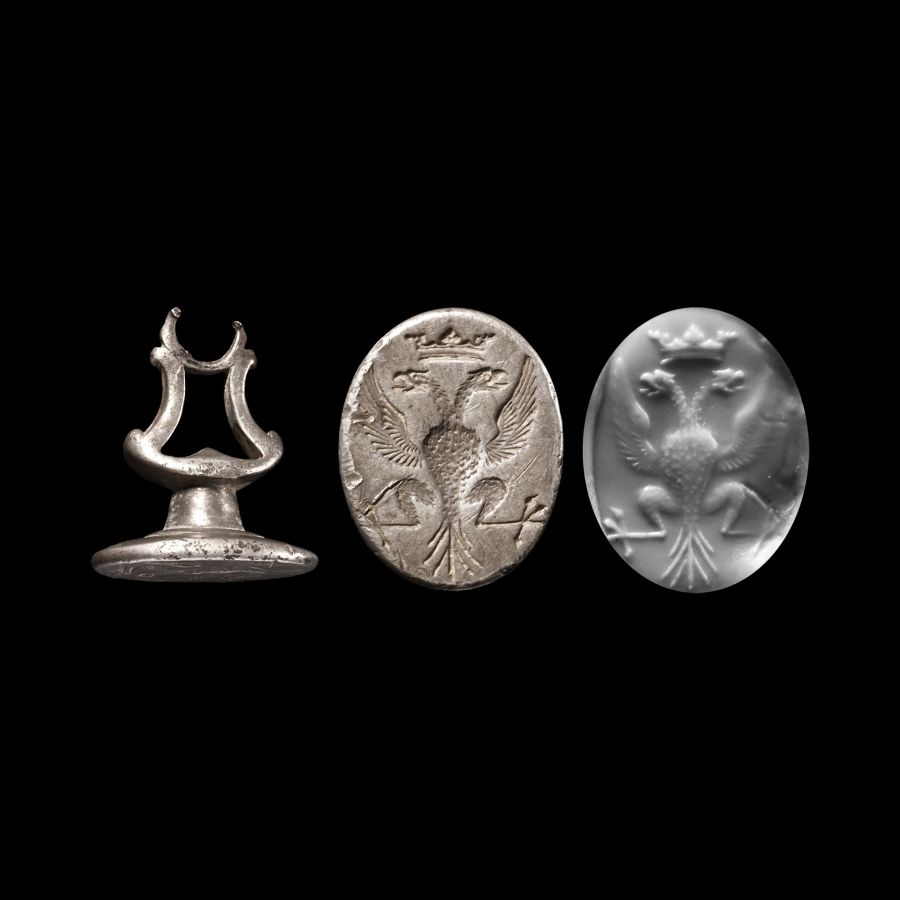
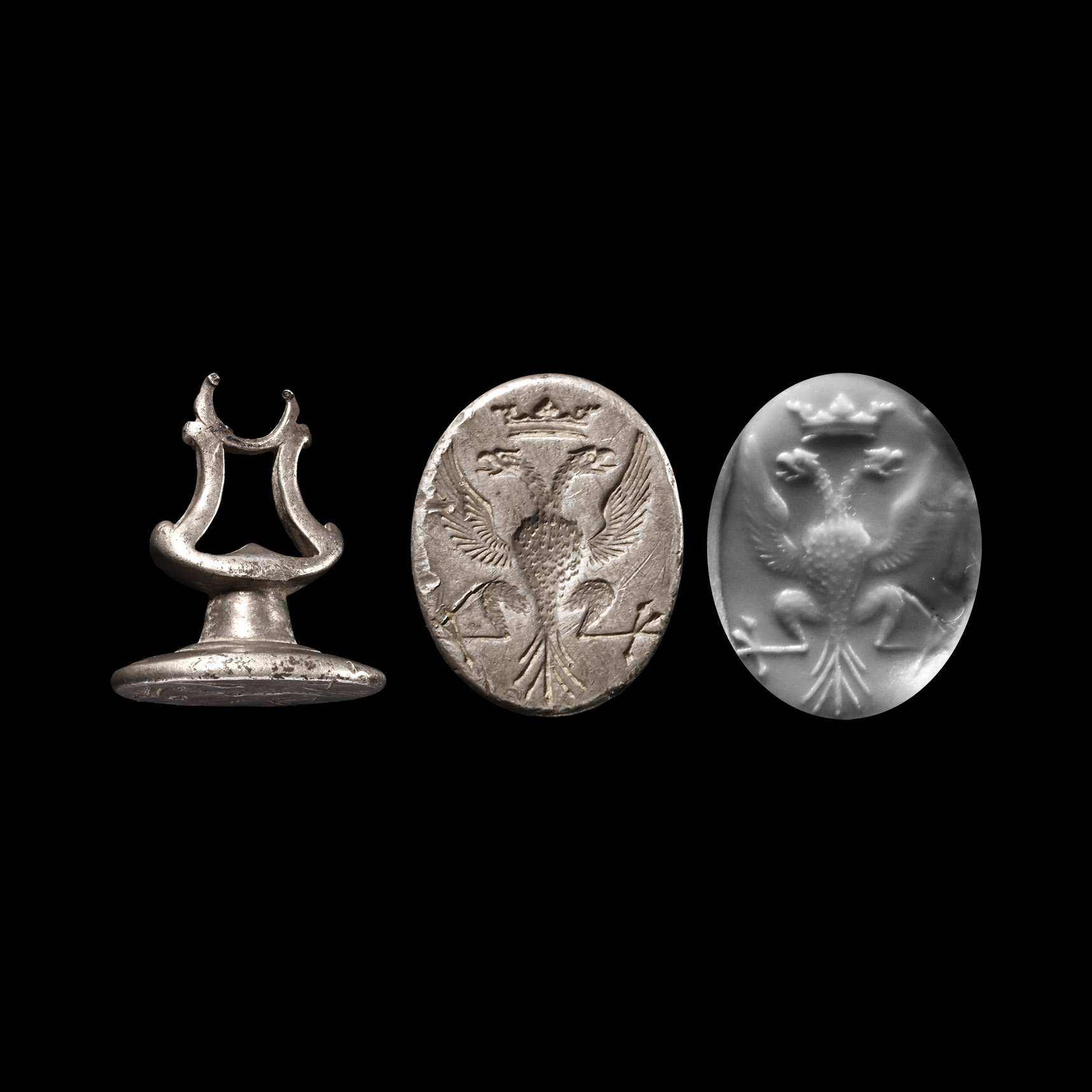
Georgian Silver Seal Matrix with Double-Headed Eagle
18TH CENTURY A.D.
7/8 in. (8.91 grams, 22 mm).
Composed of an openwork stem and oval matrix displaying a crowned double-headed eagle with spread wings to base. [No Reserve]
ProvenanceFound Hampshire, UK.
CONDITIONTimeLine Auctions follows a vetting process to ensure the authenticity and legality of all items, reinforcing our commitment to integrity and responsible trading. Each antiquity, antique, and coin lot undergoes thorough examination by a vetting committee of at least ten external specialists, professional trade association members, scientists, and archaeologists: Our Vetting Process
AUCTIONS:
TimeLine is a leading auction house specialising in antiquities, ancient art, collectables, natural history, coins, medals, and books. Our auctions offer museums, collectors, historians, and enthusiasts the opportunity to acquire unique and historically significant pieces.
-
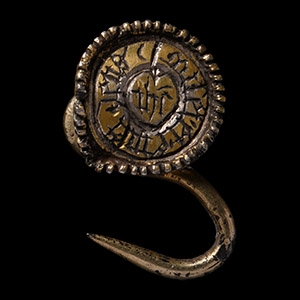
Medieval Silver-Gilt Hat Pin with Inscription
Circa 15th century A.D.Sold for (Inc. bp): £598
Engraved within a raised segmented border, 'ihc' within crude heart to centre, 'miserere mei deus' around for 'Have mercy on me oh God' (Psalm 51); hook to reverse. 2.2 grams, 20 mm
From the collection of a North American gentleman, formed in the 1990s. -
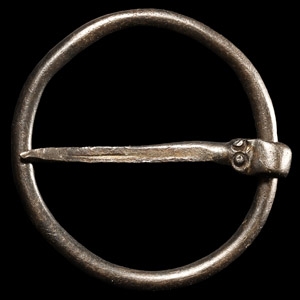
Medieval Silver Annular Brooch
13th-14th century A.D.Sold for (Inc. bp): £59
Composed of a slender round-section frame with free-running tongue, decorated with punched annulets to both sides of the neck. 0.92 grams, 18 mm
Found whilst searching with a metal detector near Yapham, East Yorkshire, UK, in 24th July 2016 by Mr David Brooks. Accompanied by a copy of the British Museum's Portable Antiquities Scheme (PAS) report no.YORYM-9A109A. Declared and disclaimed as Treasure with reference no.2016 T562. Accompanied by a copy of the Report for HM Coroner with reference no.2016 T562. -
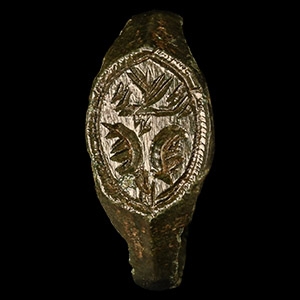
Medieval Bronze Ring with Foliage
15th-16th century A.D.Sold for (Inc. bp): £46
The slender hoop expanding to carinated shoulders, elliptical bezel engraved with stylised foliage. 1.71 grams, 18.50 mm overall, 16.19 mm internal diameter (approximate size British L, USA 5 3/4, Europe 11.24, Japan 10)
Private collection formed since the 1940s. UK art market. Property of an Essex gentleman.
