
Loading, please wait...
LOT 2120
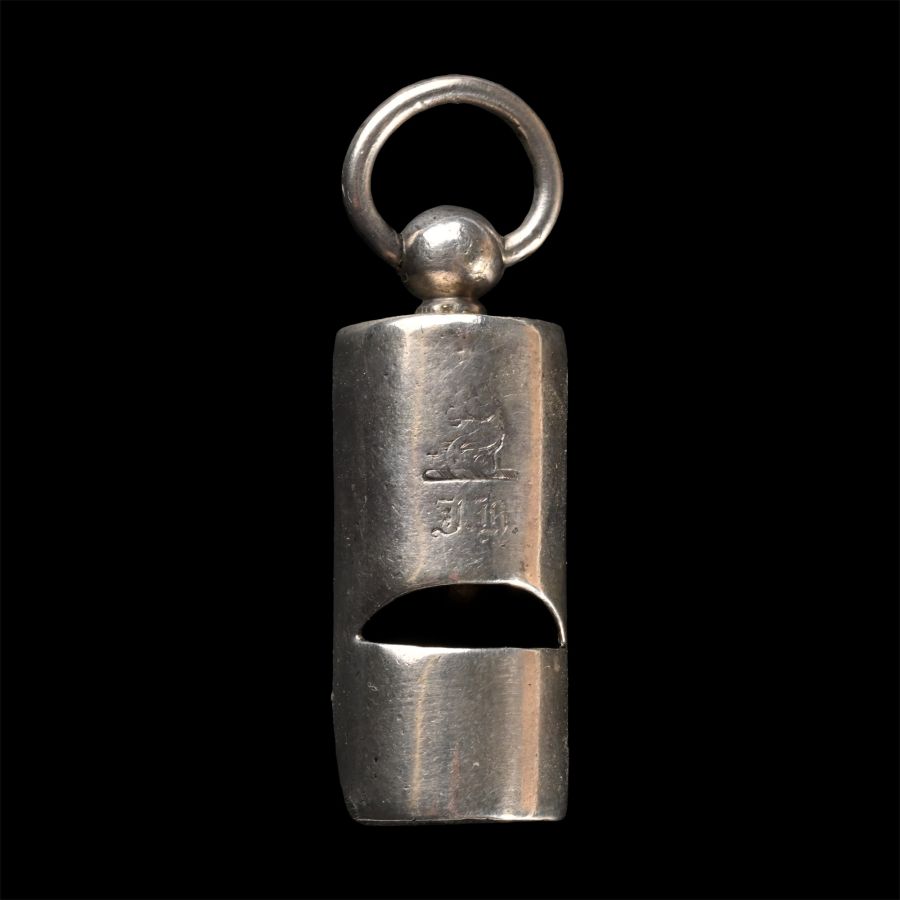
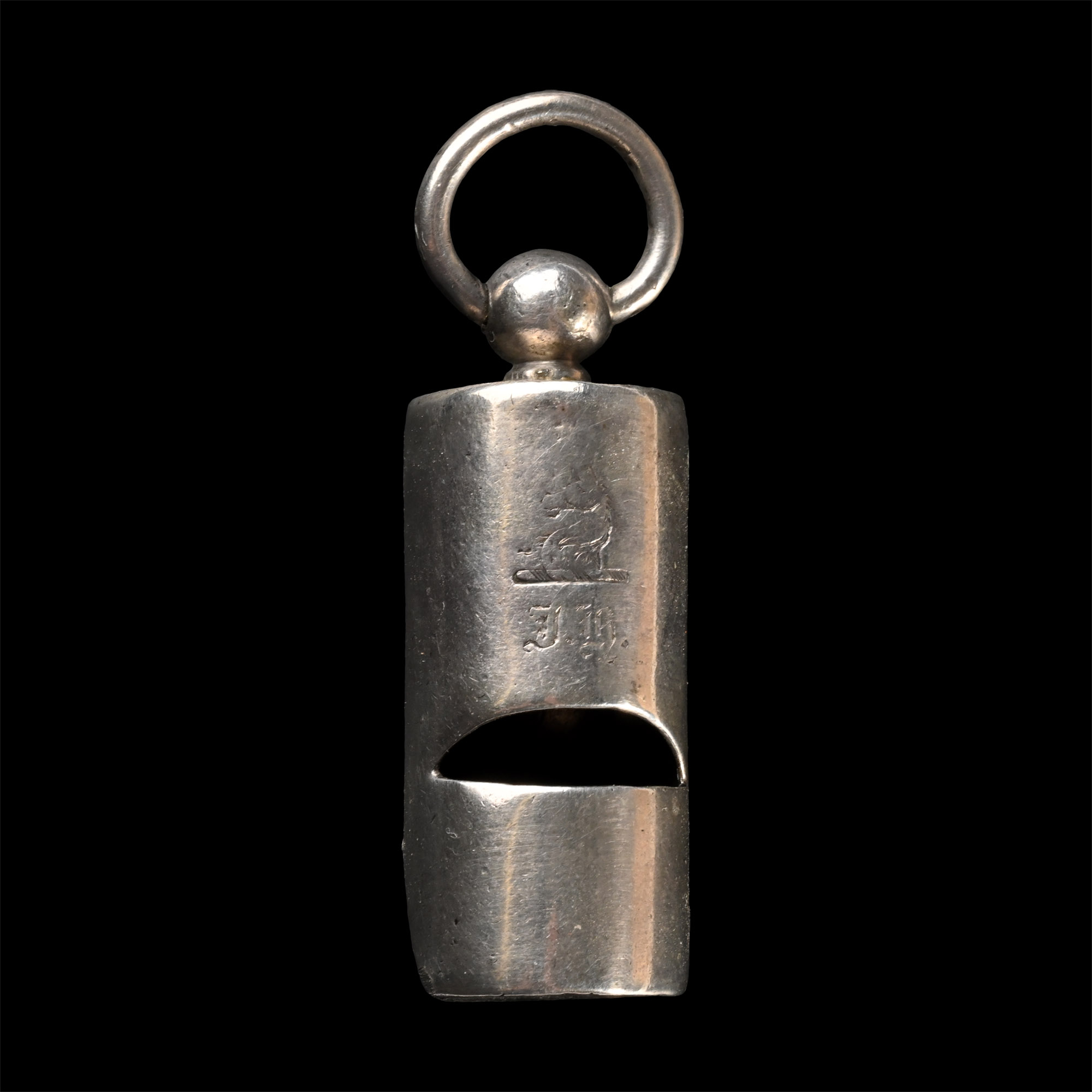
Georgian Silver Hawking Whistle with Crest
18TH-19TH CENTURY A.D.
1 7/8 in. (10.6 grams, 48 mm).
Tubular whistle with articulated suspension loop, above the blowhole a crest of a chess knight piece and initials J.H.(?) below. [No Reserve]
ProvenanceAcquired on the UK art market in the 1970s-1990s.
Property of a Nottinghamshire, UK, gentleman.
This lot is accompanied by an illustrated lot declaration signed by the Head of the Antiquities Department, Dr Raffaele D'Amato.
TimeLine Auctions follows a vetting process to ensure the authenticity and legality of all items, reinforcing our commitment to integrity and responsible trading. Each antiquity, antique, and coin lot undergoes thorough examination by a vetting committee of at least ten external specialists, professional trade association members, scientists, and archaeologists: Our Vetting Process
AUCTIONS:
TimeLine is a leading auction house specialising in antiquities, ancient art, collectables, natural history, coins, medals, and books. Our auctions offer museums, collectors, historians, and enthusiasts the opportunity to acquire unique and historically significant pieces.
-
Copy of Ankara Museum's Anatolian Hittite Bronze Stag
20th century A.D.Sold for (Inc. bp): £845
Stylised figure of a standing deer atop a ceremonial standard, elongated head with annulet eyes, tall antlers; mounted on a custom-made display stand. 2.23 kg total, 45 cm high including stand
Acquired on the UK art market, early 2000s. This lot is accompanied by an illustrated lot declaration signed by the Head of the Antiquities Department, Dr Raffaele D'Amato. -
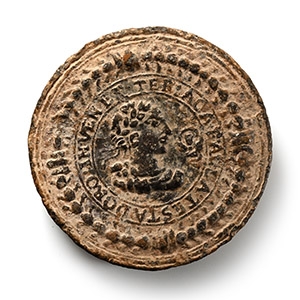
Theriaca 'Venice Triacle' Lead Box Lid
Italy, Venice, 17th century A.D.Estimate: £250 - 350 (+bp*)
Opening Bid: £125
Discoid in plan with lip to underside, central low-relief motif of a laureate and draped Roman-style bust with a nimbate lion of St. Mark, within a band inscribed 'TERIACA F ALLA TESTA DORO IN VENET'; all within outer band containing laurel wreath. 31 grams, 45 mm
From the collection of a gentleman, acquired on the London art market in the 1990s. This lot is accompanied by an illustrated lot declaration signed by the Head of the Antiquities Department, Dr Raffaele D'Amato.
Theriaca or ‘Venice treacle’ was a medicinal compound used since the time of Mithradates VI of Pontus as an antidote against any poisonous bite. -
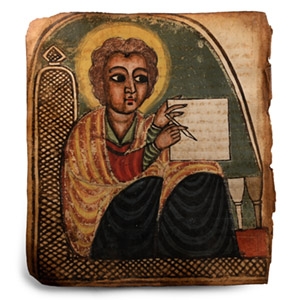
Large Ethiopian Gospel Manuscript Page with Evangelist Portrait
Ethiopia, 17th century A.D.Sold for (Inc. bp): £910
Vellum page depicting: recto: seated nimbate figure within an arch holding a manuscript page in his left hand and a quill in his right hand; verso: blank. 8 grams, 22.5 x 20.1 cm
Ex central London gallery. This lot is accompanied by an illustrated lot declaration signed by the Head of the Antiquities Department, Dr Raffaele D'Amato.
