
Loading, please wait...
_900x900.jpg "Georgian Era Gold Fob Seal with Carnelian Intaglio of Inigo Jones Attributed to Edward Burch")
_200x200.jpg "Georgian Era Gold Fob Seal with Carnelian Intaglio of Inigo Jones Attributed to Edward Burch")
.jpg "Georgian Era Gold Fob Seal with Carnelian Intaglio of Inigo Jones Attributed to Edward Burch")
LOT 0375
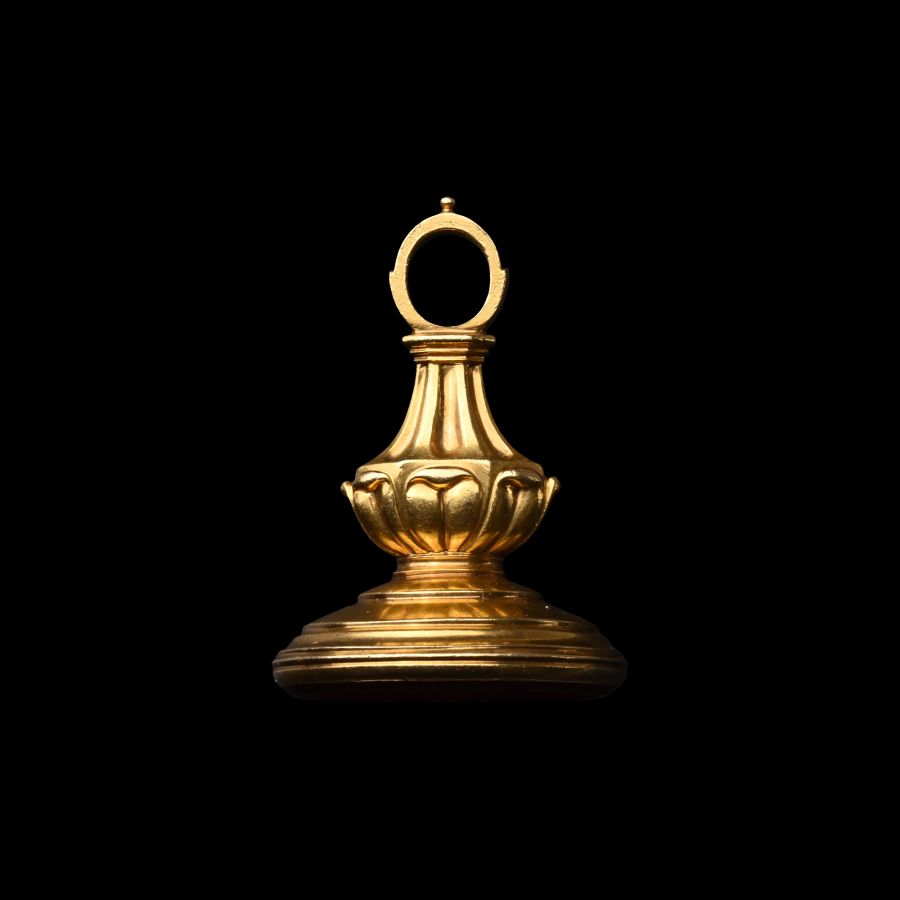
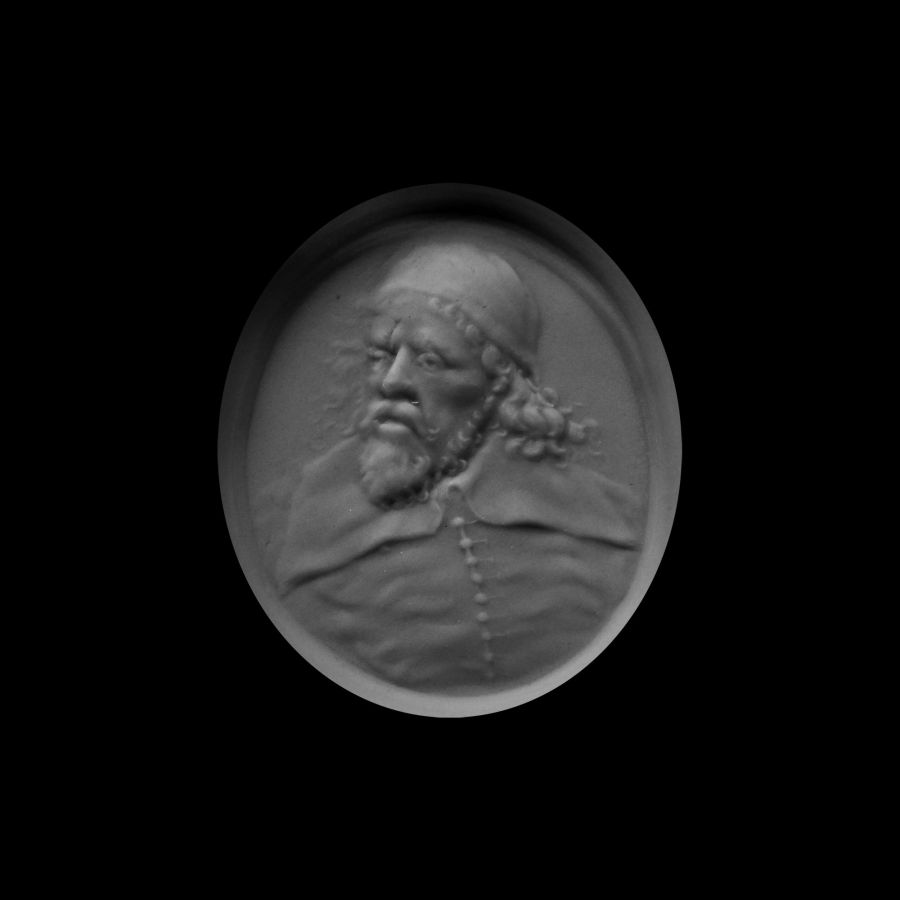
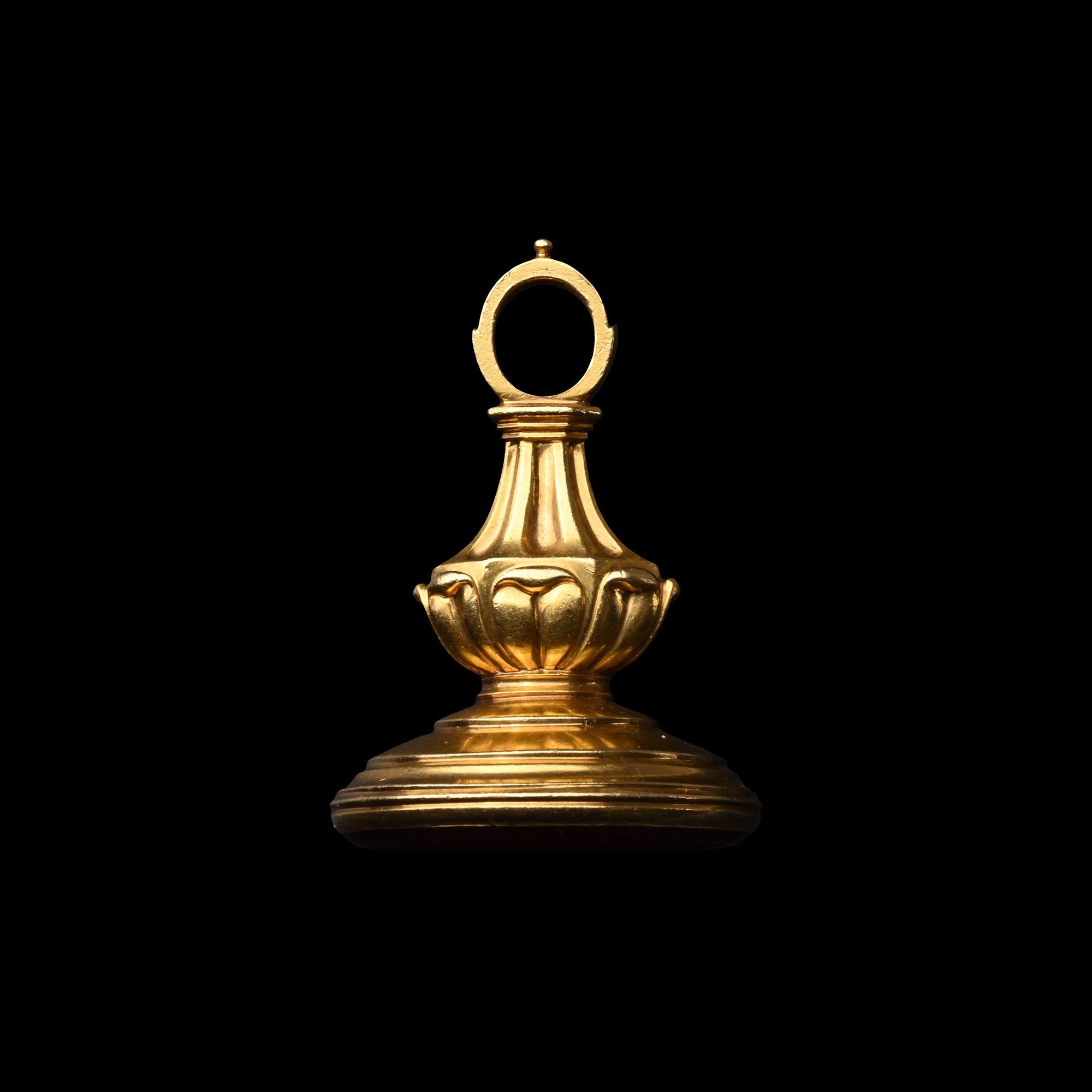
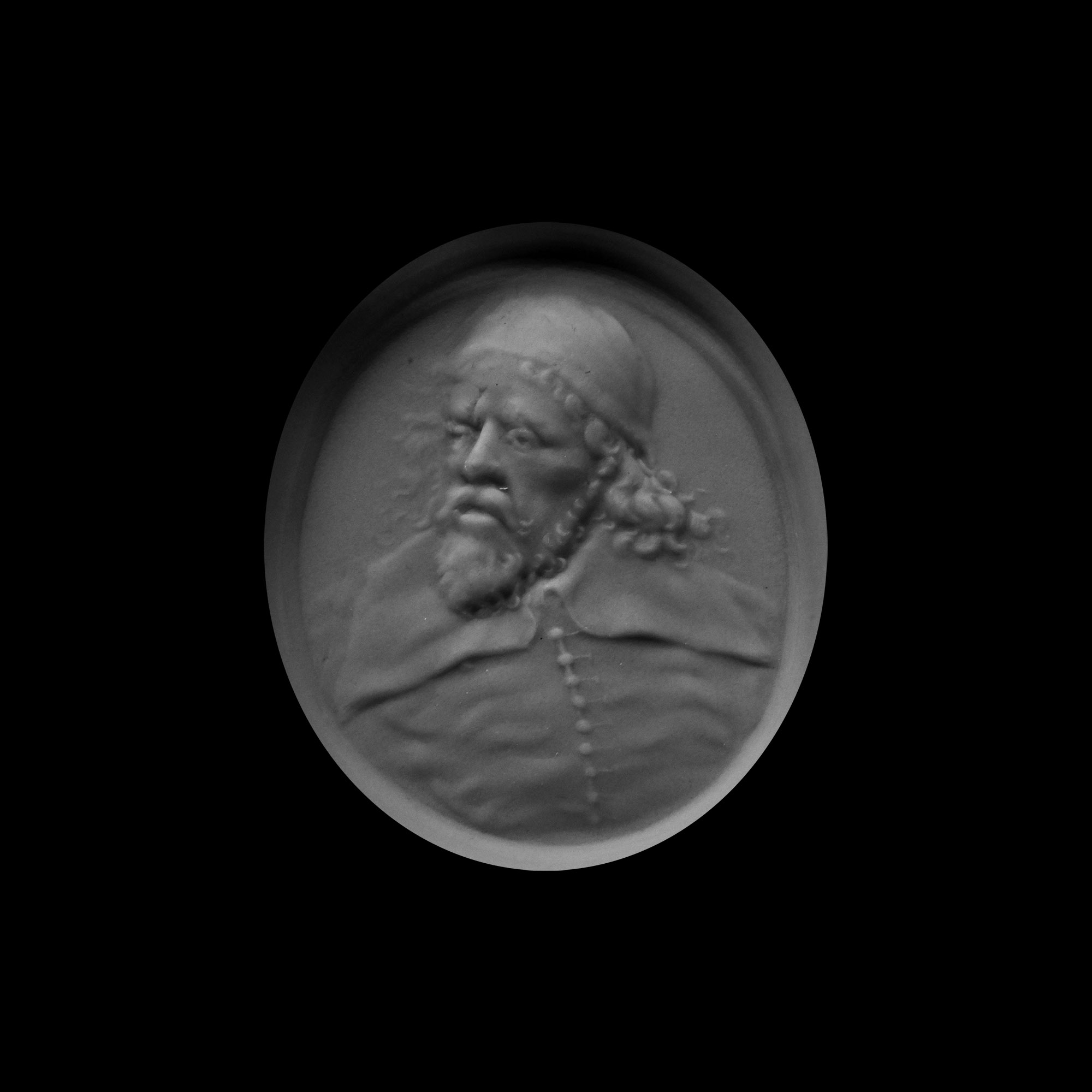
Georgian Era Gold Fob Seal with Carnelian Intaglio of Inigo Jones Attributed to Edward Burch
ENGLAND, 18TH CENTURY A.D.
1 1/4 in. (11.72 grams, 33 mm).
Vibrant red carnelian intaglio skilfully carved with a bust of a mature man in three-quarter view, gazing right, wearing a wide-collared, buttoned tunic and a cap, long curly hair framing his bearded face with a deeply furrowed forehead; set in a gold frame with an amphora-like looped handle; supplied with a museum-quality impression.
ProvenanceAcquired on the European art market.
LiteratureCf. an identical, signed example in the collection of the Penn Museum, Philadelphia, object no.29-128-2108; another unsigned example attributed to Edward Burch in the collection of the Victoria and Albert Museum, London, accession no.3339-1856.
FootnotesEdward Burch (1730–1814) was a distinguished English gem engraver and miniaturist, celebrated for his intricate craftsmanship and artistic versatility. A founding member of the Royal Academy of Arts in 1768, Burch gained acclaim for his engraved gemstones, which often depicted classical and mythological themes, reflecting the neoclassical style of the Georgian era. His skill in miniature painting further demonstrated his artistic range and mastery of detail. Highly respected in his time, Burch’s works remain admired for their technical precision and elegance, preserving his legacy as a key figure in 18th-century British art. Inigo Jones (1573–1652) was a pioneering English architect who is widely regarded as the first significant figure to introduce the principles of Renaissance architecture to England. Influenced by his studies in Italy and the works of Andrea Palladio, Jones designed elegant structures characterised by classical symmetry, proportion, and restraint. His most famous works include the Banqueting House at Whitehall, the Queen’s House in Greenwich, and contributions to the layout of Covent Garden. Jones’s adoption of Palladian ideals marked a departure from the Gothic style that had dominated English architecture, laying the foundation for subsequent developments in the Classical tradition.
CONDITIONTimeLine Auctions follows a vetting process to ensure the authenticity and legality of all items, reinforcing our commitment to integrity and responsible trading. Each antiquity, antique, and coin lot undergoes thorough examination by a vetting committee of at least ten external specialists, professional trade association members, scientists, and archaeologists: Our Vetting Process
AUCTIONS:
TimeLine is a leading auction house specialising in antiquities, ancient art, collectables, natural history, coins, medals, and books. Our auctions offer museums, collectors, historians, and enthusiasts the opportunity to acquire unique and historically significant pieces.
LOT 0375
Georgian Era Gold Fob Seal with Carnelian Intaglio of Inigo Jones Attributed to Edward Burch
Estimate £1,500 - 2,000€1,740 - 2,320 (for guidance only)$2,030 - 2,700 (for guidance only)
-
.jpg)
Large Framed Book Plate with Egyptian Amulets
19th century A.D.Sold for (Inc. bp): £13
Large-format engraved plate illustrating amulets of various types (figures of Bes and Pataikos, multiple wedjat, Taweret with dorsal pillar, etc.), from the book series La Description de l'Egypte published after the French army's Egyptian campaign (1798-1801), Book A, Volume V, plate 88; mounted in a modern glazed frame. 3 kg total, 70.6 x 53 cm including frame
Ex private collection, London, UK.
Produced between February 1802 and 1830 on the orders of Napoleon Bonaparte; published between 1809 and 1828. Just 1,000 copies were distributed to various institutions, printed on laid paper with an 'Égypte ancienne et moderne' watermark. The book is subtitled Recueil des observations et des recherches qui ont été faites en Égypte pendant l’expédition de l’Armée française, publié par les ordres de Sa Majesté l’Empereur Napoléon le Grand (Gathering of observations and discoveries which were made in Egypt during the expedition of the French army, published on the orders of His Majesty the Emperor Napoleon the Great). It was the world's first encyclopedia devoted exclusively to the remains of ancient Egypt. -
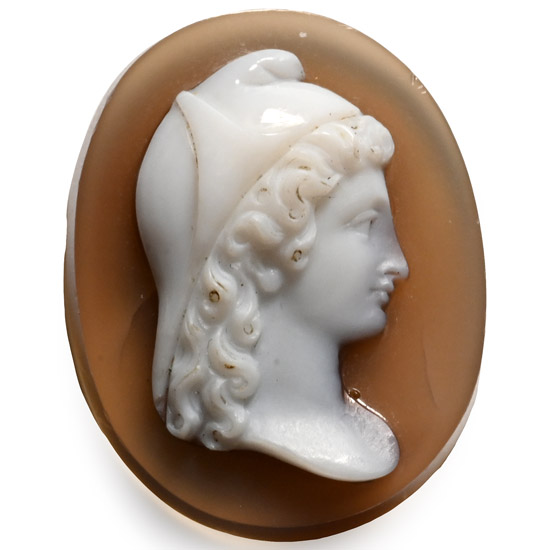
Post Classical Agate Cameo with a Helmeted Bust
20th century A.D.Sold for (Inc. bp): £169
Oval cameo with profile bust of a young warrior with curly, long hair wearing a helmet with a long neck guard. 1.53 grams, 19 mm
Acquired on the European art market. -
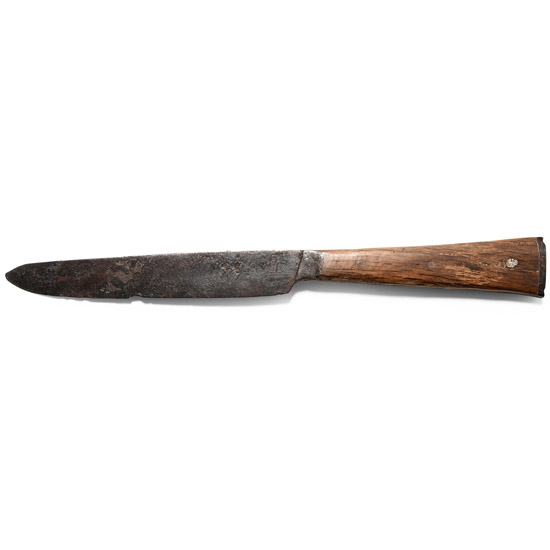
Stuart Period Iron Knife with Crown Maker's Mark
Circa 18th century A.D.Sold for (Inc. bp): £39
Forge-welded single-edged blade with rounded tip and integral baluster; wooden scales to both sides of the tang held in place with three peened studs on each side; punched crown maker's mark to one face. 28.9 grams, 19.5 cm
From a UK collection formed in the 1980s. Property of an Essex, UK, gentleman.
