
Loading, please wait...
LOT 1434
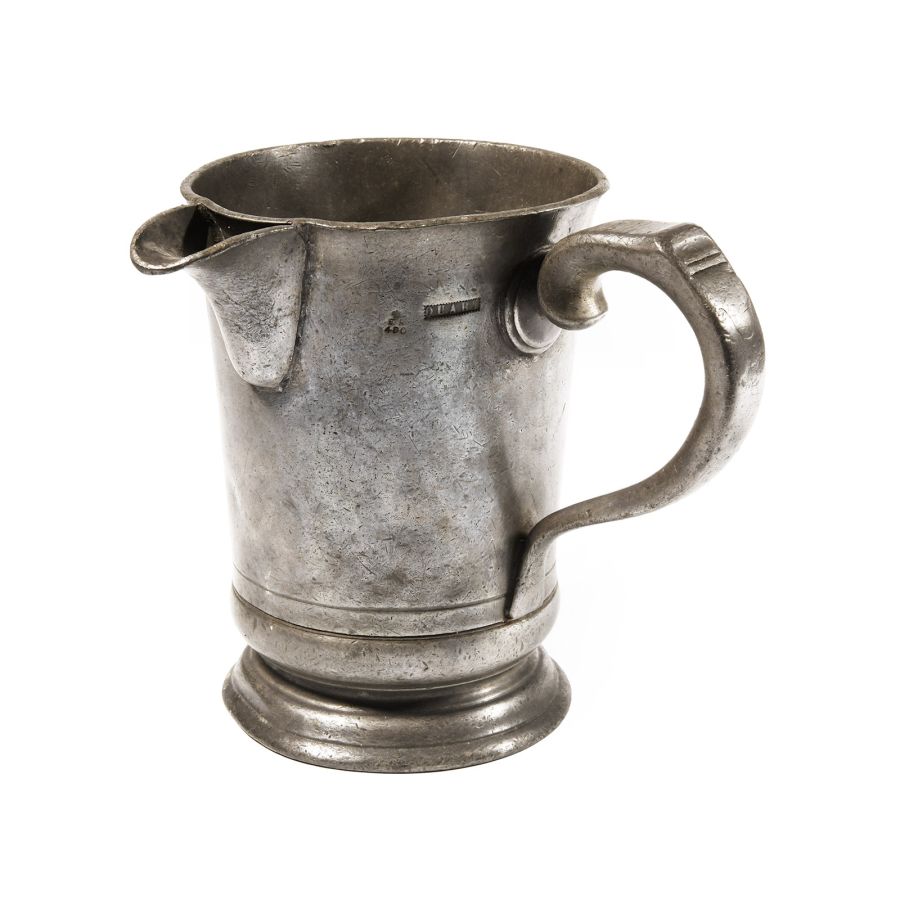
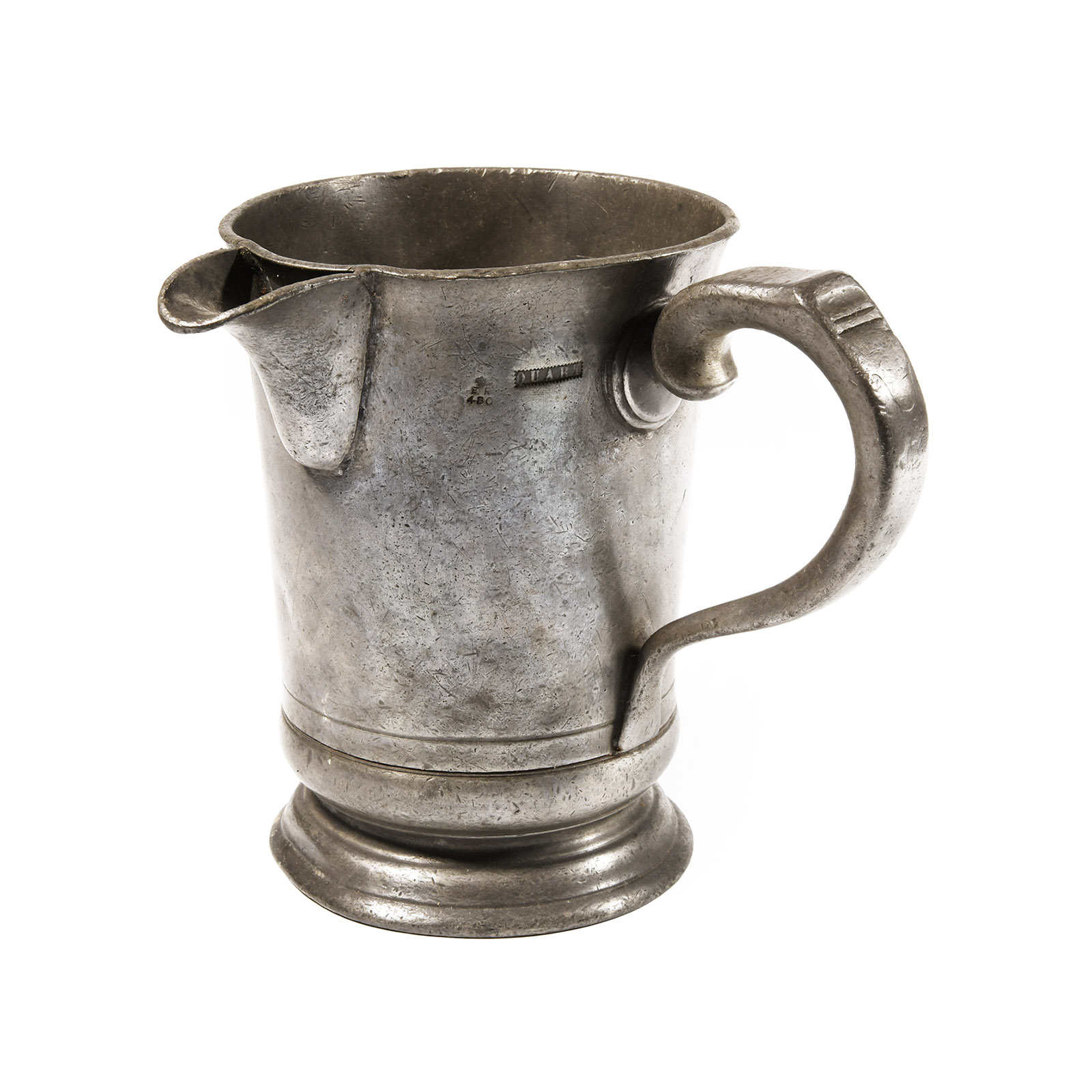
Georgian 'Coach & Horses, Plaistow' Pewter Quart Jug
CIRCA 19TH CENTURY A.D.
6 1/2 in. (969 grams, 16.6 cm high).
Inscribed in copperplate script 'SG' to the body with proof marks, 'Coach & Horse, Plaistow' to the underside. [No Reserve]
ProvenanceProperty of an Essex collector.
CONDITIONTimeLine Auctions follows a vetting process to ensure the authenticity and legality of all items, reinforcing our commitment to integrity and responsible trading. Each antiquity, antique, and coin lot undergoes thorough examination by a vetting committee of at least ten external specialists, professional trade association members, scientists, and archaeologists: Our Vetting Process
AUCTIONS:
TimeLine is a leading auction house specialising in antiquities, ancient art, collectables, natural history, coins, medals, and books. Our auctions offer museums, collectors, historians, and enthusiasts the opportunity to acquire unique and historically significant pieces.
-
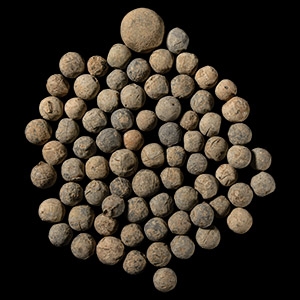
Battle of Waterloo Lead Musket Ball Collection
Early 19th century A.D.Sold for (Inc. bp): £221
Comprising a quantity of musket balls, some with impact damage or casting sprues. 1.9 kg total, 13-29 mm
Found in the vicinity of Waterloo, Belgium. French family collection, by descent. Acquired from a private French collector in 2002. Property of a Nottinghamshire gentleman. -
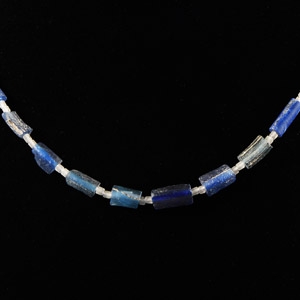
Blue Glass Bead Necklace String
20th century A.D. or earlierSold for (Inc. bp): £13
Composed of graduated facetted blue beads interspersed with opaque seed beads. 10 grams, 88 cm long
UK gallery, early 2000s. -
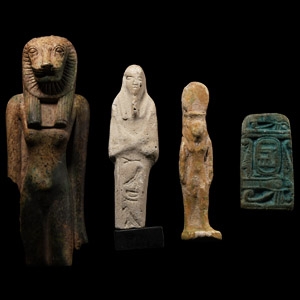
Egyptian Style Figurine Group
20th century A.D.Sold for (Inc. bp): £33
Comprising: composition shabti on a stand; composition Sekhmet figurine with sun-disc headdress; blue composition plaque with royal cartouche flanked by ostrich feathers and Wedjat eye above; stone Sekhmet figurine without lower legs with inscribed dorsal pillar. 281 grams total, 5.4-12.2 cm
Acquired from a private UK collection in the late 1990s. Private collection of Mr T.H., Norfolk, UK.
