
Loading, please wait...
_900x900.jpg "Georgian Carnelian Gem with Bust of Galba")
_200x200.jpg "Georgian Carnelian Gem with Bust of Galba")
.jpg "Georgian Carnelian Gem with Bust of Galba")
LOT 1775
Georgian Carnelian Gem with Bust of Galba
18TH CENTURY A.D.
3/4 in. (1.34 grams, 19 mm).
The polished oval stone with chamfered side edge, bearing an intaglio bust of Roman Emperor Galba in profile left, wearing a laureate crown; chipped. [No Reserve]
ProvenanceEarly 20th century collection based on the ring.
Acquired on the London art market.
Property of a North London antiquary.
TimeLine Auctions follows a vetting process to ensure the authenticity and legality of all items, reinforcing our commitment to integrity and responsible trading. Each antiquity, antique, and coin lot undergoes thorough examination by a vetting committee of at least ten external specialists, professional trade association members, scientists, and archaeologists: Our Vetting Process
AUCTIONS:
TimeLine is a leading auction house specialising in antiquities, ancient art, collectables, natural history, coins, medals, and books. Our auctions offer museums, collectors, historians, and enthusiasts the opportunity to acquire unique and historically significant pieces.
-
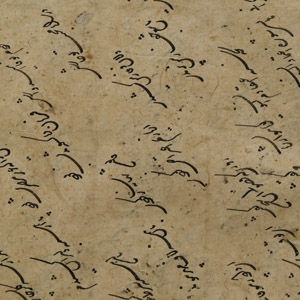
Framed Watercolour Painting
Persia, 19th century A.D.Sold for (Inc. bp): £91
With watercolour border populated with stylised polychrome leaves; mounted in a reveal and a glazed wooden frame. 942 grams, 41 x 32.5 cm
Fine condition.
Acquired on the UK art market, 1980s-1990s. The Woodbridge collection of Indo-Persian art. -
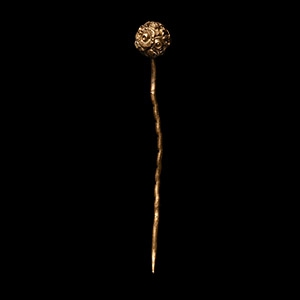
'The West Lindsey' Tudor Gold Dress Pin
Circa 16th century A.D.Sold for (Inc. bp): £221
Composed of a curved and crimped shaft tapering to a point; the hollow globular head cast with foliate ornament and simulated filigree rings. 0.8 grams, 40 mm
Found whilst searching with a metal detector near West Lindsey, Lincolnshire, UK, on Wednesday 20th October 2010. Accompanied by a copy of the British Museum's Portable Antiquities Scheme report no.SWYOR-FF9E65. Disclaimed under the Treasure Act with reference no.2010 T676. -
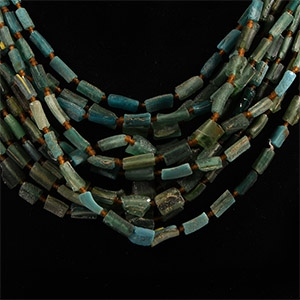
Turquoise Blue Glass Bead Necklace Collection
20th century A.D. or earlierSold for (Inc. bp): £156
Restrung; composed of blue glass beads, interspersed with umber-coloured glass spacer beads. 108 grams total, 60-71 cm
UK gallery, early 2000s.
