
Loading, please wait...
LOT 0733
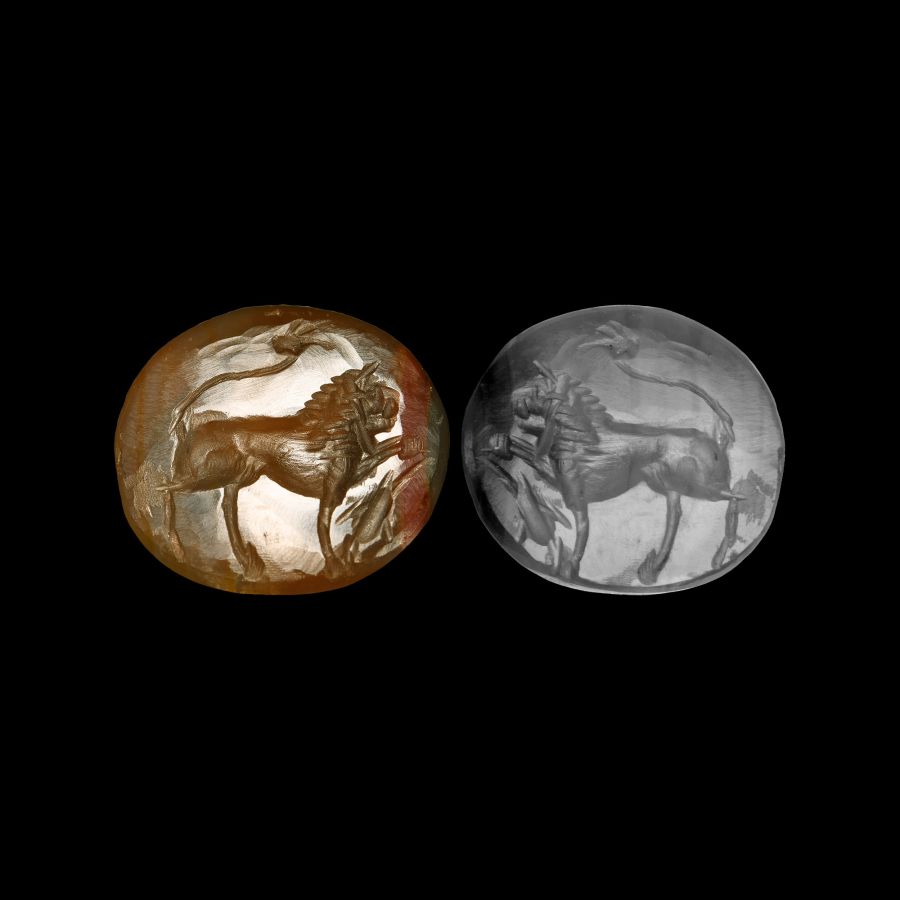
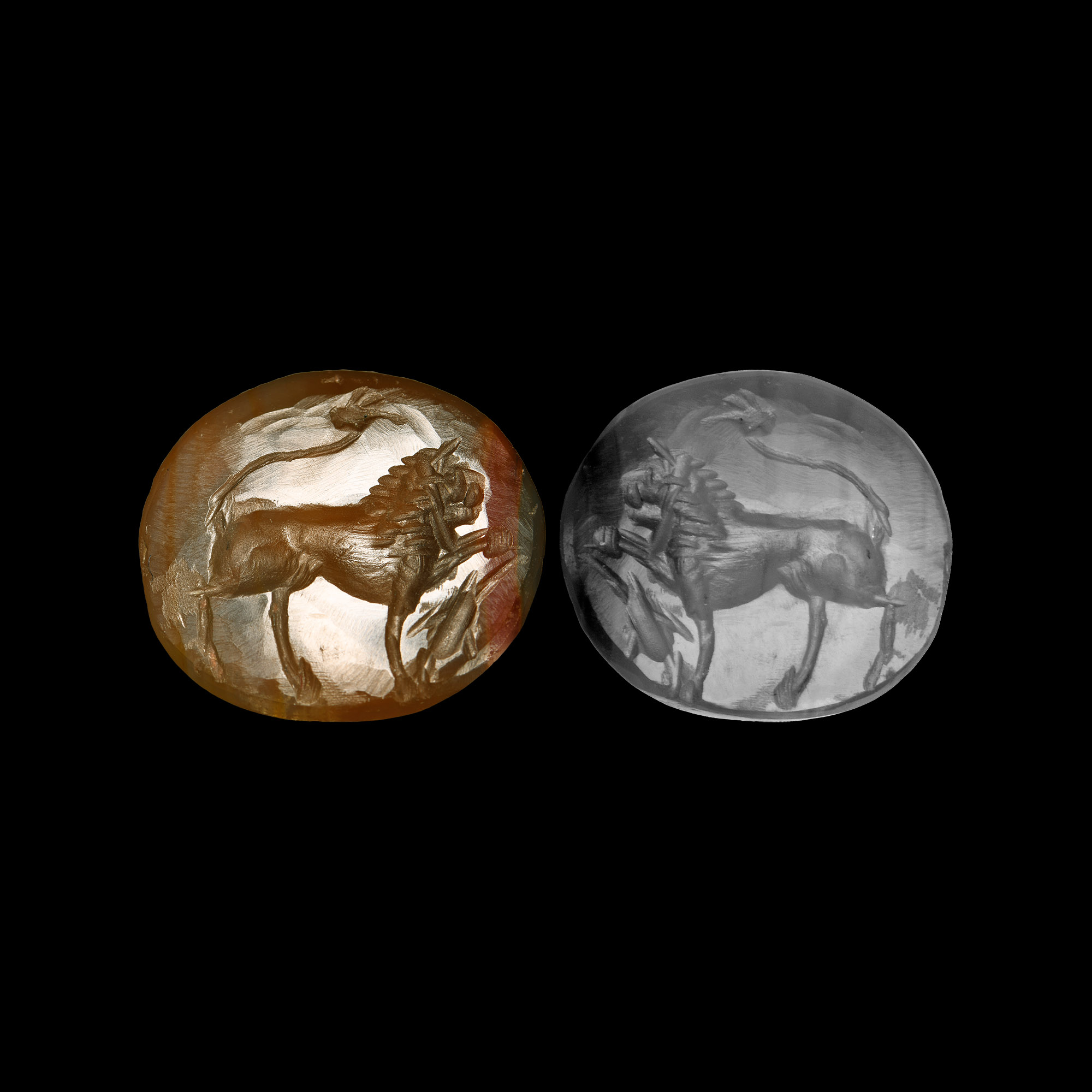
Gemstone with Lion
ROMAN, 2ND-3RD CENTURY A.D. OR LATER
1/2 in. (1.79 grams, 14 mm).
Of truncated conical form, the agate stone engraved with a prancing male lion facing right, one front leg and tail raised; accompanied by a museum-quality impression. [No Reserve]
ProvenanceAcquired on the European art market in the late 1960s-early 1970s.
CONDITIONTimeLine Auctions follows a vetting process to ensure the authenticity and legality of all items, reinforcing our commitment to integrity and responsible trading. Each antiquity, antique, and coin lot undergoes thorough examination by a vetting committee of at least ten external specialists, professional trade association members, scientists, and archaeologists: Our Vetting Process
AUCTIONS:
TimeLine is a leading auction house specialising in antiquities, ancient art, collectables, natural history, coins, medals, and books. Our auctions offer museums, collectors, historians, and enthusiasts the opportunity to acquire unique and historically significant pieces.
-
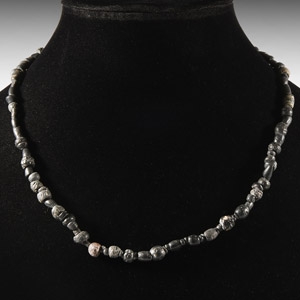
Roman Black Glass and Other Bead Necklace String
1st century A.D. and laterSold for (Inc. bp): £59
Mainly composed of restrung opaque beads of various sizes, mainly irregular oblate and barrel shapes. 19.8 grams, 50 cm long
UK gallery, early 2000s. -
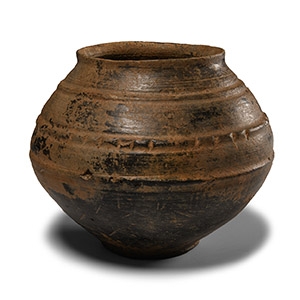
Roman Period Blackware Bowl
Circa 2nd century A.D.Sold for (Inc. bp): £208
Comprising a hemispherical black-glazed terracotta body with slightly everted rim, raised circumferential bands to the shoulder, small raised foot, flat bottom. 274 grams, 12.5 cm wide
Acquired on the UK art market. Property of a Ruislip, UK, gentleman, by inheritance.
The most interesting feature of this bowl is that its whole outline suggests that it has been copied from a Terra Sigillata bowl of type Dragendorff. The moulded figures of the decorated original were, however, probably outside of the craftsman's range, and in places the surface of the bowl is covered with a crudely executed ornamented band. -

Roman Pewter Cignus Spoon with Coiled Swan-Neck Handle
4th century A.D.Estimate: £400 - 600 (+bp*)
Opening Bid: £125
With large oval bowl and a long, slender handle, compressed into S-shape and terminating in a stylised bird’s head. 42.4 grams, 85 mm
Found near Welney, Cambridgeshire, in 1985.
Similar silver spoons (cygni), were found within a set of ten spoons (today at the British Museum with inventory nos. 1994,0408.81-90) with ownership inscriptions. The handle attachment of such spoons had some decorative profiling, and the name 'AVRVRSICINI' within the bowl was inlaid with niello. The spoons seems to have been produced by a Romano-British workshop of Late Antiquity (4th-5th centuries A.D.). The cygnus was a particular type of ligula. This type was characterised by a large, oval-shaped bowl, but was equipped, unlike the common ligula, with a shortened, recurved handle which terminated in a stylised water bird or swan's head (swan = cygnus in Latin).
