
Loading, please wait...
LOT 1435
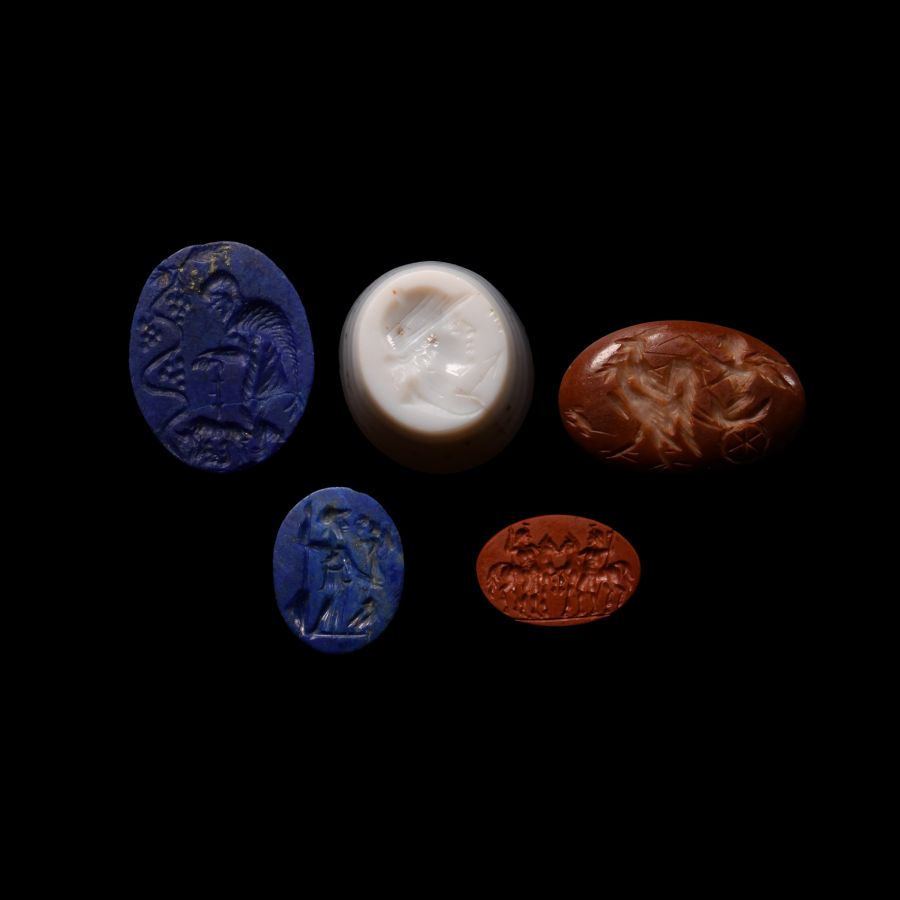
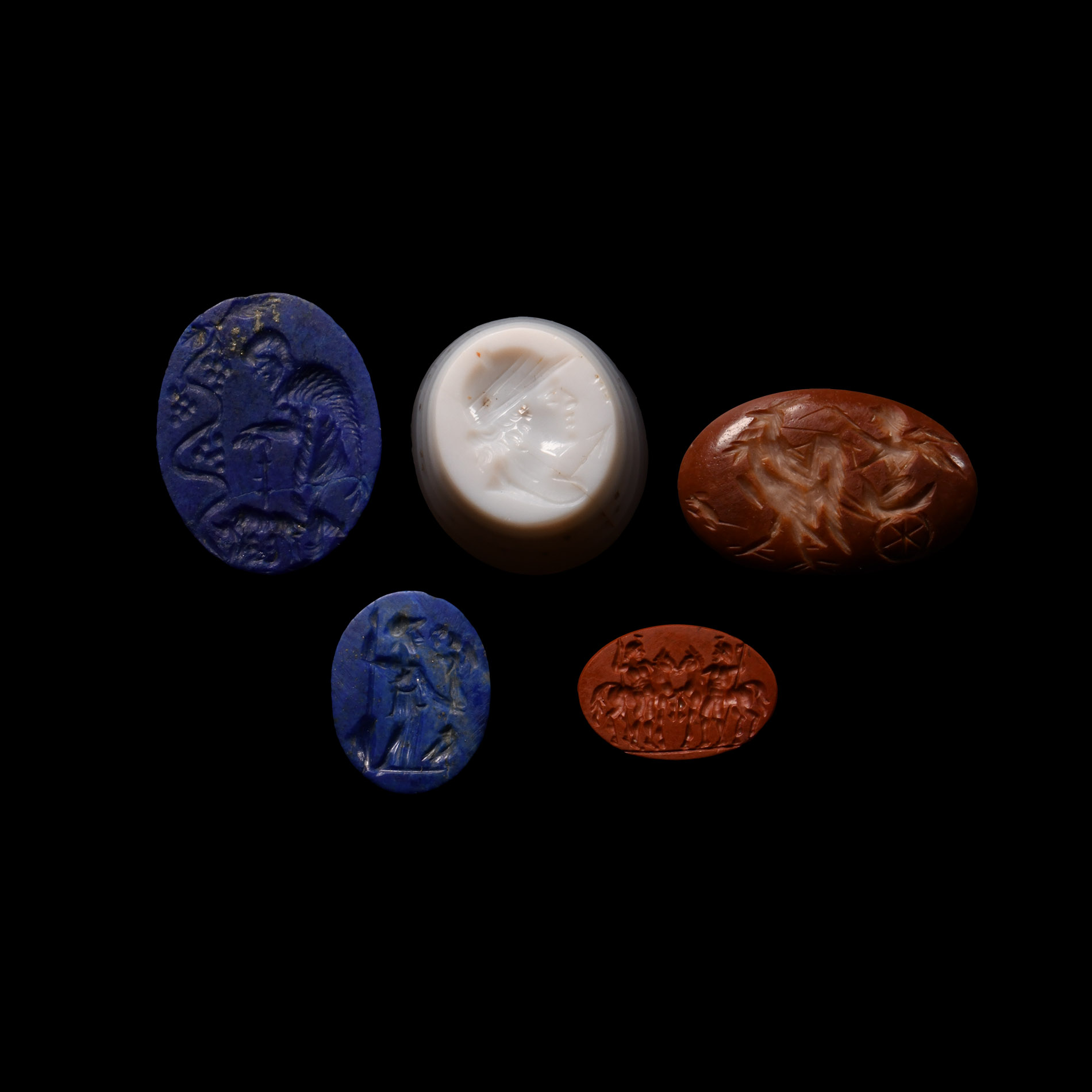
Gemstone Collection
17TH-20TH CENTURY A.D.
1/2 - 3/4 in. (8.4 grams total, 13-20 mm).
A mixed group of gemstones including lapis lazuli and sardonyx with intaglio motifs including bust of Mercury, figure of Mars and others. [5, No Reserve]
ProvenanceEnglish private collection.
CONDITIONTimeLine Auctions follows a vetting process to ensure the authenticity and legality of all items, reinforcing our commitment to integrity and responsible trading. Each antiquity, antique, and coin lot undergoes thorough examination by a vetting committee of at least ten external specialists, professional trade association members, scientists, and archaeologists: Our Vetting Process
AUCTIONS:
TimeLine is a leading auction house specialising in antiquities, ancient art, collectables, natural history, coins, medals, and books. Our auctions offer museums, collectors, historians, and enthusiasts the opportunity to acquire unique and historically significant pieces.
-
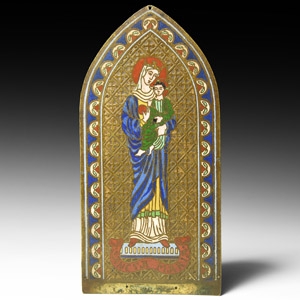
Post Medieval Enamelled Plaque in Limoges Style
19th century A.D.Sold for (Inc. bp): £114
An enamelled plaque in Limoges style, Saint Mary carrying the infant Jesus standing at the centre, banner reading 'SANCTA MARIA' below on a field of lozenges containing crosses; three piercings for attachment. 278 grams, 20.2 cm
Fine condition.
Old North American collection. Massachusetts, USA, 2005. Property of a Suffolk gentleman. -
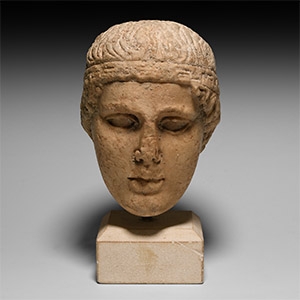
Post Medieval Marble Head
20th century A.D. or earlierSold for (Inc. bp): £1,170
A marble head carved naturalistically in the round with cropped hair, wearing a taenia headband seemingly featuring Greek key motif; possibly representing a deity, a muse or even a female satyr; mounted on a carved stone base. A marble head carved naturalistically in the round with cropped hair, wearing a taenia headband seemingly featuring Greek key motif; possibly representing a deity, a muse or even a female satyr; mounted on a carved stone base.
with Arts D'Orient, Artcurial, Paris, 19 May 2014, lot 138. English private collection. -
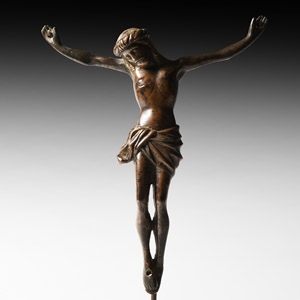
Tudor Period Bronze Corpus Christi
15th-17th century A.D.Estimate: £3,000 - 4,000 (+bp*)
Opening Bid: £1,500
A parcel-gilt bronze Corpus Christi with braided crown of thorns and draped loincloth; pierced at the extended hands and crossed feet; hollow to the reverse; mounted on a custom-made stand. 738 grams total, 23.2 cm high including stand
English private collection. This lot has been checked against the Interpol Database of stolen works of art and is accompanied by search certificate number no.11678-199807.
