
Loading, please wait...
LOT 1449
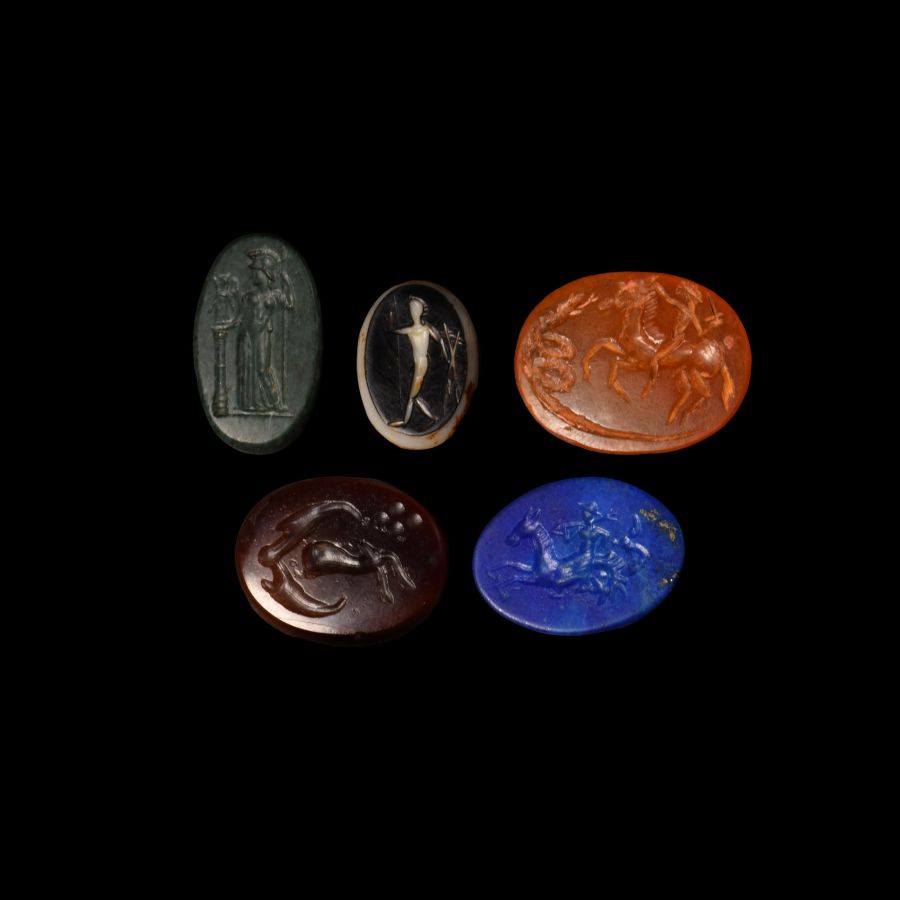
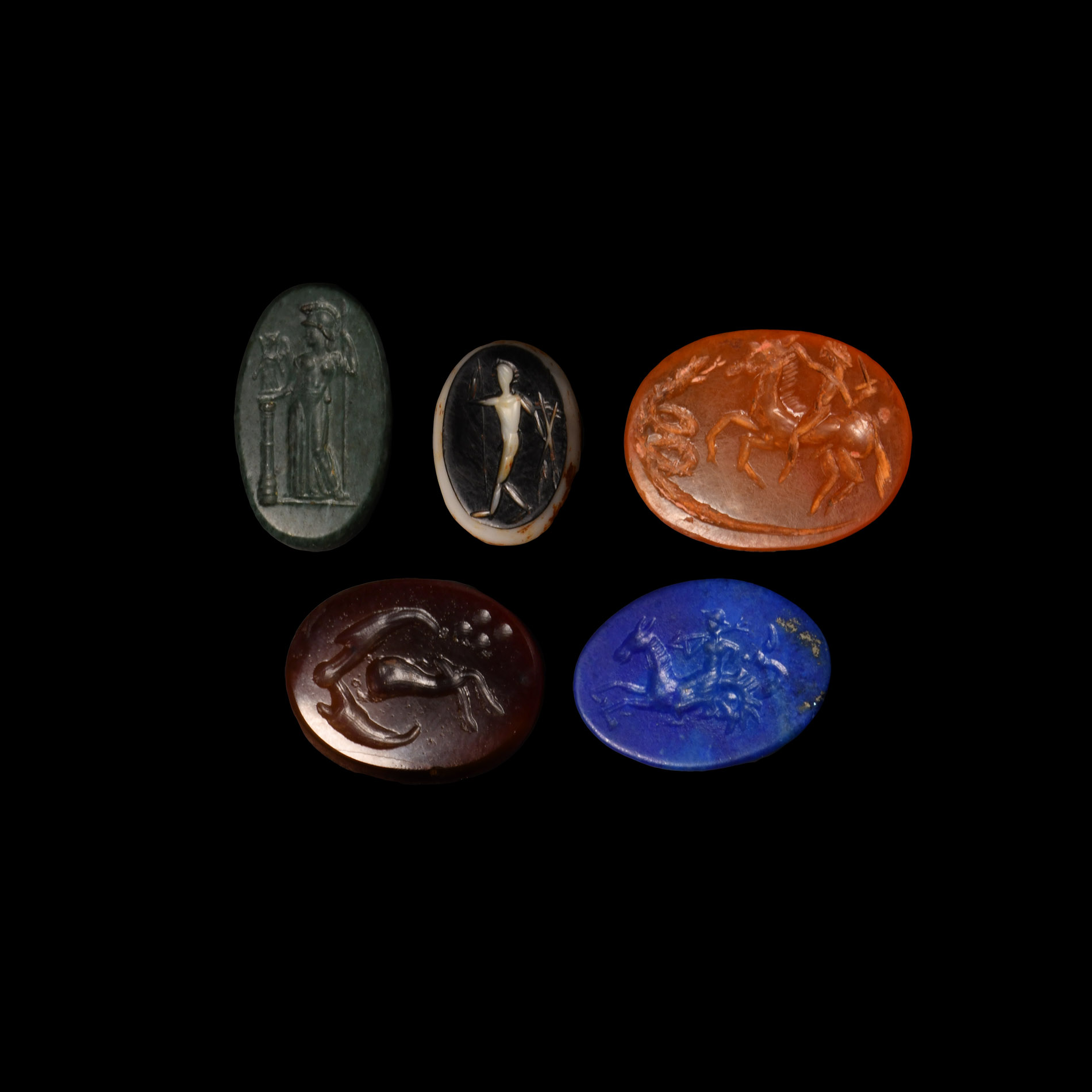
Gemstone Collection
19TH-20TH CENTURY A.D.
1/2 - 3/4 in. (6.63 grams total, 14-18 mm).
A mixed group of lapis lazuli, carnelian and other gemstones with intaglio figures of Minerva, Triton and others. [5, No Reserve]
ProvenanceEnglish private collection.
CONDITIONTimeLine Auctions follows a vetting process to ensure the authenticity and legality of all items, reinforcing our commitment to integrity and responsible trading. Each antiquity, antique, and coin lot undergoes thorough examination by a vetting committee of at least ten external specialists, professional trade association members, scientists, and archaeologists: Our Vetting Process
AUCTIONS:
TimeLine is a leading auction house specialising in antiquities, ancient art, collectables, natural history, coins, medals, and books. Our auctions offer museums, collectors, historians, and enthusiasts the opportunity to acquire unique and historically significant pieces.
-
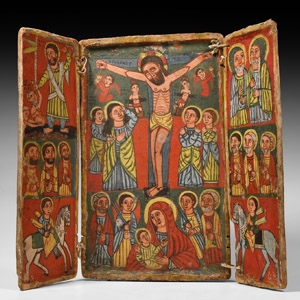
Ethiopian Triptych Icon with Mary and John the Evangelist
16th century A.D.Sold for (Inc. bp): £1,040
A wooden triptych with recessed central panel and two folding doors; the central panel with crucifixion scene with robed Mary and John the Evangelist, another apostle and Mary Magdalen, two crucified thieves to the rear and the angels depicted collecting the blood of God in cups; underneath the Crucifixion scene Virgin Mary and the Child escorted by armed Saint Gabriel and Saint Michael, prophets to the sides; the left door with nude Adam and Eve reaching up to the Resurrection of Christ, beneath them three prophets; the right door with two saints (upper panel) and three prophets; left and right bottom panels with Saint George (Bet Giorgis) and military Saint Victor on horseback; Ethiopian Ge'ez script legends. 760 grams, 35.5 x 21.5 cm
Acquired on the London art market, 2003. UK private collection.
The icon shows the Western influence on Ethiopian art. The first element is the orb which the Child holds in his left hand and the second element is the pose of his right hand. The orb appeared in Ethiopian paintings around 1500 A.D. Moreover, his hand shows two fingers outstretched, the index and middle finger, and the two last fingers folded. -
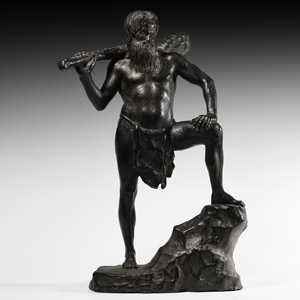
Post Medieval 'Primitive Man' Statue
German, early 20th century A.D. or laterEstimate: £800 - 1,000 (+bp*)
Opening Bid: £400
A copper-alloy statuette of a 'primitive' man, naturalistically modelled in the round standing astride a rocky outcrop, bare-footed and nude apart from a loin cloth, holding a club over his muscular shoulders. 7.5 kg, 43.5 cm high
English private collection.
Likely produced for illustrative anthropological academic purposes. -
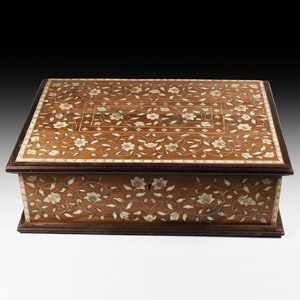
Post Medieval Wooden Box with Bone Inlays and Key
Late 19th-early 20th century A.D.Estimate: £300 - 400 (+bp*)
Opening Bid: £150
A lockable hinged wooden traveller's box decorated with bone-inlaid floral vines to the top of the lid and all four side faces; India 4.38 kg, 46 x 31.5 cm
English private collection.
