
Loading, please wait...
LOT 2094
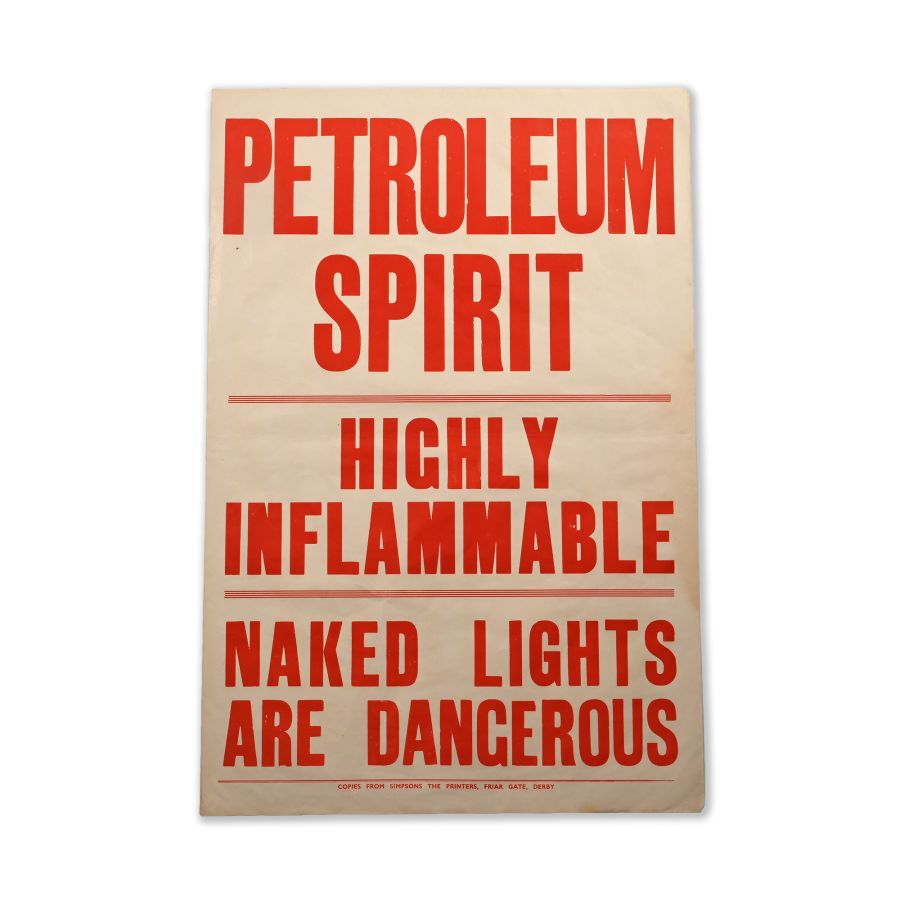
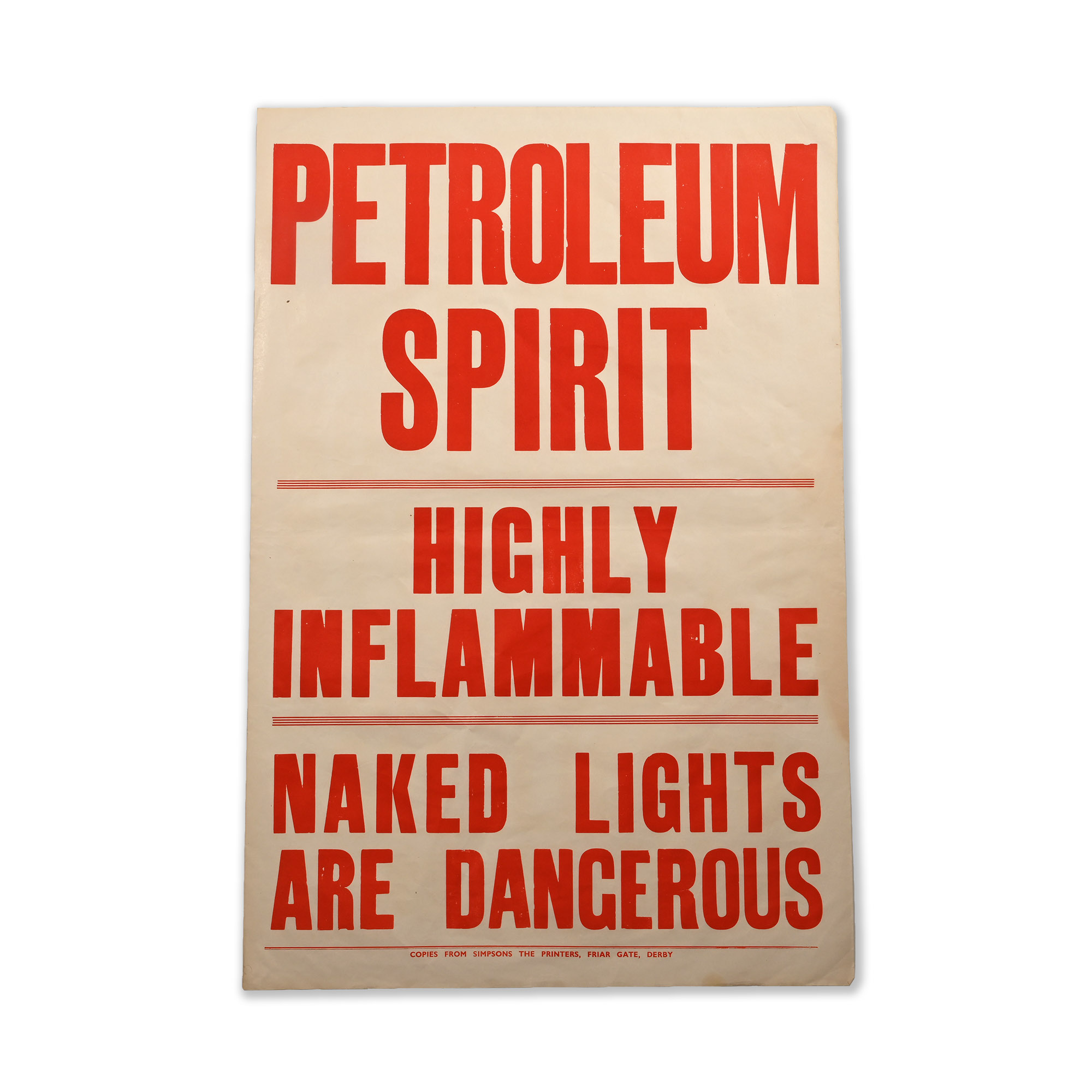
Gas / Petrol Station Original Poster Sign
1920-1940 A.D.
30 x 20 in. (22 grams, 76.2 x 50.6 cm).
White coarse paper poster with red printed warning notice for a petrol station; to foot 'copies from Simpsons the Printers, Friar Gate, Derby'. [No Reserve]
ProvenanceAcquired on the UK art market.
Property of a Harwich, UK, collector.
'Simpsons the Printers' was a local printing company specialising in postcards and photographic materials, active until the early 1960s.
CONDITIONTimeLine Auctions follows a vetting process to ensure the authenticity and legality of all items, reinforcing our commitment to integrity and responsible trading. Each antiquity, antique, and coin lot undergoes thorough examination by a vetting committee of at least ten external specialists, professional trade association members, scientists, and archaeologists: Our Vetting Process
AUCTIONS:
TimeLine is a leading auction house specialising in antiquities, ancient art, collectables, natural history, coins, medals, and books. Our auctions offer museums, collectors, historians, and enthusiasts the opportunity to acquire unique and historically significant pieces.
LOT 2094
Gas / Petrol Station Original Poster Sign
Estimate £80 - 100€93 - 116 (for guidance only)$108 - 135 (for guidance only)
-
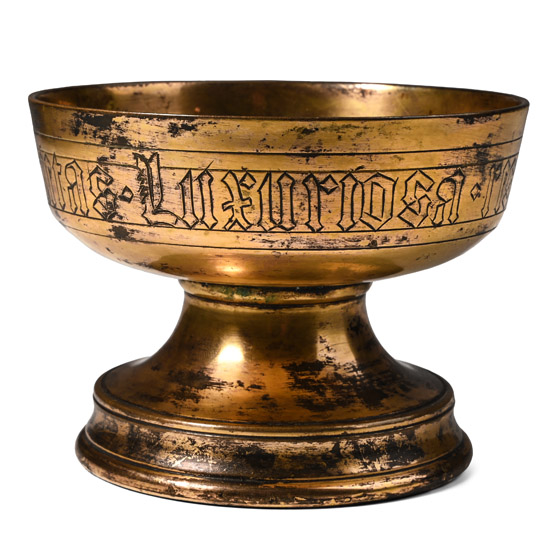
Post Medieval Gilt Bronze Chalice with Biblical Proverb in Latin
Continental Europe, circa 19th century A.D.Estimate: £800 - 1,000 (+bp*)
Opening Bid: £400
Squat in profile with stepped and carinated foot, deep shoulder to the bowl; engraved to the outer face in batada script between double horizontal rulings the legend 'Luxuriosa res vinum et tumultuosa ebrietas', a quotation from the biblical book of Proverbs, 20:1, translating to 'Wine is [a] luxurious [thing], and drunkenness is riotous'. 575 grams, 11.2 cm wide
Acquired in Paris, France, circa 2000. Personal collection of a Suffolk lady, UK.
The biblical sentence was retaken by Saint Paul, who, wanting to warn the believers against the power of wine, similarly instructed by saying: ‘Beware of drunken wine, where there is luxury’. This kind of gluttony was considered by the Fathers of the Church dangerous, in that, after it has deprived the drinker of all rational sense, it opens and reveals and releases from his chest every secret, every hidden thing: it was considered a prodigal throwaway of its own goods and those of others, deaf to rebukes, and a destroyer of every praiseworthy custom. -
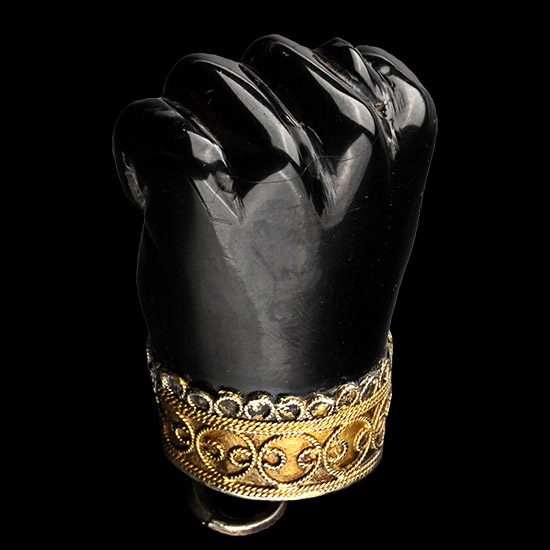
Silver-Gilt Mounted Jet 'Figa' Amulet
Spain, 17th century A.D.Sold for (Inc. bp): £715
Formed as a hand showing figa gesture, silver mount with applied twisted wires; attachment loop and ring to the top. 19.6 grams, 56 mm
Private collection, Europe. Acquired on the English art market.
Mano Fico, as protective amulets, have been used since antiquity. It was believed to protect from the evil eye and other dark and magical forces and to promote fertility. In ancient Rome, the fig sign, or mano fico, was made by the pater familias (father of the family) to ward off the evil spirits of the dead as a part of the Lemuria ritual. The ancient Greeks wore amulets of the gesture around the neck to protect from the evil eye, and also used the gesture in artwork. What they considered an overtly sexual gesture was expected to distract evil spirits from causing harm. The pendant would have been worn from a belt or from a chatelaine containing other protective talismans. This carving would have served as a token representing a person's pilgrimage to Santiago de Compostela, one of the very few places in which jet can be found and mined since at least the Middle Ages. -
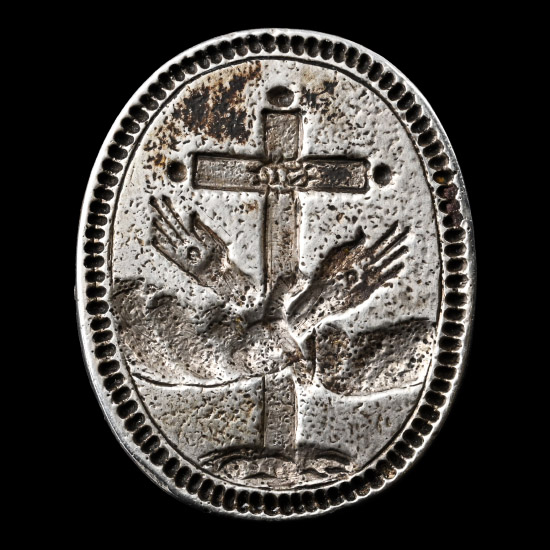
Post Medieval Silver Religious Seal with Boxwood Handle
17th-18th century A.D.Sold for (Inc. bp): £468
Comprising a balustered wooden handle and a silver stamp seal with a large cross behind two crossed hands with stigmata, the cross with an inscription, supplied with a museum-quality impression. 51.96 grams, 85 mm
Acquired on the European art market.
