
Loading, please wait...
LOT 0231
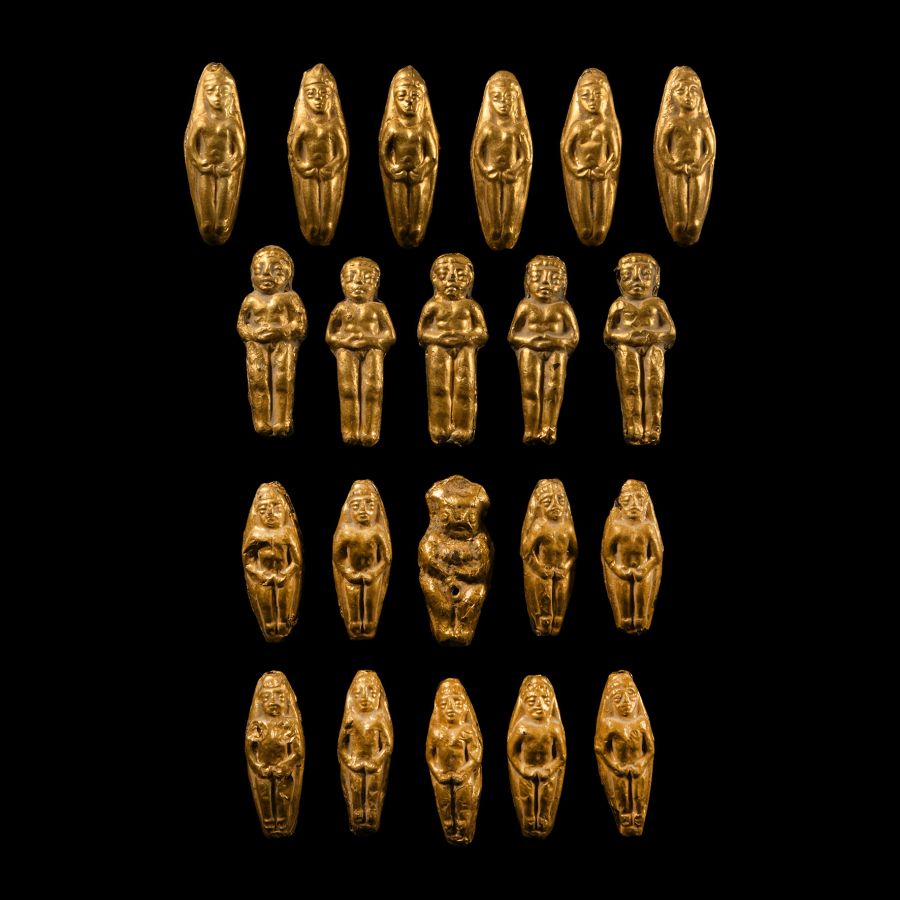
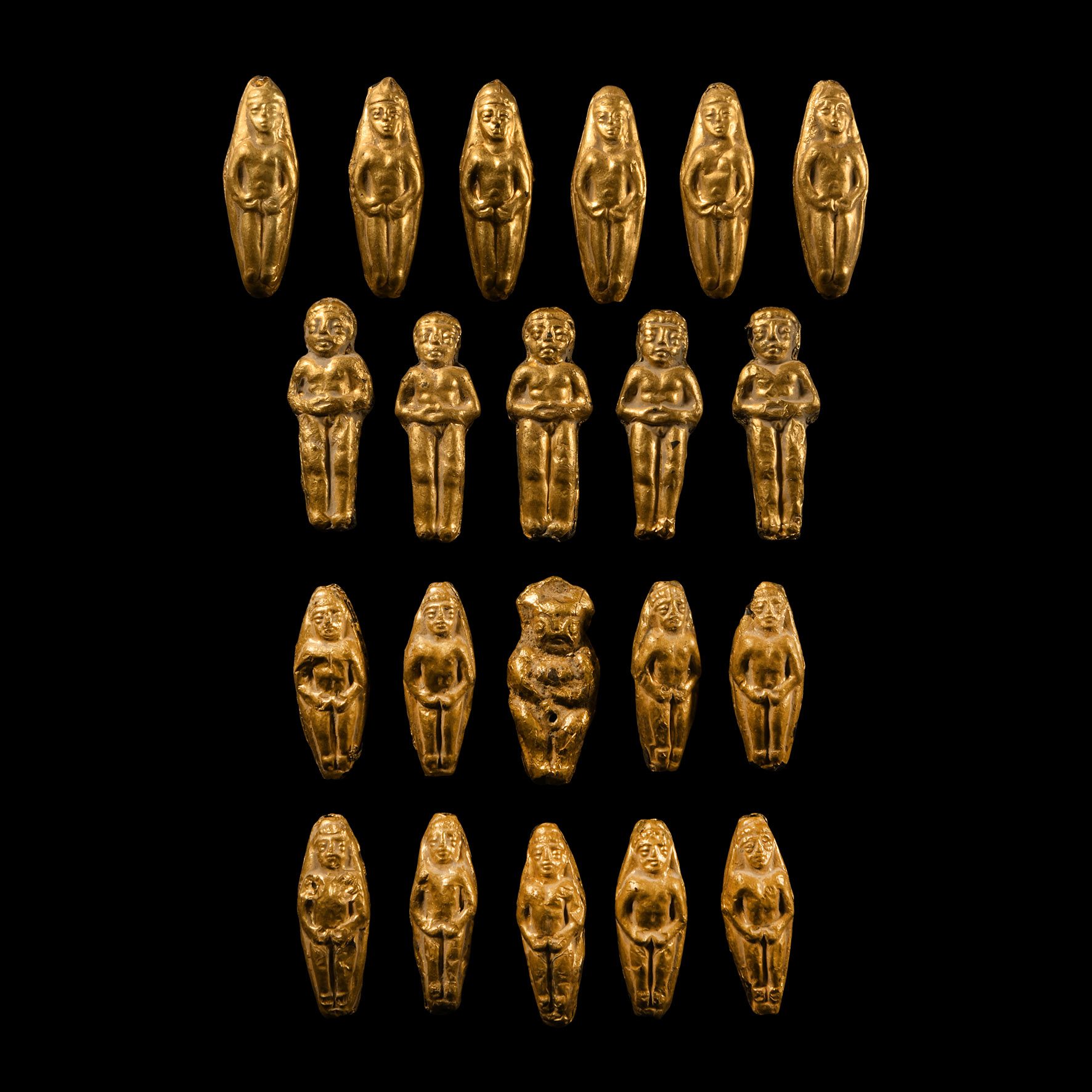
Gandharan Gold Clad Figural Buddha Bead Group
CIRCA 1ST CENTURY B.C.-2ND CENTURY A.D. OR LATER
1 3/8 - 1 3/4 in. (78.32 grams total, 34-43 mm).
The majority displaying standing figures in repoussé to both faces of a lozenge-shaped body; five formed as naked male figures with hands clasped in front of the waist; a single bead formed as a full-bodied figure wearing a headdress, one hand held over the pubic region, which is pierced; sheet-gold over bituminous cores; from a ritual headdress; most complete. [21]
ProvenanceAcquired 1970s onwards.
Private collection of Michael O'Hara, Cambridgeshire, UK.
Ex private collection of Benjamin Hyde-Smith, Hertfordshire, UK.
Cf. grave II of Tillya-Tepe, in Cambon, P., (ed.), Hidden Afghanistan, Amsterdam, 2007, no.75 p.177, for technique used for the two gold musician figures.
FootnotesAlthough the Buddha himself never visited Gandhara, with the passage of time the area became a veritable holy land for his followers. Mahayanism – a liberal and progressive school of Buddhism – flourished in Gandhara and laid emphasis among other things, on the transformation of the Buddha into a great mythological, almost eternal, god, and on the deification of future Buddhas as holding providences. In the visual arts, Buddha was permitted for the first time to be represented in human form.
CONDITIONTimeLine Auctions follows a vetting process to ensure the authenticity and legality of all items, reinforcing our commitment to integrity and responsible trading. Each antiquity, antique, and coin lot undergoes thorough examination by a vetting committee of at least ten external specialists, professional trade association members, scientists, and archaeologists: Our Vetting Process
AUCTIONS:
TimeLine is a leading auction house specialising in antiquities, ancient art, collectables, natural history, coins, medals, and books. Our auctions offer museums, collectors, historians, and enthusiasts the opportunity to acquire unique and historically significant pieces.
-
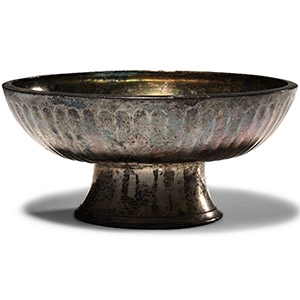
Sassanian Silver Pedestal Cup
5th-7th century A.D.Sold for (Inc. bp): £845
Shallow hollow-formed bowl with flat rim, fluted exterior, trumpet-shaped foot. 340 grams, 15 cm wide
H. Soudavar, Paris, France. Acquired Christie's circa 1996. Ex central London gallery. -
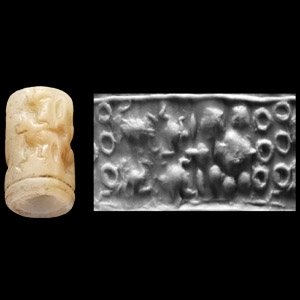
Mesopotamian Stone Cylinder Seal
Circa 2nd-1st millennium B.C.Estimate: £400 - 600 (+bp*)
Opening Bid: £200
Engraved with frieze of enigmatic motifs; drilled vertically for suspension. 6.76 grams, 22 mm
From an important London, UK, collection, 1970-1990. Examined by Professor Wilfrid George Lambert FBA (1926-2011), historian, archaeologist, and specialist in Assyriology and Near Eastern archaeology, in the late 1980s and early 1990s. -
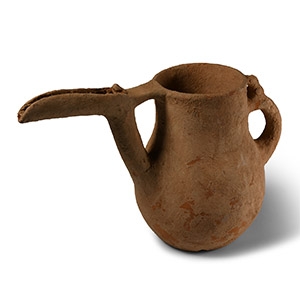
Luristan Bird-Spouted Terracotta Vessel with Animal Handle
13th-7th century B.C.Sold for (Inc. bp): £156
Piriform-bodied with a broad neck, slender spout with zoomorphic U-section terminal, double looped handle also zoomorphic in form, featuring applied pellets. 845 grams, 26 cm wide
Ex Rabi gallery, 1990s. Private collection of Iranian art.
