
LOT 3229
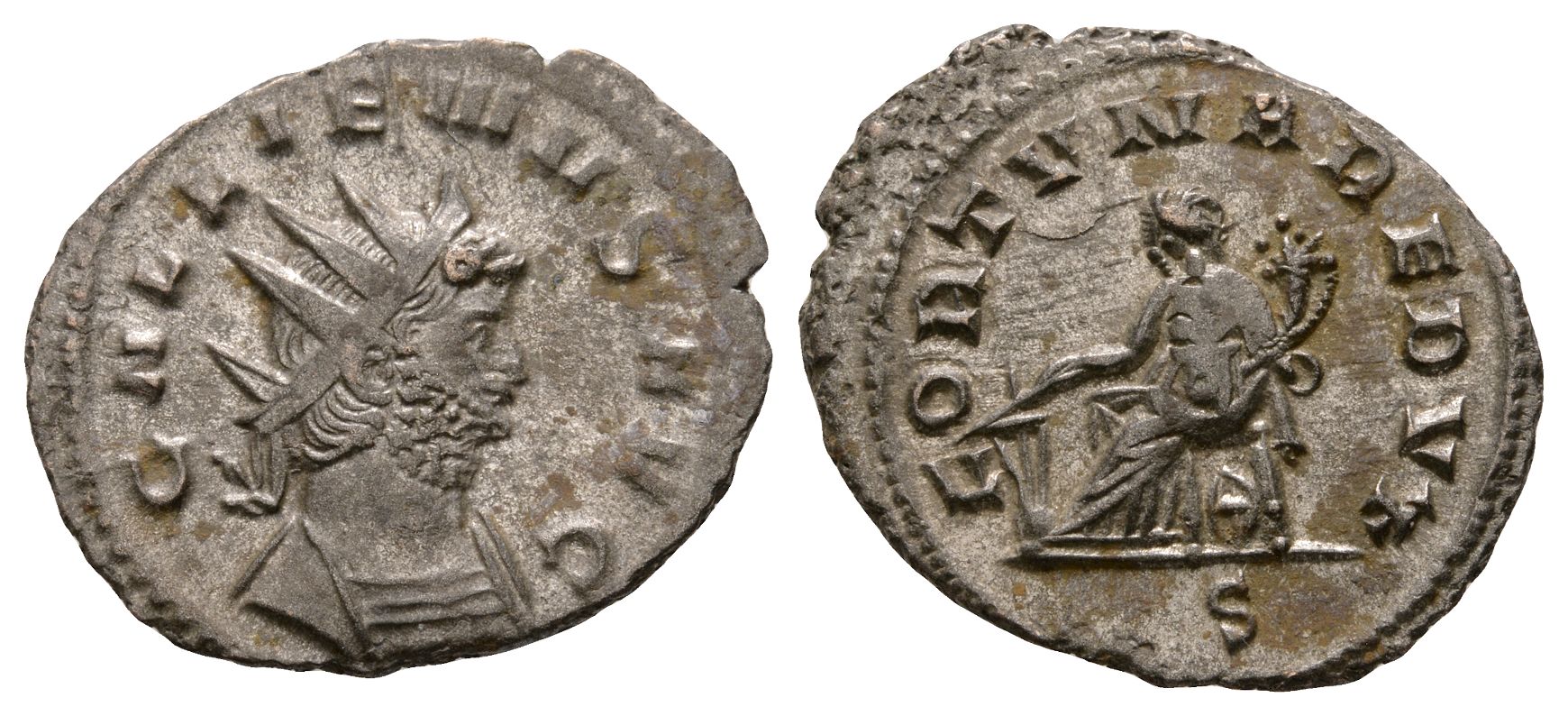
Gallienus BI Antoninianus. AD 253-268.
Rome mint; struck AD 263-265. 2nd officina. GALLIENVS AVG, radiate and cuirassed bust to right / FORTVNA REDVX, Fortuna seated to left, holding rudder with right hand and cornucopia with left, wheel beneath seat; S in exergue. RIC V.1 194a (sole reign); MIR 546g; RSC 279a. Extremely Fine. Full silvering.(3.31gr, 23mm, 11h.).
ProvenanceFrom a London, UK, collection, 1990s.
TimeLine Auctions follows a vetting process to ensure the authenticity and legality of all items, reinforcing our commitment to integrity and responsible trading. Each antiquity, antique, and coin lot undergoes thorough examination by a vetting committee of at least ten external specialists, professional trade association members, scientists, and archaeologists: Our Vetting Process
AUCTIONS:
TimeLine is a leading auction house specialising in antiquities, ancient art, collectables, natural history, coins, medals, and books. Our auctions offer museums, collectors, historians, and enthusiasts the opportunity to acquire unique and historically significant pieces.
LOT 3229
Gallienus BI Antoninianus.
Estimate £20 - 30€23 - 35 (for guidance only)$27 - 41 (for guidance only)
-
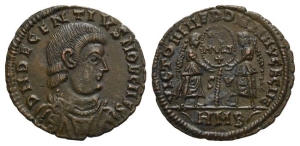
Decentius, as Caesar AE Centenionalis AD 350/1-353.
Sold for (Inc. bp): £53
Contemporary imitation of Lugdunum/Ambianum mint. D N DECENTIVS NOB CIIES, bare-headed, draped and cuirassed bust to right / VICTORIIIE DD NN HVG E CIIE, two Victories standing facing each other, between them holding a shield resting on a short column, inscribed VOT V MVLT + in four lines; S V across lower central field, (palm)HMB(palm) in exergue. Bastien pl. 17, 32/3; Cohen-; RIC -; LRBC -. 2.80gr, 21mm, 6h.
Near Extremely Fine. Very rare.
From the collection of a London antiquarian, formed since the 1980s.
This interesting ancient imitative piece combines both the mintmark of the mint at Ambianum, and the reverse field letters S-V which are only found on issues of Lugdunum. -
.jpg)
Constantine I BI Nummus. AD 307/310-337.
Sold for (Inc. bp): £33
Siscia mint; struck AD 320-321. 2nd officina. CONSTANTINVS AVG, laureate head to right / D N CONSTANTINI MAX AVG, wreath enclosing VOT • XX in two lines; BSIS(star) in exergue. RIC VII 159. 3.53gr, 19mm, 1h.
Extremely Fine. Much original silvering remaining.
From a private, UK, collection. -
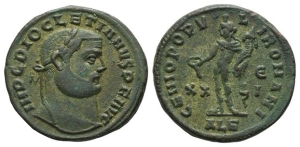
Diocletian BI Nummus. AD 284-305.
Sold for (Inc. bp): £43
Alexandria mint; struck AD 301. 5th officina. IMP C DIOCLETIANVS P F AVG, laureate head to right / GENIO POPVLI ROMANI, Genius, wearing modius on head, standing to left, holding cornucopia and patera, from which liquid flows; XX in left field, Є over I in right field, ALE in exergue. RIC VI 32a. 10.29gr, 26mm, 5h.
Very Fine.
From the private collection of Kenneth Machin (1936-2020).
