
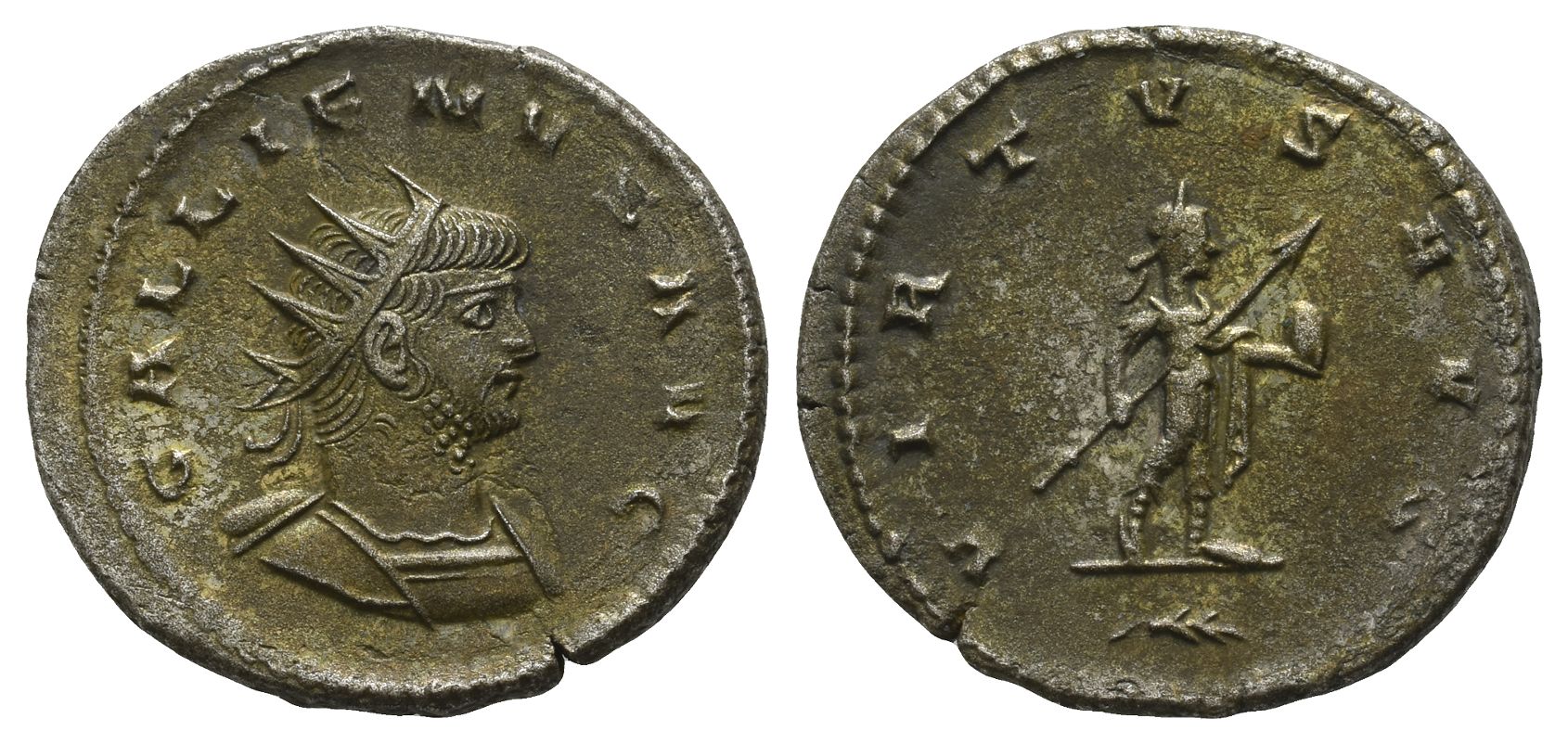
LOT 2924
Gallienus BI Antoninianus. AD 253-268.
Antioch mint; struck AD 264-265. GALLIENVS AVG, radiate and cuirassed bust to right / VIRTVS AVG, emperor standing to right, holding globe and transverse spear; palm frond in exergue. RIC V 670; MIR 36, 1636d; RSC 1258. Extremely Fine.(3.84gr, 22mm, 12h.).
ProvenanceProperty of a Cambridgeshire, UK, gentleman.
TimeLine Auctions follows a vetting process to ensure the authenticity and legality of all items, reinforcing our commitment to integrity and responsible trading. Each antiquity, antique, and coin lot undergoes thorough examination by a vetting committee of at least ten external specialists, professional trade association members, scientists, and archaeologists: Our Vetting Process
AUCTIONS:
TimeLine is a leading auction house specialising in antiquities, ancient art, collectables, natural history, coins, medals, and books. Our auctions offer museums, collectors, historians, and enthusiasts the opportunity to acquire unique and historically significant pieces.
-
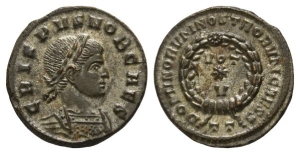
Crispus, as Caesar BI Nummus. AD 316-326.
Sold for (Inc. bp): £26
Ticinum mint; struck AD 320. 3rd officina. CRISPVS NOB CAES, laureate and cuirassed bust to right / DOMINORVM NOSTRORVM CAESS, VOT ✷ V in two lines within wreath; star; T T in exergue. RIC VII 135 var. (unlisted officina). 2.74gr, 18mm, 12h.
Extremely Fine. Original silvering almost fully intact. Extremely rare; unpublished officina with only three other examples on CoinArchives.
From a private, UK, collection. -
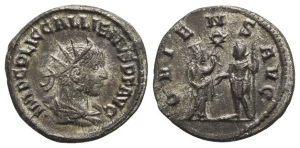
Gallienus BI Antoninianus. AD 253-268.
Sold for (Inc. bp): £26
Samosata mint; struck AD 260. IMP C P LIC GALLIENVS P F AVG, radiate, draped and cuirassed bust to right / ORIENS AVG, turreted female figure standing to right, presenting wreath to Emperor standing to left, resting on spear; wreath in upper central field. RIC V 445; MIR 36, 1698m; RSC 705a. 4.31gr, 22mm, 7h.
Good Very Fine.
Property of a Cambridgeshire, UK, gentleman. -
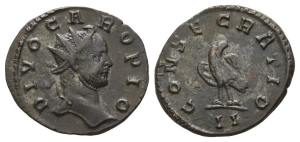
Divus Carus BI Antoninianus. Died AD 283.
Sold for (Inc. bp): £65
Lugdunum mint, 10th emission of Carinus and Numerian, AD 284. 2nd officina. Consecration issue. DIVO CARO PIO, radiate head to right / CONSECRATIO, eagle standing to left, head to right; II in exergue. RIC V.2 29; Lyon 623. 3.43gr, 22mm, 7h.
Very Fine.
Property of a North London, UK, collector.
