
LOT 2927
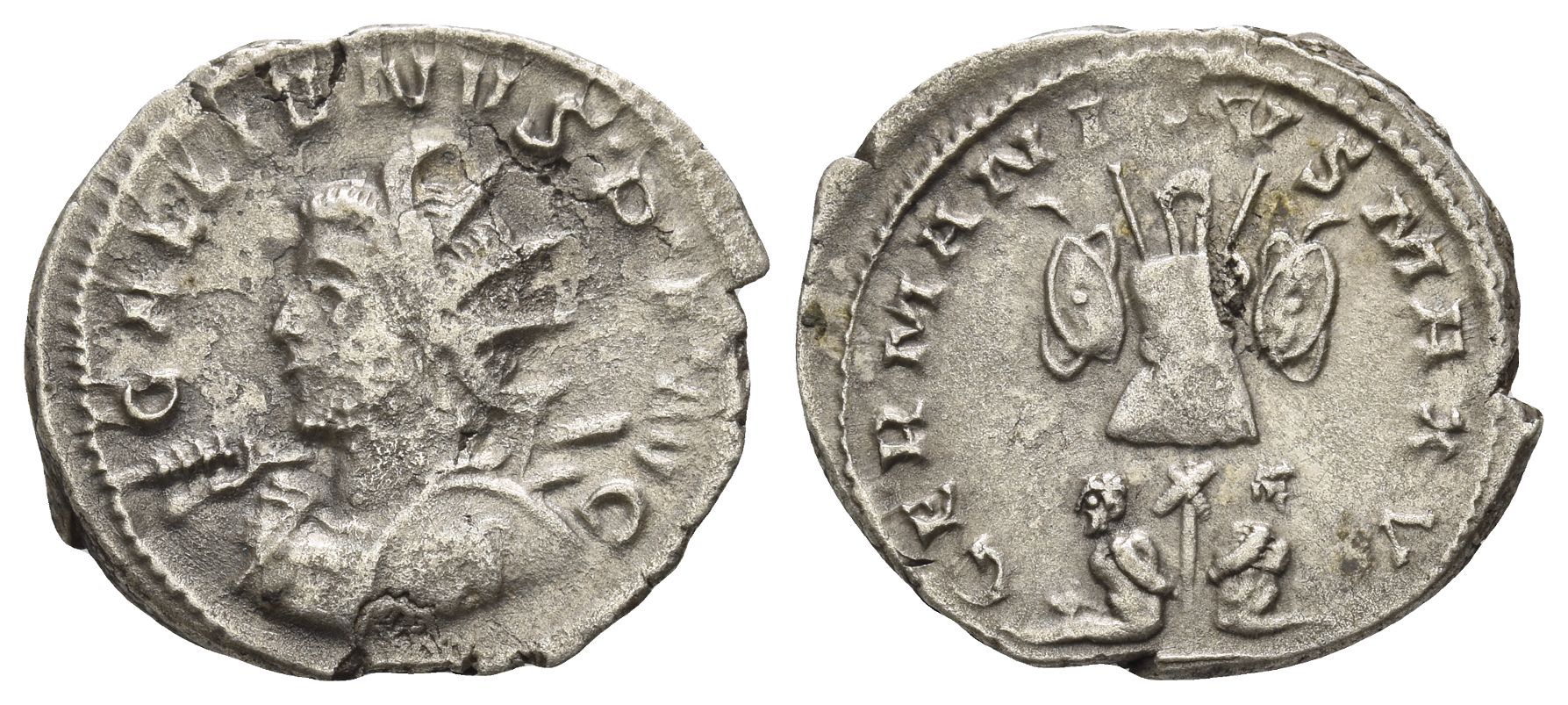
Gallienus AR Antoninianus. AD 253-268.
Colonia Agrippinensis mint; struck AD 258-259. GALLIENVS P F AVG, radiate and cuirassed bust to left, holding spear over shoulder and shield decorated with gorgon / GERMANICVS MAX V, trophy, captive bound to left and right. RIC V.1 18 (Joint Reign); MIR 872m; RSC 310. Very Fine.(3.58gr, 23mm, 6h.).
ProvenanceFrom the collection of a London antiquarian, formed since the 1980s.
TimeLine Auctions follows a vetting process to ensure the authenticity and legality of all items, reinforcing our commitment to integrity and responsible trading. Each antiquity, antique, and coin lot undergoes thorough examination by a vetting committee of at least ten external specialists, professional trade association members, scientists, and archaeologists: Our Vetting Process
AUCTIONS:
TimeLine is a leading auction house specialising in antiquities, ancient art, collectables, natural history, coins, medals, and books. Our auctions offer museums, collectors, historians, and enthusiasts the opportunity to acquire unique and historically significant pieces.
-
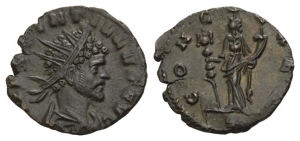
Quintillus BI Antoninianus. AD 270.
Sold for (Inc. bp): £59
Mediolanum mint; struck circa end August - November. 3rd officina. IMP QVINTILLVS AVG, radiate, draped and cuirassed bust to right / CONCO EXER, Concordia standing facing, head to left, holding standard and cornucopia; T in exergue. RIC V Online 1121; RIC V 45; Toffanin 338; Huvelin -. 2.07gr, 18mm, 6h.
Good Very Fine. Extremely rare.
Property of a North London, UK, gentleman. -
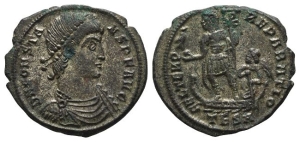
Constans BI Centenionalis. AD 337-350.
Sold for (Inc. bp): £20
Thessalonica mint; struck AD 348-350. 1st officina. D N CONSTA-NS P F AVG, pearl-diademed, draped and cuirassed bust to right / FEL TEMP REPARATIO, Constans standing to left on galley holding phoenix on globe and labarum with Christogram; at stern sits Victory, steering the ship; TESA below. RIC VIII 109. 4.60gr, 25mm, 12h.
Near Extremely Fine. Original silvering almost fully intact.
From the collection of a London antiquarian, formed since the 1980s. -
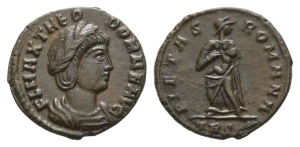
Theodora AE 14mm. Died before AD 337.
Sold for (Inc. bp): £98
Treveri mint; struck circa AD 337-340. 2nd officina. FL MAX THEODORAE AVG, mantled bust to right / PIETAS ROMANA, Pietas standing facing, head to right, carrying infant; TRS(feather) in exergue. RIC VIII 91. 1.60gr, 14mm, 12h.
Extremely Fine.
From the collection of a London antiquarian, formed since the 1980s.
