
Loading, please wait...
LOT 0336
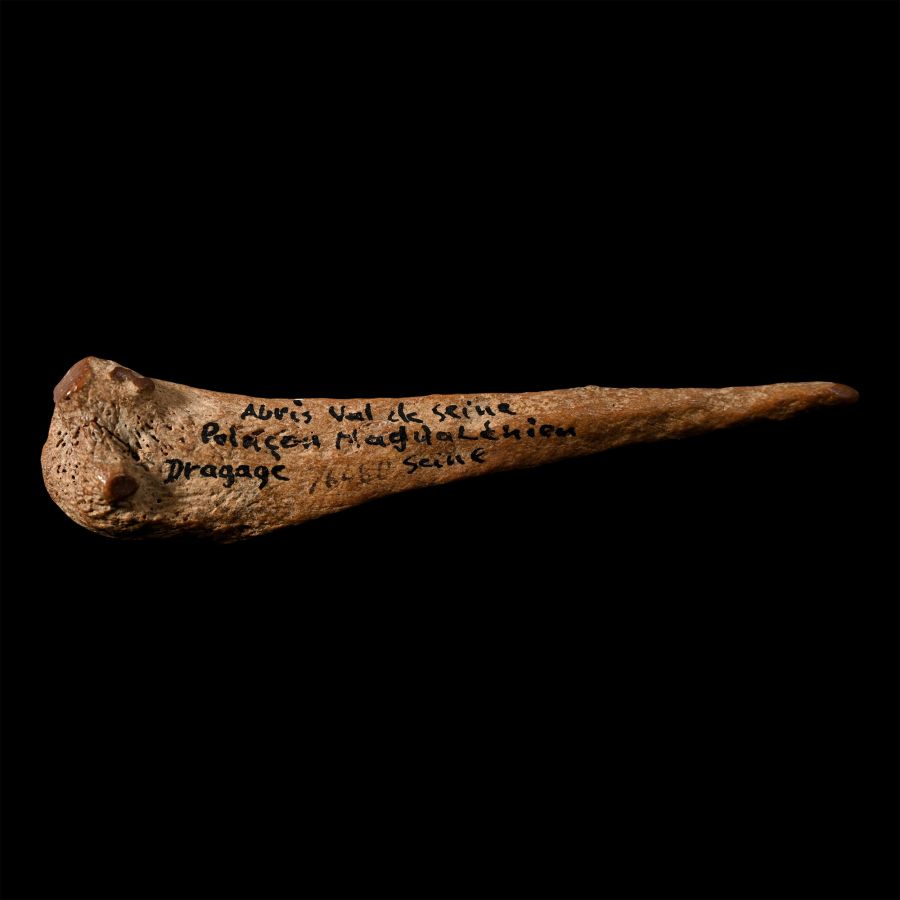
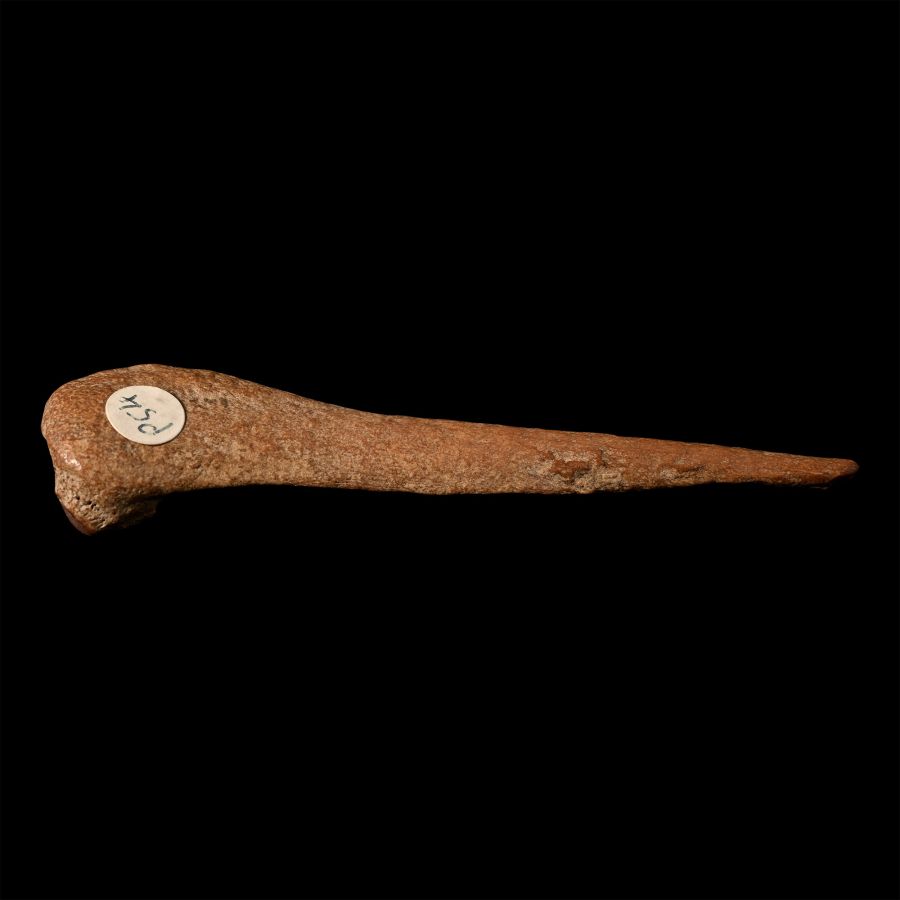
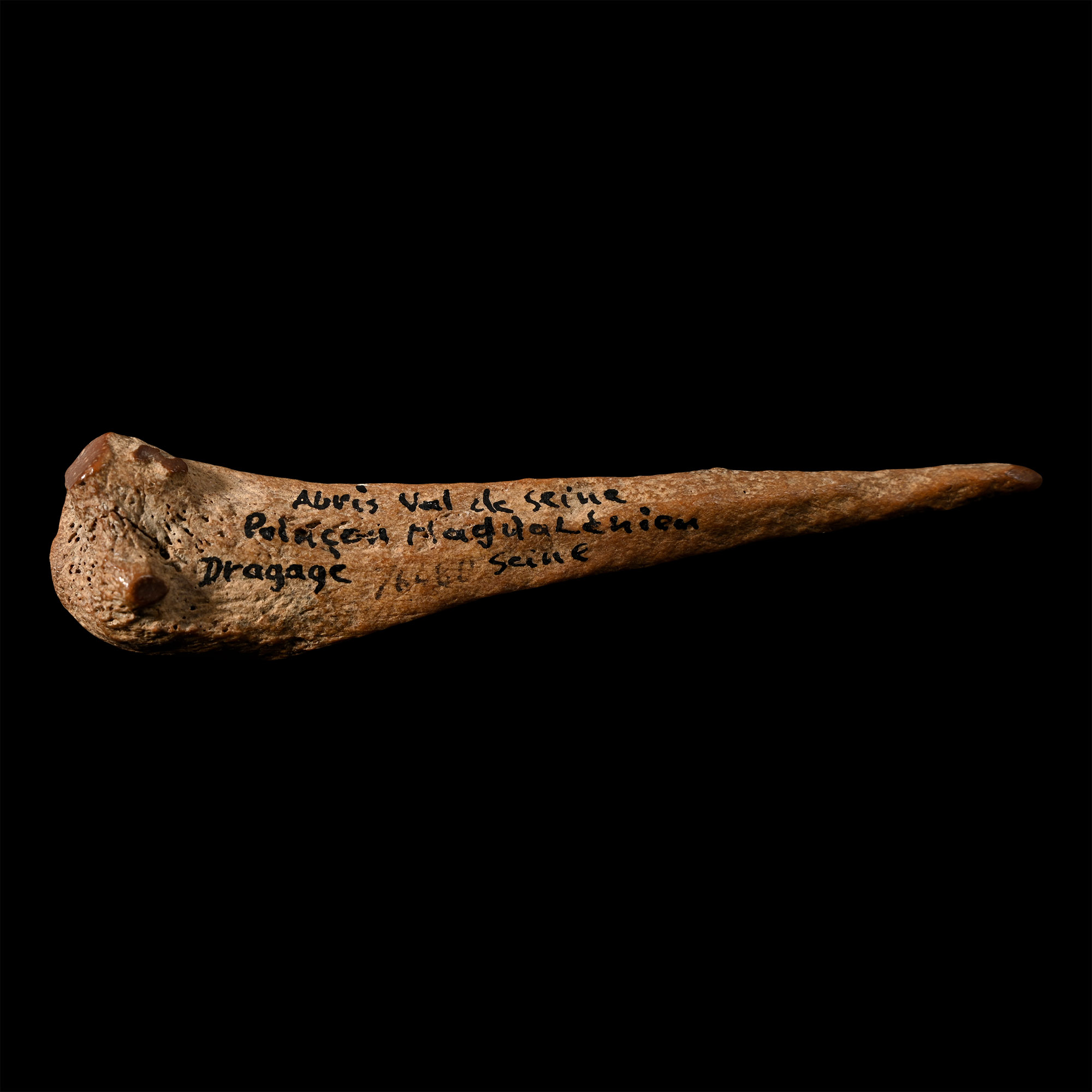
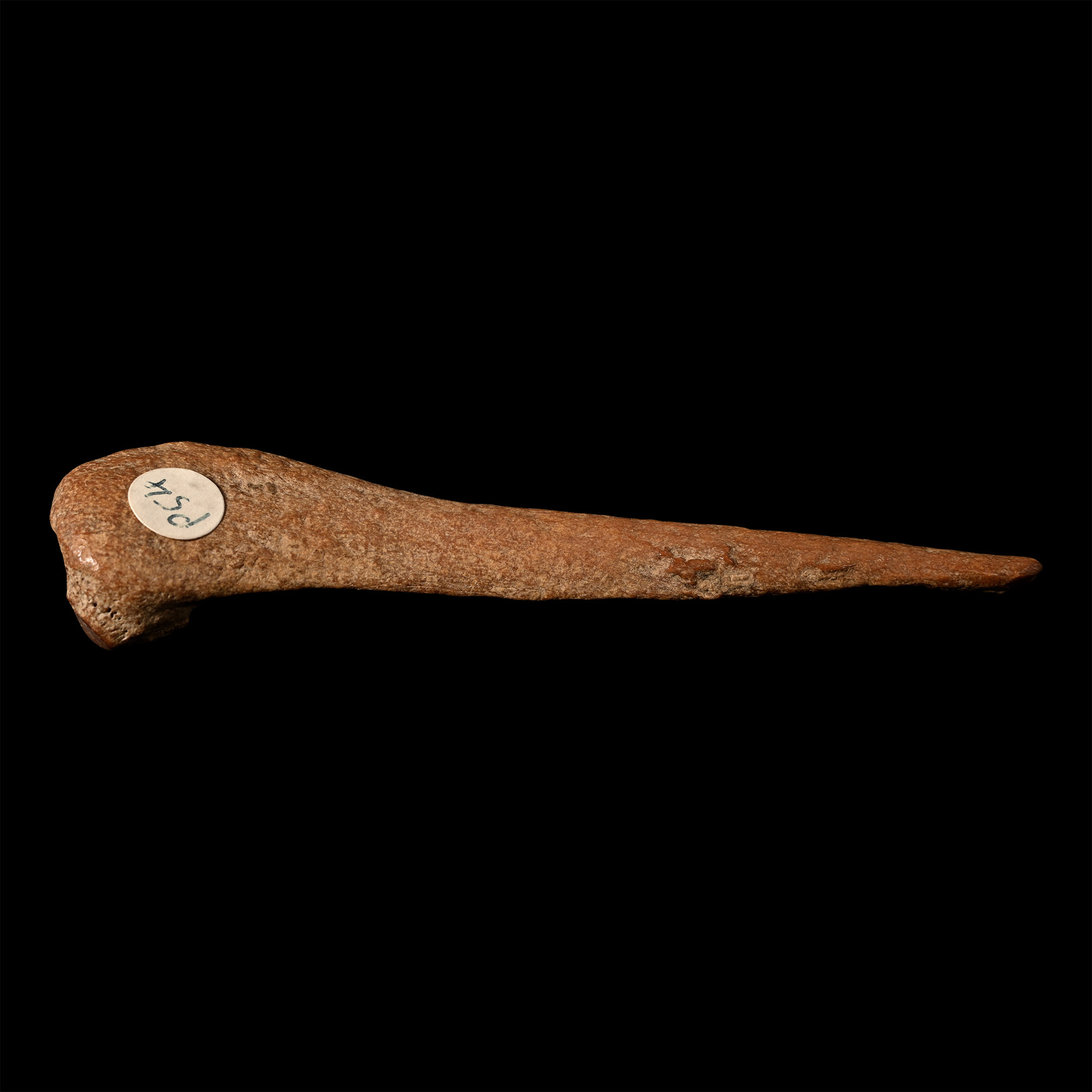
French Stone Age Magdalenian Bone Awl
MAGDALENIAN PERIOD, CIRCA 21,000-13,000 B.P.
3 3/4 in. (9.05 grams, 94.4 mm).
Well-preserved bone awl from ‘’Abris Val De Seine’’.
ProvenanceFrom an auction with Art Remy Le Fur.
Acquired on the European art market in the 2020s.
Accompanied by a copy of French export licence no.257541.
The Magdalenian is a technocomplex of the Late Upper Palaeolithic. It dates from around 21,000 to 13,000 years BP. It is named after the type site of Abri de la Madeleine, a rock shelter located in the Vézère valley of Tursac in Dordogne, France.
CONDITIONTimeLine Auctions follows a vetting process to ensure the authenticity and legality of all items, reinforcing our commitment to integrity and responsible trading. Each antiquity, antique, and coin lot undergoes thorough examination by a vetting committee of at least ten external specialists, professional trade association members, scientists, and archaeologists: Our Vetting Process
AUCTIONS:
TimeLine is a leading auction house specialising in antiquities, ancient art, collectables, natural history, coins, medals, and books. Our auctions offer museums, collectors, historians, and enthusiasts the opportunity to acquire unique and historically significant pieces.
-
.jpg)
Acheulean Stone Age Hand Axe
Lower Palaeolithic, circa 700,000-300,000 B.P.Sold for (Inc. bp): £143
Ovate in profile, broad butt with some cortex. 550 grams, 15.1 cm
Montesson, Île-de-France, May 1987. Collection of Jean-Claude Debenne (1936-2020), formed between the 1950s and 1990s. Accompanied by a French Ministry of Culture export licence no.CBC 242815. -
.jpg)
Large Stone Age Acheulean Knapped Flint Handaxe with Attractive Orange Patina
Late Lower Palaeolithic Period, circa 300,000-200,000 В.P.Sold for (Inc. bp): £208
Cordate in plan with rounded edge; marked at the base 'St. Meme Charente B. Lanceols' Achuleen Superieur'. 629 grams, 14.8 cm
Found St Même, Charente, France, with old inked label 'St Même, Charente, B.Lanceols' (Biface Lanceolate), Acheuleen Supérieur.' Acquired from the UK estate sale of famous musician, Victor Brox (1940-1923); his prehistoric artefacts collection created during the 1980s and 1990s. -
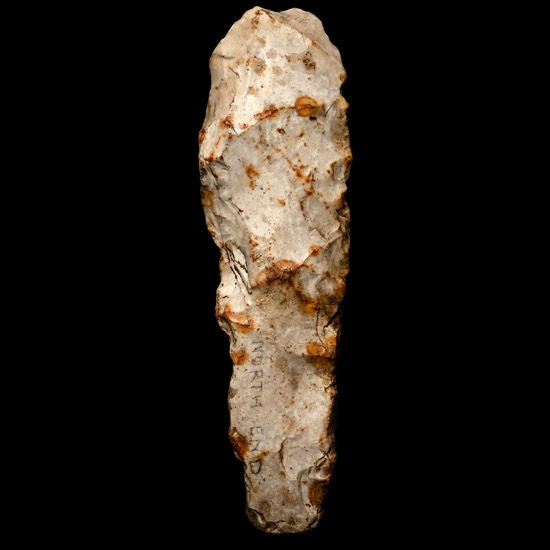
British Stone Age Large Knapped Flint Strike a Light from Farnham
Neolithic Period, circa 6000 B.P.Sold for (Inc. bp): £442
Triangular in section with rounded tip; pencilled findspot 'North End'. 113 grams, 11.4 cm
Found in 1901. From the collection of Captain Streatfield who helped to fund the archaeology excavations at Farnham, Kent. After Captain Streatfield passed away in the 1940s, his collection was sold at auction to a gentleman in Kent. The collection was then sold again in the 2020’s via a UK auction house.
Used as a tool to help create sparks to produce fire.
