
Loading, please wait...
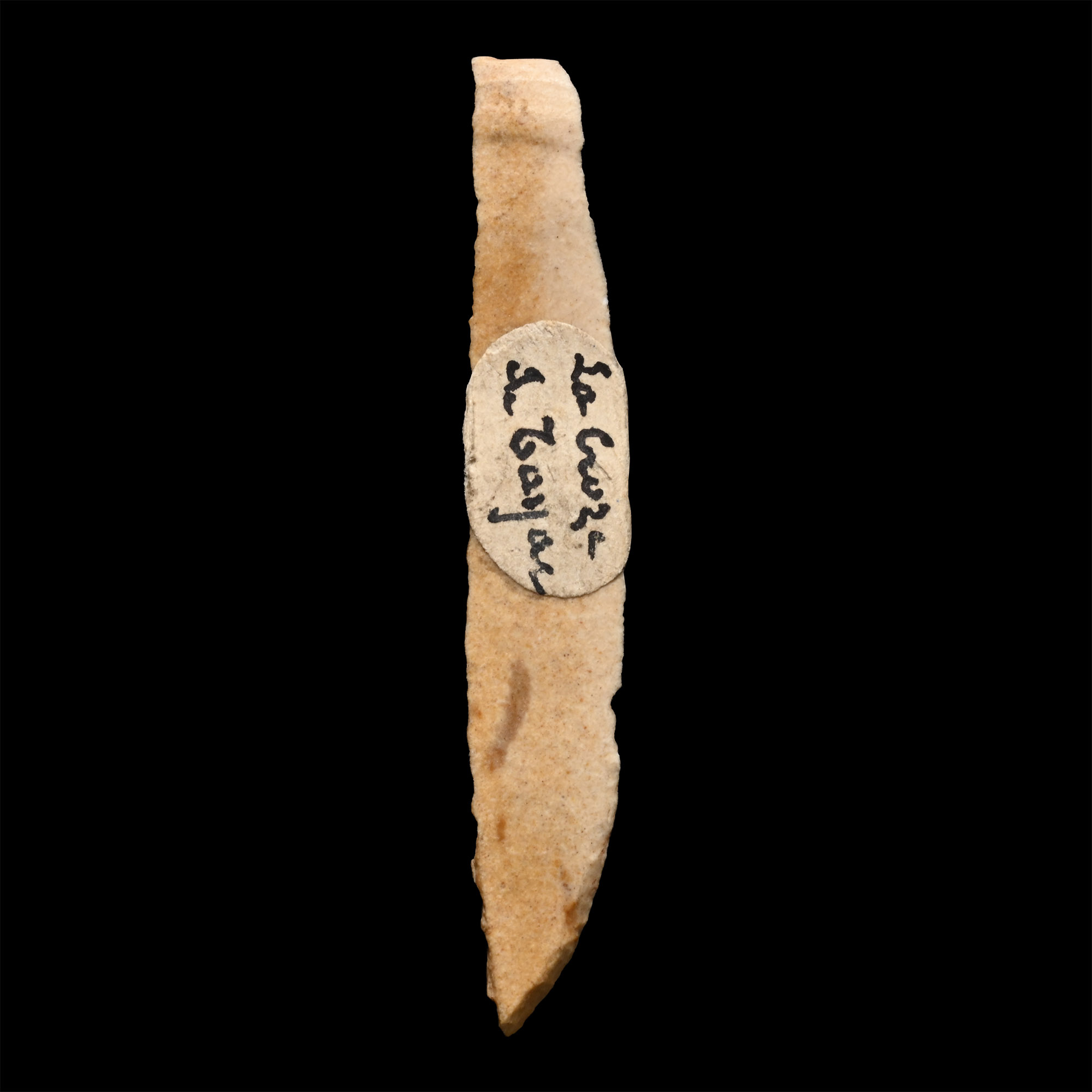
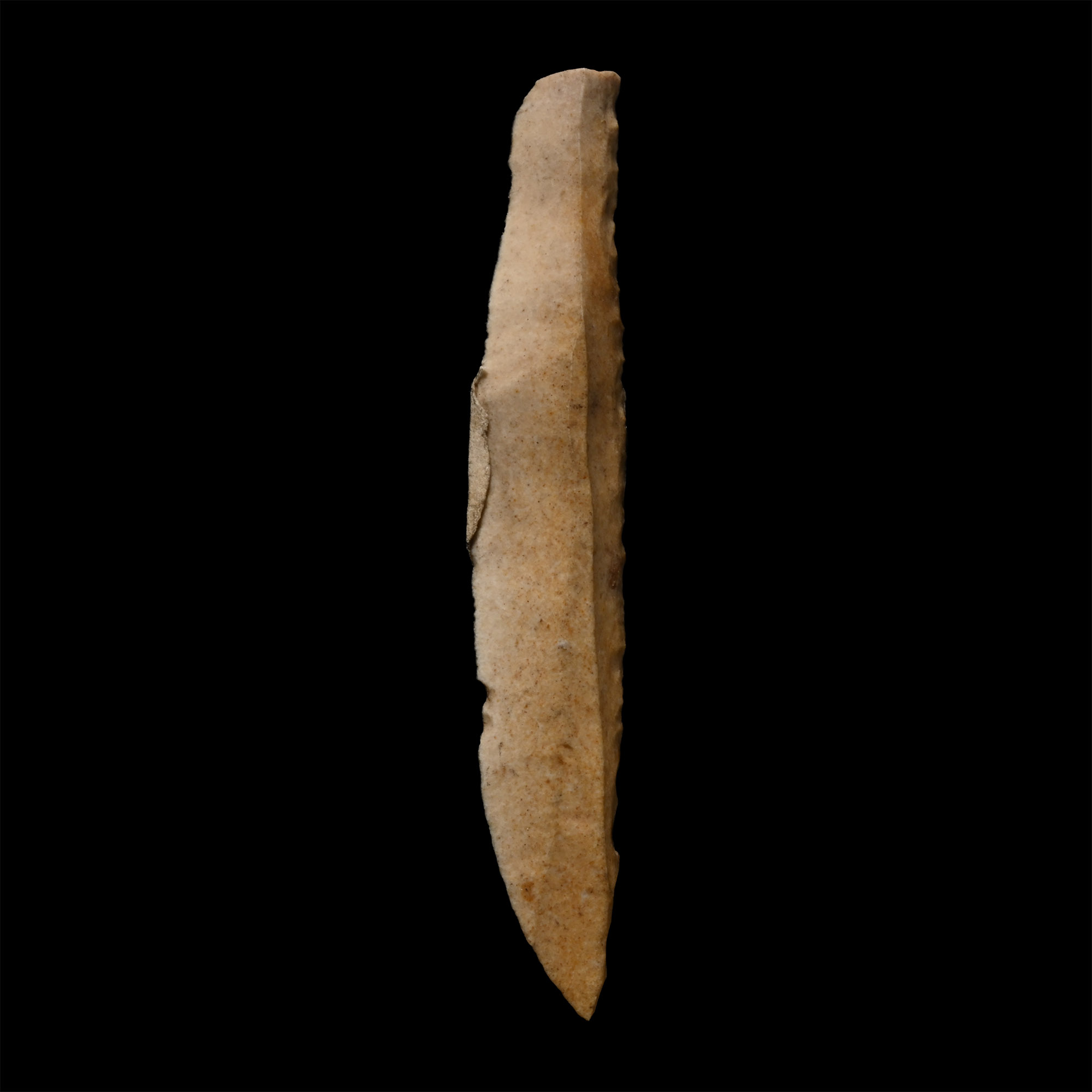
LOT 1962
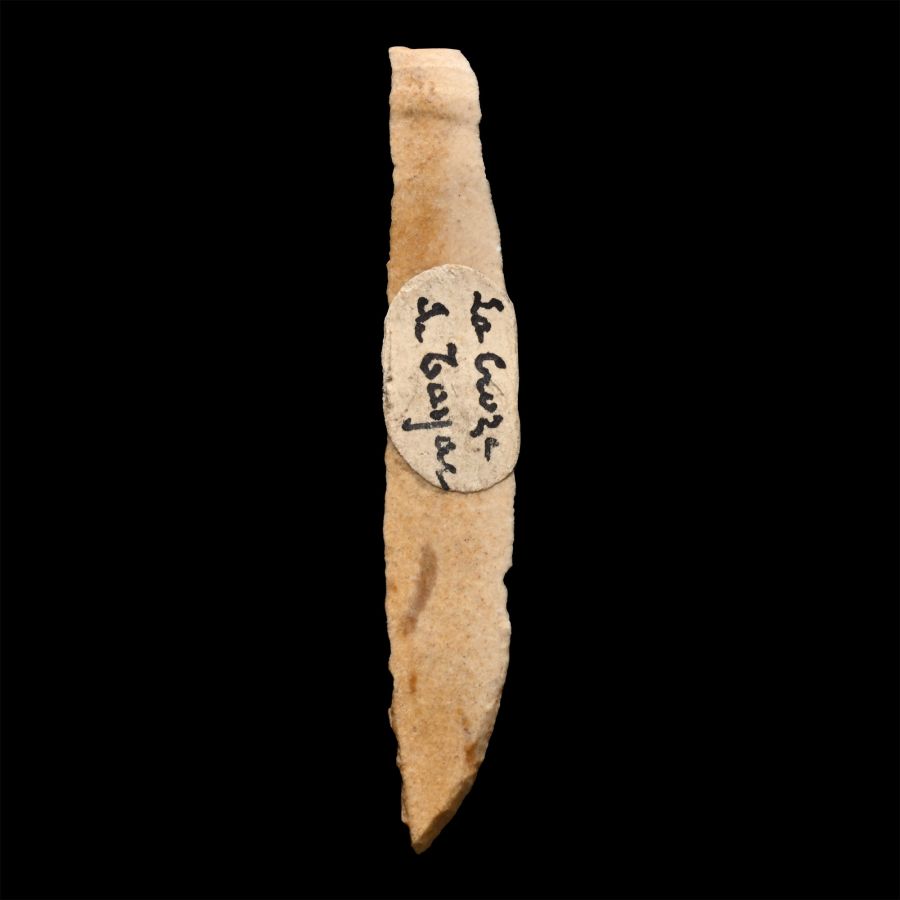
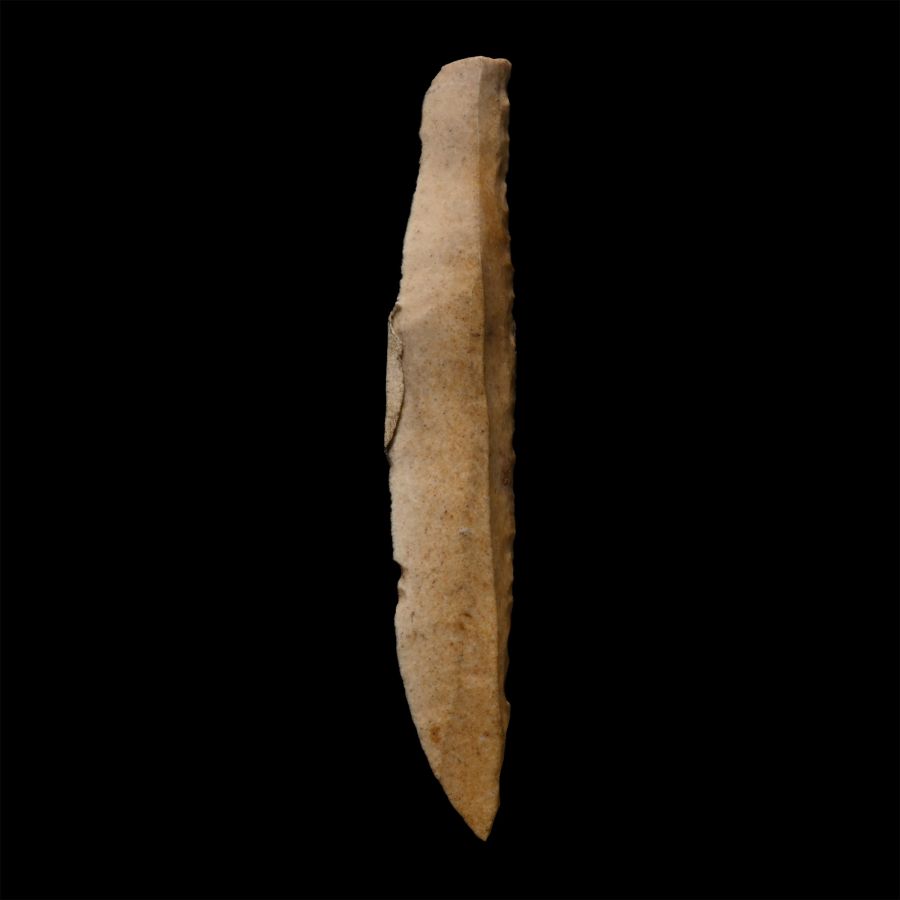
French Stone Age Knapped Flint Point
GRAVETTIAN PERIOD, CIRCA 33,000-21,000 B.P.
1 3/4 in. (1.00 grams, 46.69 mm).
Triangular in section with old collector's label 'La Groze du Tayac'. [No Reserve]
ProvenanceFrom Le Groze - Du Tay.
Acquired in the 1970s-1990s.
From the collection of the famous UK musician and amateur archaeologist, Victor Brox (1941-2023).
Acquired on the UK art market at auction after being sold by Mr Brox’s family.
From the private collection of an East Anglian, UK, specialist collector.
The Gravettian point (or Gravette point) is a small, narrow stone tool with a straight, blunted end, characteristic of the Gravettian culture. Serving as a key diagnostic artefact, these points were primarily used as weapon tips or armatures for hunting large Ice Age game
CONDITIONTimeLine Auctions follows a vetting process to ensure the authenticity and legality of all items, reinforcing our commitment to integrity and responsible trading. Each antiquity, antique, and coin lot undergoes thorough examination by a vetting committee of at least ten external specialists, professional trade association members, scientists, and archaeologists: Our Vetting Process
AUCTIONS:
TimeLine is a leading auction house specialising in antiquities, ancient art, collectables, natural history, coins, medals, and books. Our auctions offer museums, collectors, historians, and enthusiasts the opportunity to acquire unique and historically significant pieces.
-
.jpg)
French Stone Age Knapped Cream Flint Adze
Mesolithic Period, circa 12,000-8,000 B.P.Sold for (Inc. bp): £85
Tongue-shaped in plan with a rounded butt. 227 grams, 12.7 cm
Acquired in the 1970s-1990s. From the collection of the famous UK musician and amateur archaeologist, Victor Brox (1941-2023). Acquired on the UK art market at auction after being sold by Mr Brox’s family. From the private collection of an East Anglian, UK, specialist collector. -
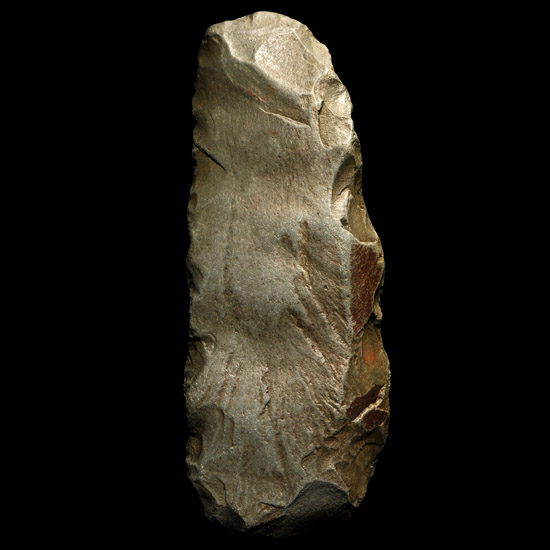
British Stone Age Knapped Langdale Tuff Axe Head
Neolithic Period, circa 6000 B.P.Sold for (Inc. bp): £65
Plano-convex in section with a narrow butt and a broad cutting edge. 345 grams, 15.6 cm
From the collection of Richard Widdowson. Richard owned an antiquity shop in Southern England and amassed a great and varied Stone Age collection. Purchased from Mr Widdowson in the 1980s and then more recently from a collector in the UK. -
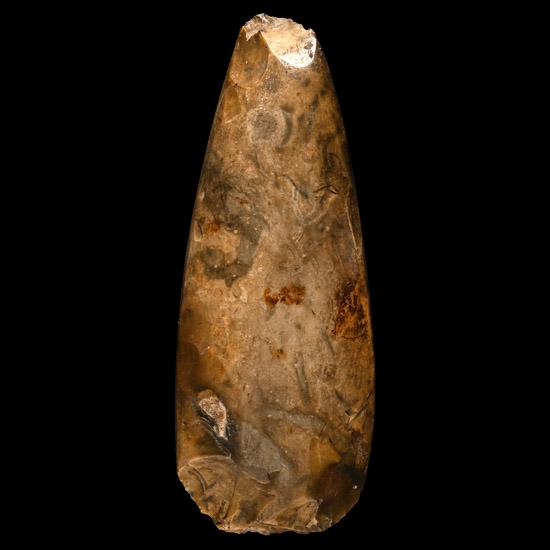
Stone Age Polished Flint Axe Head
Neolithic Period, circa 6000 B.P.Sold for (Inc. bp): £65
Leaf-shaped with a rounded butt and curved cutting edge. 383 grams, 16.3 cm
Acquired in the 1970s-1990s. From the collection of the famous UK musician and amateur archaeologist, Victor Brox (1941-2023). Acquired on the UK art market at auction after being sold by Mr Brox’s family. From the private collection of an East Anglian, UK, specialist collector.
