
Loading, please wait...
LOT 1981
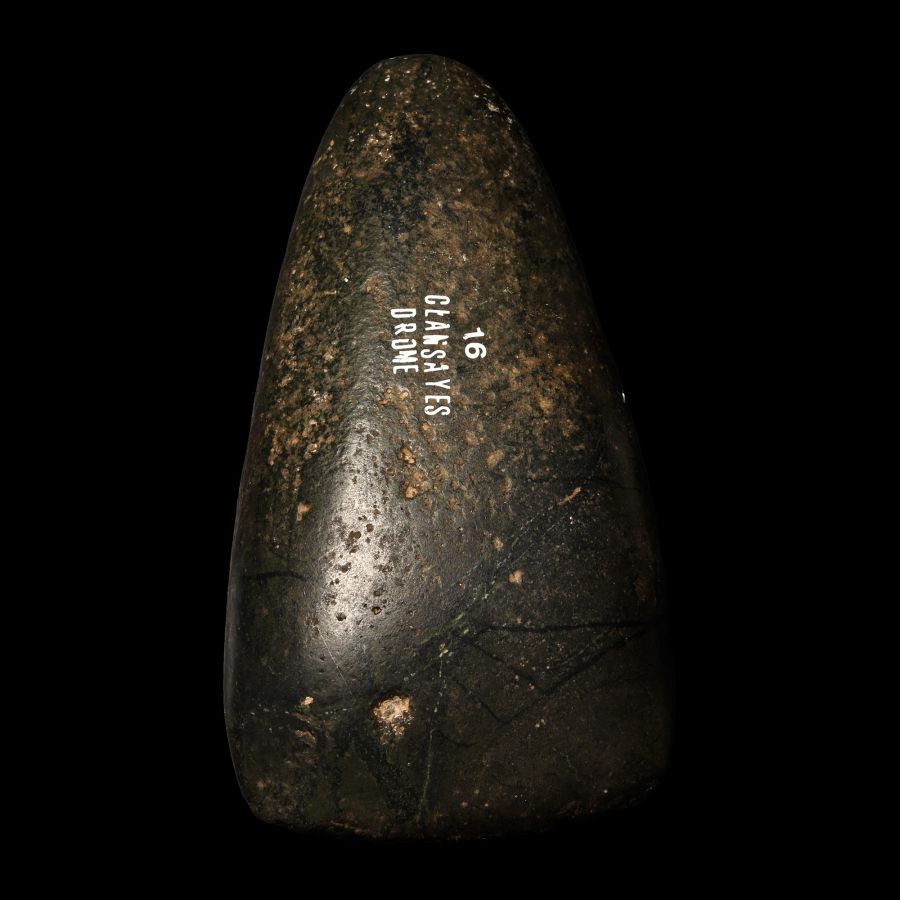
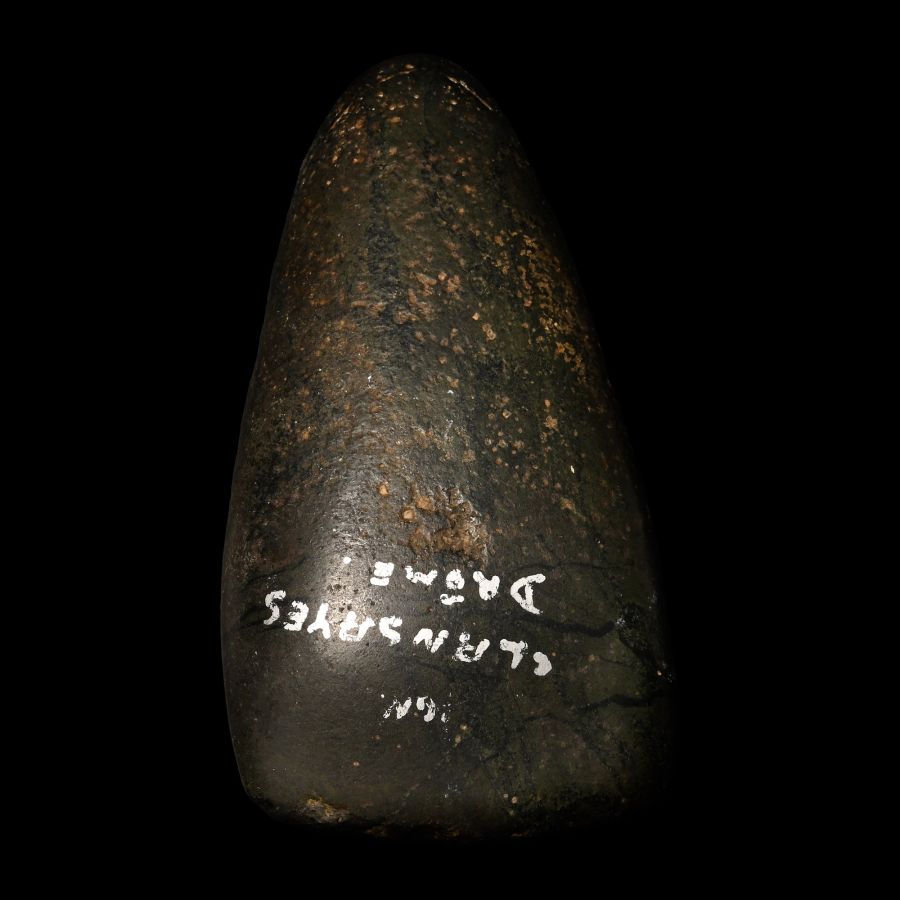
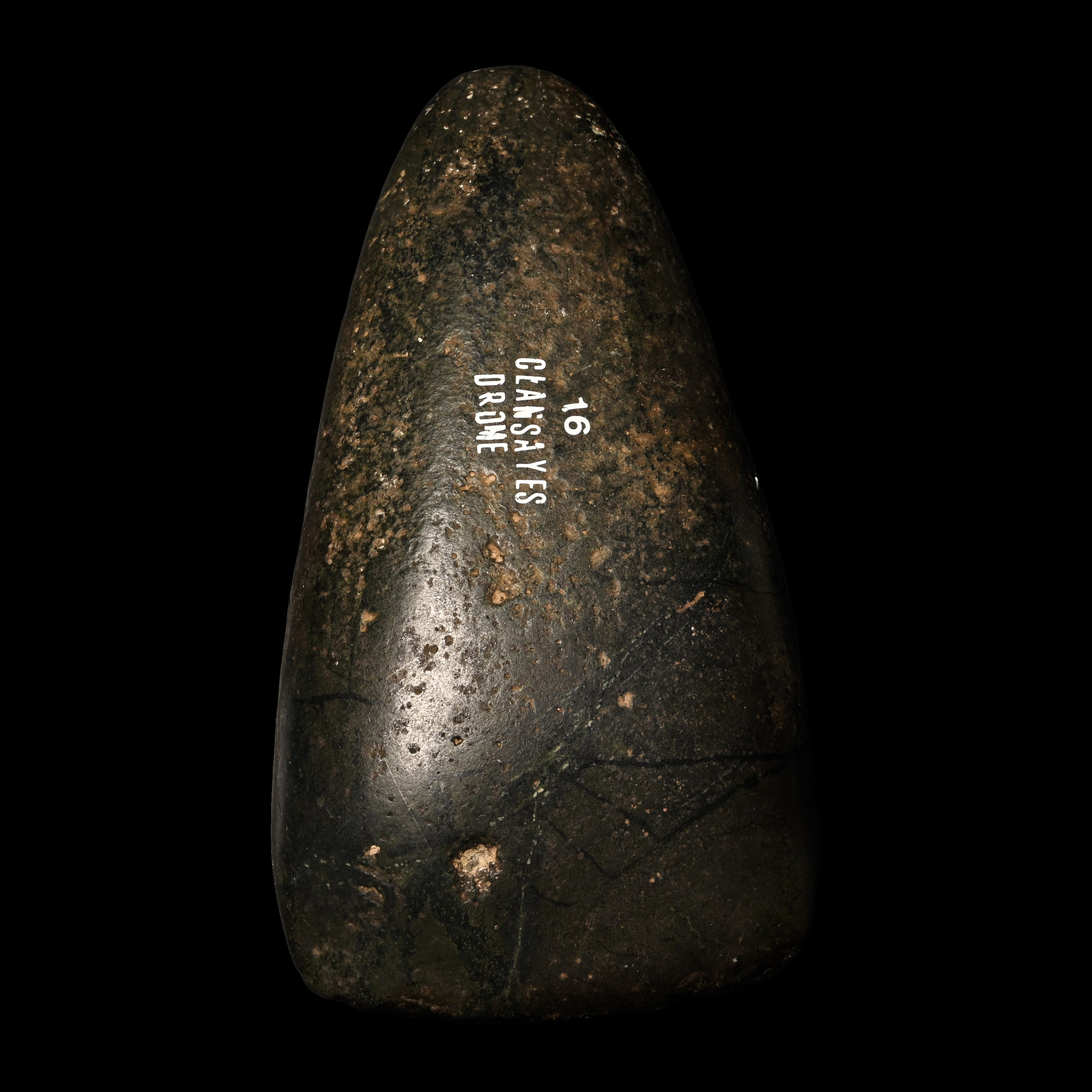
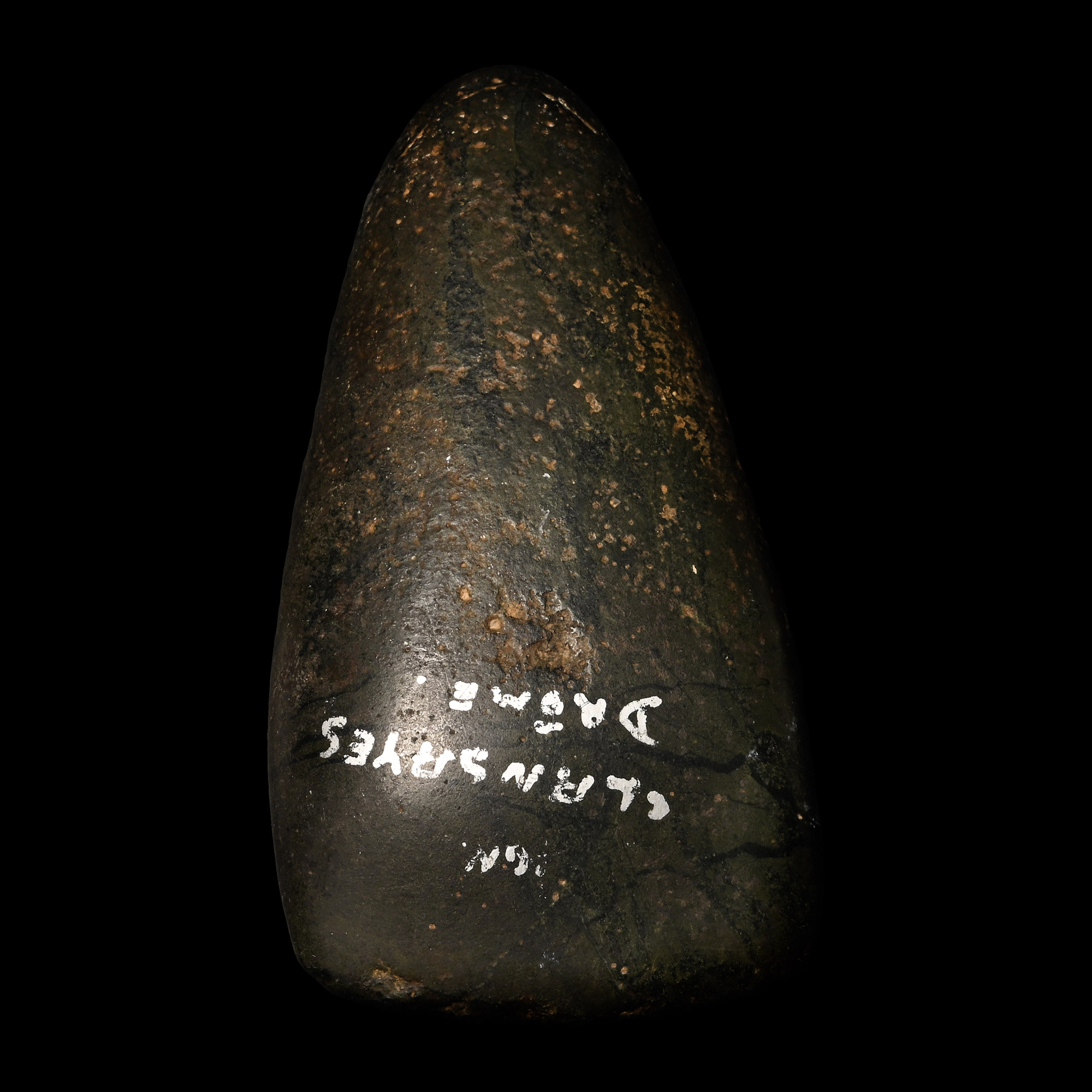
French Stone Age Green Stone Polished Axe Head
NEOLITHIC PERIOD, CIRCA 6000 B.P.
4 in. (302 grams, 10.2 cm).
With pointed butt and broad cutting edge; inked findspot '26N Clansayes, Drome'. [No Reserve]
ProvenanceFrom Clansayes, Drome, France.
From a collection acquired at Bonhams in the 2020s.
TimeLine Auctions follows a vetting process to ensure the authenticity and legality of all items, reinforcing our commitment to integrity and responsible trading. Each antiquity, antique, and coin lot undergoes thorough examination by a vetting committee of at least ten external specialists, professional trade association members, scientists, and archaeologists: Our Vetting Process
AUCTIONS:
TimeLine is a leading auction house specialising in antiquities, ancient art, collectables, natural history, coins, medals, and books. Our auctions offer museums, collectors, historians, and enthusiasts the opportunity to acquire unique and historically significant pieces.
-

Italian Stone Age Knapped Flint Handaxe
Palaeolithic Period, circa 600,000-250,000 B.P.Sold for (Inc. bp): £169
Cordate in profile with some cortex to the rounded butt; old collector's label 'Monte Grande / Ost van lago di Var[...] / an der Küste d[...] / Lago di Verano [...] / Gargonico'. 568 grams, 13.4 cm.
From Monte Grande. Ex old German collection formed in the 1970s. Purchased on the European art market.
Made from flint with a mottled grey and yellow patina. -

Stone Age Knapped Flint Scraper Knife
Palaeolithic Period, circa 250,000-150,000 B.P.Sold for (Inc. bp): £312
With thick rear edge and broad curved blade, old label 'Paleolithic Scraper / Knife / Hampstead, London'. 169 grams, 87 mm
Found Hampstead, London, UK. Acquired on the UK art market before 2000. Property of an Essex, UK, gentleman. -
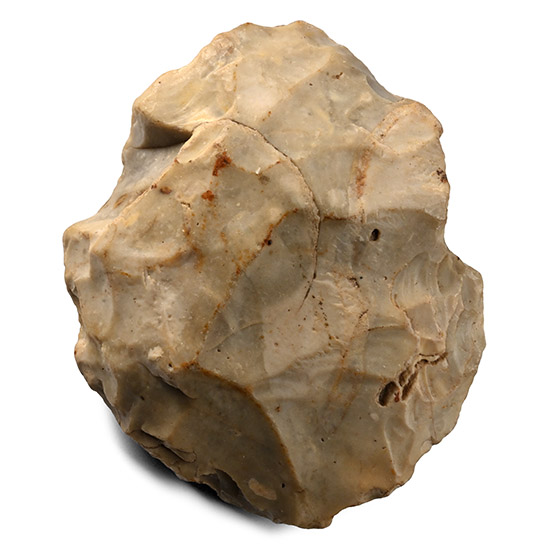
British Stone Age Mousterian Knapped Flint Bifacial Handaxe from Farnham Made by Neanderthal Man
Middle Palaeolithic Period, circa 150,000 to 60,000 B.P.Sold for (Inc. bp): £546
Ovate in form with thick butt. 66 grams, 64.4 mm
Found in 1901. From the collection of Captain Streatfield, who helped to fund the archaeology excavations at Farnham, Kent. After Captain Streatfield passed away in the 1940s, his collection was sold at auction to a gentleman in Kent. The collection was then sold again in the 2020’s via a UK auction house.
Artefacts from this period in Great Britain are not common.
