
Loading, please wait...
LOT 1965
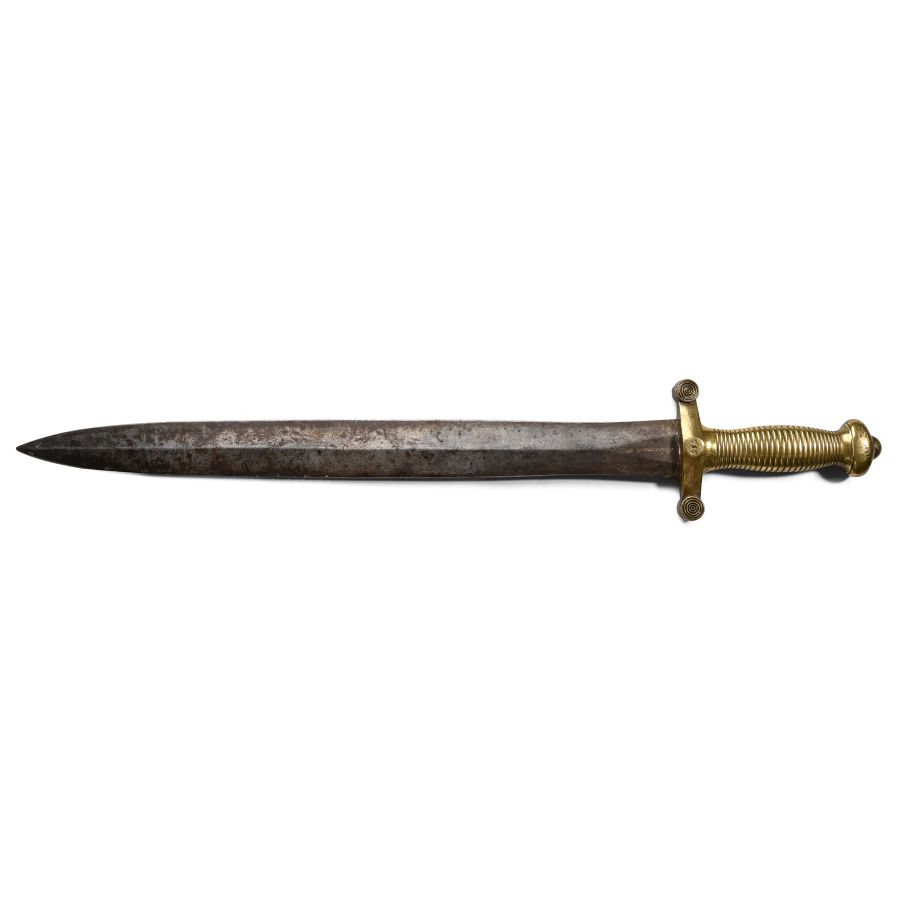
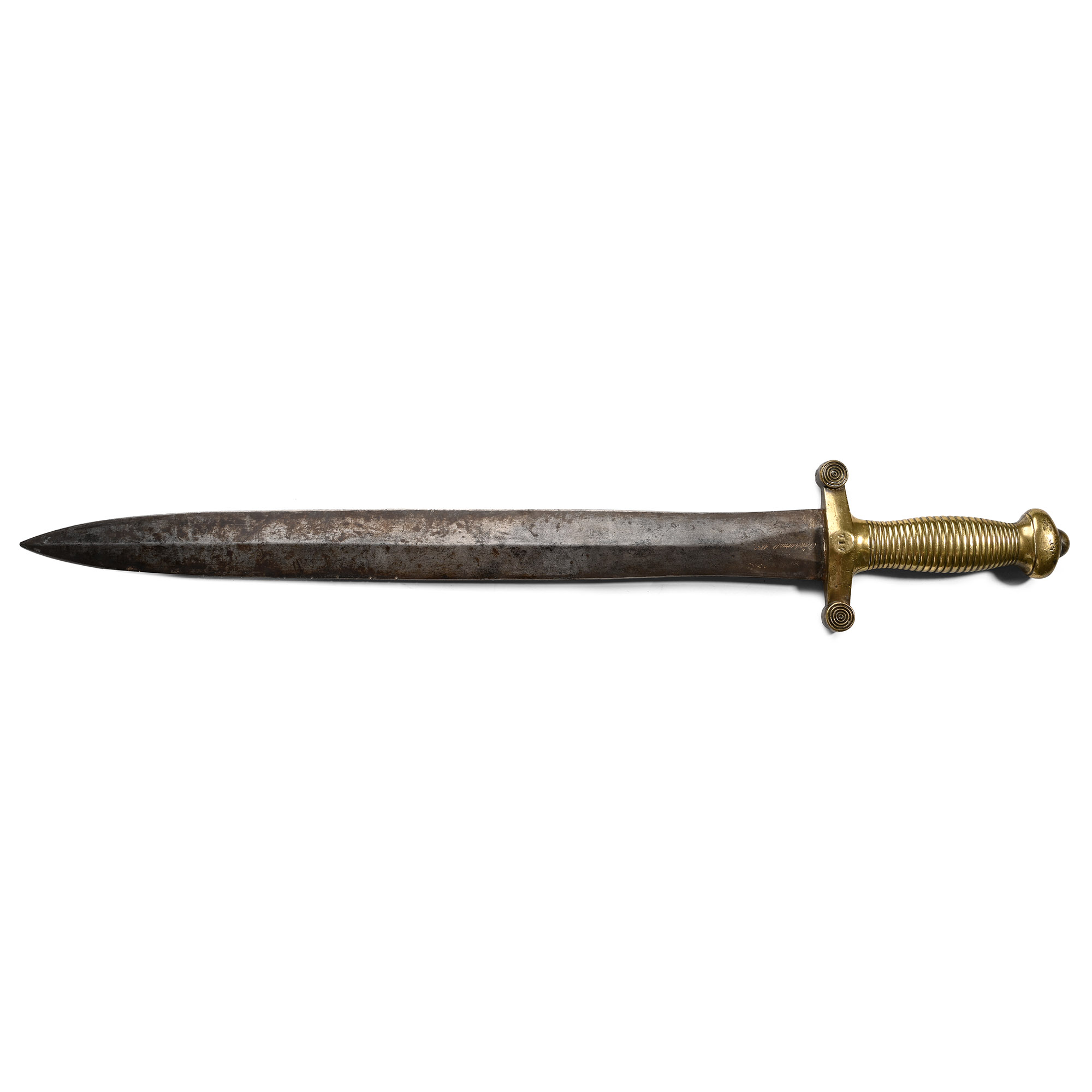
French Artillery Infantry Short Sword
CIRCA 1830-1848 A.D.
25 in. (1.11 kg, 63.7 cm).
Model 1831 double-edged short sword with slightly waisted lentoid-section blade, solid bronze hilt with ribbed grip, roundel finials to the crossguard, stamped '717' to one face and 'X' to underside; blade with asterisk proofing stamp, copperplate legend 'Shre...'; reverse with 'Châtellerault,1832'; edges notched. [No Reserve]
ProvenanceFrom the private collection of Peter Clayton, FCILIP, Dip, Arch, FSA, FRNS, Hemel Hempstead, Hertfordshire, UK; formed since the late 1950s.
CONDITIONTimeLine Auctions follows a vetting process to ensure the authenticity and legality of all items, reinforcing our commitment to integrity and responsible trading. Each antiquity, antique, and coin lot undergoes thorough examination by a vetting committee of at least ten external specialists, professional trade association members, scientists, and archaeologists: Our Vetting Process
AUCTIONS:
TimeLine is a leading auction house specialising in antiquities, ancient art, collectables, natural history, coins, medals, and books. Our auctions offer museums, collectors, historians, and enthusiasts the opportunity to acquire unique and historically significant pieces.
LOT 1965
French Artillery Infantry Short Sword
Estimate £100 - 140€120 - 160 (for guidance only)$140 - 190 (for guidance only)
-
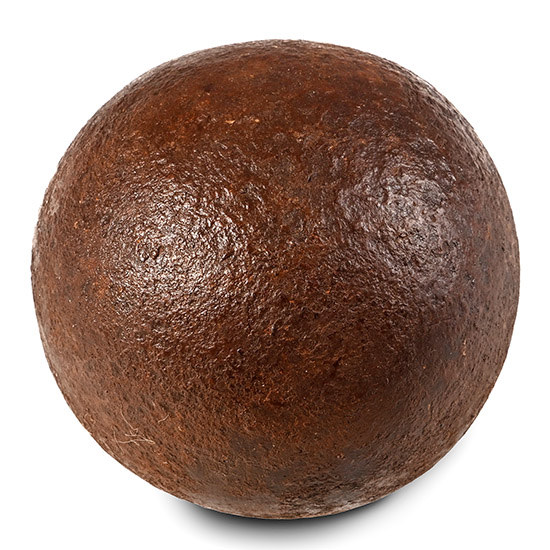
Battle of Sole Bay 12lb Iron Cannon Ball
Circa 1672 A.D.Estimate: £100 - 140 (+bp*)
Opening Bid: £50
About 4 inches in diameter, spherical solid shot with a small patch of slight flattening from the casting process. 5.43 kg, 10.8 cm
Found Southwold Beach, Suffolk, UK, in 1984. Acquired on the UK art market. Property of a Nottinghamshire, UK, gentleman.
The Battle of Solebay took place on 6 June 1672 near Southwold, Suffolk, England. It was an action in the Third Anglo-Dutch War and one of the largest naval battles of the period. A Dutch fleet attacked a combined Anglo-French force off the English coast but the outcome was inconclusive despite a very lengthy combat. The Allied fleet suffered considerable damage and was forced to abandon plans to land troops on the Dutch coast. -
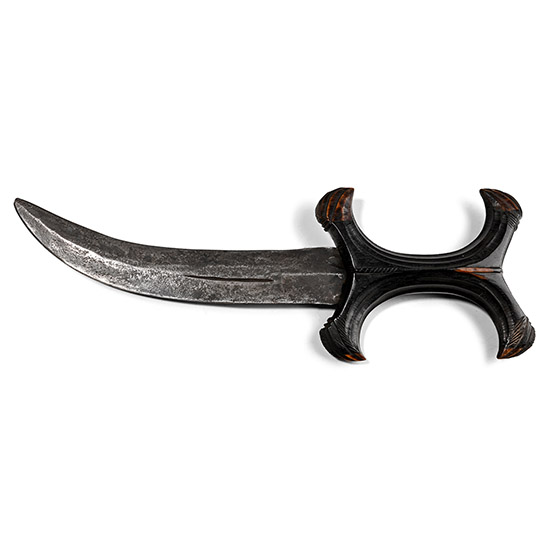
Beja or Hadendoa Curved Dagger
Sudan, late 19th-early 20th century A.D.Estimate: £80 - 100 (+bp*)
Opening Bid: £5
Comprising a thin leaf-shaped two-edged blade in an X-shaped wooden hilt with carved fluting and median rib. 188 grams, 30 cm
From the private collection of Peter Clayton, FCILIP, Dip, Arch, FSA, FRNS, Hemel Hempstead, Hertfordshire, UK; formed since the late 1950s. -
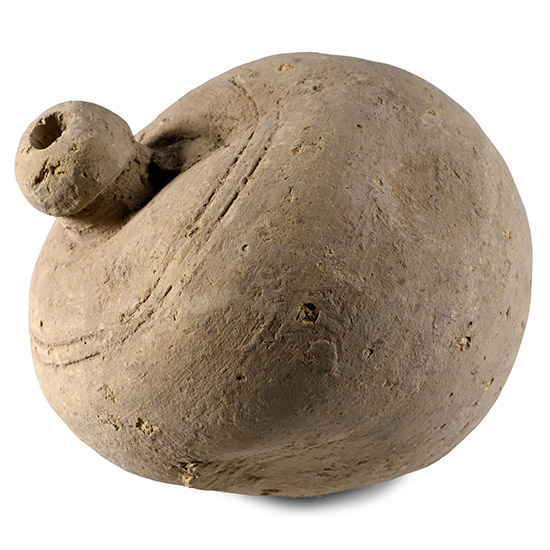
Byzantine 'Greek Fire' Ceramic Fire Bomb or Hand Grenade
9th-11th century A.D.Estimate: £70 - 90 (+bp*)
Bids: 1 | Current Bid: £5
Bulbous body with rounded base and domed filler hole, two circumferential bands above the shoulder; intended to be filled with explosive liquid and a wick, and used as a hand grenade. 760 grams, 11.6 cm
Ex important collection of weaponry, London, UK, 1980-1990s. Accompanied by an academic paper by military specialist Dr Raffaele D'Amato, dated 15 July 2019 and titled 'Eastern Roman Empire - Greek Fire Bomb or Hand Grenade (μεσαίον kακάβιον) 9th-11th century AD'.
Apart from the use of siphons or manual flame-throwers called cheirosiphona, special corps of Roman soldiers employed terracotta grenades, in the form of small jars, abundantly evidenced in archaeological excavations. They were called μεσαία kακαβιά or κυτροκακάβια, where the former had a bulbous shape and the latter a more cylindrical form.
