
Loading, please wait...
LOT 0300
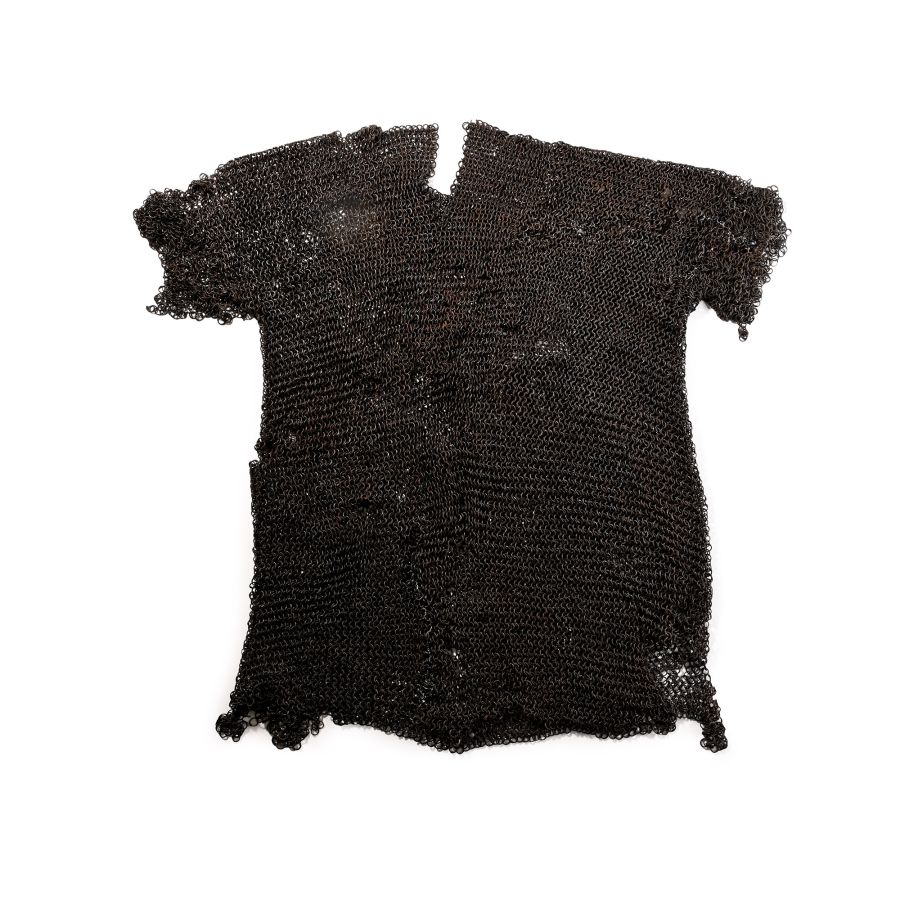
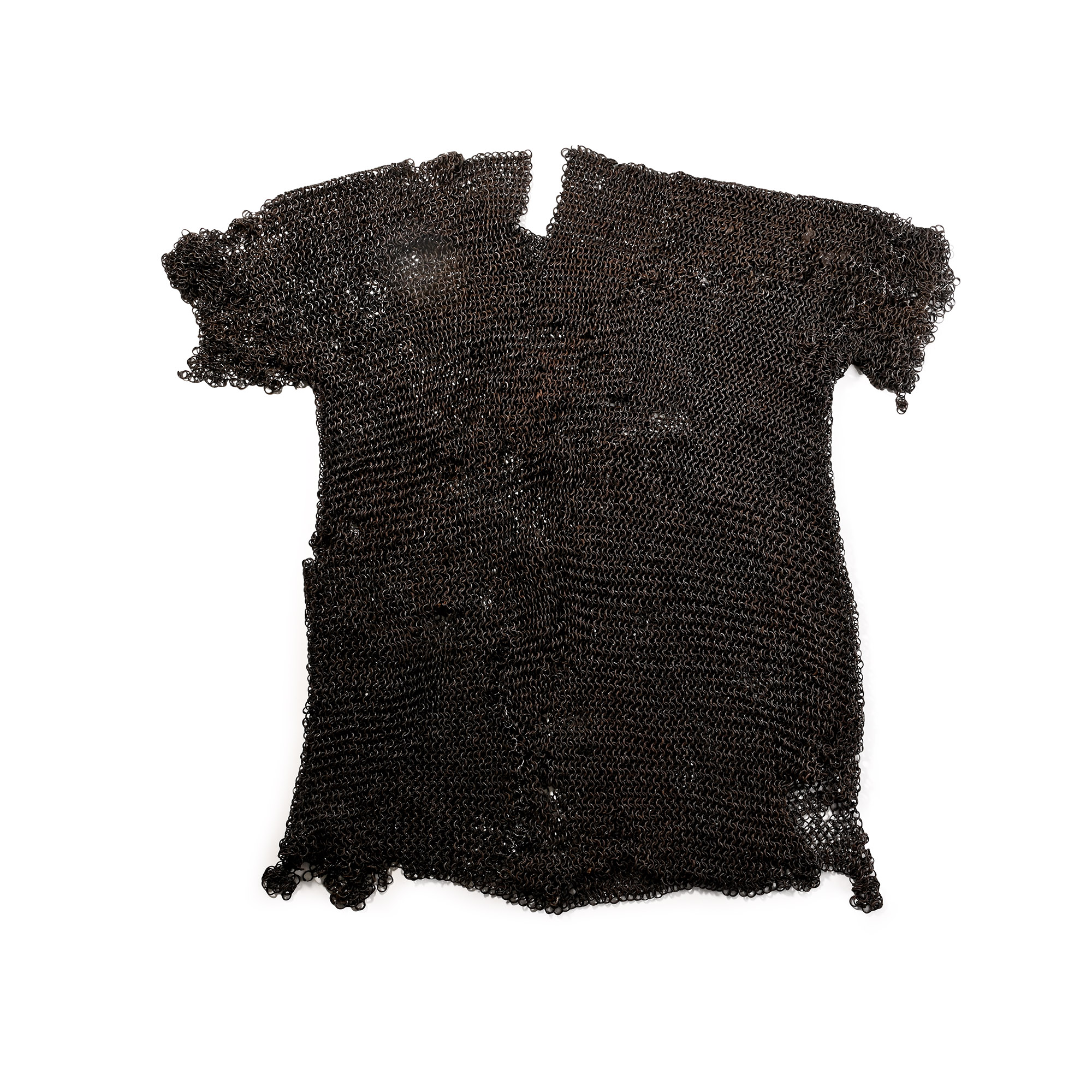
Frankish Warrior's Iron Byrnie Chain Mail Armour
NORTHERN EUROPE, CIRCA 6TH-10TH CENTURY A.D.
25 1/2 x 29 1/2 in. (4.71 kg, 65 x 75 cm).
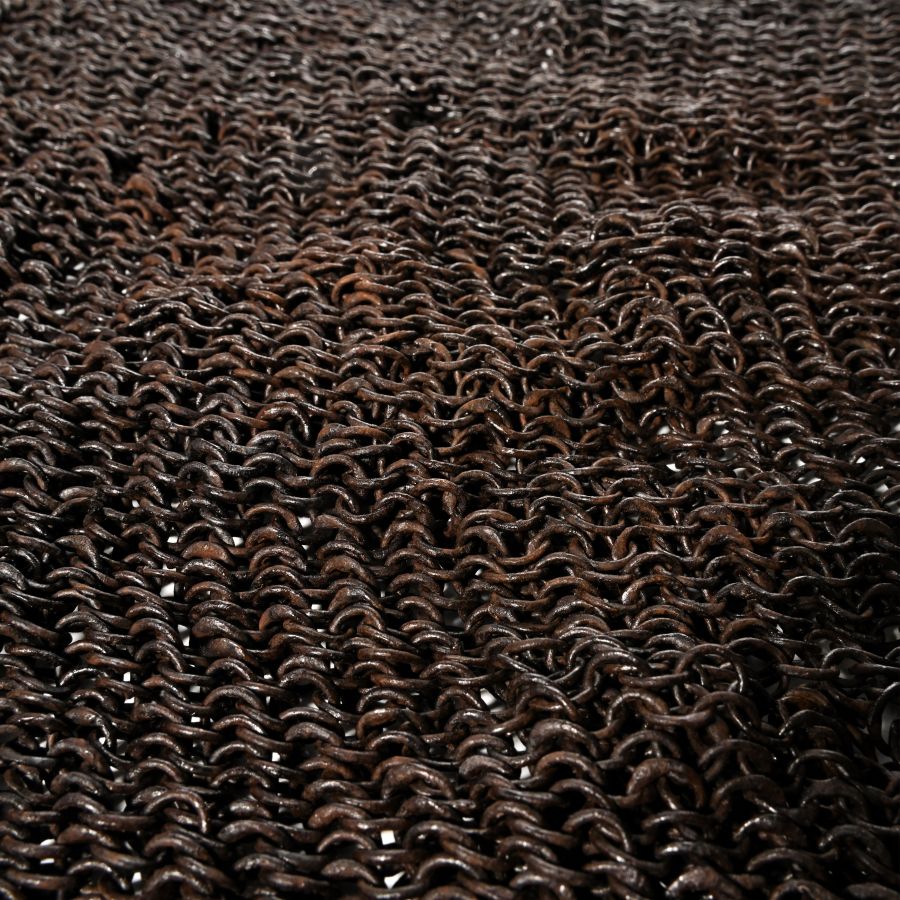
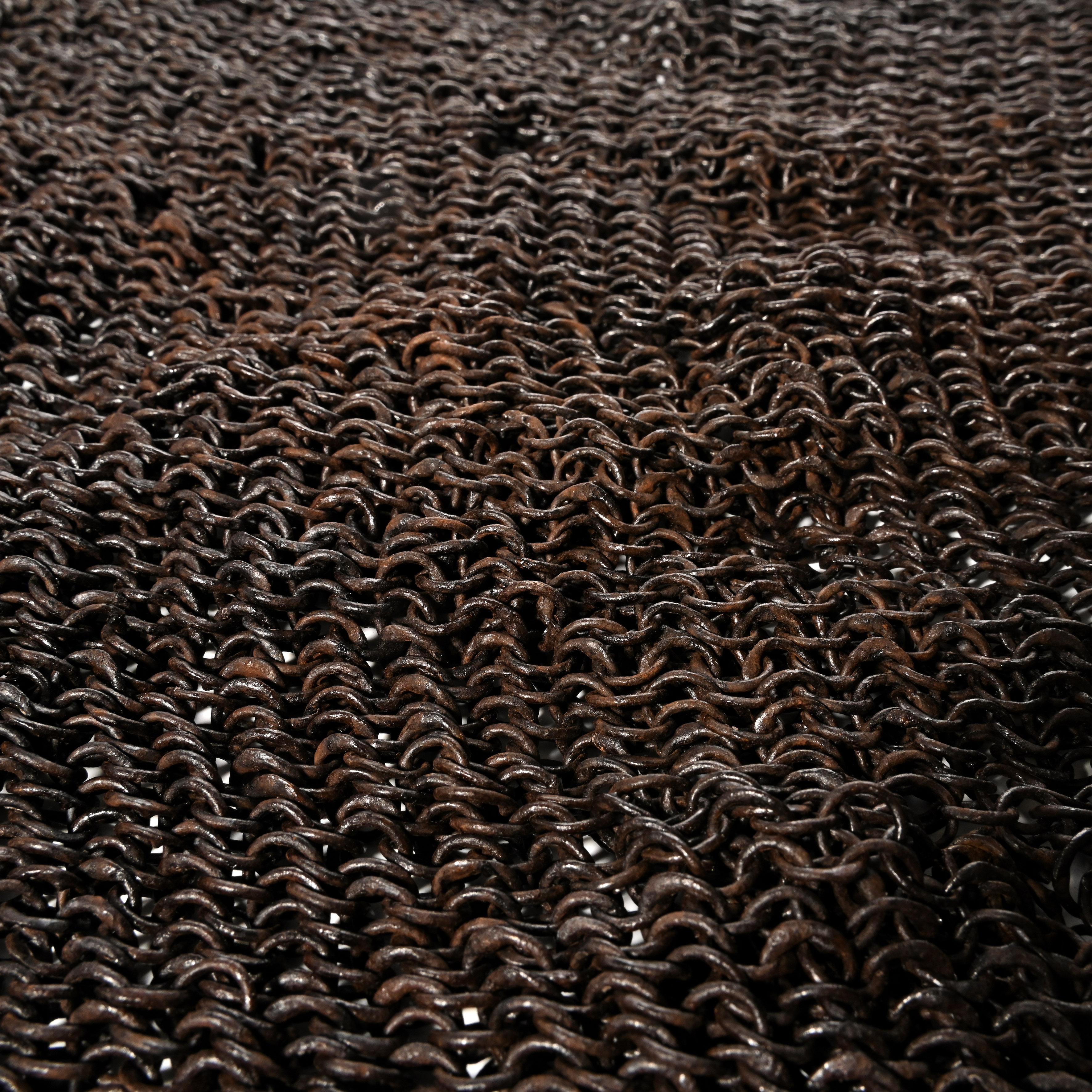
A nearly complete short-sleeved ring armour composed of interlocking links in the four-through-one formation with alternating rivetted rings.
ProvenanceFrom the private collection of a London gentleman, from his grandfather's collection formed before the early 1970s.
Accompanied by an academic report by Dr Raffaele D’Amato.
This lot has been checked against the Interpol Database of stolen works of art and is accompanied by a search certificate number no.13041-248010.
Cf. Nicolle, D., Carolingian Cavalryman, AD 768-987, Oxford, 2005; Wijnhoven, M.A., Moskvin, A., Moskvina, M., ‘Testing archaeological mail armour in a virtual environment: 3rd century BC to 10th century AD’ in Journal of Cultural Heritage, 2021, no.8, pp. 106-118; Wijnhoven, M.A., Ringed battle shirts from the iron age, Roman Period and Early Middle Ages, Amsterdam, 2022.
FootnotesThe rings are arranged in rows, and the links within the same row do not join. Instead, each ring connects to two rings in the row above and two in the row beneath. A great majority of all-rivetted mail comes from Southern Scandinavia and Northern Europe, notably Sweden, northern Germany and Poland. All-rivetted mail already occurs there during the Roman Iron Age, and continues into the Migration, the Vendel, and then the Viking periods. Rivetted rings were usually fabricated by shaping metal wire into a circle with the ends overlapping several mm. Here, the riveted rings seem to be of reshaped oval form.
CONDITIONTimeLine Auctions follows a vetting process to ensure the authenticity and legality of all items, reinforcing our commitment to integrity and responsible trading. Each antiquity, antique, and coin lot undergoes thorough examination by a vetting committee of at least ten external specialists, professional trade association members, scientists, and archaeologists: Our Vetting Process
AUCTIONS:
TimeLine is a leading auction house specialising in antiquities, ancient art, collectables, natural history, coins, medals, and books. Our auctions offer museums, collectors, historians, and enthusiasts the opportunity to acquire unique and historically significant pieces.
-
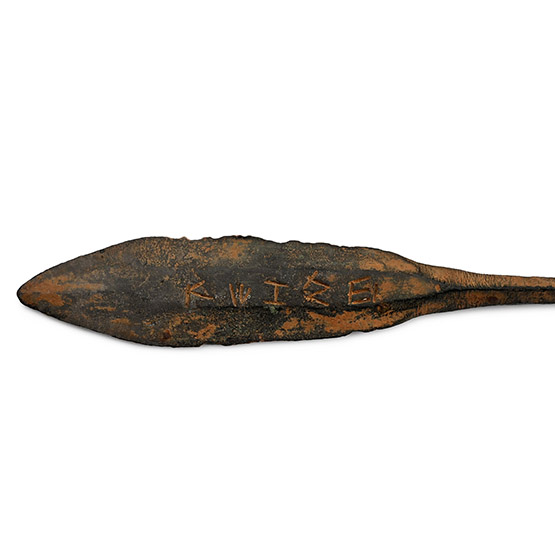
Aramaic Inscribed Bronze Arrowhead for Zscha..., Son of Adnb
1st millennium B.C.Sold for (Inc. bp): £1,105
Comprising a two-edged lentoid-section leaf-shaped blade and lozenge-section tang; each side with a short incised Aramaic inscription; ḥṣ zš bn ʾdnb = arrow of Zscha..., son of Adnb. 14 grams, 94 mm
From the collection of a gentleman, acquired on the London art market in the 1990s. -
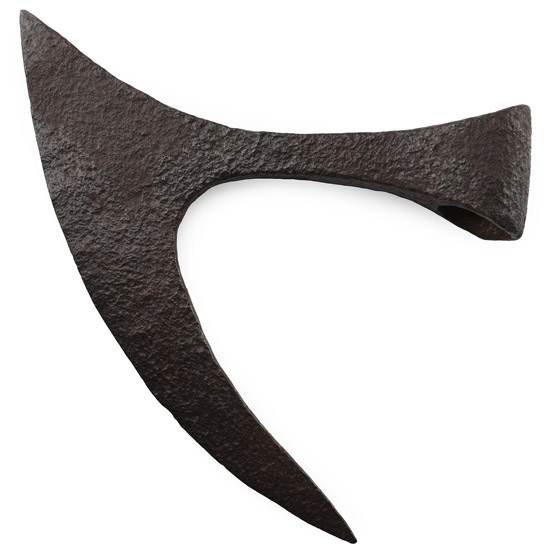
Viking Hooked Iron Axehead
Circa 9th-11th century A.D.Sold for (Inc. bp): £442
With broad curved blade and pointed chin, tapering neck, deep socket. 366 grams, 20.1 cm
Ex North American private collection, 1970s. -
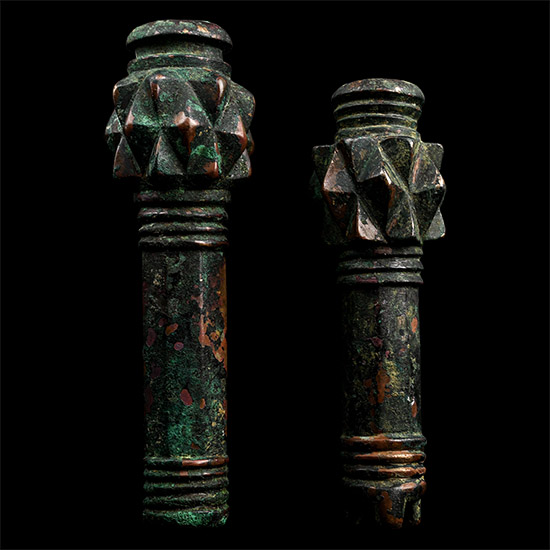
Luristan Bronze Macehead Collection
Circa 900-800 B.C.Sold for (Inc. bp): £1,300
With long septagonal and octagonal shank, rounded knobs around the swollen head, flanked by horizontal bands. 876 grams total, 15.5-17.3 cm
UK private collection before 2000. Acquired on the UK art market. Private collection, London, UK.
