
LOT 3648
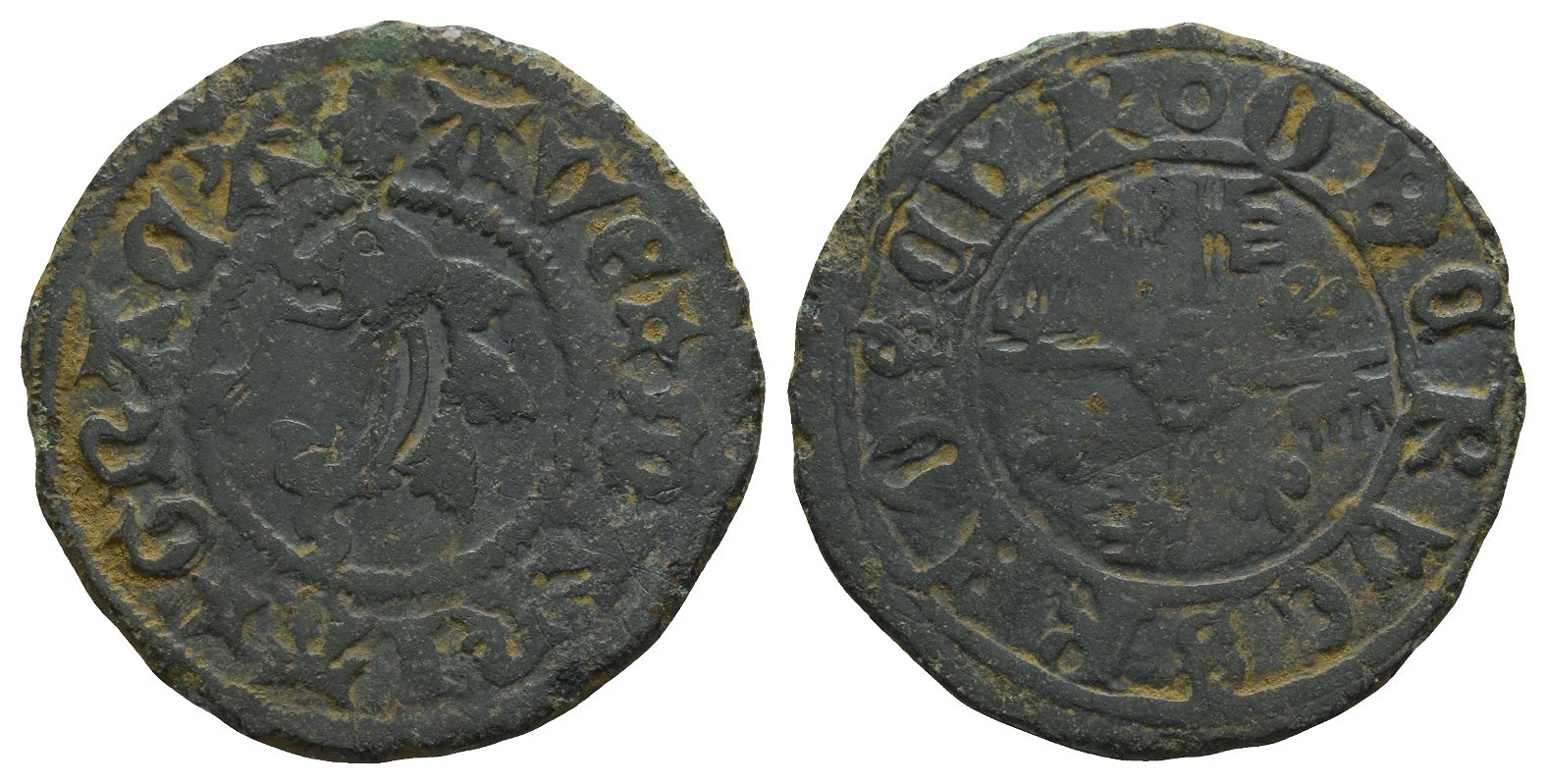
France AE Jeton. Time of Louis XI le Prudent, 1461-1483.
Issue of Dauphiné. Contemporary imitation? (Lis) AVE (voided five-rayed star) ᙏARIA (voided five-rayed star) GRACA, dolphin to left / Legend around cross in form of four keys clockwise with central motif and lis in angles. For a similar example see Feuardent, Jetons 11300. Near Very Fine.(4.26gr, 27mm.).
ProvenanceFound Cambridgeshire, UK.
TimeLine Auctions follows a vetting process to ensure the authenticity and legality of all items, reinforcing our commitment to integrity and responsible trading. Each antiquity, antique, and coin lot undergoes thorough examination by a vetting committee of at least ten external specialists, professional trade association members, scientists, and archaeologists: Our Vetting Process
AUCTIONS:
TimeLine is a leading auction house specialising in antiquities, ancient art, collectables, natural history, coins, medals, and books. Our auctions offer museums, collectors, historians, and enthusiasts the opportunity to acquire unique and historically significant pieces.
-
.jpg)
England. 'Late Plantagenet' Pb Token. 1425-1490.
Sold for (Inc. bp): £13
London mint. Mitchiner Type La. Expanding cross with convex arms and central dot / Expanding cross with convex arms and central dot. Cf. Mitchiner & Skinner type L, 6-7. 1.03gr, 12mm.
Near Very Fine.
Found from Billingsgate spoil from the Thames foreshore, London, UK, in the 1980s. Property of an Essex collector. -
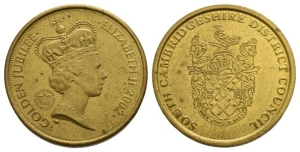
Great Britain. South Cambridgeshire District Council Token. Dated 2002.
Sold for (Inc. bp): £7
Golden Jubilee - 50th Anniversary of the Accession of Queen Elizabeth II. • GOLDEN JUBILEE • • ELIZABETH II 2002 •, crowned head of Elizabeth II to right; behind, crown within •THE QUEEN'S•GOLDEN JUBILEE• / SOUTH CAMBRIDGESHIRE DISTRICT COUNCIL, coat of arms with motto: NIET • ZONDER • ARBYT ('nothing without work'). 8.28gr, 27mm, 12h.
Near Mint State.
Property of a Cambridgeshire, UK, gentleman.
Sir Cornelius Vermuyden (1595-1677) was a Dutch engineer who introduced Dutch land reclamation methods to England. He was commissioned by the Crown to drain Hatfield Chase in the Isle of Axholme, Lincolnshire. In the 1650s, he directed major projects to drain The Fens of East Anglia, introducing the innovation of constructing washes, to allow periodic flooding of the area by excess waters. His motto Niet Zonder Arbyt ("Nothing Without Work") was adopted as the official motto of South Cambridgeshire District Council. -
.jpg)
England. 'Cross and Pellets' Pb Token. 1425-1490.
Sold for (Inc. bp): £13
London or Paris mint. Mitchiner Type Mb. IHC (retrograde) in Gothic within anti-clockwise ray border / Cross with dot in each angle; al within anti-clockwise ray border. Mitchiner & Skinner type M, 50 var. (IHC not retrograde; clockwise ray border). 0.69gr, 12mm.
Very Fine.
Found from Billingsgate spoil from the Thames foreshore, London, UK, in the 1980s. Property of an Essex collector.
The 'cross and pellets' tokens differ from the other series of fifteenth-century tokens found in London by virtue of their close links with a series of French tokens. They have been found with not quite equal frequency in London and in Paris. The uniformity of design suggests centralised production control (such as by a guild) but the range of symbols - religious, merchant, brothels - suggests a wide range of users.
