
Loading, please wait...
_900x900.jpg "Framed Watercolour Painting")
_200x200.jpg "Framed Watercolour Painting")
.jpg "Framed Watercolour Painting")
LOT 2040
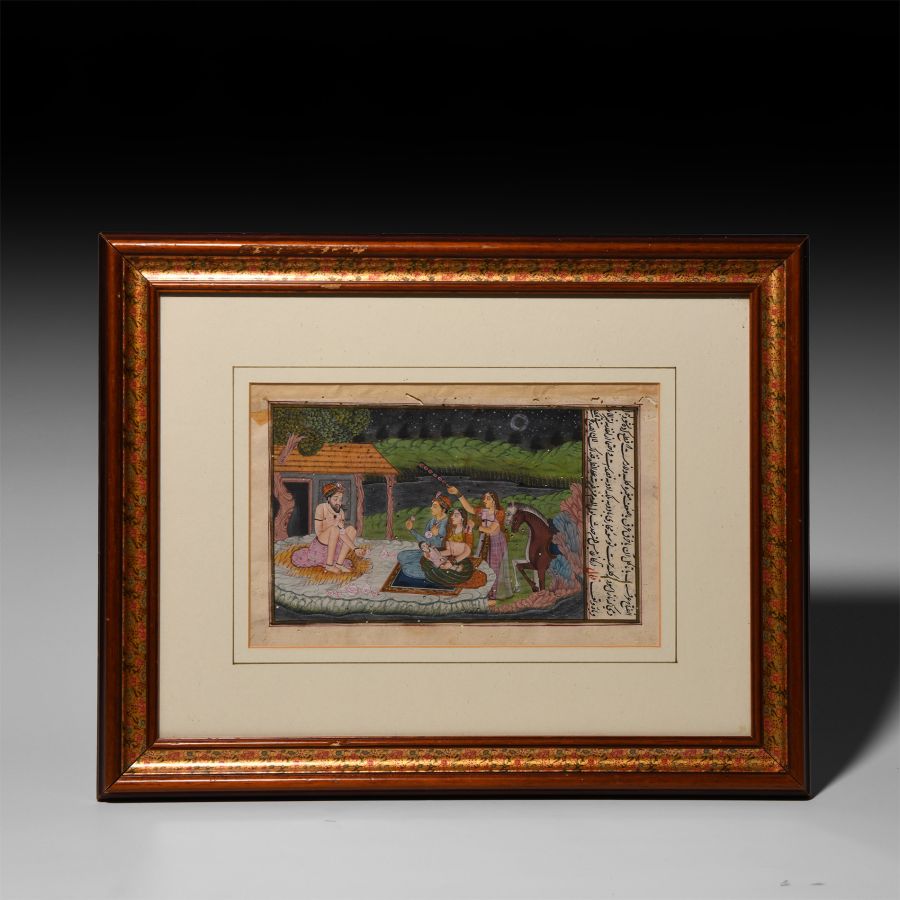
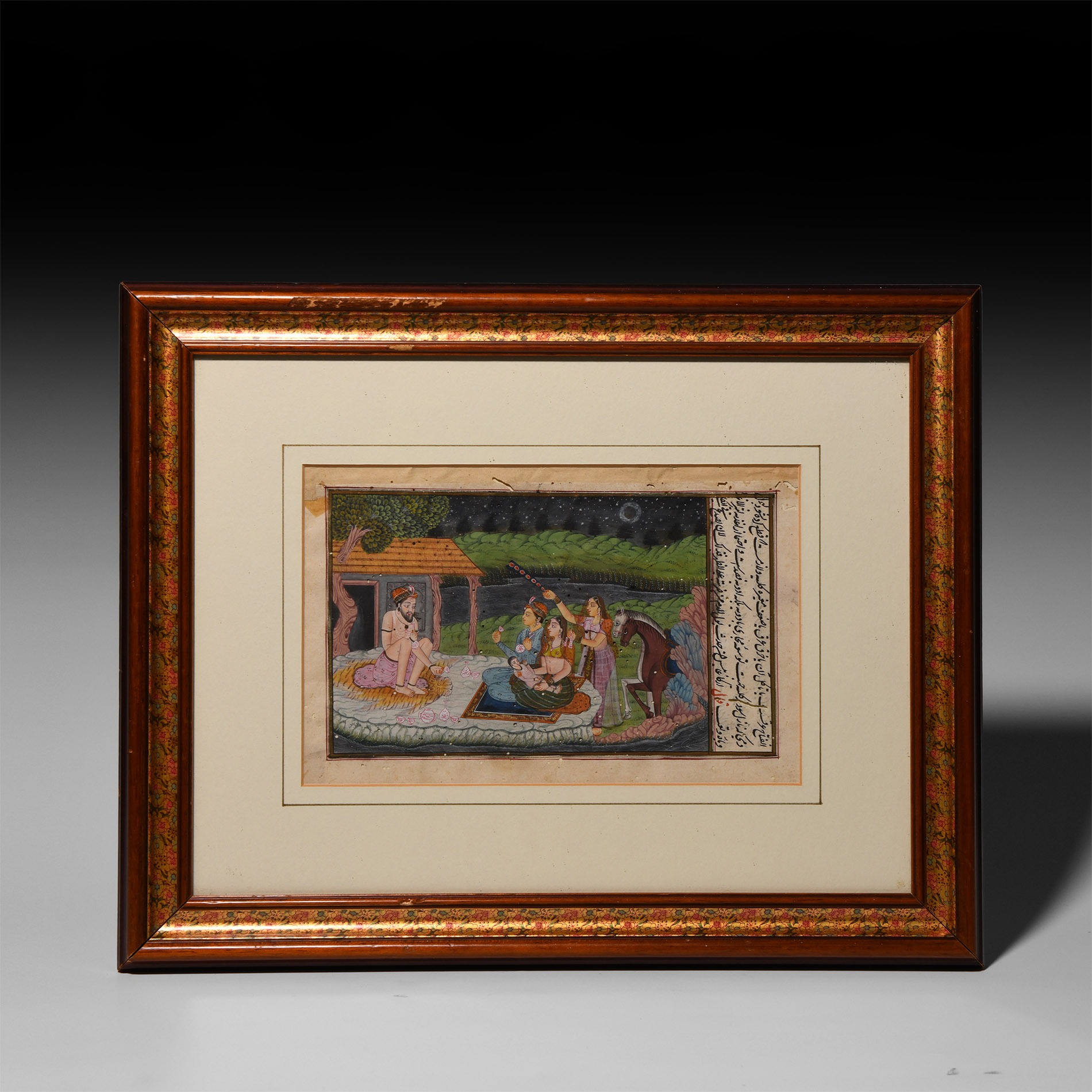
Framed Watercolour Painting
INDIA, 20TH CENTURY A.D.
14 3/4 x 1 5/8 in. (795 grams, 37.5 x 29.5 cm).
Showing a vibrant scene in watercolour composed of a couple with a child seated on a rug by a religious figure, being blessed; their attendant fans them whilst their horses stand behind, set in a landscape, panel of text to one side; set in a reveal within a glazed wooden frame.
ProvenanceAcquired on the UK art market, 1980s-1990s.
The Woodbridge collection of Indo-Persian art.
TimeLine Auctions follows a vetting process to ensure the authenticity and legality of all items, reinforcing our commitment to integrity and responsible trading. Each antiquity, antique, and coin lot undergoes thorough examination by a vetting committee of at least ten external specialists, professional trade association members, scientists, and archaeologists: Our Vetting Process
AUCTIONS:
TimeLine is a leading auction house specialising in antiquities, ancient art, collectables, natural history, coins, medals, and books. Our auctions offer museums, collectors, historians, and enthusiasts the opportunity to acquire unique and historically significant pieces.
-
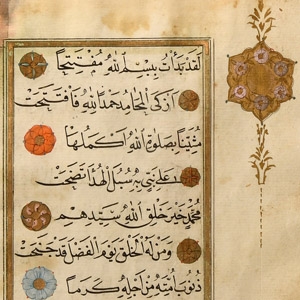
Framed Ottoman Qur'an Page
Circa 1800 A.D.Estimate: £80 - 100 (+bp*)
Opening Bid: £40
Adorned with stylised flower heads in polychrome and gold leaf, framed by a gold leaf border; mounted in a reveal and a glazed wooden frame. 412 grams, 24.5 x 20.4 cm
Fine condition.
Acquired on the UK art market, 1980s-1990s. The Woodbridge collection of Indo-Persian art. -
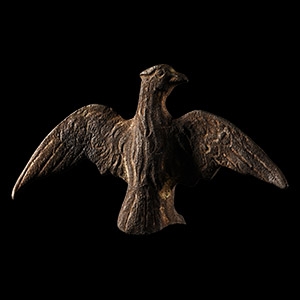
Post Medieval Bronze Spread Eagle Mount
18th-19th century A.D.Sold for (Inc. bp): £33
Modelled in the round standing on a domed base, wings outspread, head turned left, stylised detailing to the head and feathers. 20.9 grams, 56 mm
Found Nottinghamshire, UK. -
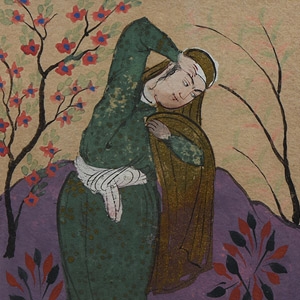
Framed Watercolour Painting
Persia, late 19th-20th century A.D.Estimate: £80 - 100 (+bp*)
Opening Bid: £40
Showing a female figure in a stylised landscape within a blue and white frame, itself set in a larger landscape composed of wispy flowering trees and sparse bushes; mounted in a reveal and a glazed wooden frame. 904 grams, 43.5 x 31.2 cm
Fine condition.
Acquired on the UK art market, 1980s-1990s. The Woodbridge collection of Indo-Persian art.
