
Loading, please wait...
LOT 1397
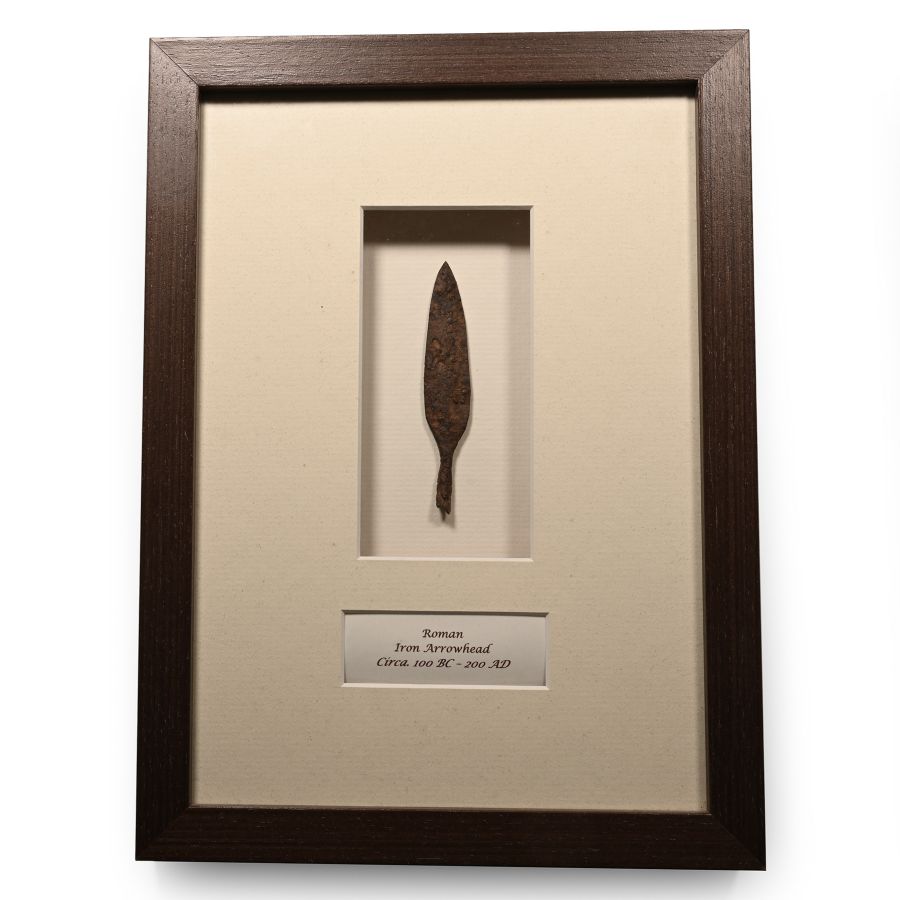
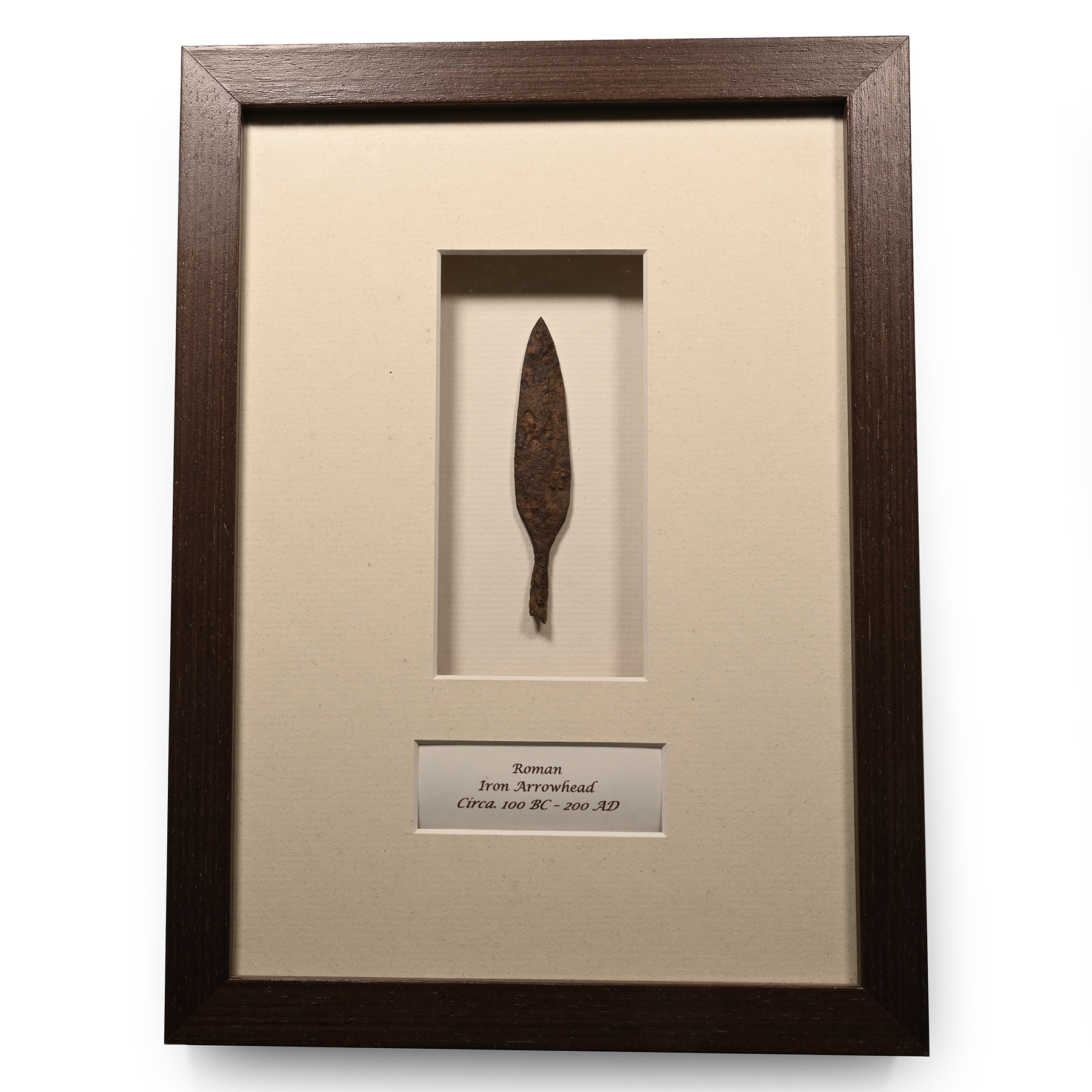
Framed Roman Iron Socketted Arrowhead
1ST CENTURY B.C.-2ND CENTURY A.D.
13 x 9 1/2 in. (963 grams, 33 x 24.1 cm).
With leaf-shaped blade and narrow neck, flared tubular split socket; mounted in a glazed wooden frame with reveal and title panel. [No Reserve]
ProvenanceFrom the private collection of Kenneth Machin (1936-2020), Buckinghamshire, UK; his collection of antiquities and natural history was formed since 1948; thence by descent.
CONDITIONTimeLine Auctions follows a vetting process to ensure the authenticity and legality of all items, reinforcing our commitment to integrity and responsible trading. Each antiquity, antique, and coin lot undergoes thorough examination by a vetting committee of at least ten external specialists, professional trade association members, scientists, and archaeologists: Our Vetting Process
AUCTIONS:
TimeLine is a leading auction house specialising in antiquities, ancient art, collectables, natural history, coins, medals, and books. Our auctions offer museums, collectors, historians, and enthusiasts the opportunity to acquire unique and historically significant pieces.
-
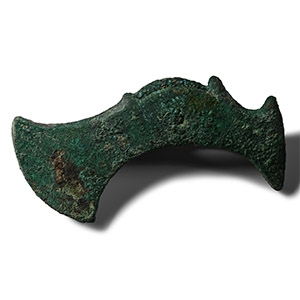
Bactrian Bronze Axehead
3rd-2nd millennium B.C.Estimate: £500 - 700 (‡+bp*)
Opening Bid: £250
With curved flaring cutting edge, characteristic curving shape and narrow socket, blade end squaring off, shaft hole pierced on both sides. 227 grams, 10.6 cm
Acquired in the mid 1980s-1990s. Private collection, Switzerland, thence by descent. Private collection, since the late 1990s.
These collared axes have the specific feature of being equipped with variously shaped rear extensions. The provenance of this typology is clearer than others: these axes came from Margiana and southern Bactria. Gonur Depe and Susa yielded a rather atypical and probably imported example. P. Amiet suggests that they were an adoption of Elamite material, from conceptual and institutional models. They would have developed from the end of the 3rd and the beginning of the 2nd millennium B.C. -
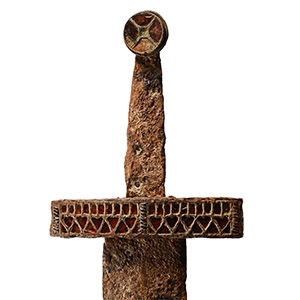
Migration Period Iron Sword with Jewelled Hilt
5th-6th century A.D.Estimate: £8,000 - 10,000 (+bp*)
Opening Bid: £3,000
Comprising: a spatha-type two-edged tapering blade, lentoid in section with sloped shoulders and short tang pierced by an attachment rivet for the grip; traces to both faces of the blade of wooden fibre from the scabbard; edges lightly notched but substantially complete; the lower guard rectangular in plan and scaphoid in section with inset garnet cloisons, triangular along the lower row and heart-shaped above, rectangular at the top, with small rectangular slivers at each end; accompanied by the upper roundel of the pommel, set with four garnet cloisons. 954 grams, 84.5 cm
From the private collection of a London gentleman, from his grandfather's collection formed before the early 1970s. Accompanied by an academic report by Dr Raffaele D’Amato. This lot has been checked against the Interpol Database of stolen works of art and is accompanied by search certificate no. 12357-225921.
These ‘ceremonial’ swords (in reality widely used in battle) with an inlaid guard are according to Kazanski Late Roman in origin. The cloisonné decoration was probably linked with the production of particularly ornamented swords in the ateliers of the Roman capital of Constantinople. This typology of weapon was not only produced as a gift for Barbarian chiefs allied to the empire, but it was also adopted by the Imperial army, and reserved for the Imperial officers, who were often of Germanic or Asiatic origin. -
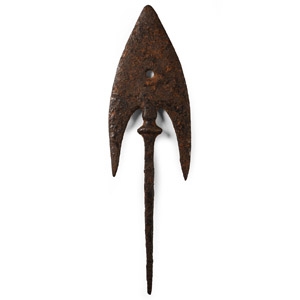
Medieval Pierced Incendiary Fire Arrowhead
Circa 12th-14th century A.D.Sold for (Inc. bp): £338
Large swallowtail arrowhead with square-section tang; pierced at centre for insertion of flammable material. 62 grams, 16.2 cm
Private Buckingham, UK, collection, formed before 2000.
