
Loading, please wait...
LOT 0640
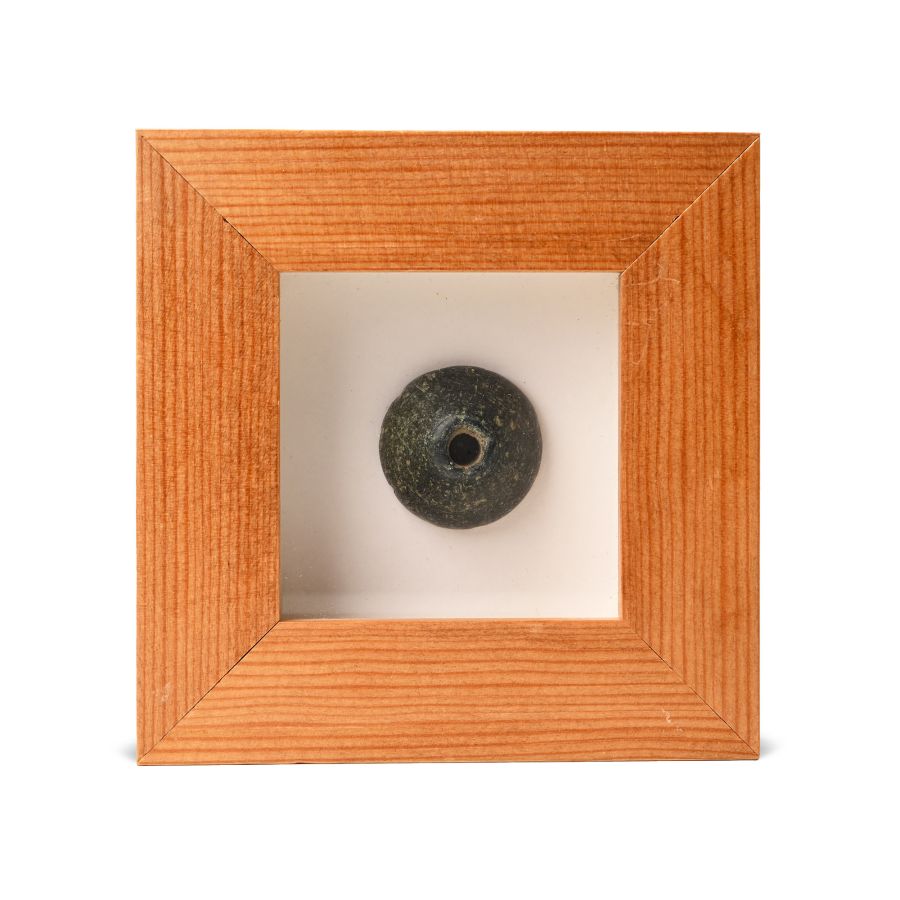
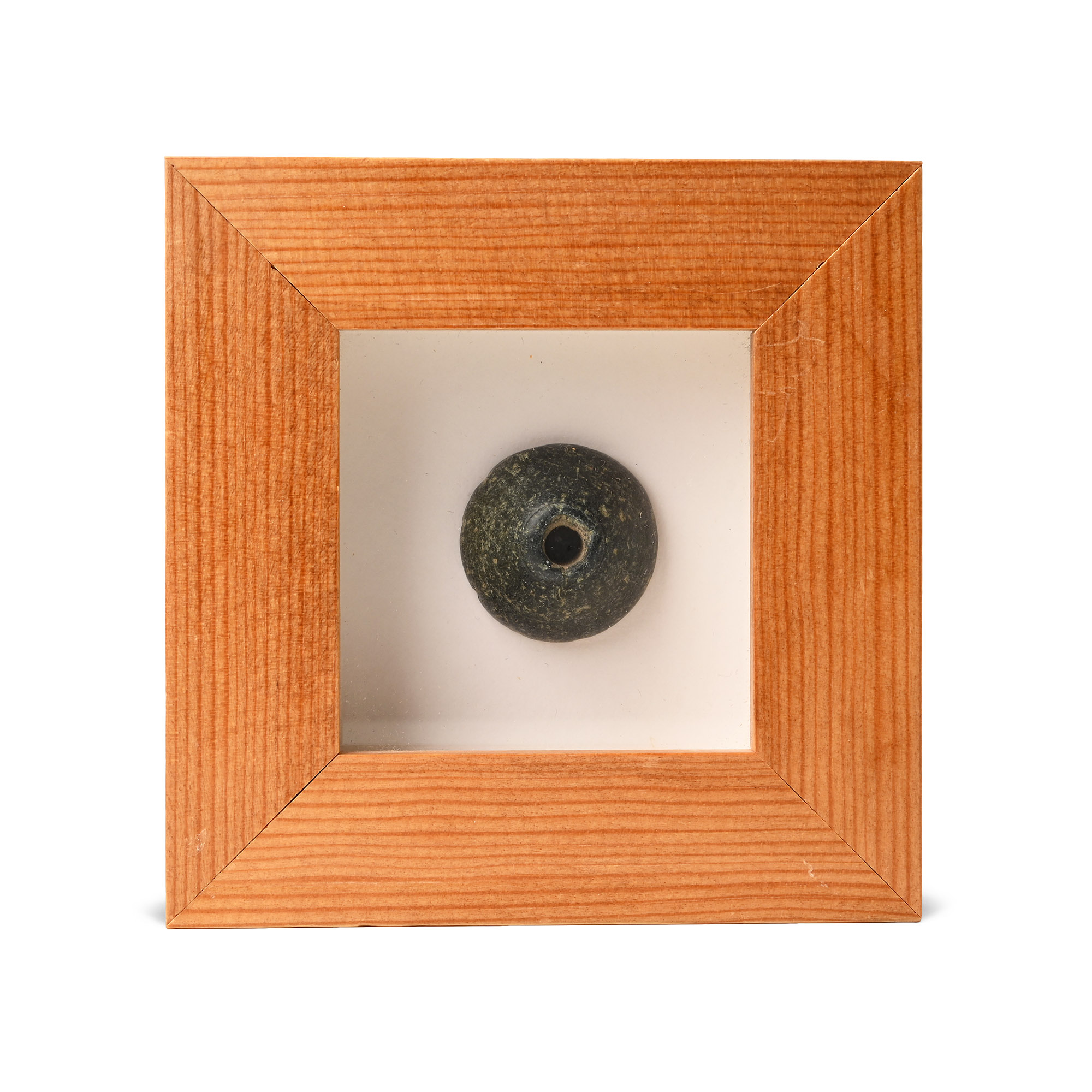
Framed Roman Black Stone Spindle Whorl
CIRCA 200 A.D.
3 5/8 x 3 3/4 in. (114 grams total, 93 x 94 mm including frame).
Conical body with a circular opening; set in a glazed wooden display frame. [No Reserve]
ProvenanceAcquired from Ancient Art Shop, Berkshire, UK.
From the collection of a Nottingham, UK, collector, established from the early 2000s.
Accompanied by the original Ancient Art Shop certificate of authenticity.
TimeLine Auctions follows a vetting process to ensure the authenticity and legality of all items, reinforcing our commitment to integrity and responsible trading. Each antiquity, antique, and coin lot undergoes thorough examination by a vetting committee of at least ten external specialists, professional trade association members, scientists, and archaeologists: Our Vetting Process
AUCTIONS:
TimeLine is a leading auction house specialising in antiquities, ancient art, collectables, natural history, coins, medals, and books. Our auctions offer museums, collectors, historians, and enthusiasts the opportunity to acquire unique and historically significant pieces.
-
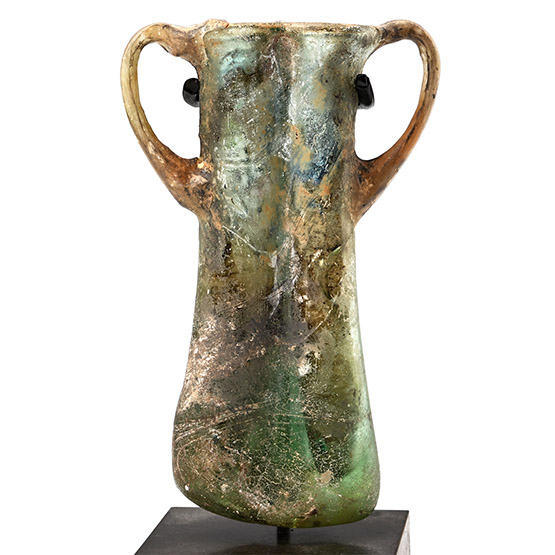
Roman Glass Double Balsamarium
Circa 4th century A.D.Sold for (Inc. bp): £312
Formed as a pair of conjoined tubes with slightly flared tops and thickened rims; applied handles at the shoulders joined to the rim; glass with areas of iridescence; mounted on a custom-made stand. 85 grams, 10.9 cm
From a London, UK, collection of glass, 1970-2000s. -
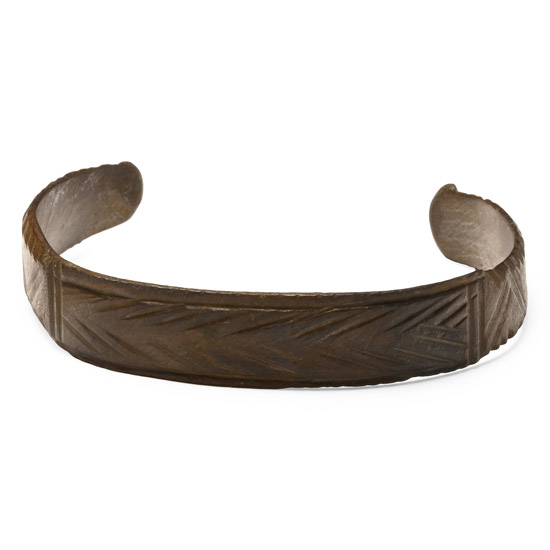
Late Roman Bronze Bracelet
4th-6th century A.D.Sold for (Inc. bp): £85
Penannular flat-section body with chevron decoration. 13.7 grams, 55 mm
Ex German art market, 2000s. Acquired from an EU collector living in London. From the collection of a Surrey, UK, gentleman. -
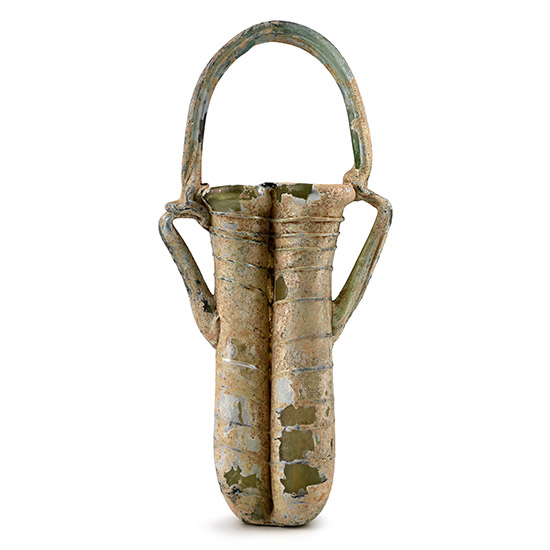
Roman Iridescent Glass Double Unguentarium
2nd-3rd century A.D.Sold for (Inc. bp): £468
With rolled rim to each tapering tube, applied trail detailing to each upper body, lateral angled handles and large applied loop handle above; iridescent surface. 77 grams, 17.5 cm
Private collection, 1990s-early 2000s.
