
Loading, please wait...
_900x900.jpg "Framed Indo-Persian Watercolour Painting")
_200x200.jpg "Framed Indo-Persian Watercolour Painting")
.jpg "Framed Indo-Persian Watercolour Painting")
LOT 0871
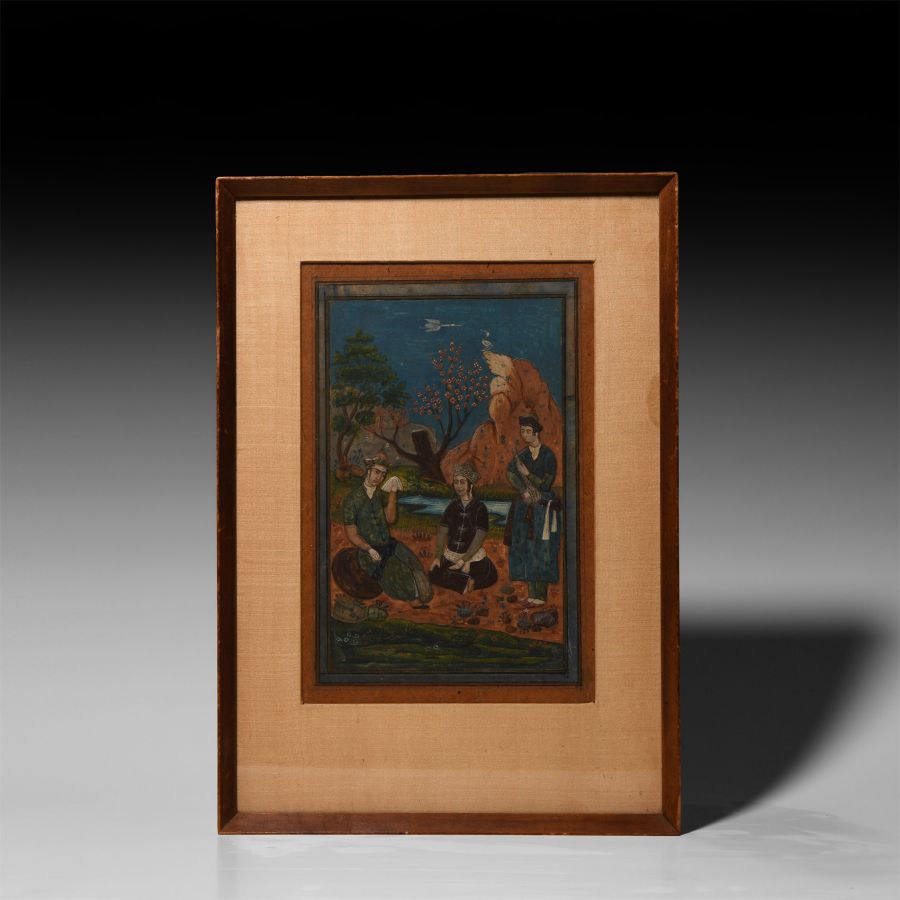
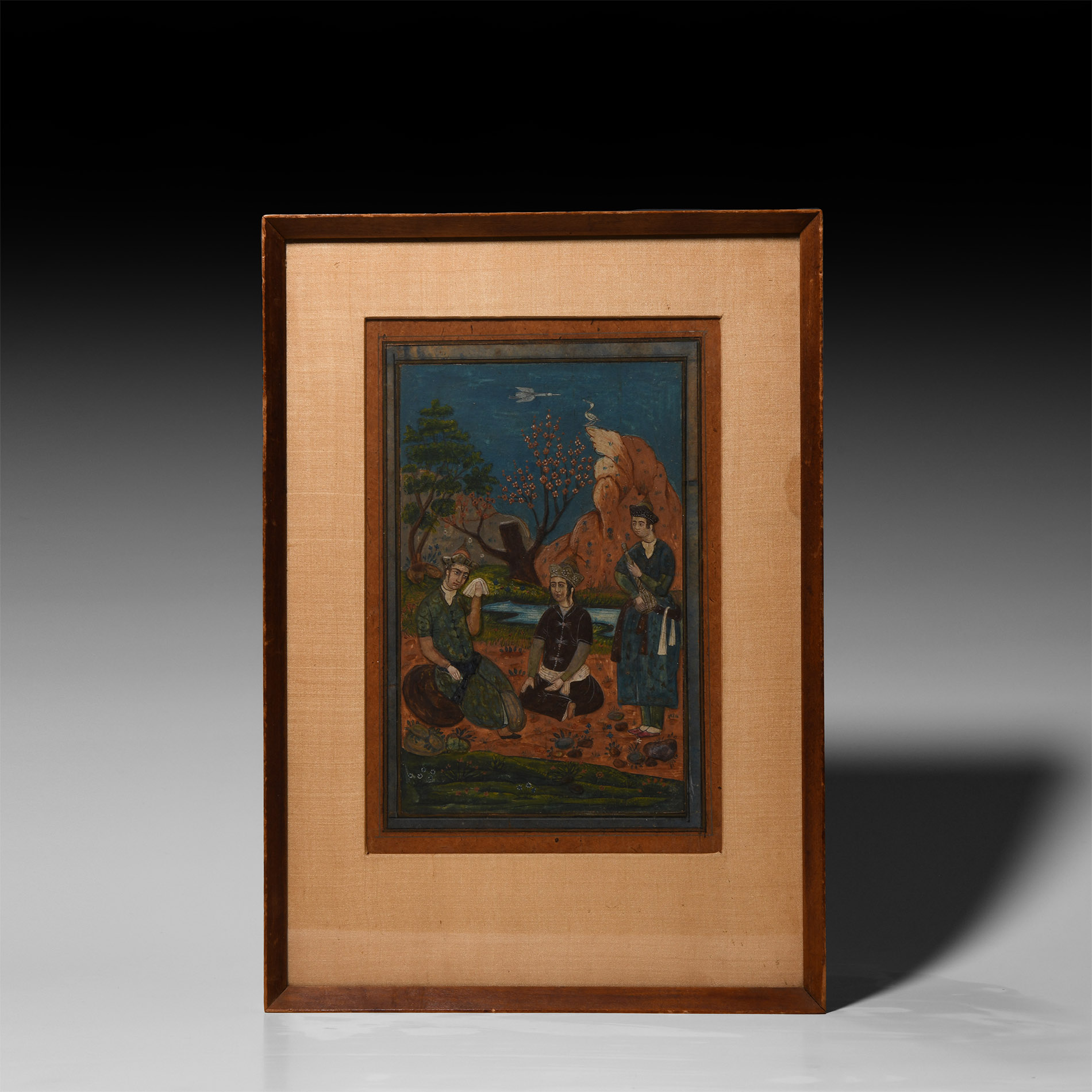
Framed Indo-Persian Watercolour Painting
20TH CENTURY A.D.
14 3/8 x 10 in. (622 grams, 36.5 x 25.5 cm).
A watercolour painting showing three figures in a landscape, birds in the sky and on the hills beyond, one seated figure weeping, one turning towards him possibly to offer consolation, the third standing, holding a bottle; set in a reveal within a glazed wooden frame.
ProvenanceAcquired on the UK art market, 1980s-1990s.
The Woodbridge collection of Indo-Persian art.
TimeLine Auctions follows a vetting process to ensure the authenticity and legality of all items, reinforcing our commitment to integrity and responsible trading. Each antiquity, antique, and coin lot undergoes thorough examination by a vetting committee of at least ten external specialists, professional trade association members, scientists, and archaeologists: Our Vetting Process
AUCTIONS:
TimeLine is a leading auction house specialising in antiquities, ancient art, collectables, natural history, coins, medals, and books. Our auctions offer museums, collectors, historians, and enthusiasts the opportunity to acquire unique and historically significant pieces.
-
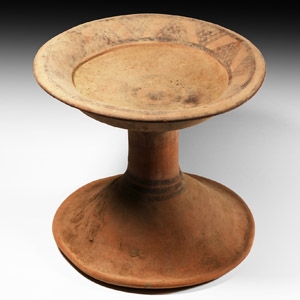
Large Western Asiatic Terracotta Chalice
1st millennium B.C.Sold for (Inc. bp): £176
A terracotta footed vessel comprising a broad carinated bowl with painted hatching to the rim, stepped stem and flared base with rolled rim; painted bands above the base. 3.6 kg, 28 cm wide
Acquired 1980-2015. Ex Abelita family collection. -
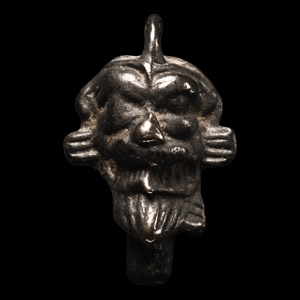
Western Asiatic Silver Pazuzu Head Amulet
Circa 8th-6th century B.C.Sold for (Inc. bp): £364
A silver Pazuzu head amulet with grotesque facial features and integral suspension loop. 4.33 grams, 20 mm
Acquired before the early 1970s. Ex London, UK, gallery. Property of a London gentleman. -
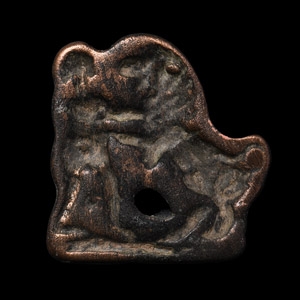
Central Asian Seal Pendant with Lion Attacking a Standing Figure
23rd-20th century B.C.Sold for (Inc. bp): £338
A copper-alloy stamp seal formed as a rearing lion grappling with a standing figure, suspension loop to reverse. 15.9 grams, 29 mm
1980s-early 1990s collection, UK.
