
Loading, please wait...
LOT 1580
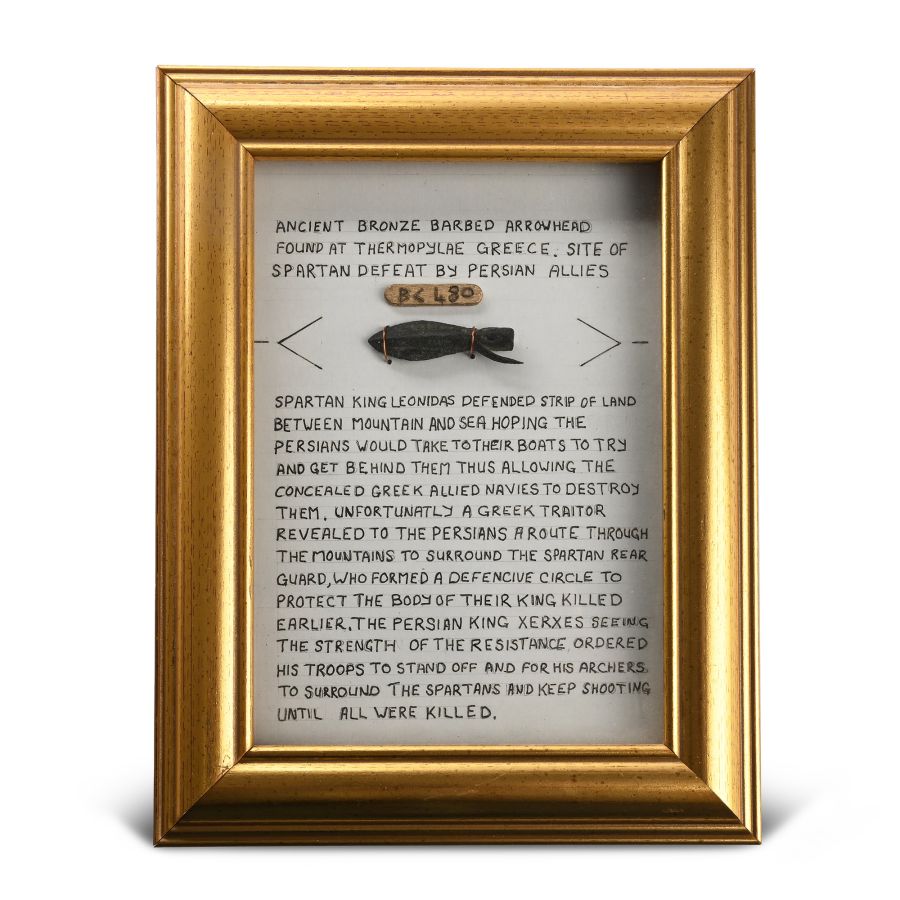
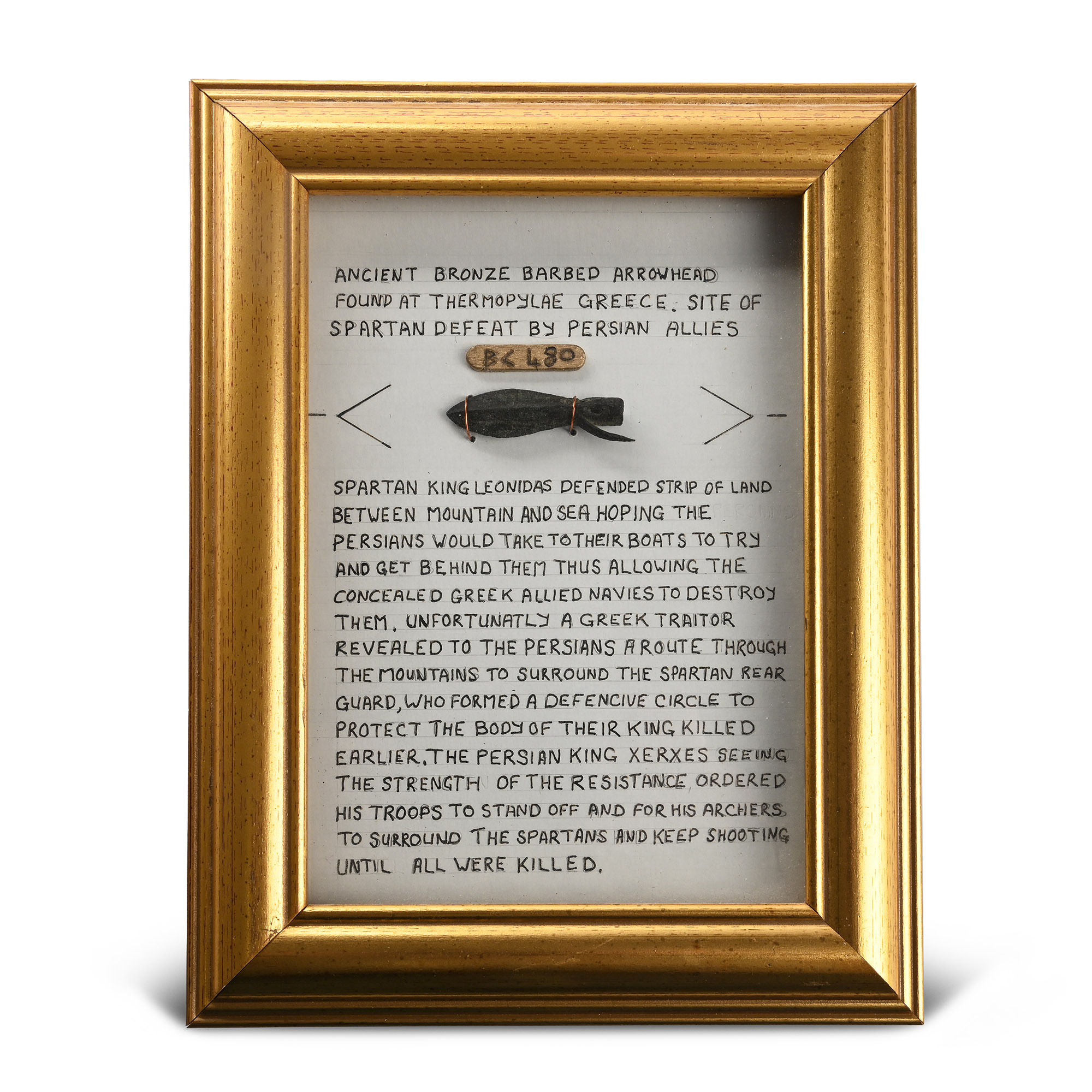
Framed Greek Bronze Barbed Arrowhead
5TH-3RD CENTURY B.C.
8 7/8 x 7 in. (440 grams total, 22.7 x 17.6 cm).
Leaf-shaped arrowhead with midrib, conical socket and lateral spur; mounted in a glazed wooden display case with hand-lettered explanatory text concerning the battle of Thermopylae where the item was found. [No Reserve]
ProvenanceAcquired on the UK art market.
From the private collection of an East Anglian, UK, Specialist Collector.
TimeLine Auctions follows a vetting process to ensure the authenticity and legality of all items, reinforcing our commitment to integrity and responsible trading. Each antiquity, antique, and coin lot undergoes thorough examination by a vetting committee of at least ten external specialists, professional trade association members, scientists, and archaeologists: Our Vetting Process
AUCTIONS:
TimeLine is a leading auction house specialising in antiquities, ancient art, collectables, natural history, coins, medals, and books. Our auctions offer museums, collectors, historians, and enthusiasts the opportunity to acquire unique and historically significant pieces.
-
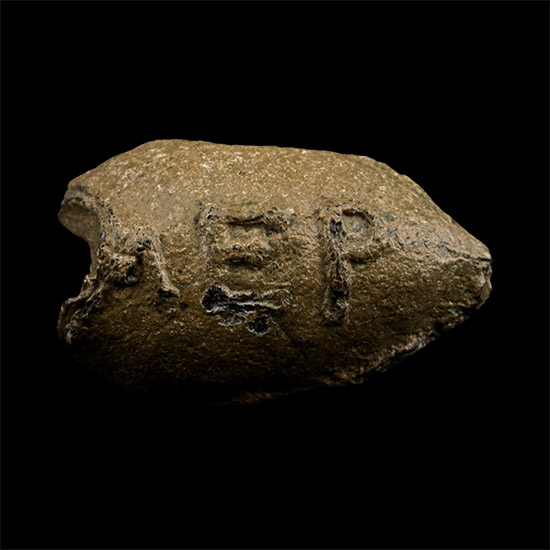
Greek Macedonian Lead Impacted Slingshot
4th-3rd century B.C.Sold for (Inc. bp): £52
Lentoid type with one end deformed on impact; raised legend '[.]MEP' to one face and 'NA[..]' to the other. 26.6 grams, 25 mm
Ex German art market, 2000s. Acquired from an EU collector living in London. From the collection of a Surrey, UK, gentleman. -
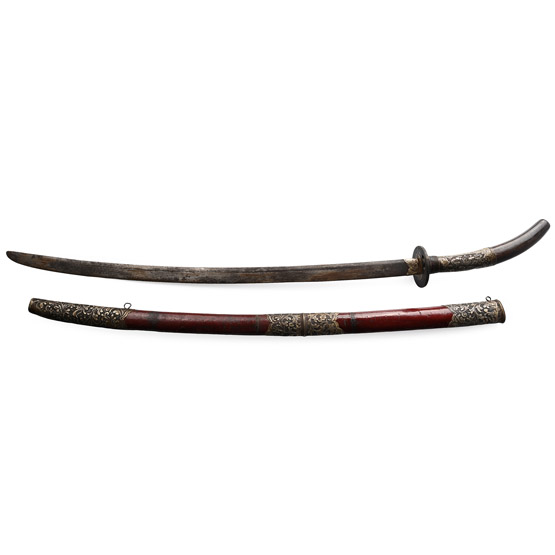
Vietnamese Officer's Iron Sword with Scabbard
Colonial Period, late 19th-early 20th century A.D.Sold for (Inc. bp): £1,105
The curved blade with corrugation below the spine, narrowing tip, applied collar at the ricasso; pierced discoid guard, curved grip with decorated sleeve; lacquered scabbard with silver fittings; Vietnamese name lightly inscribed on hilt. 967 grams total, 93 cm including scabbard
Acquired in 2008. Property of a Kent, UK, private collector. -
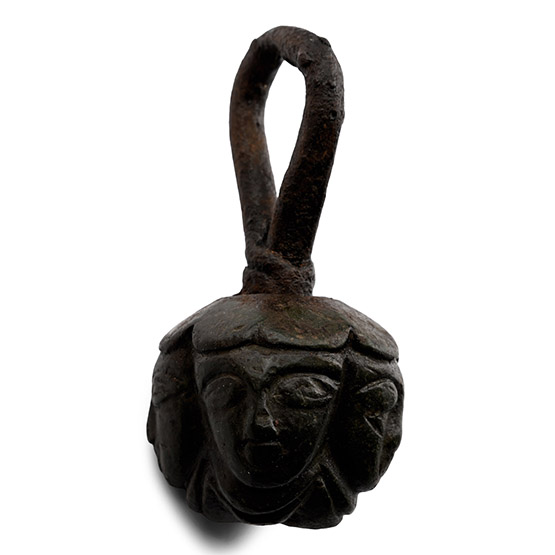
Medieval Bronze Flail Head with Four Heads
14th-15th century A.D.Sold for (Inc. bp): £468
Formed as four radiating D-shaped masks beneath a rosette, substantial suspension loop. 114 grams, 60 mm
From the private collection of a London gentleman, from his grandfather's collection formed before the early 1970s.
