
Loading, please wait...
LOT 2137
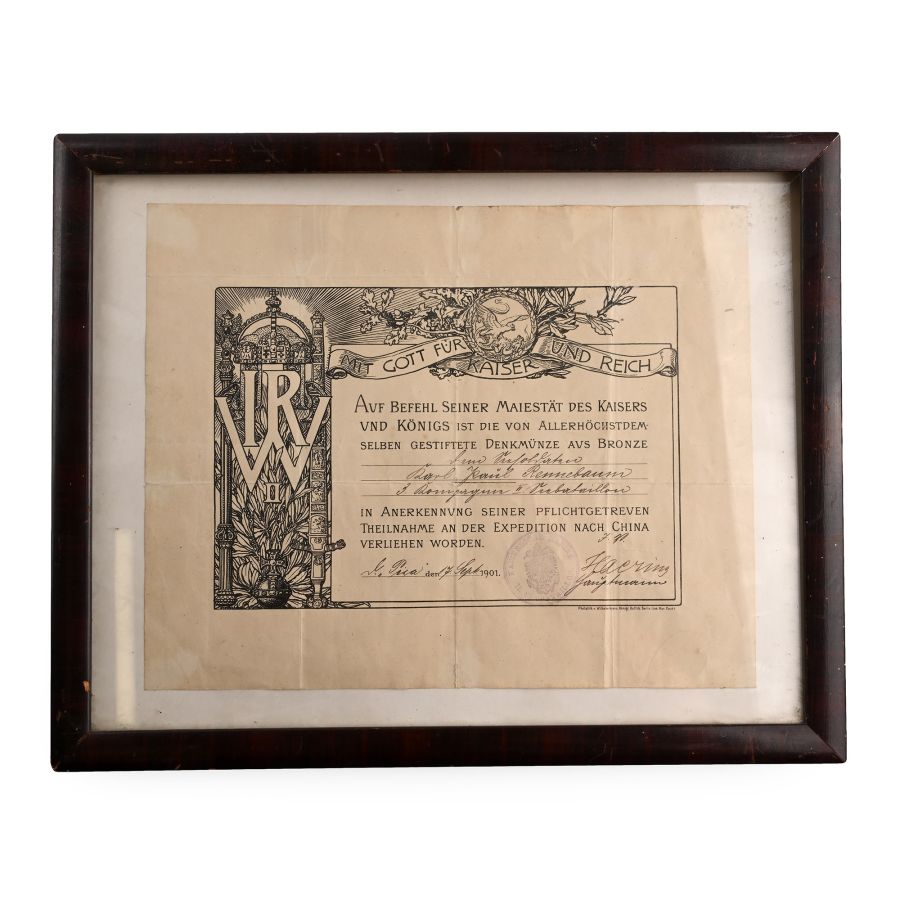
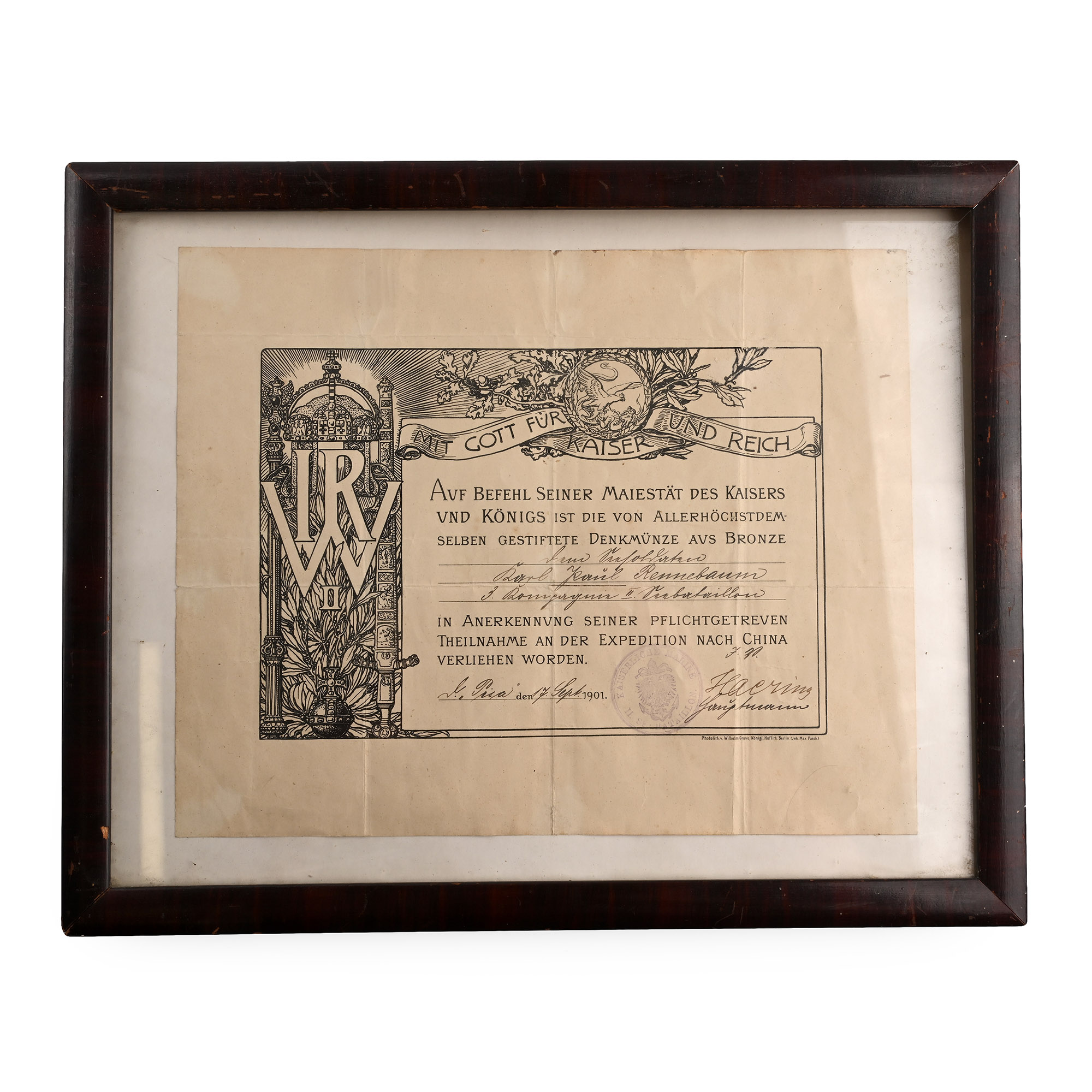
Framed German Expedition to China Medal Certificate
1901 A.D.
15 1/8 in. (831 grams total, 38.5 x 31 cm).
Certificate of participation in the German expedition against China, dated 17th September 1901, issued to Karl Rennebaum and stamped by the 'Kaiserliche Marine'; in glazed wooden frame. [No Reserve]
ProvenanceFrom the private collection of author and historian Dr DeWitt Bailey; thence by descent to his grandson.
CONDITIONTimeLine Auctions follows a vetting process to ensure the authenticity and legality of all items, reinforcing our commitment to integrity and responsible trading. Each antiquity, antique, and coin lot undergoes thorough examination by a vetting committee of at least ten external specialists, professional trade association members, scientists, and archaeologists: Our Vetting Process
AUCTIONS:
TimeLine is a leading auction house specialising in antiquities, ancient art, collectables, natural history, coins, medals, and books. Our auctions offer museums, collectors, historians, and enthusiasts the opportunity to acquire unique and historically significant pieces.
-
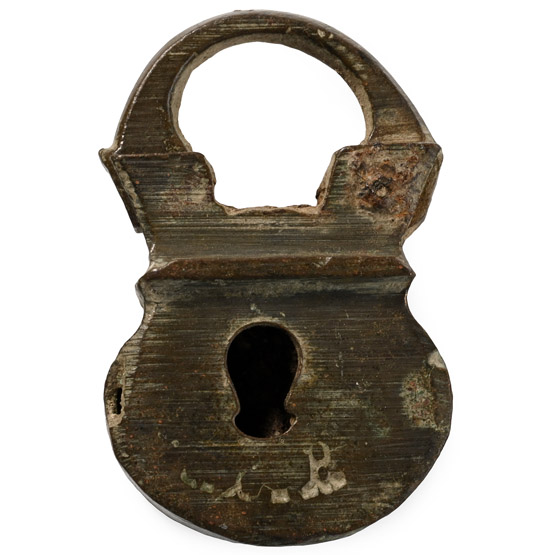
Post Medieval Bronze Padlock
16th-17th century A.D.Sold for (Inc. bp): £33
Tudor period with C-shaped locking arm, keyhole with ledge above. 16.92 grams, 34 mm
Ex German art market, 2000s. Acquired from an EU collector living in London. From the collection of a Surrey, UK, gentleman. -
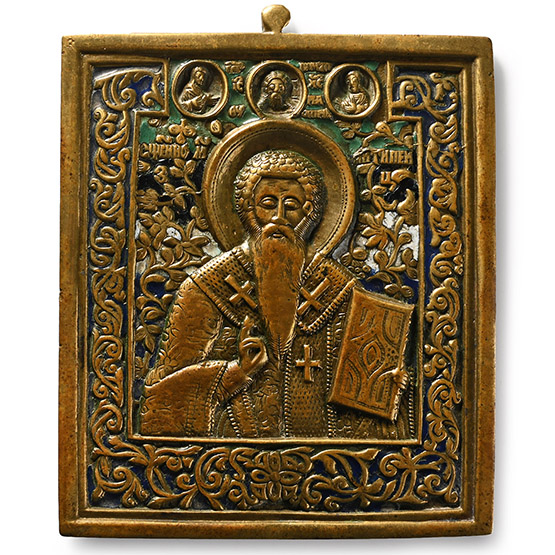
Russian Orthodox Enamelled Bronze Travel Icon with Saint Antipas of Pergamum
19th century A.D.Estimate: £250 - 350 (+bp*)
Opening Bid: £135
Representing Saint Antipas with a Gospel in his left hand and making the gesture of blessing with his right, dressed as a bishop, with sticharion, covered by omophorion, and surmounted by an epitrachelion; the Mandylion at the centre above the saint, Saint Mary on the left panel and Jesus on the right; Old Slavic inscription around the figures: 'ΙC ΧΡ' (Jesus Christ); 'ΜΡ ϴΥ'(Mother of God); Saint Antipas of Pergamum (Св Анти́па Перга́мский). 238 grams, 11.3 cm
Acquired from Chris Martin-Zakheim, Iconastas, 5 Piccadilly Arcade, London SW1. From the private collection of a West London, UK, gentleman, formed since the early 2000s.
The icon features meticulous craftsmanship typical of Orthodox iconography. Saint Antipas was popularly held to be a healer of tooth problems. He was martyred by burning in a brazen bull-shaped altar under the Emperors Nero or Domitian. -
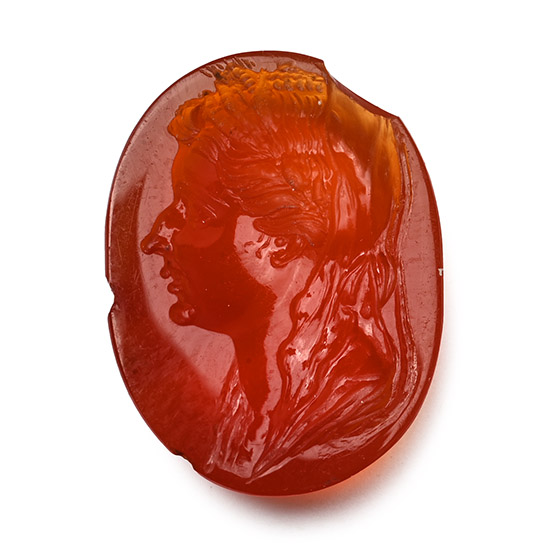
Neoclassical Carnelian Gemstone with Bust of the Roman Empress Livia as the Greek Goddess Ceres
Italy, 18th century A.D.Sold for (Inc. bp): £650
Intaglio profile bust of Empress Livia with laurel wreath to her long hair, presented in the guise of Ceres; supplied with a museum-quality impression. 1.51 grams, 19 mm
Private English collection, formed between the late 1970s and early 1990s. Private collection, London, UK.
Livia Drusilla (59 B.C.-A.D. 29) was Roman empress from 27 B.C.-A.D. 14 as the wife of Emperor Augustus. She was known as Julia Augusta after her admission into the Julian family in AD 14. Charis (Greek: Χάρις meaning 'Grace') was a goddess in Greek mythology, one of the 'Charites' or 'Graces' associated with charm, beauty, nature, creativity and fertility.
