
Loading, please wait...
LOT 1450
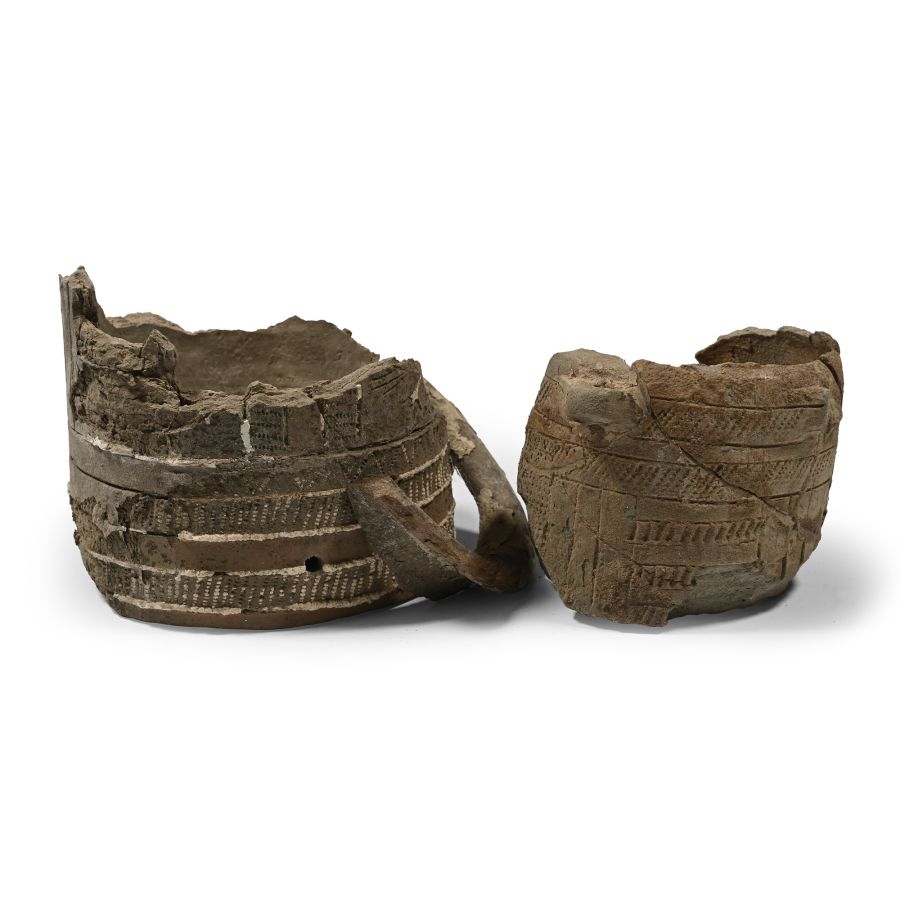
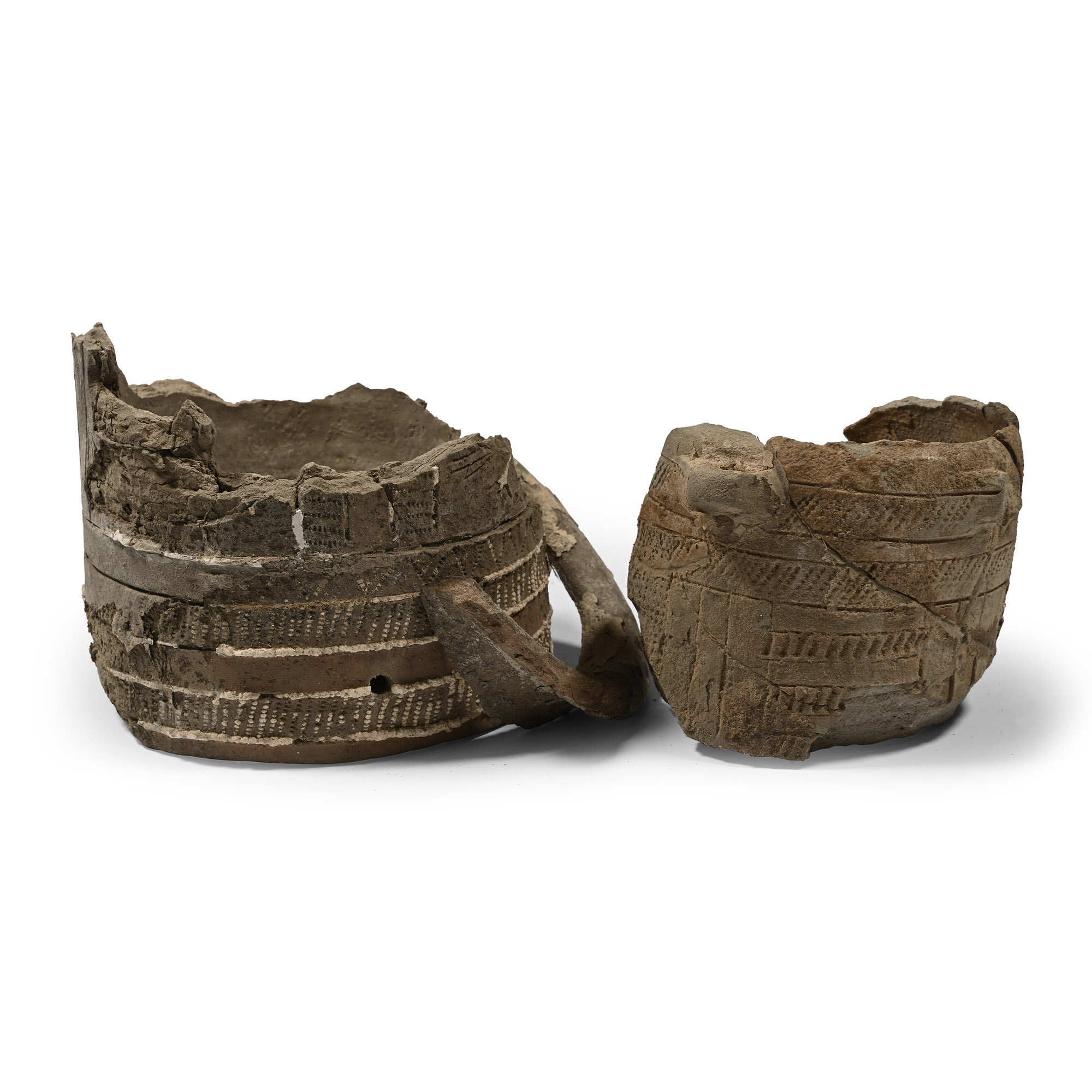
Fragmentary Sumerian Jar with Decoration
2ND MILLENNIUM B.C.
1/8 - 4 1/4 in. (705 grams total, 0.1-10.9 cm).
Fragments of a coarse ceramic jar with vertical and horizontal incised bands, some with hatched detailing. [No Reserve]
ProvenanceFrom a London, UK, collection, 1990s.
This lot has been cleared against the Art Loss Register database, and is accompanied by an illustrated lot declaration signed by the Head of the Antiquities Department, Dr Raffaele D'Amato.
TimeLine Auctions follows a vetting process to ensure the authenticity and legality of all items, reinforcing our commitment to integrity and responsible trading. Each antiquity, antique, and coin lot undergoes thorough examination by a vetting committee of at least ten external specialists, professional trade association members, scientists, and archaeologists: Our Vetting Process
AUCTIONS:
TimeLine is a leading auction house specialising in antiquities, ancient art, collectables, natural history, coins, medals, and books. Our auctions offer museums, collectors, historians, and enthusiasts the opportunity to acquire unique and historically significant pieces.
-
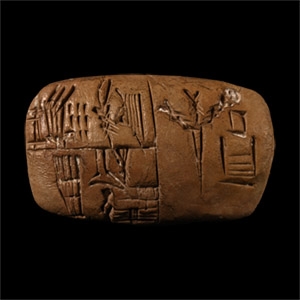
Proto-Sumerian Pictographic Terracotta Tablet
Uruk III, circa 3200-3000 B.C.Sold for (Inc. bp): £3,120
Lentoid in section with design to one face in three registers: left, large panel with impressed grid, square and spray; right, two smaller panels with hatching and geometric forms. 26.2 grams, 55 mm
From an important collection formed before 1988. Examined by Professor Wilfrid George Lambert FBA (1926-2011), historian, archaeologist, and specialist in Assyriology and Near Eastern archaeology, in the late 1980s and 1990s. This lot has been checked against the Interpol Database of stolen works of art and is accompanied by a search certificate number no.12543-231889. This lot has been cleared against the Art Loss Register database, and is accompanied by an illustrated lot declaration signed by the Head of the Antiquities Department, Dr Raffaele D'Amato. -
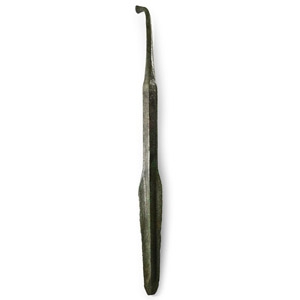
Luristan Bronze Spearhead
1200-1100 B.C.Estimate: £200 - 300 (+bp*)
Opening Bid: £100
With ovate blade, central rib and curved shoulders, the lozenge-section long shaft tapering towards the end, rectangular tang with bent tip. 267 grams, 34.5 cm
Acquired 1980-2015. Ex Abelita family collection. This lot has been cleared against the Art Loss Register database, and is accompanied by an illustrated lot declaration signed by the Head of the Antiquities Department, Dr Raffaele D'Amato.
The spearhead represents a slender variant of type 1 of Khorasani classification. The type 1 was characterised by the bent tang. It was the evolution of a typology which began much earlier in Mesopotamia and the fertile crescent, the type 4 of the Stronach classification, with straight tang and square section, usually thickened at the base with a button tang. -
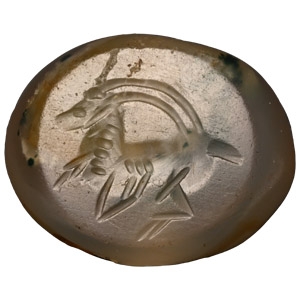
Sasanian Chalcedony Stamp Seal with an Ibex
5th century A.D.Sold for (Inc. bp): £143
Domed body with a large suspension hole to the centre, underside with a reclining ibex, long curving horns extending to the rump. 14.9 grams, 26 mm
UK private collection before 2000. Acquired on the UK art market. Property of a London gentleman. This lot has been cleared against the Art Loss Register database, and is accompanied by an illustrated lot declaration signed by the Head of the Antiquities Department, Dr Raffaele D'Amato.
