
Loading, please wait...
_900x900.jpg "Fossil Woolly Rhinoceros Tooth")
_200x200.jpg "Fossil Woolly Rhinoceros Tooth")
.jpg "Fossil Woolly Rhinoceros Tooth")
LOT 2764
Fossil Woolly Rhinoceros Tooth
DEVENSIAN PERIOD, CIRCA 110,000-12,000 YEARS B.P.
3 5/8 in. (138 grams, 93 mm).
A molar from Coelodonta antiquitatis with root. [No Reserve]
ProvenanceFrom a Cambridgeshire, UK, collection.
FootnotesThe form of the woolly rhino’s skull and teeth had evolved to support its grazing lifestyle with its head dipped downwards towards the ground, even in its relaxed attitude. The skull is unusual in having both an extensively ossified nasal septum, probably evolved as a result of the heavy pressure on the horn and face when grazing, and a down-turned anterior region on the premaxilla that contacts the edge of the upper jaw. The shoulders were raised with a powerful hump, used to support the animal's massive front horn and also used for storing fat.
CONDITIONTimeLine Auctions follows a vetting process to ensure the authenticity and legality of all items, reinforcing our commitment to integrity and responsible trading. Each antiquity, antique, and coin lot undergoes thorough examination by a vetting committee of at least ten external specialists, professional trade association members, scientists, and archaeologists: Our Vetting Process
AUCTIONS:
TimeLine is a leading auction house specialising in antiquities, ancient art, collectables, natural history, coins, medals, and books. Our auctions offer museums, collectors, historians, and enthusiasts the opportunity to acquire unique and historically significant pieces.
-
![Cut & Polished Malachite Display Piece Group [20]](https://timelineauctions.com/upload/images/items/small/227934-s.jpg)
Cut & Polished Malachite Display Piece Group [20]
Sold for (Inc. bp): £33
Each with at least one polished face to reveal the attractive banding; some pierced for threading. 304 grams total, 24-42 mm
From Democratic Republic of the Congo, Central Africa. Ex Mineral Imports, London, UK. Gregory, Bottley & Lloyd (Gregory's), Harwich, UK. -
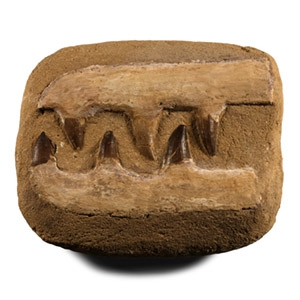
Mosasaur 'Marine Dinosaur' Fossil Teeth in Composite Matrix
Cretaceous Period, circa 145-65 million years B.P.Sold for (Inc. bp): £33
Comprising six Mosasaur prognathodon teeth set on a composite matrix. 1.59 kg, 19 cm
From Germany. From a Cambridgeshire, UK, collection.
Mosasaurs (from the Greek for 'lizard') were aquatic dinosaurs which probably gave birth to live young. -
![Deep Purple Amethyst Crystal Chunk Group [40]](https://timelineauctions.com/upload/images/items/small/227826-s.jpg)
Deep Purple Amethyst Crystal Chunk Group [40]
Sold for (Inc. bp): £20
Comprising forty large chunks in dark purple colour. 2.64 kg total, 46-72 mm
From Brazil. Ex Mineral Imports, London, UK. Gregory, Bottley & Lloyd (Gregory's), Harwich, UK.
