
Loading, please wait...
LOT 2327
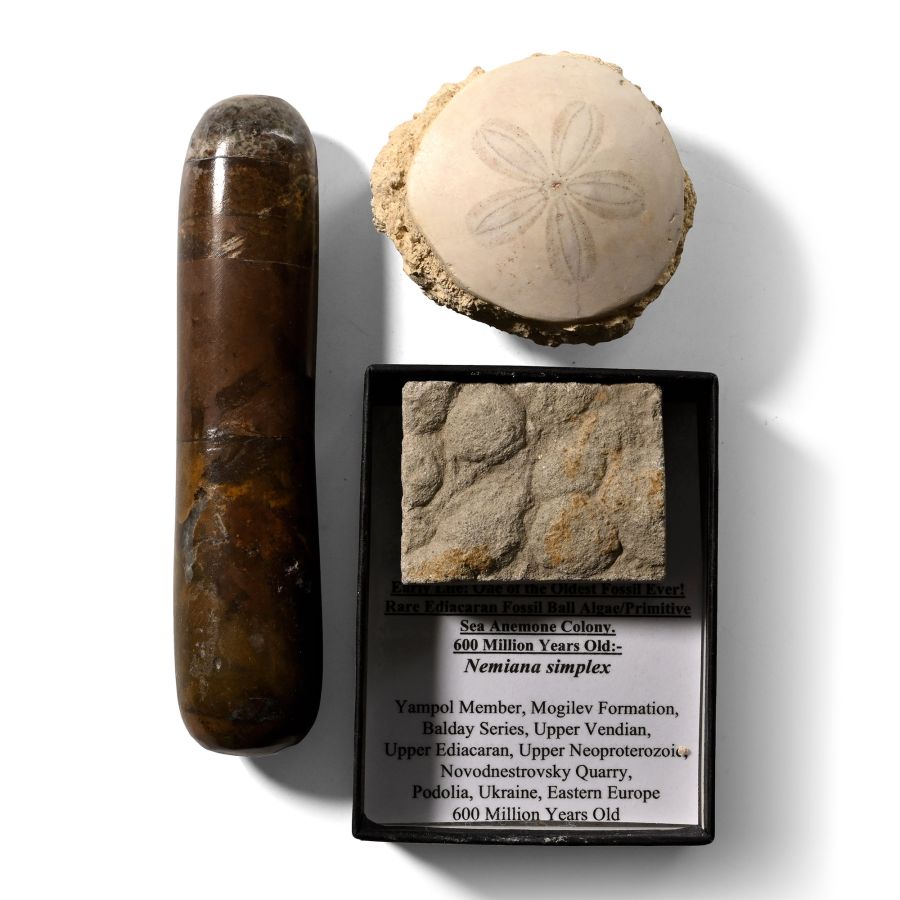
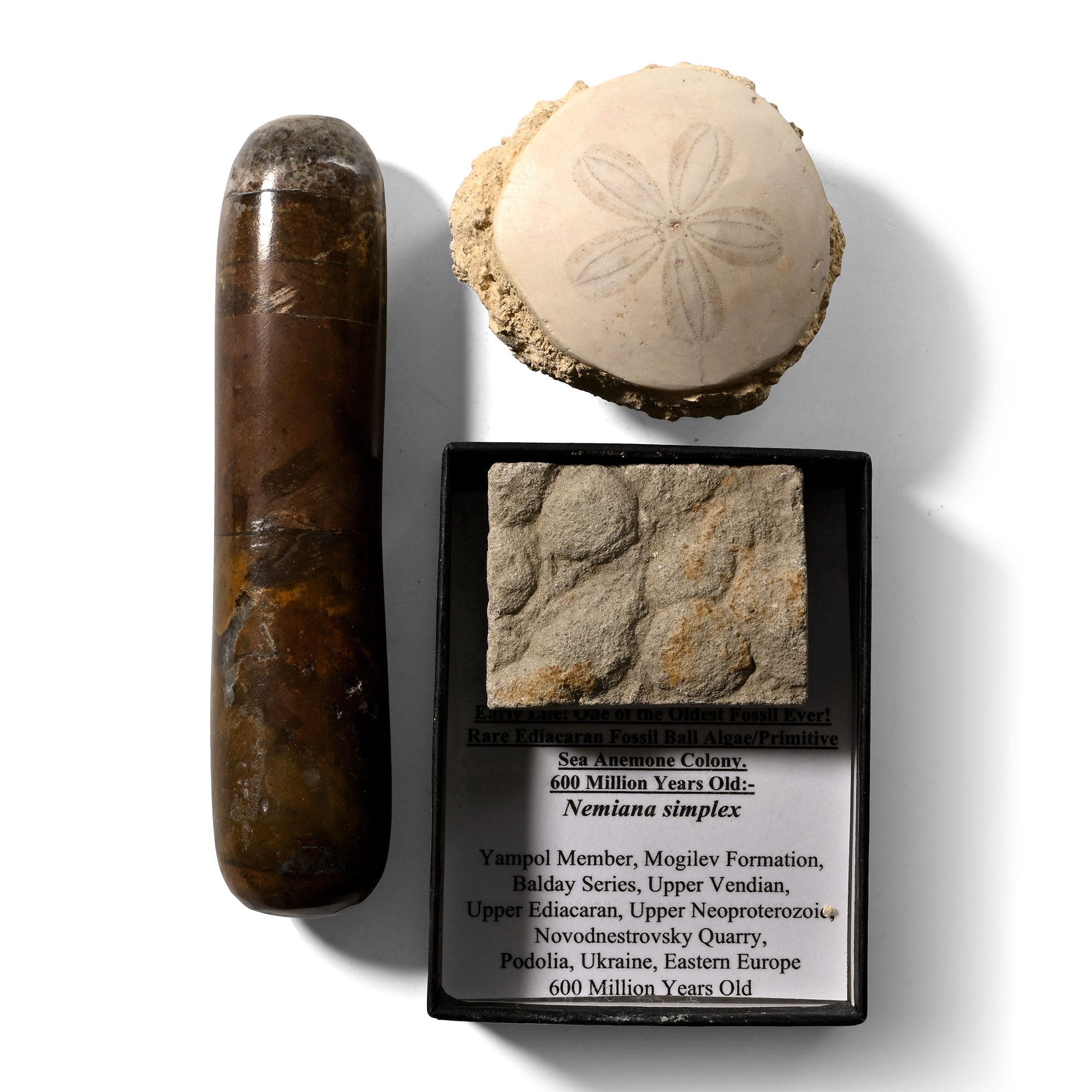
Fossil Sand Dollar and Ediacaran Primitive Sea Anemone Colony Group
EDIACARAN-MIOCENE PERIOD, CIRCA 600-25 MILLION YEARS B.P.
2 - 5 in. (366 grams total, 4.9-12.6 cm).
Comprising: a fossil 'sand dollar' on matrix, a rectangular section of Nemiana simplex in a box with an information card, a polished stone 'wand'. [3, No Reserve]
ProvenanceFrom the private collection of Kenneth Machin (1936-2020), Buckinghamshire, UK; his collection of antiquities and natural history was formed since 1948; thence by descent.
CONDITIONTimeLine Auctions follows a vetting process to ensure the authenticity and legality of all items, reinforcing our commitment to integrity and responsible trading. Each antiquity, antique, and coin lot undergoes thorough examination by a vetting committee of at least ten external specialists, professional trade association members, scientists, and archaeologists: Our Vetting Process
AUCTIONS:
TimeLine is a leading auction house specialising in antiquities, ancient art, collectables, natural history, coins, medals, and books. Our auctions offer museums, collectors, historians, and enthusiasts the opportunity to acquire unique and historically significant pieces.
LOT 2327
Fossil Sand Dollar and Ediacaran Primitive Sea Anemone Colony Group
Sold for (Inc. bp): £20
-
![Large Group of One Hundred and Thirty [130] Mixed Colour Topaz Pebbles Totalling 6,500 Carats](https://timelineauctions.com/upload/images/items/small/255985-s.jpg)
Large Group of One Hundred and Thirty [130] Mixed Colour Topaz Pebbles Totalling 6,500 Carats
Sold for (Inc. bp): £13
Large quantity of pale coloured topaz pebbles, including quartz and possibly some other specimens. 1.3 kg total, 11-52 mm
Ex Mineral Imports, London, UK. Gregory, Bottley & Lloyd (Gregory's), Harwich, UK. -
![Group of Twenty Nine [29] Large Rock Crystal Quartz Specimens](https://timelineauctions.com/upload/images/items/small/255986-s.jpg)
Group of Twenty Nine [29] Large Rock Crystal Quartz Specimens
Sold for (Inc. bp): £29
Boxed group of mainly prismatic colourless specimens, some twinned and three specimens with dark dendritic inclusions. 2.93 kg total, 45-88 mm
From Brazil. Ex Mineral Imports, London, UK. Gregory, Bottley & Lloyd (Gregory's), Harwich, UK. -
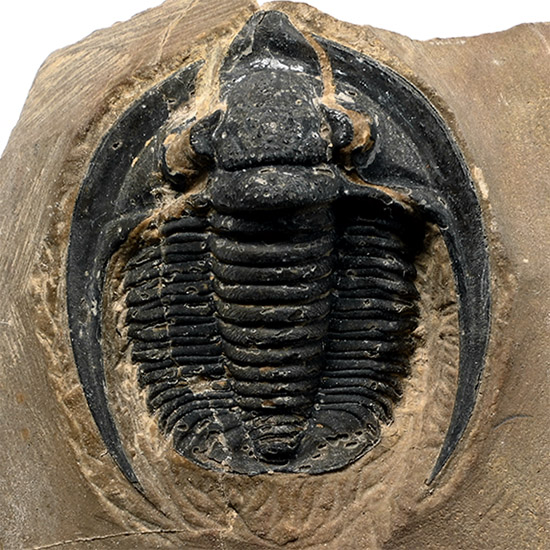
Fossil Harpes Trilobite in Matrix
Middle Devonian Period, circa 380 million years B.P.Sold for (Inc. bp): £143
Roughly semicircular head, and the genal roll with genal prolongations. 117 grams, 77 mm
From the private collection of Kenneth Machin (1936-2020), Buckinghamshire, UK; his collection of antiquities and natural history was formed since 1948; thence by descent.
