
Loading, please wait...
_900x900.jpg "Fossil Lebanese Shrimp on Matrix Group")
_200x200.jpg "Fossil Lebanese Shrimp on Matrix Group")
.jpg "Fossil Lebanese Shrimp on Matrix Group")
LOT 2725
Fossil Lebanese Shrimp on Matrix Group
CRETACEOUS PERIOD, CIRCA 110 MILLION YEARS B.P.
3 1/4 - 3 1/2 in. (447 grams total, 84-89 mm).
Comprising three rectangular matrices, each with a Carpopenaeus sp. specimen, one dendritic. [3, No Reserve]
ProvenanceFrom a Cambridgeshire, UK, collection.
CONDITIONTimeLine Auctions follows a vetting process to ensure the authenticity and legality of all items, reinforcing our commitment to integrity and responsible trading. Each antiquity, antique, and coin lot undergoes thorough examination by a vetting committee of at least ten external specialists, professional trade association members, scientists, and archaeologists: Our Vetting Process
AUCTIONS:
TimeLine is a leading auction house specialising in antiquities, ancient art, collectables, natural history, coins, medals, and books. Our auctions offer museums, collectors, historians, and enthusiasts the opportunity to acquire unique and historically significant pieces.
-
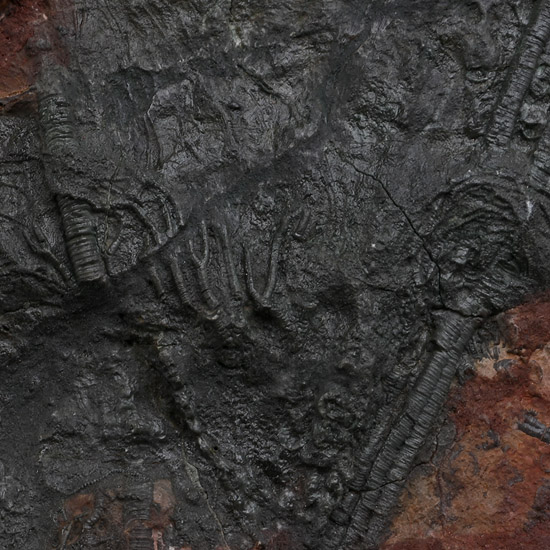
Fossil Mahoumacrinus Crinoid Plate
Devonian Period, circa 400 million years B.P.Sold for (Inc. bp): £26
On a tongue-shaped matrix showing part of the stalk and calyces. 797 grams, 19.1 cm
From a Cambridgeshire, UK, collection. -
![Group of Twenty [20] Cut and Polished Agate Geode Slices](https://timelineauctions.com/upload/images/items/small/251021-s.jpg)
Group of Twenty [20] Cut and Polished Agate Geode Slices
Sold for (Inc. bp): £111
Comprising twenty transparent to translucent slices, some with a crystalline centre, four dyed. 560 grams total, 5.5-10.8 cm
Ex Mineral Imports, London, UK. Gregory, Bottley & Lloyd (Gregory's), Harwich, UK. -
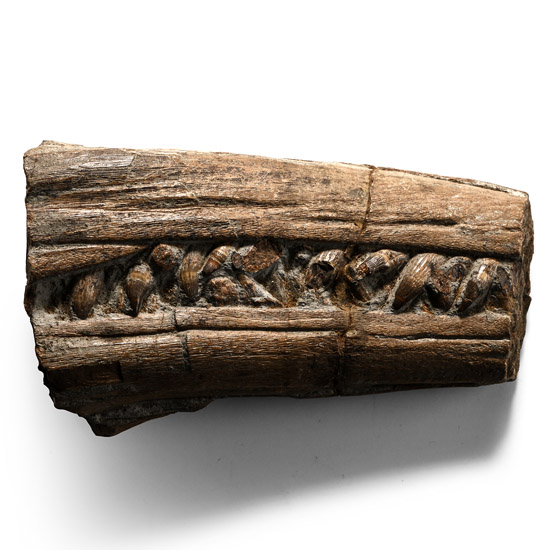
Bifacial Partial Fossil Ichthyosaur Jaw
Mesozoic-Jurassic Period, circa 250-90 million years B.P.Sold for (Inc. bp): £1,040
Showing multiple sharp teeth and a section of well-formed, slender jaws. 270 grams, 10.6 cm
Discovered at Lyme Regis, UK, during the time of Mary Anning and her family. From an old English collection. Ian Wilkinson collection, Nottinghamshire, UK, formed since 1985. With an original early 19th-century handwritten identification label ‘Nose of a Saurian’, the original discovery of this fossil can be dated to the period 1800-1830.
Originally, ichthyosaur fossils were misidentified as ‘Saurian’ - being either lizards or forms of crocodile. The term 'Ichthyosaur' was first used in 1817 by the German naturalist Karl Dietrich Eberhard Konig, and he did not publish the name until 1825. By the 1830’s, the name Ichthyosaur was widely used. Having been discovered in Lyme Regis, this dates the discovery of the fossil to the ‘Golden Age’ of fossil hunting in the early 1800s (before the use of the name ‘ichthyosaur’) made especially famous by Mary Anning and her family, who collected fossils from the coast around Lyme Regis and who sold specimens, for additional income, to tourists as well as leading naturalists and fossil collectors from around the world.
