
Loading, please wait...
LOT 2083
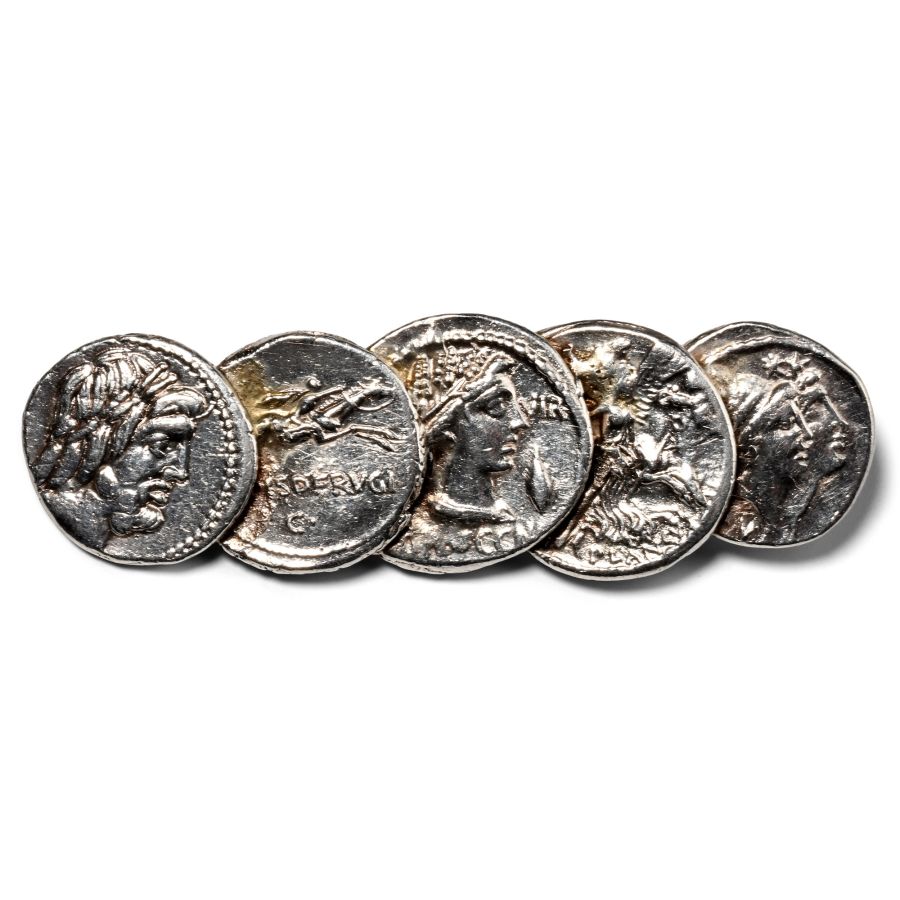
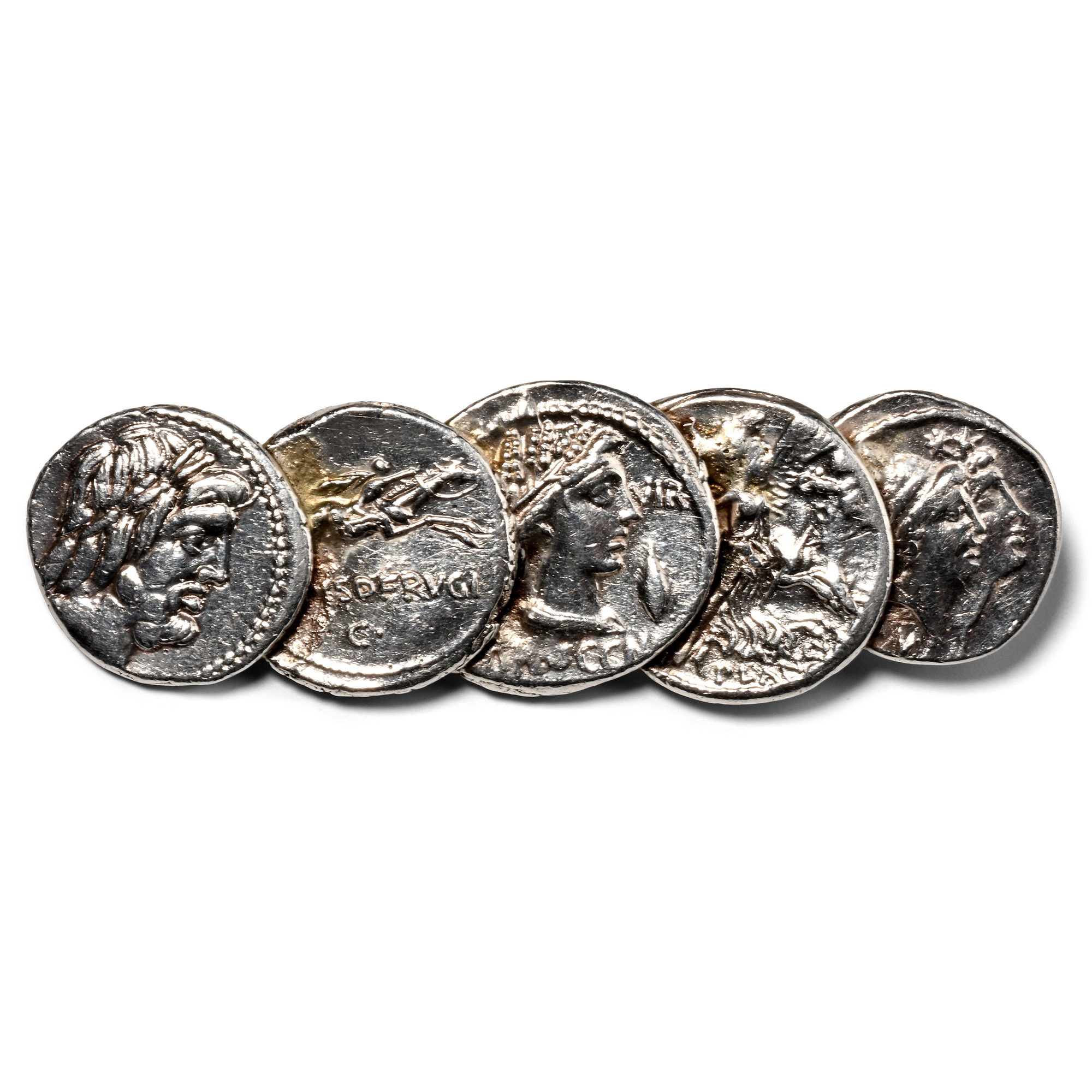
FIve Republican Denarii Formed as A Victorian Tie Pin.
LATE 19TH CENTURY A.D.
2 1/2 in. (21 grams, 62 mm).
Group of five coins soldered together and with hinge and catch fittings with a pin to the reverse.
ProvenanceFrom a UK collection.
Property of a London, UK, antiquarian.
TimeLine Auctions follows a vetting process to ensure the authenticity and legality of all items, reinforcing our commitment to integrity and responsible trading. Each antiquity, antique, and coin lot undergoes thorough examination by a vetting committee of at least ten external specialists, professional trade association members, scientists, and archaeologists: Our Vetting Process
AUCTIONS:
TimeLine is a leading auction house specialising in antiquities, ancient art, collectables, natural history, coins, medals, and books. Our auctions offer museums, collectors, historians, and enthusiasts the opportunity to acquire unique and historically significant pieces.
-
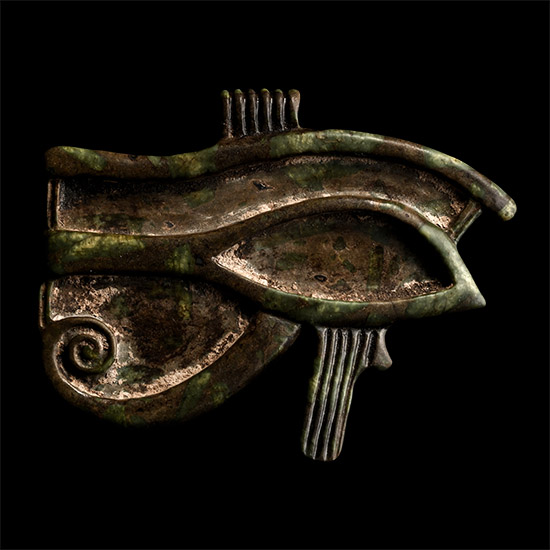
Egyptian Style Green Porphyritic Stone Eye of Horus Pendant
20th century A.D.Estimate: £500 - 700 (+bp*)
Opening Bid: £250
Carved from mottled stone wedjat with raised eyebrow, sclera, teardrop and markings, ribbed suspension loop above. 15 grams, 48 mm
Old French collection. UK private collection, acquired from the above in the 2000s. -
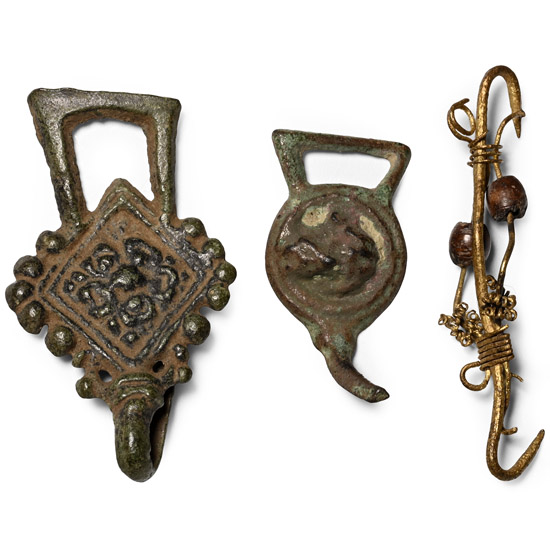
Tudor Period Bronze Hook Fastener Group
Circa 16th century A.D.Sold for (Inc. bp): £13
Comprising: a fastener with a bust; a large fastener with a lozenge-shaped plate with a floral motif; a wire fastener with two hooked ends, wire decoration and two decorative beads. 7.69 grams total, 28-41 mm
From the private collection of Graham Slater (1927-2024), Cambridge, UK; formed 1980s-1990s. -
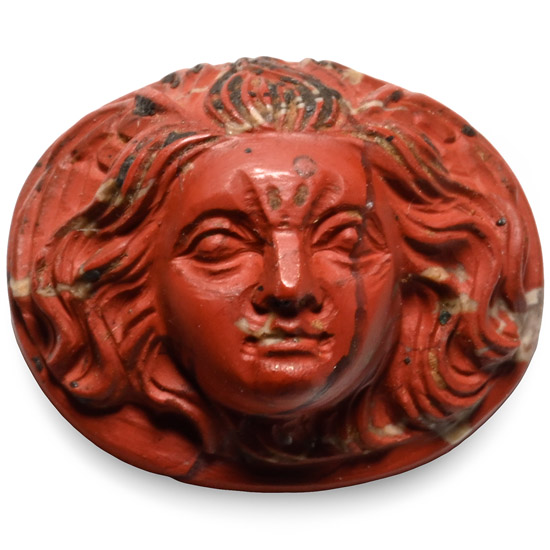
Post Classical Red Jasper Cameo of Medusa
20th century A.D.Sold for (Inc. bp): £117
Oval cameo with the face of Medusa with flowing hair, furrowed brow and piercing gaze. 1.48 grams, 14 mm
Acquired on the European art market.
