
Loading, please wait...
LOT 1198
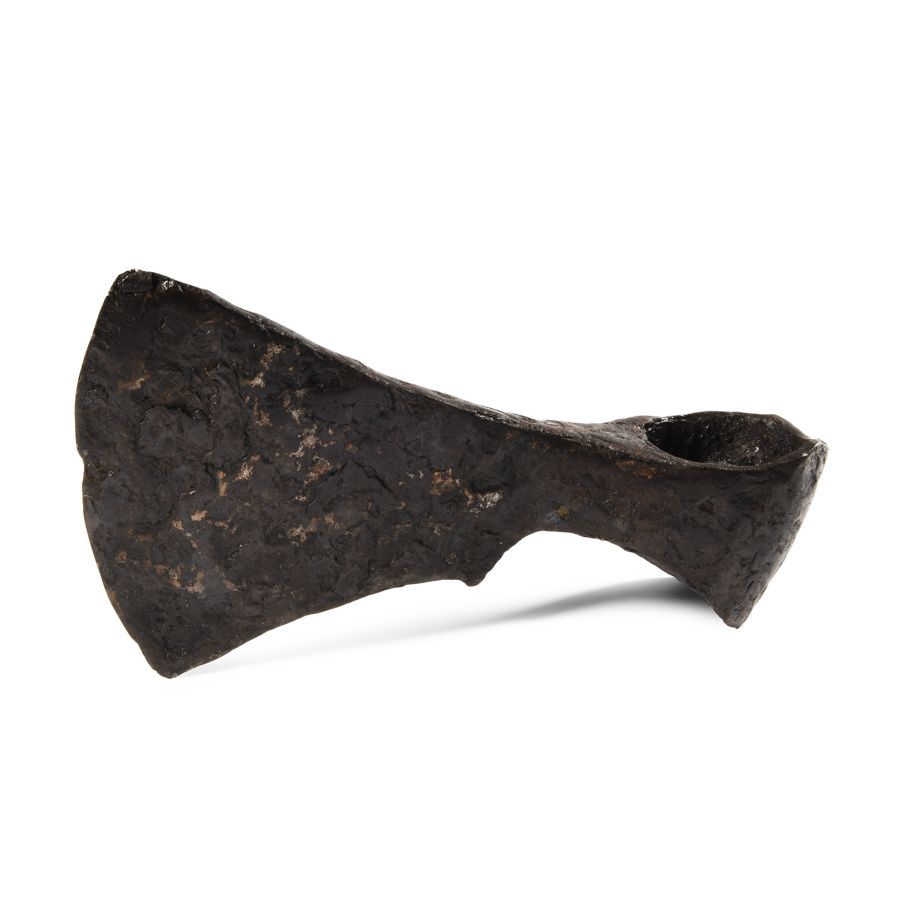
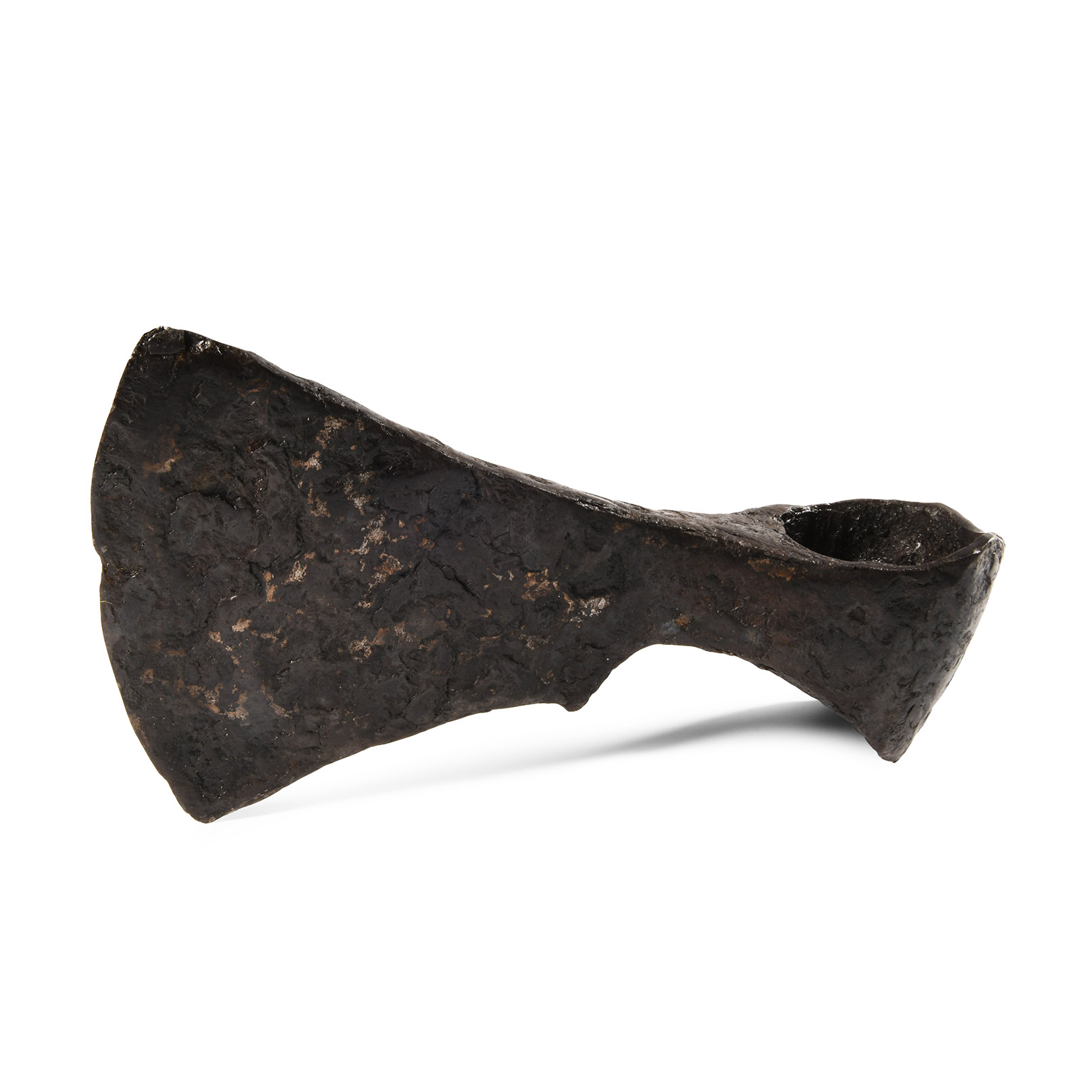
Finno-Ugrian Socketted Axehead
10TH-13TH CENTURY A.D.
6 7/8 in. (569 grams, 17.5 cm).
Hand-forged with triangular-section narrow blade widening to a broad bevelled edge with square chin and spur to the rear, socket with flanges to the rear. [No Reserve]
ProvenanceFrom the private collection of a London gentleman, from his grandfather's collection formed before the early 1970s.
LiteratureCf. Nicolle, D., 'Raiders of the Ice War' in Military Illustrated, March 1996, no.94, pp.26-29, fig.p.28, for similar axes; Sedov, B.B., 'Finno-Ugri i Balti v Epokhi Srednevekovija,' Moscow, 1987, pl.CX, item 44.
FootnotesDuring the mid 13th century, the axes were favourite weapons among Baltic people. For instance, the Curonian army included lightly armed soldiers who fought with spears, shields, fighting knives and axes. A heavily armed soldier could also carry a sword, a helmet, a shield and a wide-bladed axe.
CONDITIONTimeLine Auctions follows a vetting process to ensure the authenticity and legality of all items, reinforcing our commitment to integrity and responsible trading. Each antiquity, antique, and coin lot undergoes thorough examination by a vetting committee of at least ten external specialists, professional trade association members, scientists, and archaeologists: Our Vetting Process
AUCTIONS:
TimeLine is a leading auction house specialising in antiquities, ancient art, collectables, natural history, coins, medals, and books. Our auctions offer museums, collectors, historians, and enthusiasts the opportunity to acquire unique and historically significant pieces.
-
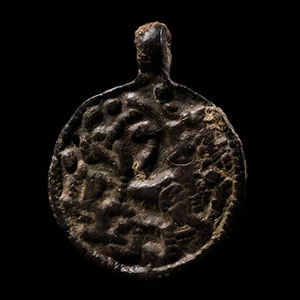
Large Viking Age Bronze Regardant Beast Pendant
9th-11th century A.D.Sold for (Inc. bp): £195
Of discoid form with integral suspension loop, design in relief. 17.2 grams, 47 mm
From the collection of a North American gentleman, formed in the 1990s. -
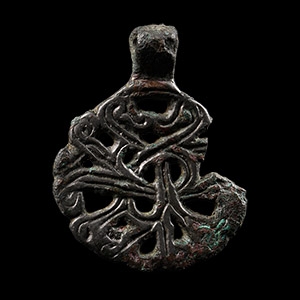
Viking Age Bronze Openwork Pendant
9th-11th century A.D.Sold for (Inc. bp): £46
Featuring a central trefoil knot and radiating bars forming an interlaced panel; suspension loop above; chipped. 7.335 grams, 38 mm
Ex property of a European gentleman living in Northamptonshire, before 2014. From the collection of a North American gentleman. -
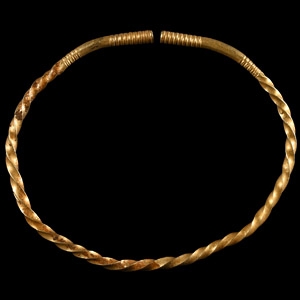
Viking Age Gold Twisted Bracelet
9th-11th century A.D. or earlierSold for (Inc. bp): £1,235
Composed of a slender, decoratively twisted penannular hoop with expanded collared terminals. 9.51 grams, 61 mm
From the collection of a North American gentleman, formed in the 1990s.
