
Loading, please wait...
LOT 0240
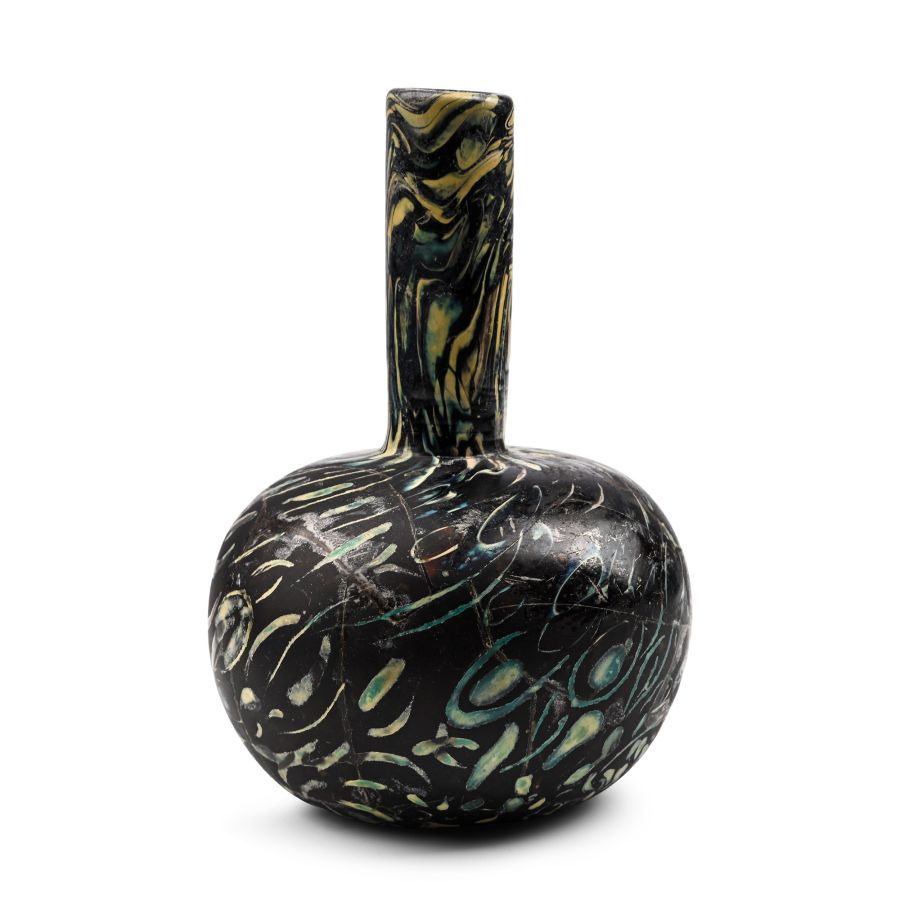
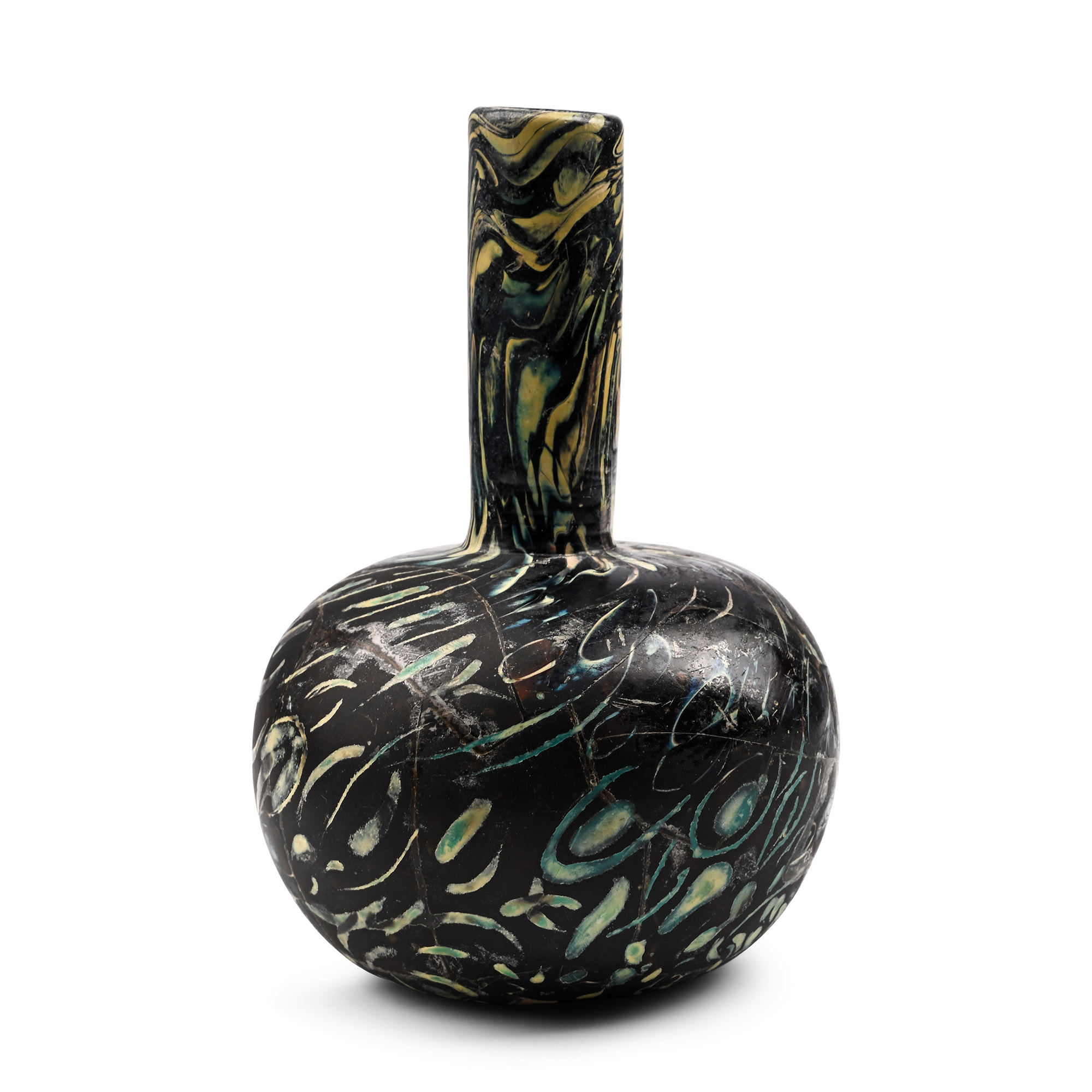
Fatimid Opaque Mosaic Glass Vase
CIRCA 10TH-12TH CENTURY A.D. OR LATER
6 1/8 in. (242 grams, 15.5 cm).
Comprising a squat, rounded body and tubular neck with a rounded rim, pontil base; dragged swirl motifs in white on a navy blue field; repaired.
ProvenancePrivate collection, UK.
LiteratureCf. for similar bottle, Kevorkian, A., Loudmer, G., Verres Antiques et de l’Islam, Ancienne Collection de Monsieur D., 3 et 4 Juin 1985, Paris, 1985, fig.622.
FootnotesThese vessels were core-formed in opaque green manganese, with a flattened spherical body and tall, thin, tapering neck. Such categories of vessels were especially produced in the region of the Fayoum.
CONDITIONTimeLine Auctions follows a vetting process to ensure the authenticity and legality of all items, reinforcing our commitment to integrity and responsible trading. Each antiquity, antique, and coin lot undergoes thorough examination by a vetting committee of at least ten external specialists, professional trade association members, scientists, and archaeologists: Our Vetting Process
AUCTIONS:
TimeLine is a leading auction house specialising in antiquities, ancient art, collectables, natural history, coins, medals, and books. Our auctions offer museums, collectors, historians, and enthusiasts the opportunity to acquire unique and historically significant pieces.
LOT 0240
Fatimid Opaque Mosaic Glass Vase
Estimate £600 - 800€700 - 930 (for guidance only)$810 - 1,080 (for guidance only)
-
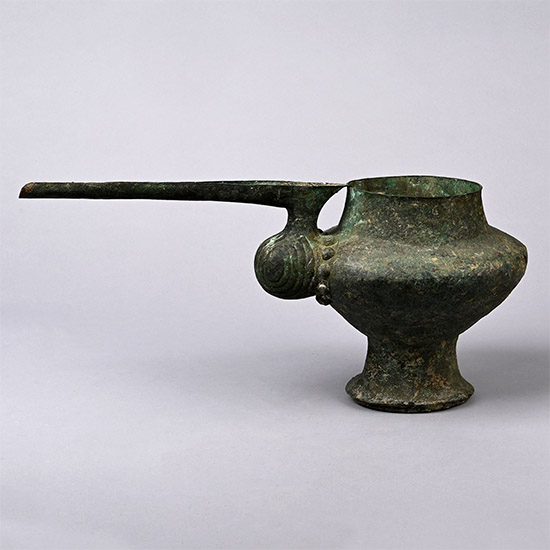
Large Amlash Bronze Spouted Libation Vessel
Circa 1200-1000 B.C.Estimate: £3,000 - 4,000 (+bp*)
Current Winning Bid: £2,200
One of the largest known examples, comprising a thin-walled body and flaring foot, a separately made long spout rivetted to the body; the U-shaped spout resembling the beak of a bird with stylised linear feather detailing to the gracefully curving neck, eleven domed rivets to the edges; the base of the foot with concentric circle decoration. 735 grams, 46 cm
Believed to have been acquired in the 1960s-1970s. From the collection of Mr Jay Gluck (1927–2000) and Mrs Sumi Hiramoto Gluck. Malter Galleries Inc., Auction 80, The Gluck Collection of Ancient Art, 7 April 2002, no.54. Alexander Ancient Art, Netherlands. Private collection, London, UK. This lot has been checked against the Interpol Database of stolen works of art and is accompanied by search certificate number no.13314-257665.
Jay Gluck (1927–2000) was an American author, art historian, and orientalist who spent much of his life in Japan and the wider Asia-Pacific region. A passionate collector and scholar of Asian art and culture, he is perhaps best known for his landmark publication Japan Inside Out (1964), and later A Survey of Persian Handicrafts (1977), co-authored with his wife Sumi Hiramoto Gluck, a Japanese-born artist and cultural collaborator who shared his deep engagement with Eastern art traditions. Together, the Glucks assembled a distinguished collection reflecting their combined expertise and decades of firsthand engagement with the arts of Asia and the ancient world. Items from their collection are held with great regard for the couple's scholarly rigour and the depth of provenance they represent. -
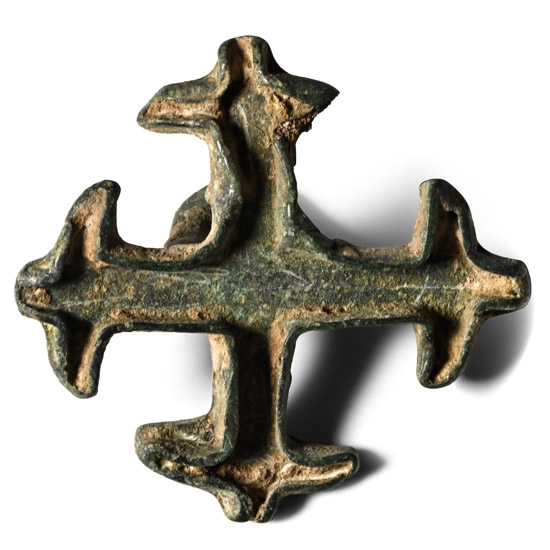
Large West Central Asian Bronze Fleur-Ended Cross Seal Matrix
Circa 2300-2000 B.C.Sold for (Inc. bp): £65
Comprising a cross-shaped body and a large U-shaped loop on the reverse. 14.5 grams, 41 mm
Acquired in the late 1980s-early 1990s. Ex property of a West London businessman. Academically researched and catalogued by the late Professor Lambert in the early 1990s. -
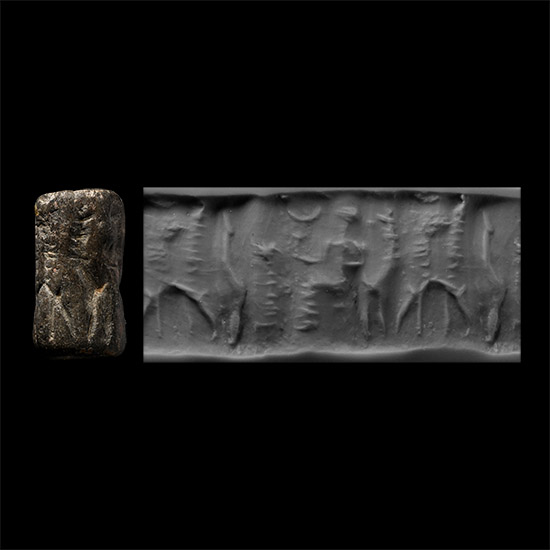
Western Asiatic Steatite Cylinder Seal with Deity and Beasts
Circa 1500 B.C.Sold for (Inc. bp): £156
Showing a crescent moon and a standing beast, unusual filler motifs including a snake, an altar and a seated deity with a fringed skirt; supplied with a museum-quality impression. 3.65 grams, 20 mm
From the private collection of a European gentleman (1942-2024), formed since the 1970s. Accompanied by a previous typed catalogue slip with collection no.50.
