
Loading, please wait...
LOT 1657
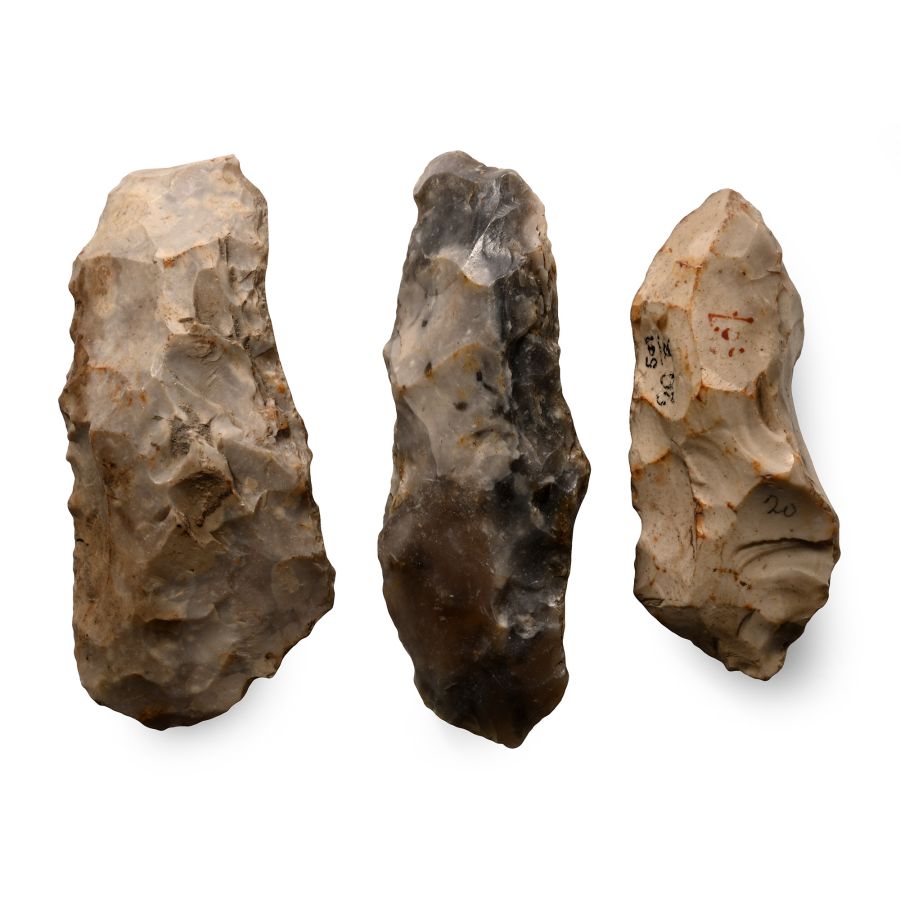
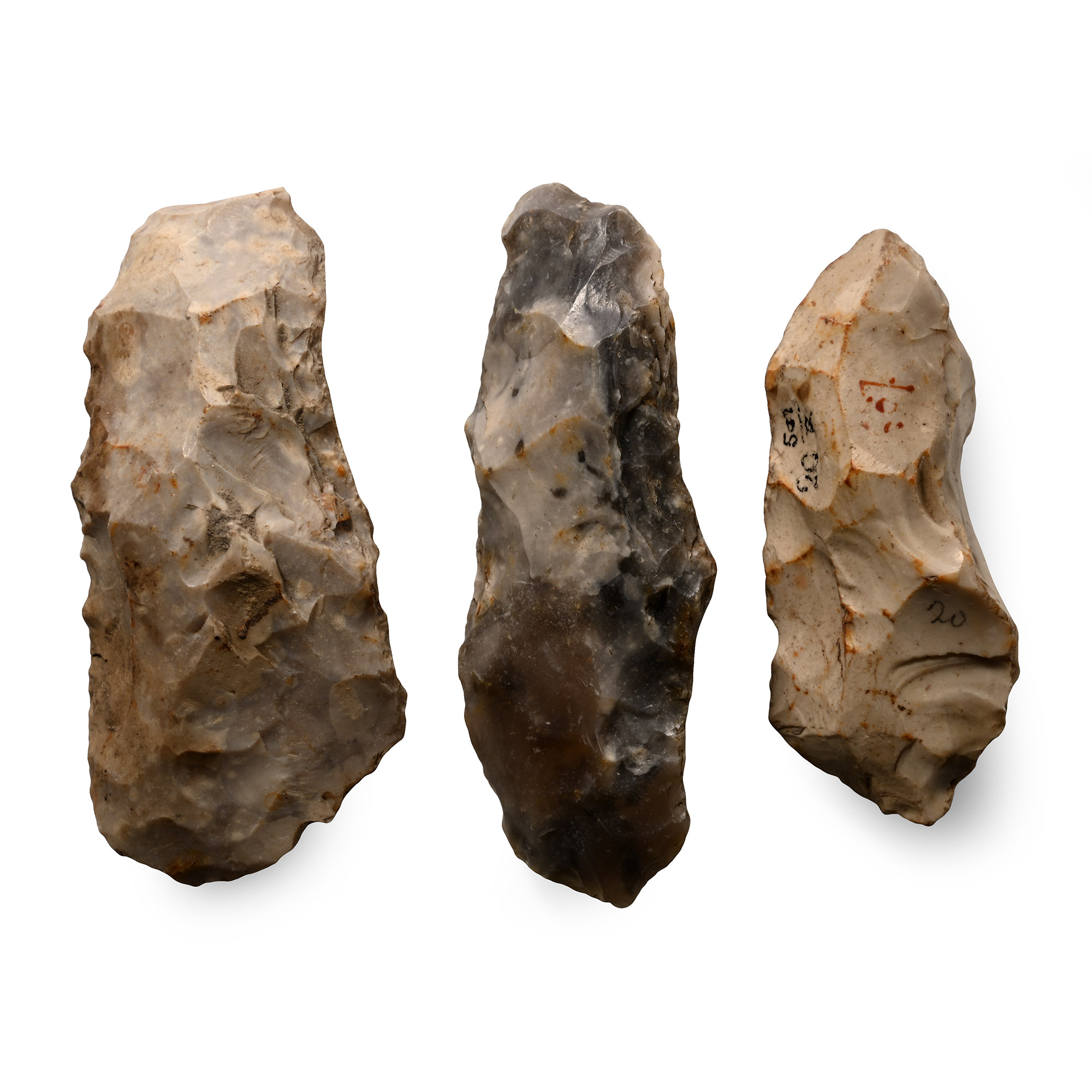
Farnham Stone Age Knapped Flint Tool Collection
NEOLITHIC PERIOD, CIRCA 6,000 B.P.
3 1/4 - 3 3/4 in. (277 grams total, 82-95 mm).
Each with broad edge and narrow butt, one with inked legend' 20 502 -G' and others mainly effaced. [3, No Reserve]
ProvenanceFound during the original official excavations in the Farnham area, Surrey, UK, which were conducted by Harold Faulker (1875-1963), and William Francis Rankine (c.1877-1962), who were instrumental with the excavation works and pit dwellings at sites including Six Bells, Frensham, Tilford, Thursley and Bagshot, and Waverley, amongst others at and near Farnham in the 1930s and 1940s.
Much of the material is now in the prestigious Farnham museum.
The present part of the collection having been gifted to their good friend and Haselmere Parish Priest, Charles Borelli (c.1914-2000) of Farnham; who was part of the Borelli family from Italy who emigrated from Lake Como in 1828 to set up the Borelli family watch and jewellery business; thence by family descent to his nephew.
Farnham district is one of the most interesting prehistoric regions in England, and has been visited by a succession of prehistoric peoples from Palaeolithic times onwards. Along the southern slope of the Farnham valley are three gravel terraces, which are famous prehistorically and have yielded large quantities of flint implements and bones of prehistoric animals, notably the mammoth. In prehistoric times, the chalk deposits played an important role in attracting settlers, as they contained rich layers of flint nodules used to make implements.
The Farnham Gravels have been an abundant source of Palaeolithic finds, most prominent being hand axes. The axes differ in type, and each type is associated with a cultural phase of the Palaeolithic period. Types similar to these are found in similar deposits in the Somme valley and in many English valley gravels. Flint mining was also carried out by the Neolithic folk. Polished axes and leaf forms, arrowheads and knives, or possibly lance heads, are characteristic of the Neolithic flint work.
TimeLine Auctions follows a vetting process to ensure the authenticity and legality of all items, reinforcing our commitment to integrity and responsible trading. Each antiquity, antique, and coin lot undergoes thorough examination by a vetting committee of at least ten external specialists, professional trade association members, scientists, and archaeologists: Our Vetting Process
AUCTIONS:
TimeLine is a leading auction house specialising in antiquities, ancient art, collectables, natural history, coins, medals, and books. Our auctions offer museums, collectors, historians, and enthusiasts the opportunity to acquire unique and historically significant pieces.
-
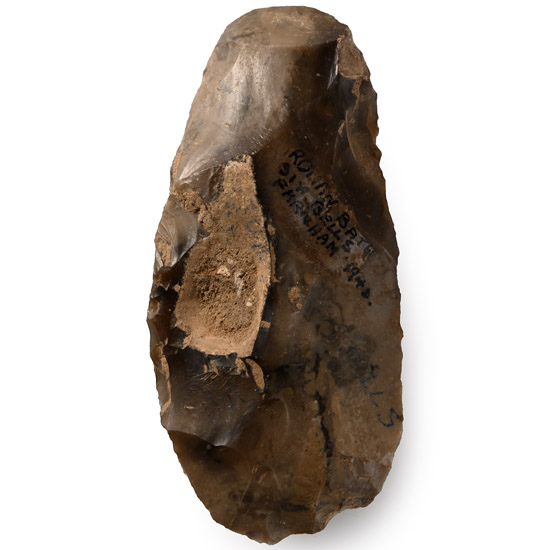
Farnham Stone Age Polished Axehead
Neolithic Period, circa 6,000 B.P.Sold for (Inc. bp): £442
Biconvex in section with broad butt, remains of cortex to both faces; old inked legends 'Roman Bath Six Bells Farnham 1948' and others effaced. 128 grams, 10.3 cm
Found during the original official excavations in the Farnham area, Surrey, UK, which were conducted by Harold Faulker (1875-1963), and William Francis Rankine (c.1877-1962), who were instrumental with the excavation works and pit dwellings at sites including Six Bells, Frensham, Tilford, Thursley and Bagshot, and Waverley, amongst others at and near Farnham in the 1930s and 1940s. Much of the material is now in the prestigious Farnham museum. The present part of the collection having been gifted to their good friend and Haselmere Parish Priest, Charles Borelli (c.1914-2000) of Farnham; who was part of the Borelli family from Italy who emigrated from Lake Como in 1828 to set up the Borelli family watch and jewellery business; thence by family descent to his nephew.
Farnham district is one of the most interesting prehistoric regions in England, and has been visited by a succession of prehistoric peoples from Palaeolithic times onwards. Along the southern slope of the Farnham valley are three gravel terraces, which are famous prehistorically and have yielded large quantities of flint implements and bones of prehistoric animals, notably the mammoth. In prehistoric times, the chalk deposits played an important role in attracting settlers, as they contained rich layers of flint nodules used to make implements. The Farnham Gravels have been an abundant source of Palaeolithic finds, most prominent being hand axes. The axes differ in type, and each type is associated with a cultural phase of the Palaeolithic period. Types similar to these are found in similar deposits in the Somme valley and in many English valley gravels. Flint mining was also carried out by the Neolithic folk. Polished axes and leaf forms, arrowheads and knives, or possibly lance heads, are characteristic of the Neolithic flint work. -
.jpg)
African Stone Age Homo Erectus Knapped Handaxe
Lower Palaeolithic Period, circa 1,000,000-500,000 B.P.Sold for (Inc. bp): £338
Piriform in plan with broad butt, natural nodule cavity to one face. 793 grams, 18 cm
El Golea, Algeria, Africa. Ex old German collection formed in the 1970s by Dr J Fehkhaber. Acquired on the European art market. -
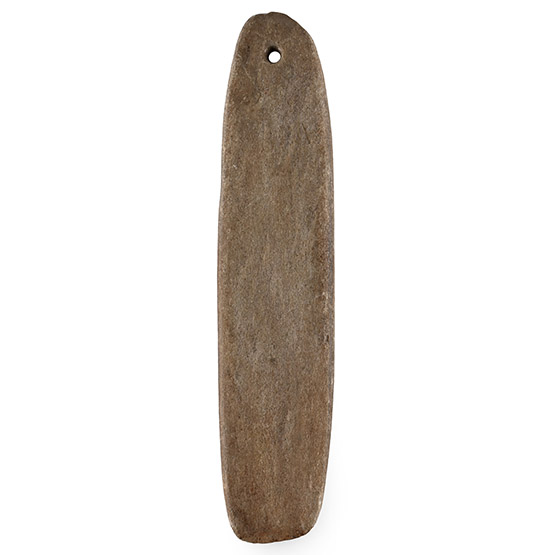
Scandinavian Stone Age Polished Schist Pendant
Neolithic Period, circa 5500 B.P.Sold for (Inc. bp): £130
A long flat polished pendant or sharpener stone, hole to the apex, almost square blade to the end. 117 grams, 16.5 cm
From the South of Denmark. Acquired on the UK art market. From the private collection of an East Anglian, UK, specialist collector.
