
Loading, please wait...
_900x900.jpg "Extremely Large British Bronze Age Pierced Stone Battle-Axe")
_200x200.jpg "Extremely Large British Bronze Age Pierced Stone Battle-Axe")
.jpg "Extremely Large British Bronze Age Pierced Stone Battle-Axe")
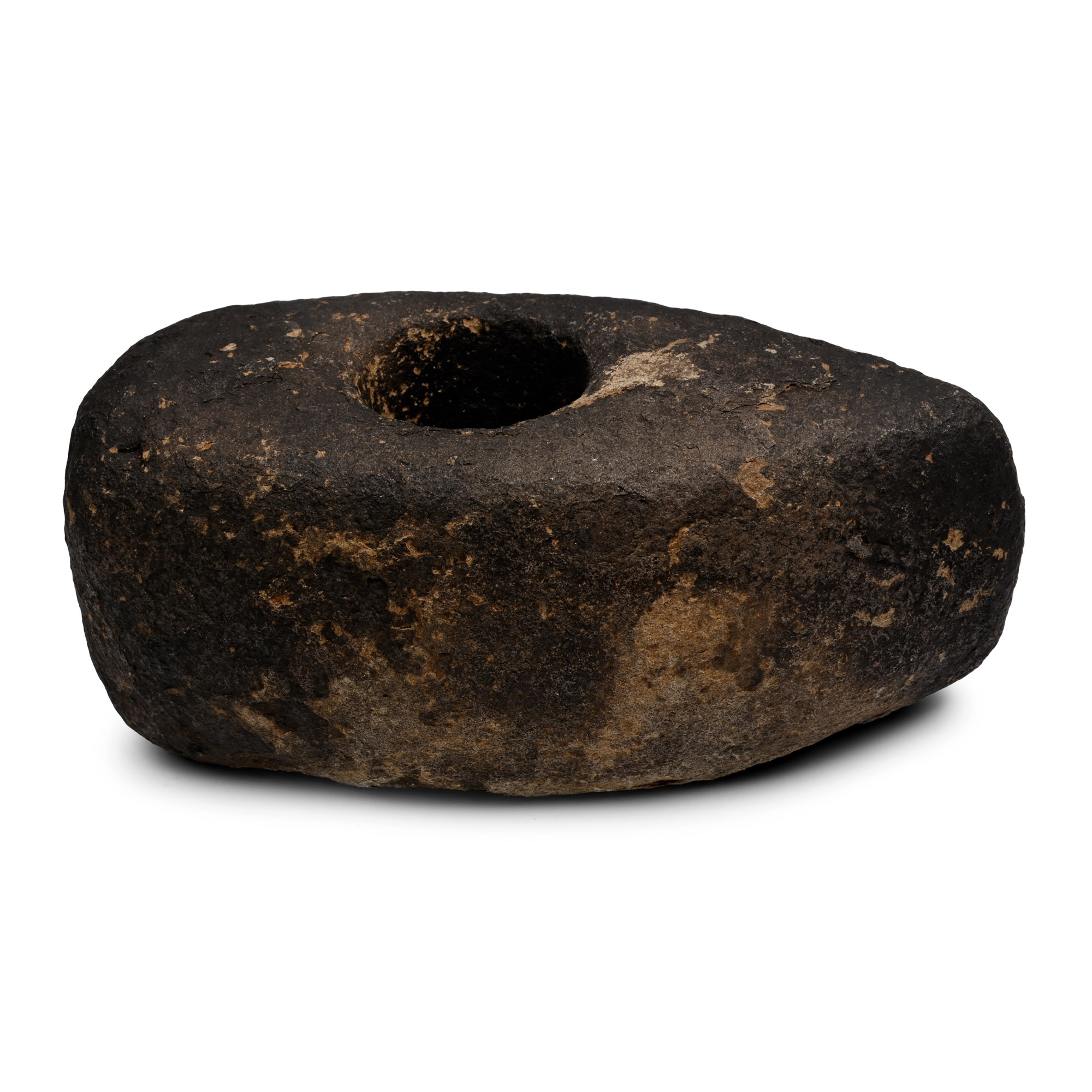
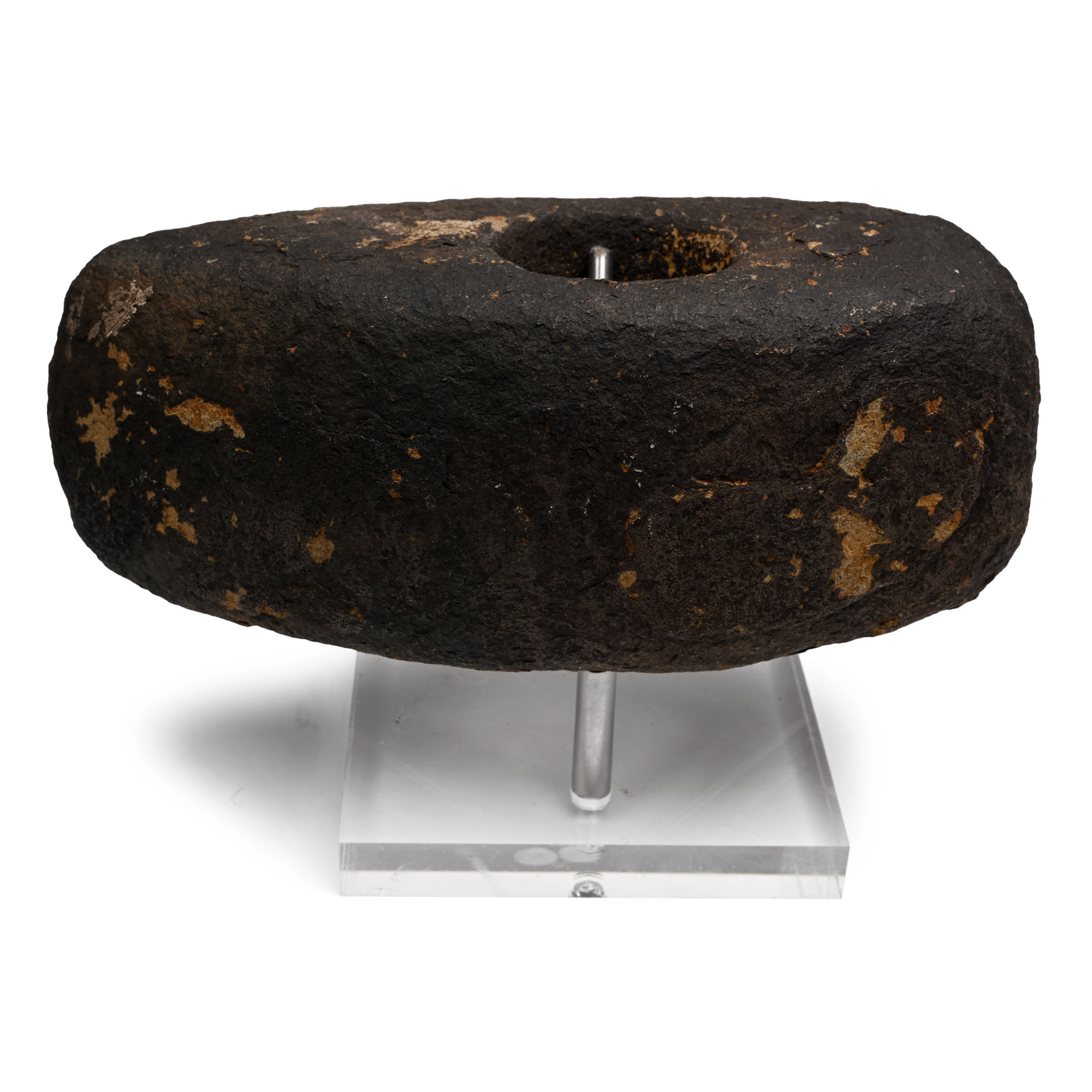
LOT 0316
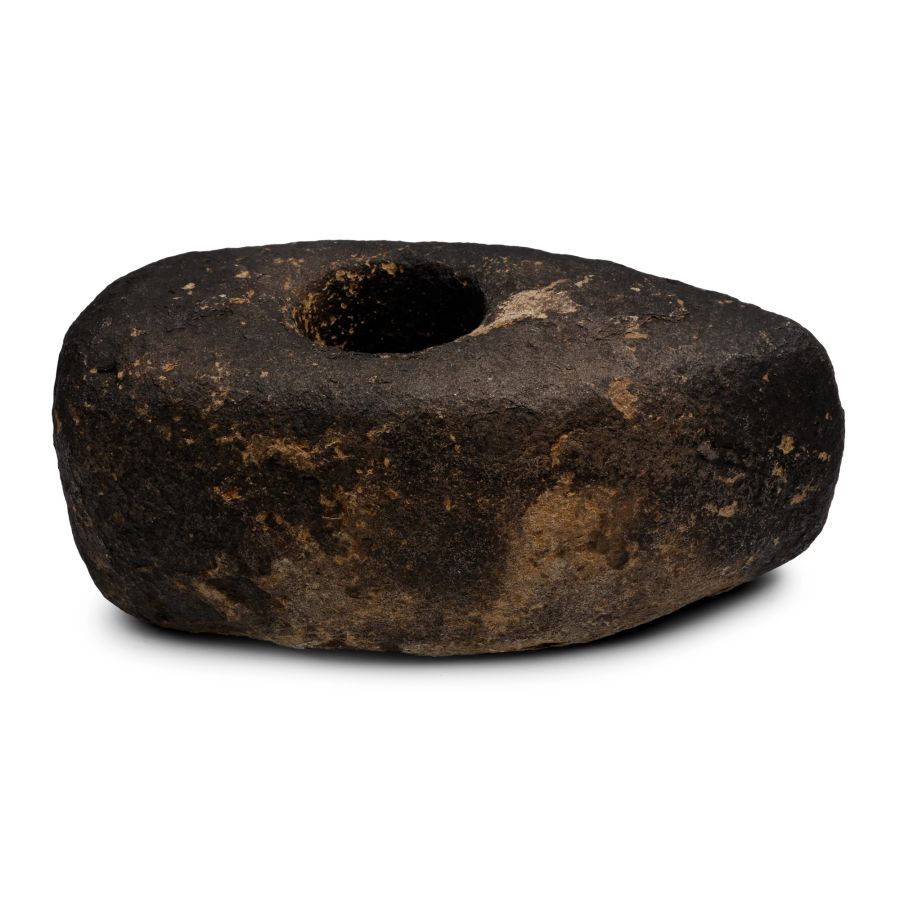
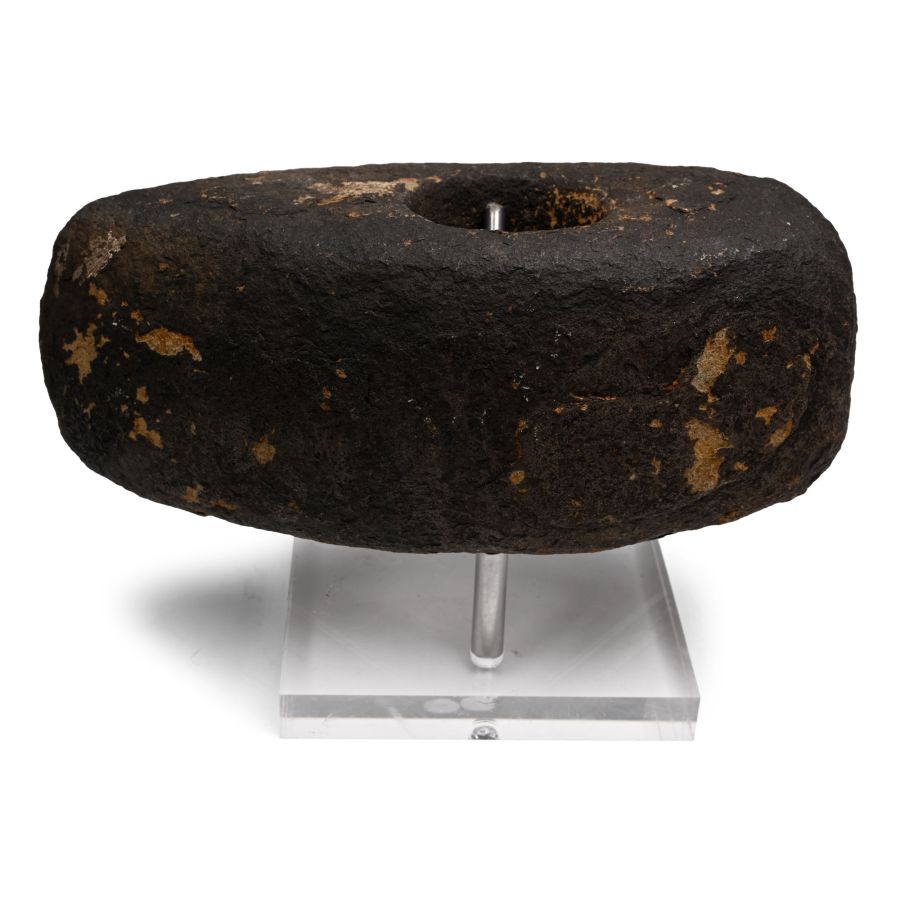
Extremely Large British Bronze Age Pierced Stone Battle-Axe
EARLY BRONZE AGE, CIRCA 5500-3500 B.P.
7 1/2 in. (2.63 kg total including stand, axe: 19.2 cm).
Pecked basalt surface, boat-shaped with straight cutting edge tapering to flat butt; drilled to receive handle; mounted on a custom-made stand.
ProvenanceFound Cumbria, N.W. England.
Acquired on the UK art market.
From the private collection of an East Anglian, UK, specialist collector.
This lot is accompanied by an illustrated lot declaration signed by the Head of the Antiquities Department, Dr Raffaele D'Amato.
Finds of this type from the UK are uncommon.
CONDITIONTimeLine Auctions follows a vetting process to ensure the authenticity and legality of all items, reinforcing our commitment to integrity and responsible trading. Each antiquity, antique, and coin lot undergoes thorough examination by a vetting committee of at least ten external specialists, professional trade association members, scientists, and archaeologists: Our Vetting Process
AUCTIONS:
TimeLine is a leading auction house specialising in antiquities, ancient art, collectables, natural history, coins, medals, and books. Our auctions offer museums, collectors, historians, and enthusiasts the opportunity to acquire unique and historically significant pieces.
LOT 0316
Extremely Large British Bronze Age Pierced Stone Battle-Axe
Sold for (Inc. bp): £702
-
Stone Age Corded Ware Polished Battle Axehead
Neolithic Period, late 5th-early 4th millennium B.P.Sold for (Inc. bp): £5,460
A large and finely formed boat-shaped axe in a dark diorite with asymmetric convex cutting edge tapering, with pronounced ridge to upper surface copying a bronze casting seam, to shouldered and rounded hammer-butt, pierced to receive handle with projecting socket to underside. 912 grams, 23 cm
From the private collection of a London gentleman, from his grandfather's collection formed before the early 1970s. This lot has been checked against the Interpol Database of stolen works of art and is accompanied by a search certificate number no.12891-240326. This lot has been cleared against the Art Loss Register database, and is accompanied by an illustrated lot declaration signed by the Head of the Antiquities Department, Dr Raffaele D'Amato. -
Stone Age Gravettian Blade Barrel Core
Upper Palaeolithic Period, circa 35,000-25,000 B.P.Sold for (Inc. bp): £13
A light brown flint core with blade removals from around the whole. 58 grams, 68 mm
Found Sougy, Loiret, France. Acquired in the 1970s-1990s. From the collections of J.R Vircoulon. Acquired on the UK art market. From the private collection of an East Anglian, UK, specialist collector. This lot is accompanied by an illustrated lot declaration signed by the Head of the Antiquities Department, Dr Raffaele D'Amato. -
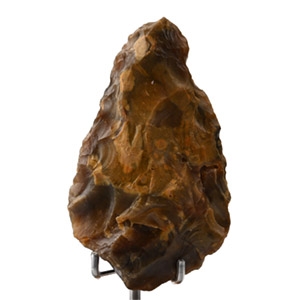
Stone Age Classic-Shaped Flint Handaxe
Palaeolithic Period, circa 500,000-300,000 B.P.Sold for (Inc. bp): £1,170
Cordiform with mottled autumnal patina and glassy flint; traces of fossil marine creatures within the flint, now turned to quartz; mounted on a custom-made display stand. 443 grams total including stand, axe: 13 cm
Found Thames gravels, Kent, UK. Acquired on the UK art market. From the private collection of an East Anglian, UK, specialist collector. This lot is accompanied by an illustrated lot declaration signed by the Head of the Antiquities Department, Dr Raffaele D'Amato.
Attributed to Homo Heidelbergensis.
