
Loading, please wait...
_900x900.jpg "Exceptionally Large Greek Gnathian Skyphos")
_200x200.jpg "Exceptionally Large Greek Gnathian Skyphos")
_900x900.jpg "Exceptionally Large Greek Gnathian Skyphos")
_200x200.jpg "Exceptionally Large Greek Gnathian Skyphos")

.jpg "Exceptionally Large Greek Gnathian Skyphos")
.jpg "Exceptionally Large Greek Gnathian Skyphos")
LOT 0040
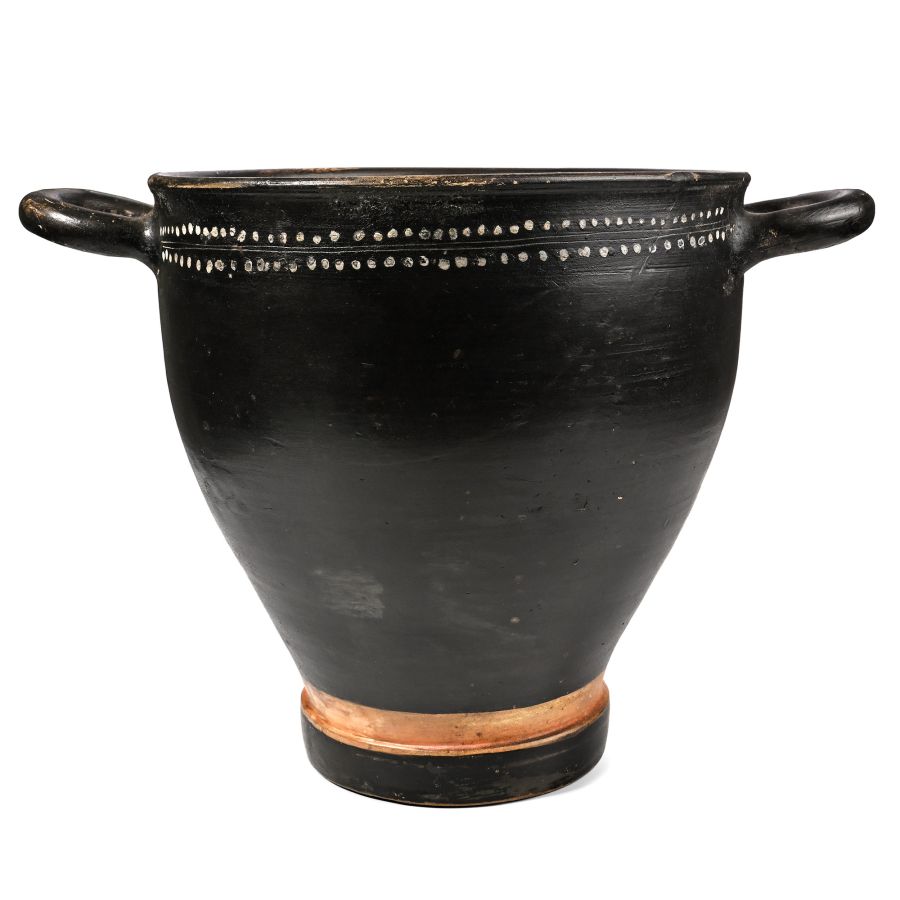
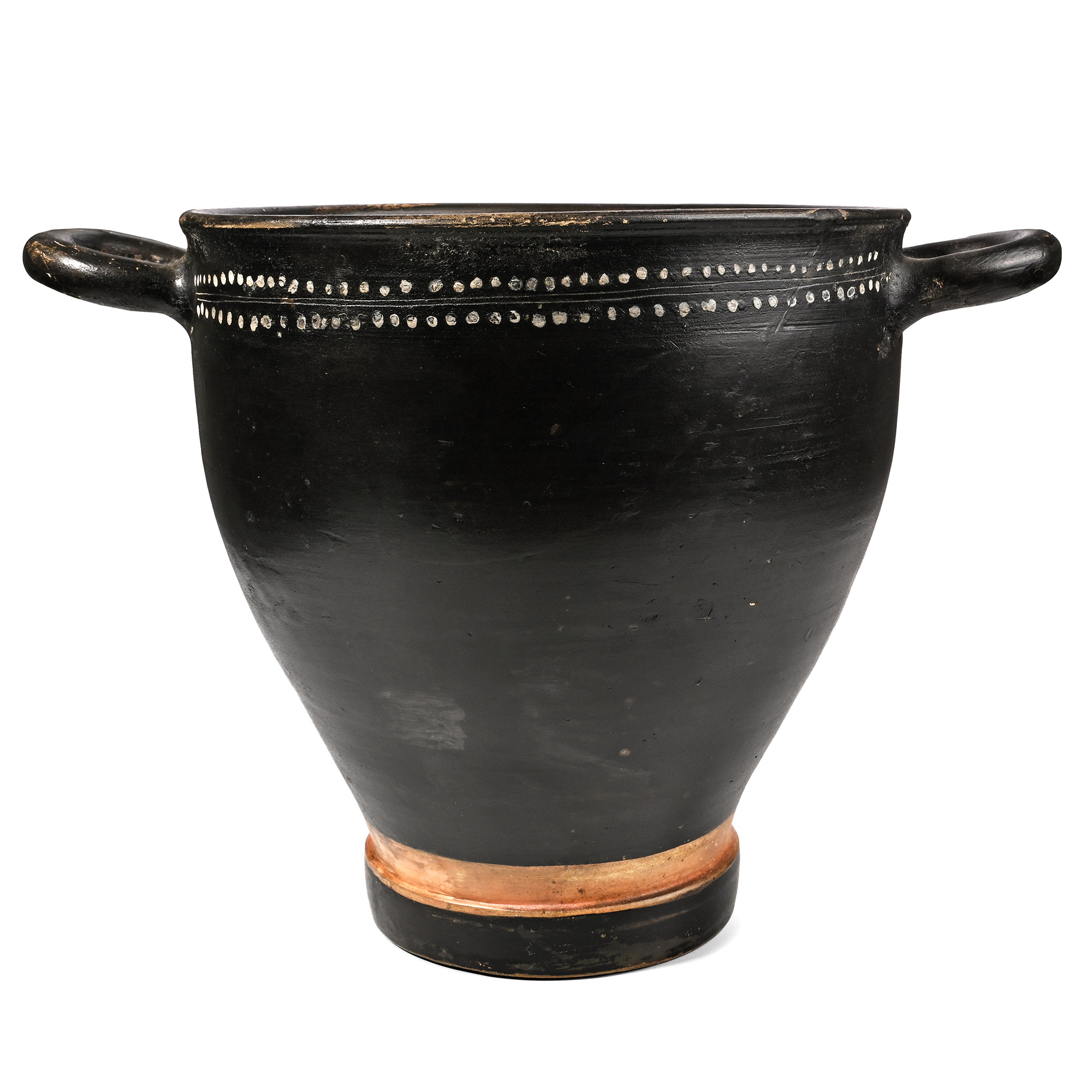
Exceptionally Large Greek Gnathian Skyphos
APULIA, 5TH-3RD CENTURY B.C.
13 1/2 in. (2.21 kg, 34.4 cm).
Mammiform body with pedestal base and two loop handles to the rim; Side A - band of white ovolo detailing to the neck, median red band with vine leaves and tendrils; Side B - bilinear band below neck with lateral pellets.
ProvenanceEx Orivate collection, formerly with Art Ancient, previously Derek Glover collection.
CONDITIONTimeLine Auctions follows a vetting process to ensure the authenticity and legality of all items, reinforcing our commitment to integrity and responsible trading. Each antiquity, antique, and coin lot undergoes thorough examination by a vetting committee of at least ten external specialists, professional trade association members, scientists, and archaeologists: Our Vetting Process
AUCTIONS:
TimeLine is a leading auction house specialising in antiquities, ancient art, collectables, natural history, coins, medals, and books. Our auctions offer museums, collectors, historians, and enthusiasts the opportunity to acquire unique and historically significant pieces.
-
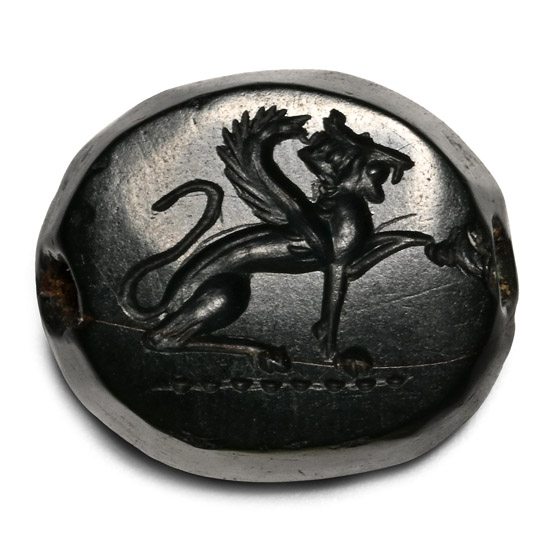
Eastern Greek Scaraboid Gemstone with Gryphon
4th-2nd century B.C. or laterSold for (Inc. bp): £650
Scaraboid type with incuse design to the underside of a winged gryphon with one foreleg raised; supplied with a museum-quality impression. 1.24 grams, 13 mm
From the private collection of a European gentleman (1942-2024), formed since the 1970s. -
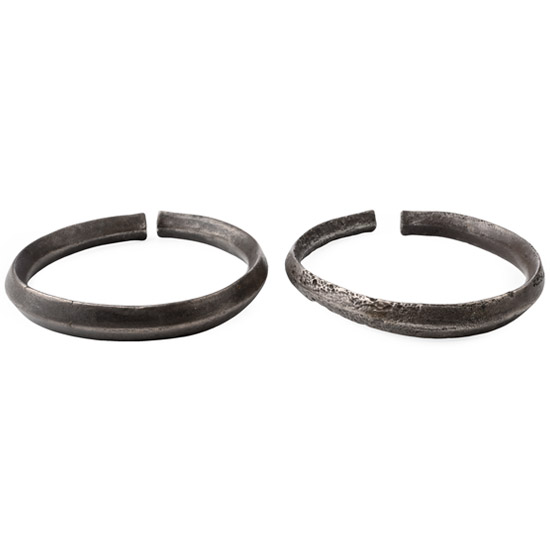
Greek Undecorated Silver Bracelets
Italy, 4th century B.C.Sold for (Inc. bp): £468
Comprising two penannular lozenge-section bracelets. 182 grams total, 84 mm each
Bonhams, Knightsbridge, London, 12 December 1996, no.49. Private collection, Suffolk. -
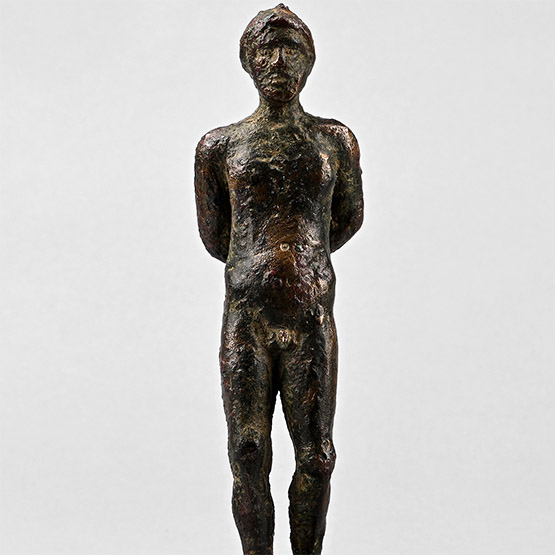
Greek Bronze Figure of a Bound Captive
Hellenistic, 2nd century B.C.Sold for (Inc. bp): £2,860
Modelled in the round nude male standing with hands bound behind his back; with short cropped hair and slender figure; left foot absent; mounted on a custom-made stand. 491 grams, 17 cm including stand
Ex S.K. collection. Acquired on the German art market, July 1995. Accompanied by an academic report by Dr Raffaele D'Amato. This lot has been checked against the Interpol Database of stolen works of art and is accompanied by a search certificate number no.12518-232076.
The character's hairstyle of the statuette is simple, and his hair is short, not treated with chalk like that of the famous ‘dying Galatian’ from Pergamon. The gaze is fixed on the distance, while the bony, beardless, long-limbed figure conveys the prisoner's energy. The nose here takes on a strong characteristic together with the broad jaw, which is also recognisable in later statuettes of Roman age. These characteristics, combined with those of nudity, allow us to recognise the figure of the prisoner as a Celtic warrior.
