
Loading, please wait...
LOT 0274
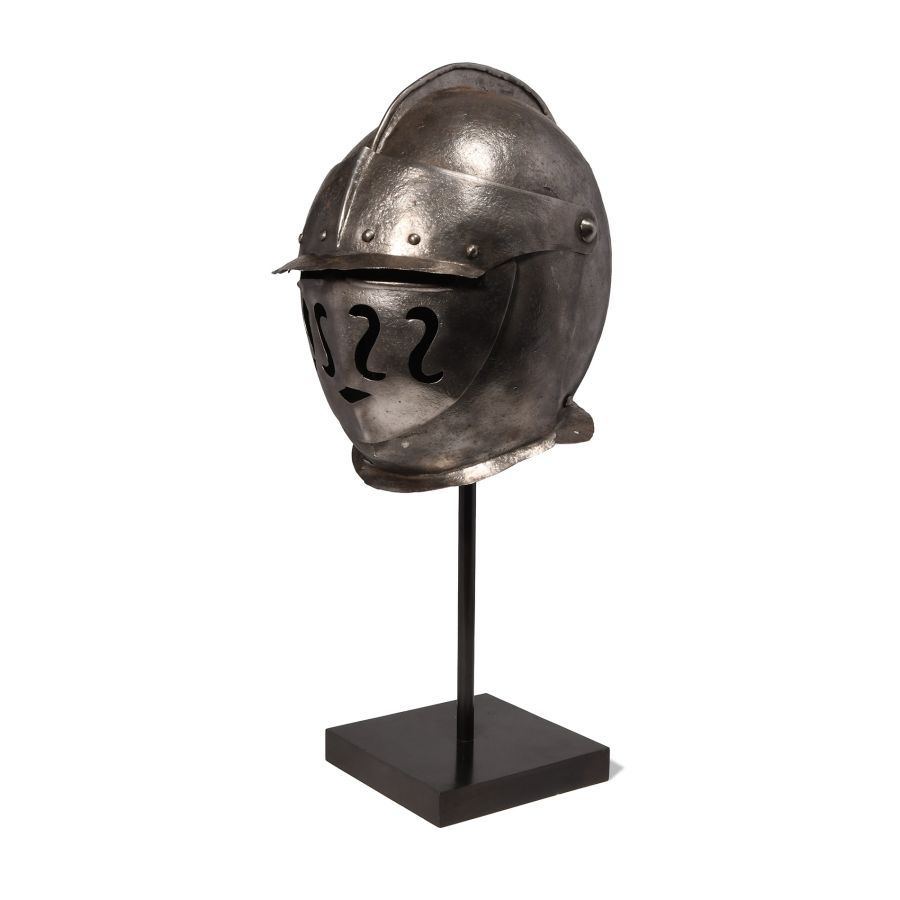
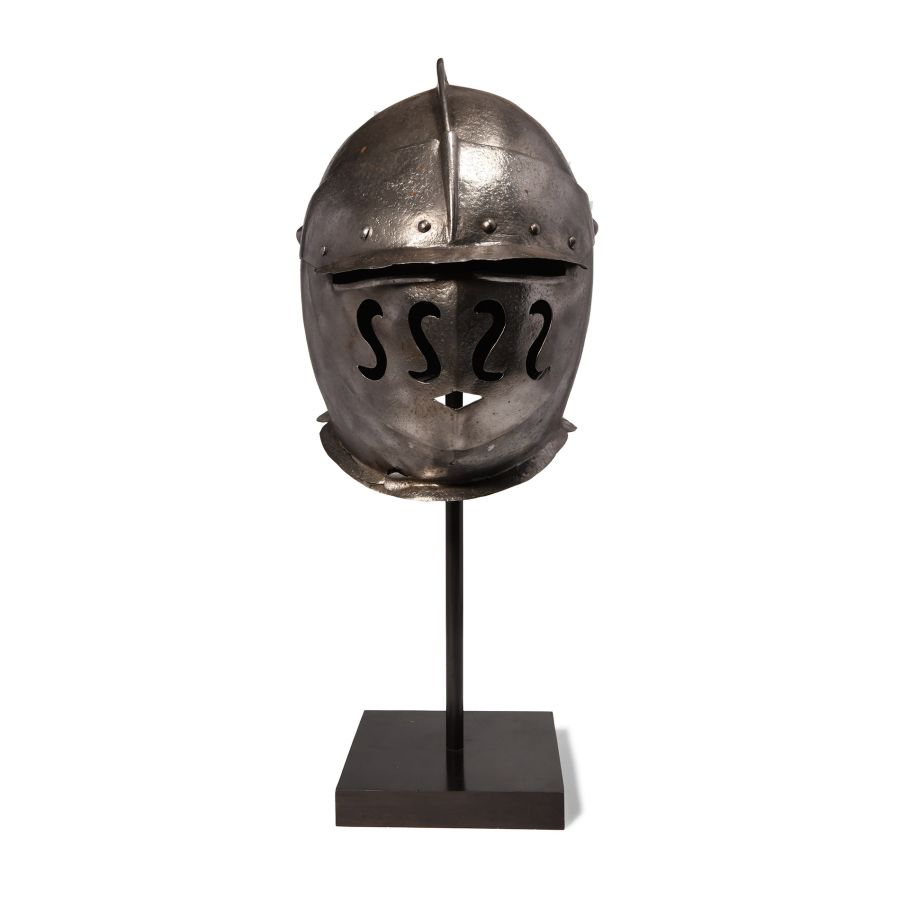
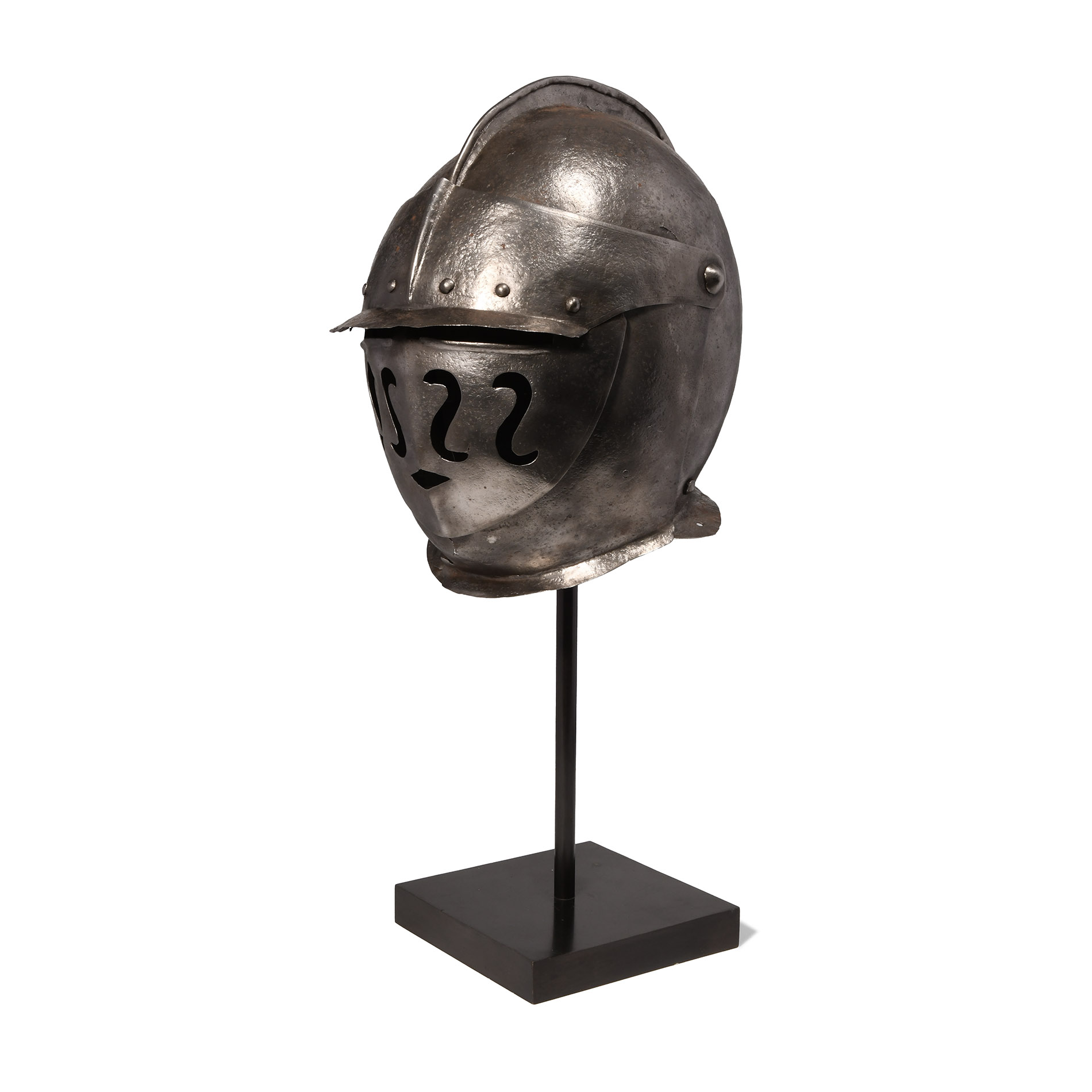
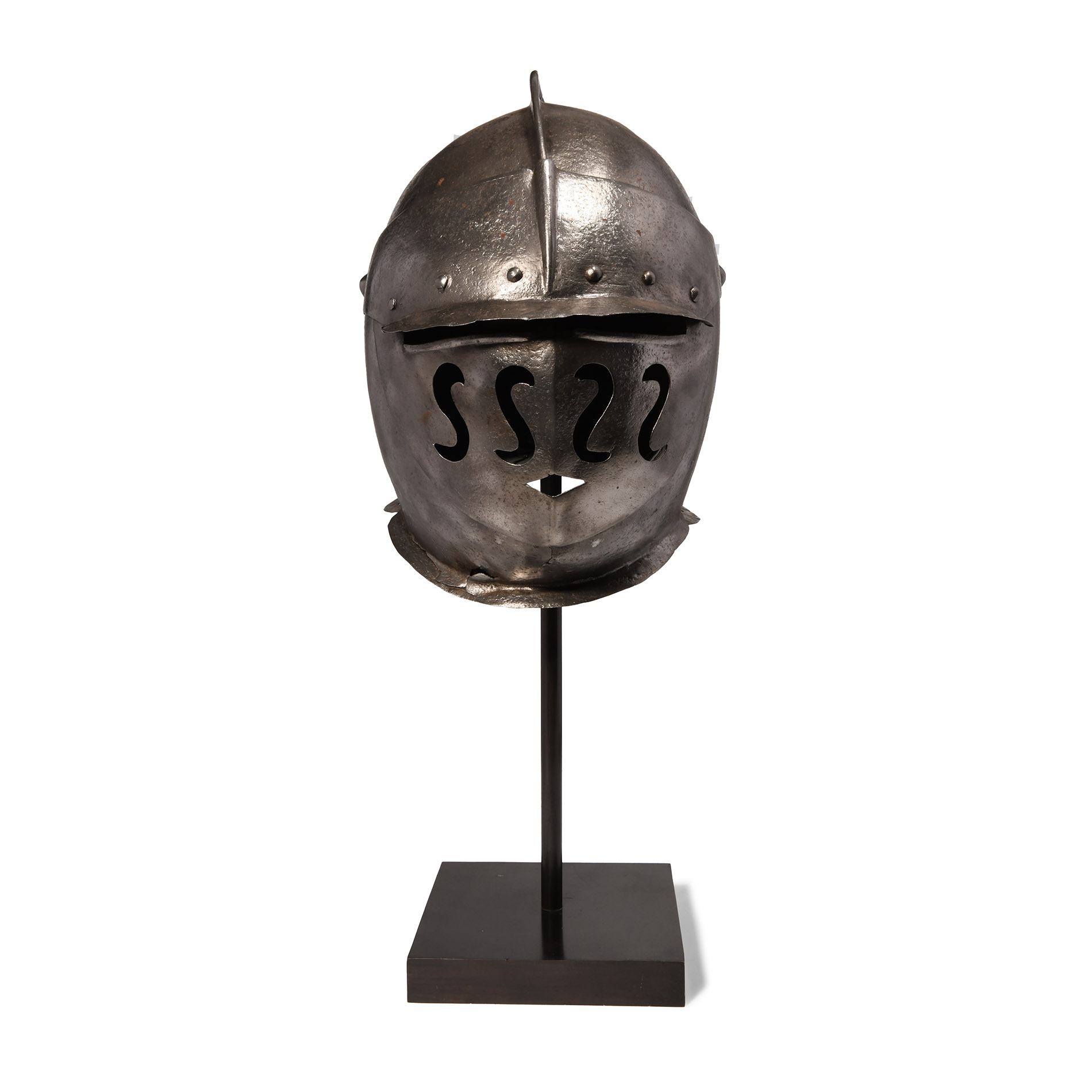
European Savoyard Burgonet
CIRCA 1620 A.D.
10 in. (1.14 kg, 25 cm high).
Comprising a full face shield with broad wavy bars and a small mouth opening, a wide hinged visor; the visor and the front section of the helmet secured by large hook-and-eye closures on the right-hand side; the crown with a tall ridge running from front to back, small collar for protecting the neck.
ProvenanceAcquired from Andrew Bennett in 2016.
The Kusmirek Collection, UK.
Accompanied by a copy of a payment confirmation from Andrew Bennett, dated 1st June 2016.
Accompanied by an academic report by Dr Raffaele D'Amato.
This lot has been checked against the Interpol Database of stolen works of art and is accompanied by search certificate number no. 11768-203986.
Cf. Pyhrr, S.W., European Helmets, 1450-1650, Treasures from the Reserve Collection, New York, 2000, cat.nos.61-62.
FootnotesThis variation of the burgonet helmet is thought to have originated in the Savoy region of southeast France, and was very popular with heavy cavalry (Reiters) serving with a variety of Continental armies of the period. The term Savoyard is a reference to a large number of these helmets that the Swiss captured from the troops of the Duke of Savoy during an unsuccessful assault on the city of Genoa in 1602. The undulated bars and the small mouth of the visor are all indicative of the Savoyard style. The hinges on the side allowed the front of the helmet as a whole to be lifted away from the rear, aiding the wearer to place it over his head.
CONDITIONTimeLine Auctions follows a vetting process to ensure the authenticity and legality of all items, reinforcing our commitment to integrity and responsible trading. Each antiquity, antique, and coin lot undergoes thorough examination by a vetting committee of at least ten external specialists, professional trade association members, scientists, and archaeologists: Our Vetting Process
AUCTIONS:
TimeLine is a leading auction house specialising in antiquities, ancient art, collectables, natural history, coins, medals, and books. Our auctions offer museums, collectors, historians, and enthusiasts the opportunity to acquire unique and historically significant pieces.
LOT 0274
European Savoyard Burgonet
Estimate £3,500 - 4,500€4,060 - 5,220 (for guidance only)$4,730 - 6,080 (for guidance only)
-
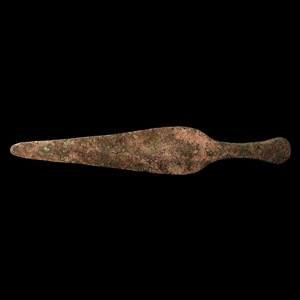
Western Asiatic Bronze Dagger with Integral Hilt
3rd-2nd millennium B.C.Estimate: £100 - 140 (+bp*)
Opening Bid: £50
Composed of a leaf-shaped blade, round-section grip with wide flat tang and lobe pommel. 740 grams, 40 cm
Fine condition.
Abelita family collection, 1980-2015. -
.jpg)
Large Byzantine Silver Archer's Ring
14th-15th century A.D.Estimate: £600 - 800 (+bp*)
Opening Bid: £240
Comprising a hoop with reserved triangular ornament on the edges and triangular plaque with foliage motifs, raised central panel with frond motif. 22.61 grams, 34.77 mm overall, 25.16 mm internal diameter
Acquired in the 1990s. Ex Cambridgeshire, UK, collection.
Archer rings in Late Byzantium and the medieval Balkans were connected with the employment of the powerful composite bow, but very often, in the 14th century they served as insignia of rank for aristocratic noblemen. Archaeological findings of archers’ rings originate mainly from fortified towns, including mining centres. Many were made in bone, simple in design and undecorated. In contrast, the ones made in bronze and silver were usually decorated in rather uniform style, consisting of floral motifs on the head, mostly tulip and foliage, and linear motifs around the edges. This decoration combined Turkish, Central European and Eastern Roman traditional patterns. -
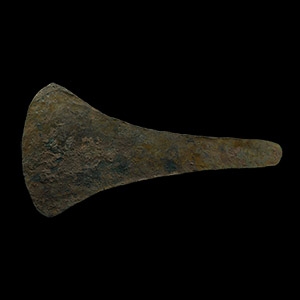
Western Asiatic Bronze Flat Axe
Circa 2nd millennium B.C.Sold for (Inc. bp): £78
Featuring wedge-shaped cheeks, a convex cutting edge and rounded terminal. 106 grams, 18.6 cm
UK private collection formed before 2000. Ex North London, UK, gallery.
The flat axe belongs to Type 1, sub-type a.4 of the Çetin-Bilgi classification of flat axes. They have concave-sided blade, rectangular in section, a splayed cutting edge and a narrow butt. The first examples of axe-type weapons appear in the last phase of the Late Chalcolithic Age in the Middle East and Anatolia.
