
Loading, please wait...
LOT 1183
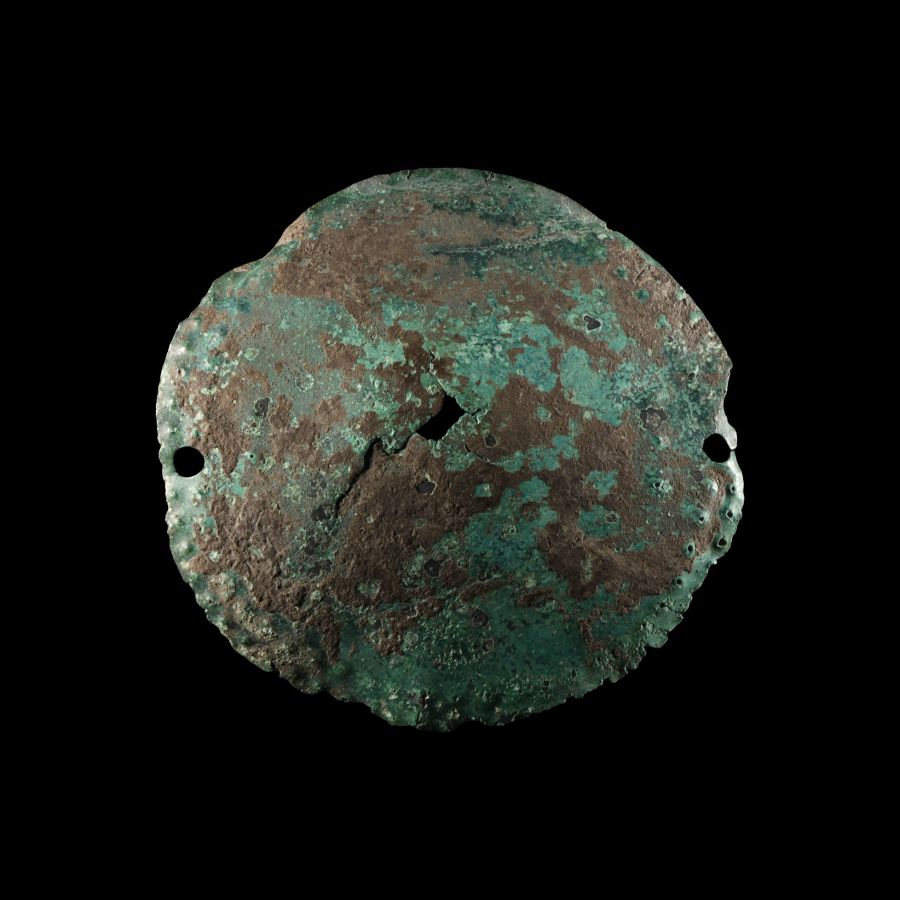
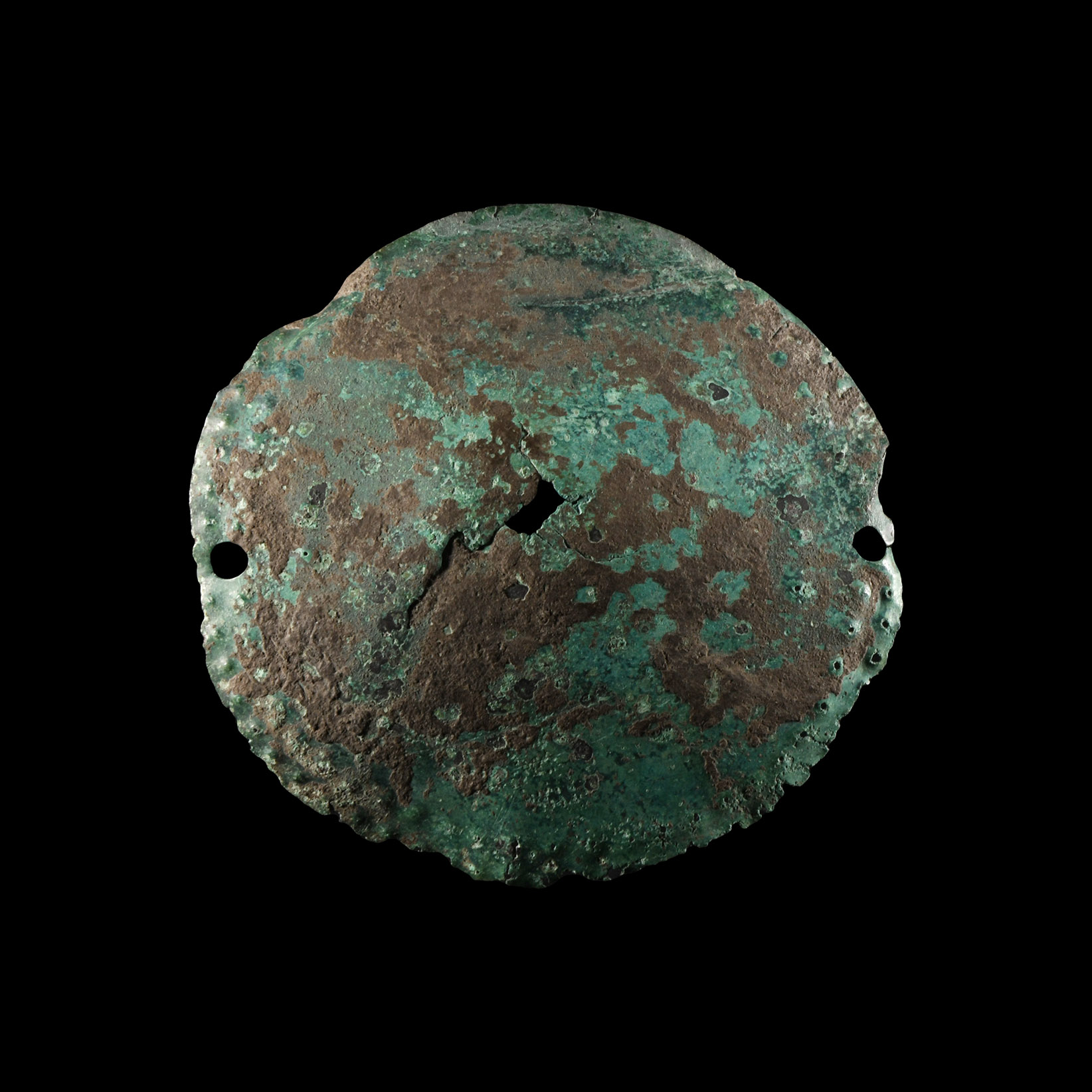
European Bronze Age Boss
2ND-1ST MILLENNIUM B.C.
3 3/4 in. (36 grams, 95 mm).
Of repoussé form, slightly convex in profile with two concentric bands of pierced ornament and two attachment holes at edge.
ProvenanceEx English collection, pre-2000.
The Kusmirek Collection, UK.
Accompanied by a previous dealer's certificate of authenticity.
TimeLine Auctions follows a vetting process to ensure the authenticity and legality of all items, reinforcing our commitment to integrity and responsible trading. Each antiquity, antique, and coin lot undergoes thorough examination by a vetting committee of at least ten external specialists, professional trade association members, scientists, and archaeologists: Our Vetting Process
AUCTIONS:
TimeLine is a leading auction house specialising in antiquities, ancient art, collectables, natural history, coins, medals, and books. Our auctions offer museums, collectors, historians, and enthusiasts the opportunity to acquire unique and historically significant pieces.
-
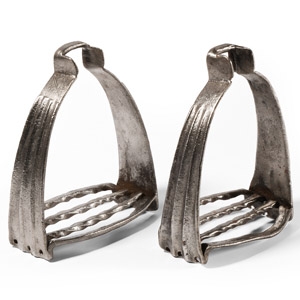
German Iron Stirrup Pair
16th century A.D.Estimate: £200 - 300 (+bp*)
Opening Bid: £111
Featuring twisted bar open treads, arched side pieces grooved and connected by a strap bar. 780 grams total, 16.5 cm each
Acquired from Czerny's Auctions, Italy, 2016, lot 313. The Kusmirek Collection, UK. Accompanied by a copy of Czerny's invoice and lot details. -
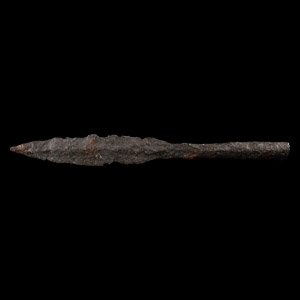
Anglo-Saxon 'Norfolk' Iron Socketted Spearhead
6th-7th century A.D.Sold for (Inc. bp): £172
With lentoid-section lanceolate blade, tapering circular socket with forge-welded split. 134 grams, 25.3 cm
Found Norfolk, UK, in the 1970s. Gary Edwards, York, UK. Private collection, Preston, UK. Accompanied by a certificate of authenticity and receipt from Gary Edwards, no.SN12480.
The spearhead belongs to the C2 group of the Swanton's classification, by far the commonest leaf-shaped blade found in Anglo-Saxon graves in 6th and 7th centuries A.D. These spears have their broadest part in the lower half, and are lentoid in section. Length varies between 20 and 35 cm. -
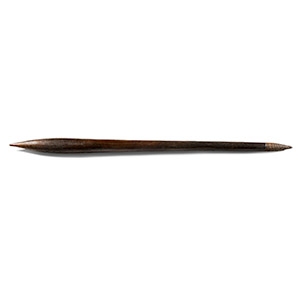
Australian Aboriginal Throwing Club
19th century A.D.Sold for (Inc. bp): £117
The round-section shaft with one tapered end and a pointed, bulbous head. 435 grams, 69 cm
Acquired UK market. Property of a Kent collector.
Used for hunting and in warfare. Possibly engraved using a possum tooth.
