
Loading, please wait...
LOT 0109
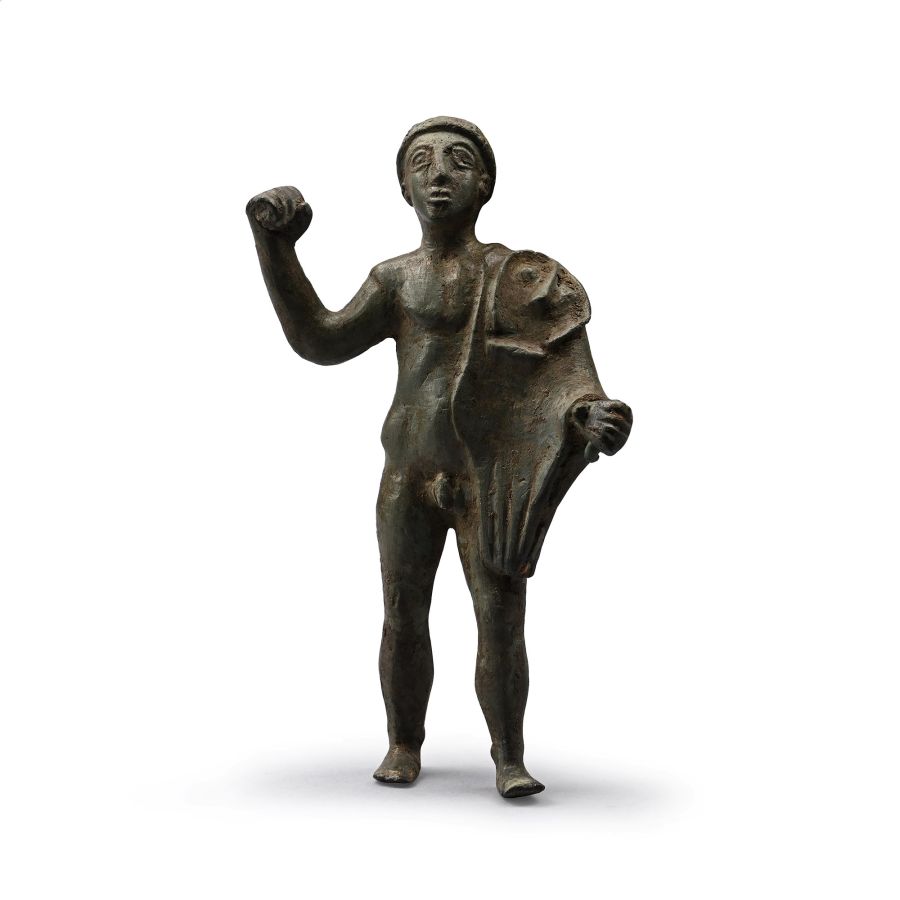
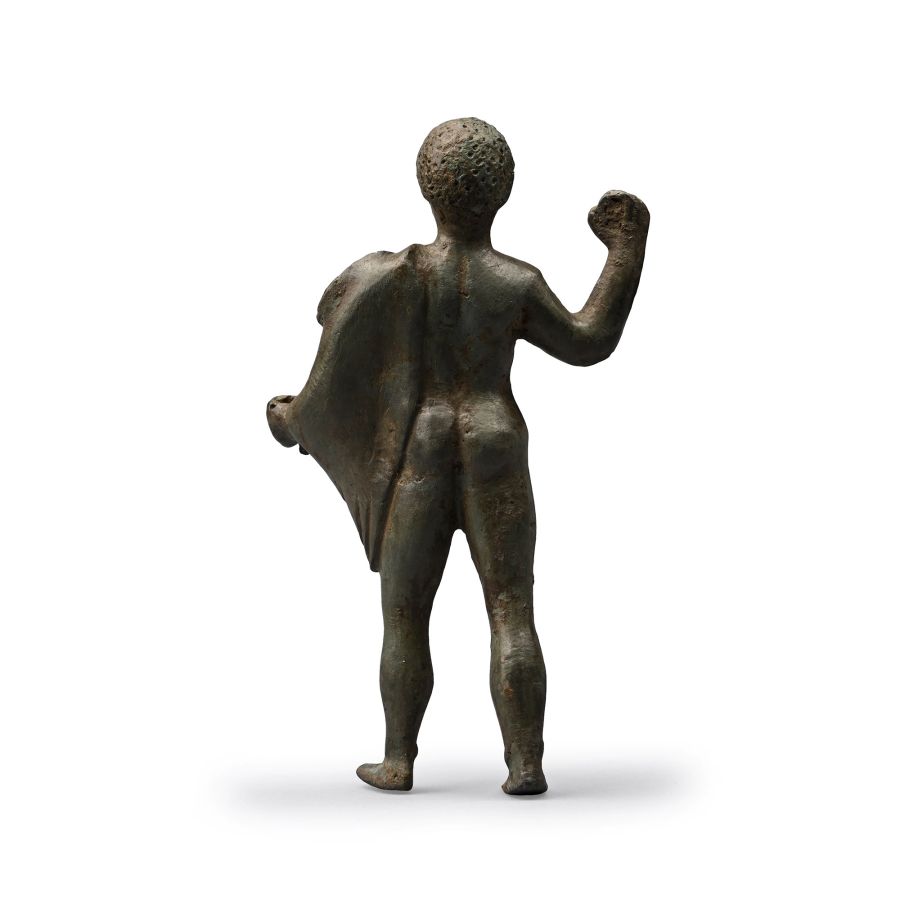
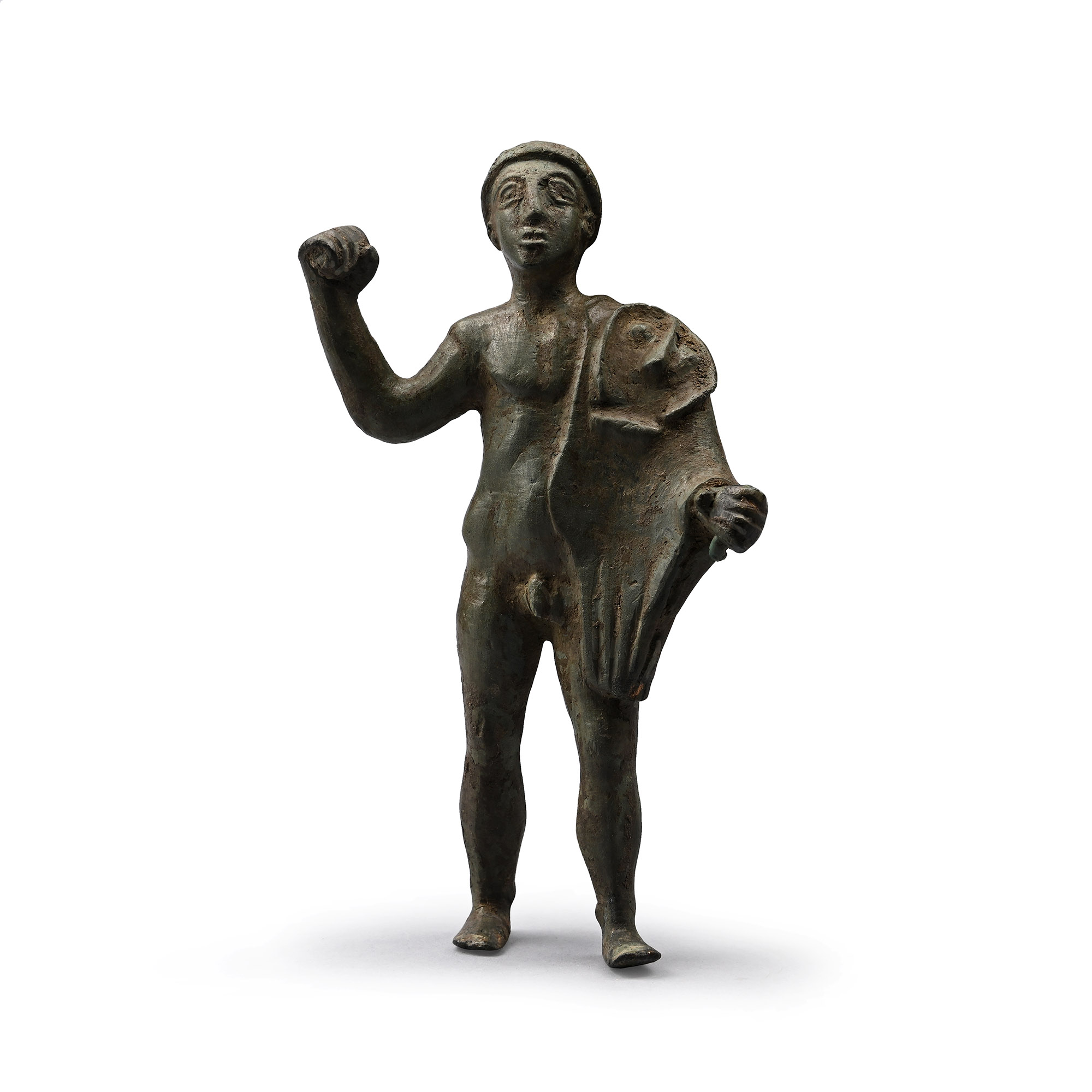
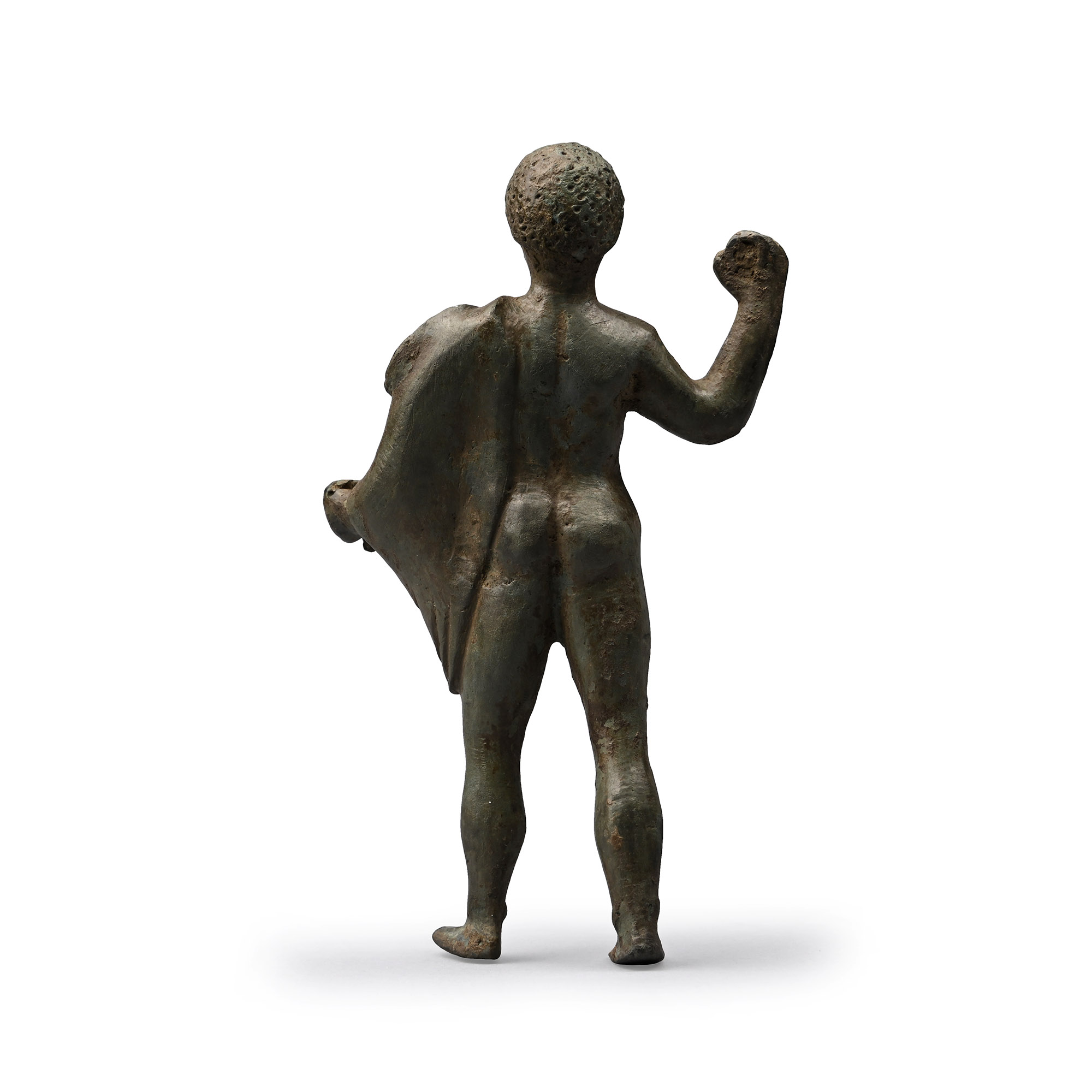
Etrusco-Italic Bronze Figure of Young Hercules
ARCHAIC STYLE, CIRCA 4TH-3RD CENTURY B.C.
4 5/8 in. (307 grams, 12 cm).
Modelled in the round figure standing in advancing pose with the right hand raised and fist clenched; left shoulder and arm covered with the skin of the Nemean lion and left hand modelled hollow; hair cut short and textured.
ProvenanceAcquired in the mid 1980s-1990s.
Private collection, Switzerland, thence by descent.
Private collection, since the late 1990s.
Accompanied by an academic report by Dr Raffaele D'Amato.
This lot has been checked against the Interpol Database of stolen works of art and is accompanied by a search certificate number no.12515-232159.
Cf. similar figure in the Getty Museum under reference 96.AB.36, Metropolitan Museum of Art under object number: 96.9.419; Reinach, S., Répertoire de la statuaire grecque et romaine, Paris, 1897, p.105-108, for the archaic prototypes and similar statuettes; Rolland, H., Bronzes Antiques de Haute Provence, Paris, 1965, items 85-95, for type, especially nos.85-87.
FootnotesThere were several cult sites of Hercules in Etruria and old Latium, particularly in the Sabellian region, and the bronze statuettes discovered here exhibit a wide range of styles. Etruscan bronzes of the half-god usually represent him with the lion skin draped over his arm (Metropolitan accession number 96.9.419).
CONDITIONTimeLine Auctions follows a vetting process to ensure the authenticity and legality of all items, reinforcing our commitment to integrity and responsible trading. Each antiquity, antique, and coin lot undergoes thorough examination by a vetting committee of at least ten external specialists, professional trade association members, scientists, and archaeologists: Our Vetting Process
AUCTIONS:
TimeLine is a leading auction house specialising in antiquities, ancient art, collectables, natural history, coins, medals, and books. Our auctions offer museums, collectors, historians, and enthusiasts the opportunity to acquire unique and historically significant pieces.
LOT 0109
Etrusco-Italic Bronze Figure of Young Hercules
Estimate £2,500 - 3,500€2,900 - 4,060 (for guidance only)$3,380 - 4,730 (for guidance only)
-
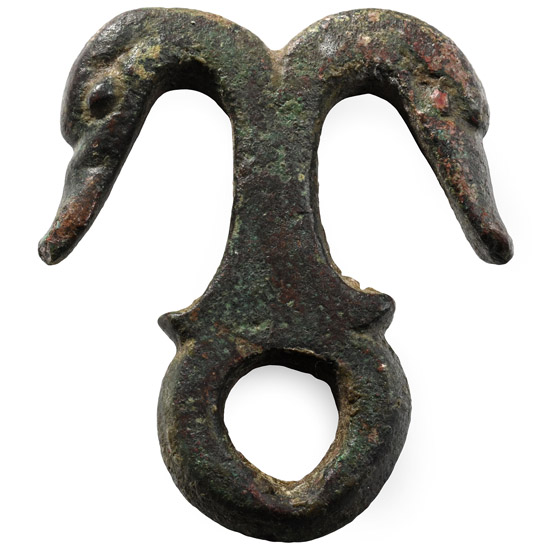
Roman Bronze Double Swan-Head Pendant Hanger
1st century A.D.Sold for (Inc. bp): £59
Composed of two elegantly curving swan's heads with pellet eyes, large loop below. 34.8 grams, 45 mm
From the private coin collection of a West London, UK, gentleman, formed since the mid 1980s. -
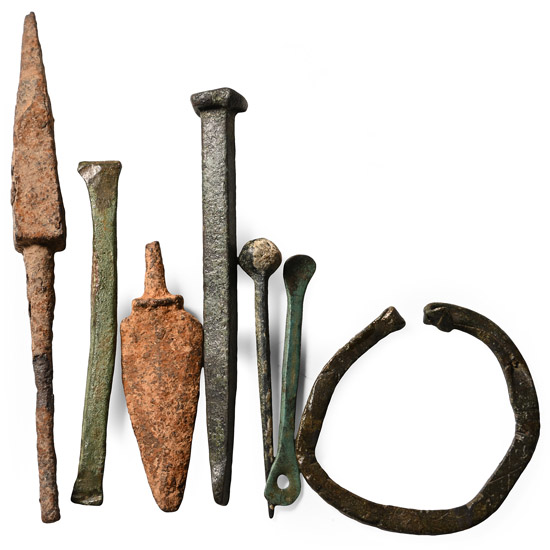
Roman Bronze and Iron Artefact Collection
Circa 1st-4th century A.D.Sold for (Inc. bp): £98
Comprising: ball-headed dess pin; stylus with eraser; cosmetic scoop; penannular quoit brooch with recurved ends; clout nail; leaf-shaped arrowhead; quarrel head with long tang. 50 grams total, 45-87 mm
From the private collection of Mr Brian Edwards, New Malden, Surrey, UK, formed from the late 1970s-early 1980s; thence by descent. Accompanied by the original collector's data sheet(s) with reference nos.A63, A64, A65, A74, A96, A97 & A107. -
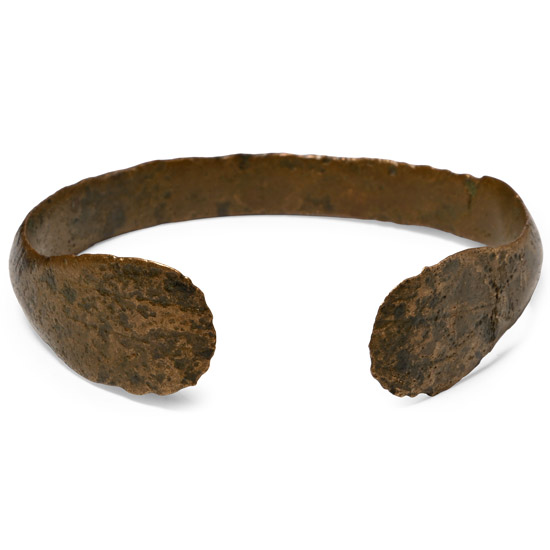
Late Roman Bronze Bracelet
5th-6th century A.D.Sold for (Inc. bp): £33
Penannular bracelet with keeled body and flared terminals, pointillé decoration. 20.1 grams, 61 mm
Ex German art market, 2000s. Acquired from an EU collector living in London. From the collection of a Surrey, UK, gentleman.
