
Loading, please wait...
_900x900.jpg "Etruscan Variegated Agate Scaraboid Gemstone with Dancing Satyrs")
_200x200.jpg "Etruscan Variegated Agate Scaraboid Gemstone with Dancing Satyrs")
_900x900.jpg "Etruscan Variegated Agate Scaraboid Gemstone with Dancing Satyrs")
_200x200.jpg "Etruscan Variegated Agate Scaraboid Gemstone with Dancing Satyrs")
.jpg "Etruscan Variegated Agate Scaraboid Gemstone with Dancing Satyrs")
.jpg "Etruscan Variegated Agate Scaraboid Gemstone with Dancing Satyrs")
LOT 0078
Etruscan Variegated Agate Scaraboid Gemstone with Dancing Satyrs
4TH CENTURY B.C.
5/8 in. (2.75 grams, 17 mm).
Scaraboid type with incuse design to the underside of two opposed dancing satyrs, heads and arms missing, possibly unfinished or cut down from a depiction of a lion and hero; supplied with a museum-quality impression. [No Reserve]
ProvenanceFrom the private collection of a European gentleman (1942-2024), formed since the 1970s.
LiteratureCf. similar images of Satyrs on Etruscan agate scaraboid in Spier, J., Ancient Gems and finger Rings, catalogue of the collections, the J. Paul Getty Museum, Malibu, 1992, nos.149-150.
CONDITIONTimeLine Auctions follows a vetting process to ensure the authenticity and legality of all items, reinforcing our commitment to integrity and responsible trading. Each antiquity, antique, and coin lot undergoes thorough examination by a vetting committee of at least ten external specialists, professional trade association members, scientists, and archaeologists: Our Vetting Process
AUCTIONS:
TimeLine is a leading auction house specialising in antiquities, ancient art, collectables, natural history, coins, medals, and books. Our auctions offer museums, collectors, historians, and enthusiasts the opportunity to acquire unique and historically significant pieces.
LOT 0078
Etruscan Variegated Agate Scaraboid Gemstone with Dancing Satyrs
Sold for (Inc. bp): £182
-
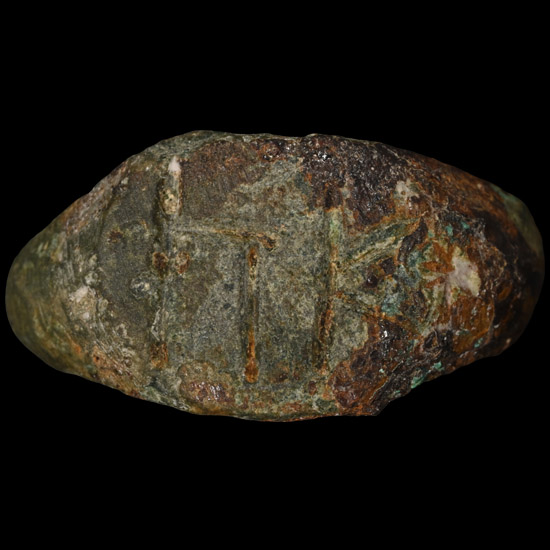
Graeco-Roman Bronze Ring with Inscription
1st century B.C.-1st century A.D.Sold for (Inc. bp): £33
A substantial ring with expanding shoulders, a large oval bezel with 'ΠK'. 9.03 grams, 26.58 mm overall, 18.68 x 16.06 mm internal diameter (approximate size British M, USA 6, Europe 12.46, Japan 12)
From the private collection of a European gentleman (1942-2024), formed since the 1970s. -
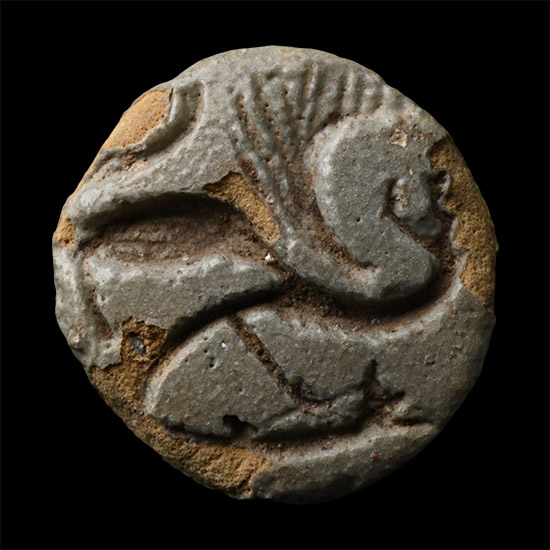
Mycenaean Glazed Terracotta Conical Shaped Stamp Seal with Animal
Circa 1st millennium B.C.Sold for (Inc. bp): £299
Conical body pierced through the top, the underside with an incuse seated beast with open wings facing back; accompanied by a museum-quality impression. 4.55 grams, 20 mm wide
UK private collection before 2000. London collection, acquired on the UK art market. -
.jpg)
Etruscan Carnelian Scarab of a Fletcher in Gold Ring
Late 4th-3rd century B.C.Sold for (Inc. bp): £1,170
With carapace detailing and intaglio of a crouching male carving an arrow, set within a dotted border; set into a later gold swivel ring. 4.24 grams, 27.12 mm overall, 18.38 x 18.49 mm internal diameter (approximate size British P 1/2, USA 7 3/4, Europe 16.86, Japan 16)
Private collection, Europe. Acquired on the English art market.
