
Loading, please wait...
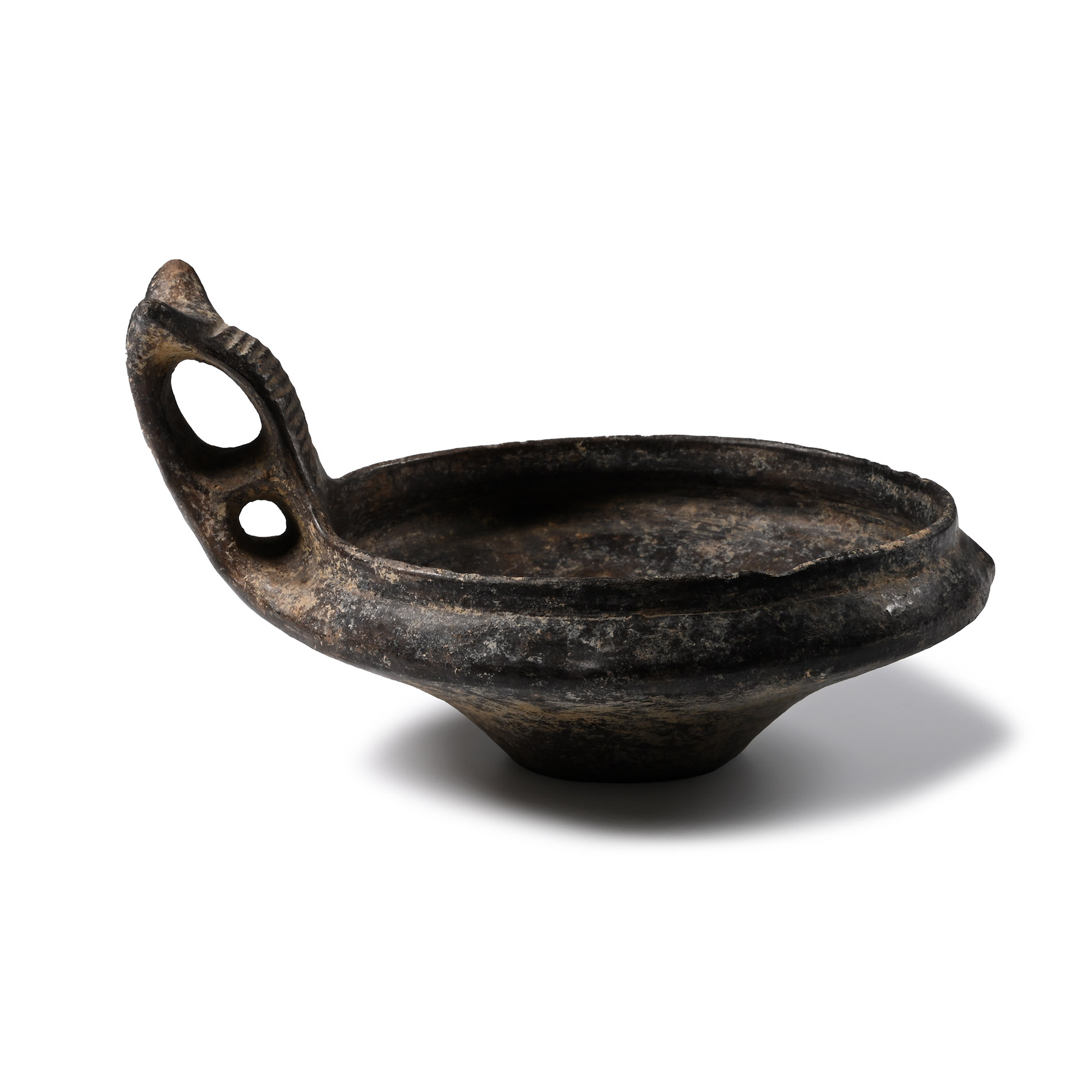
LOT 0579
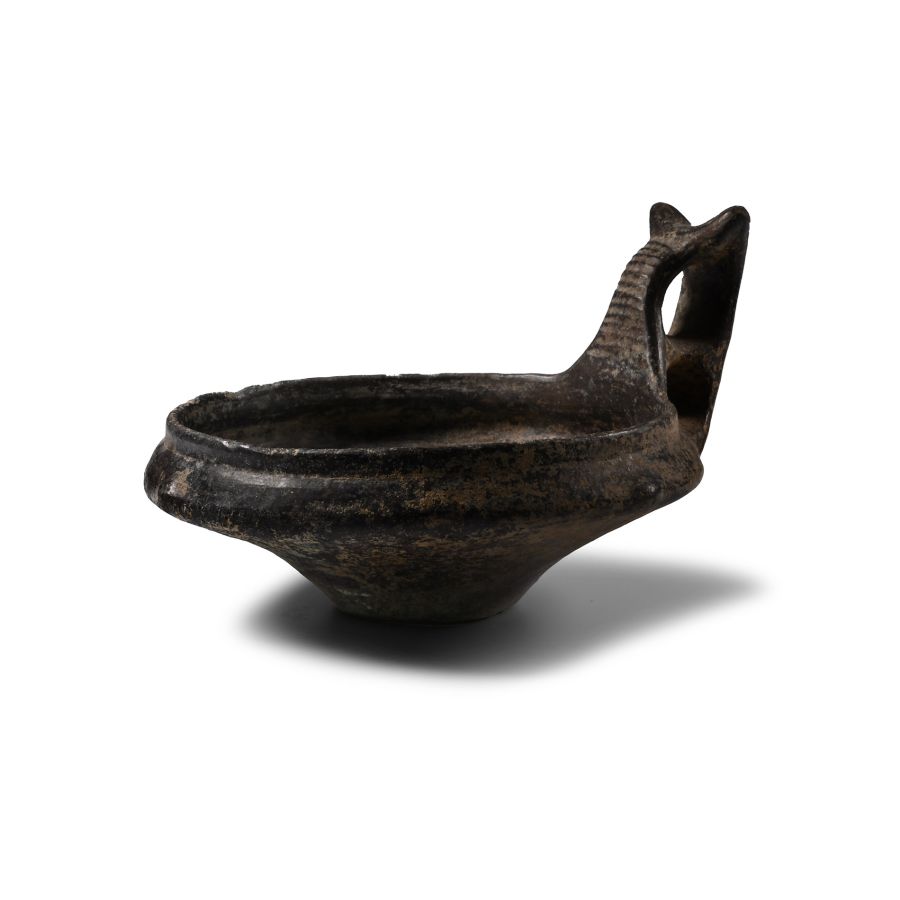
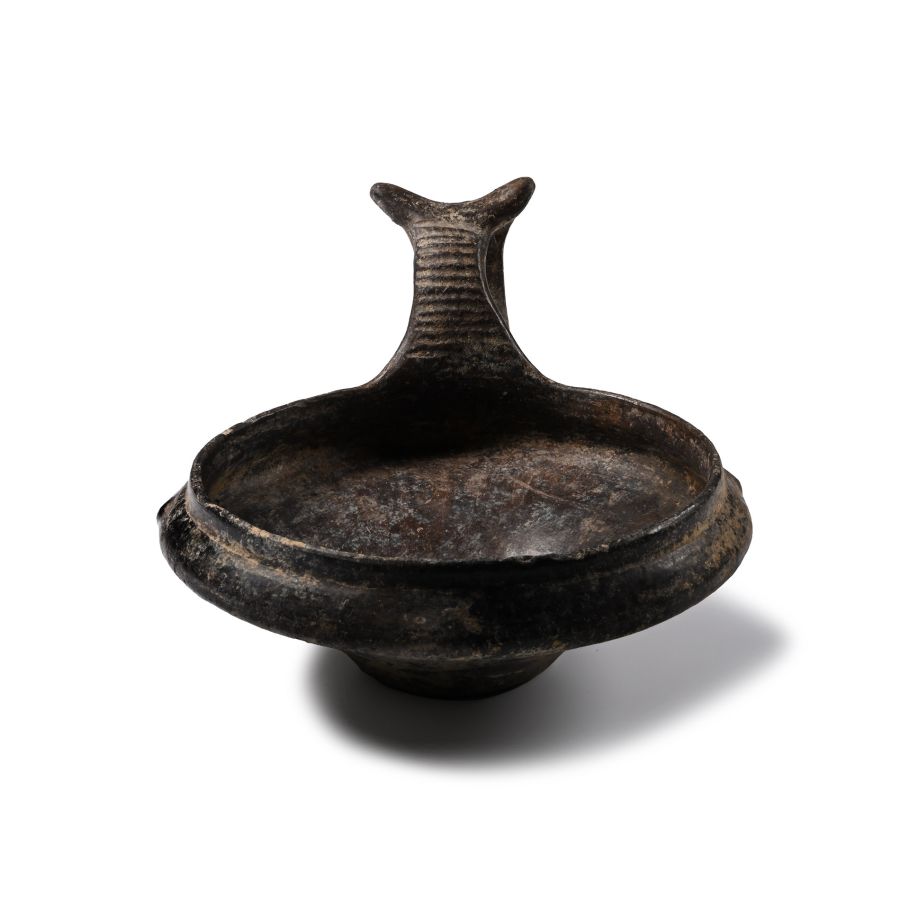
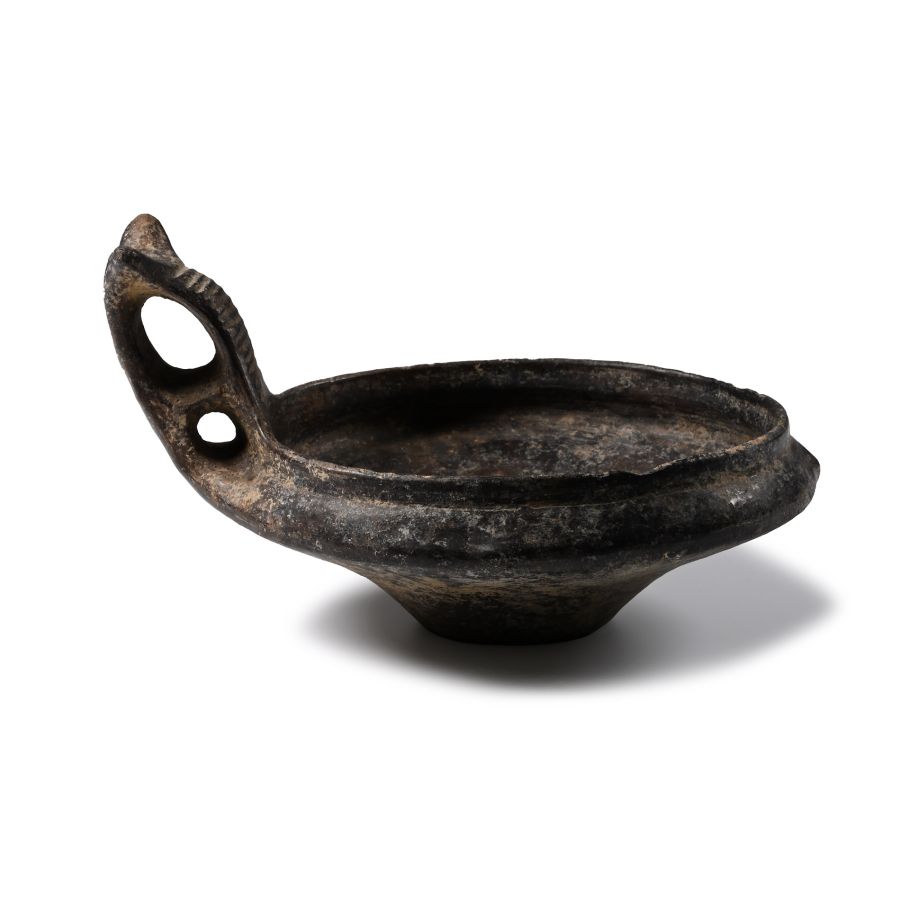
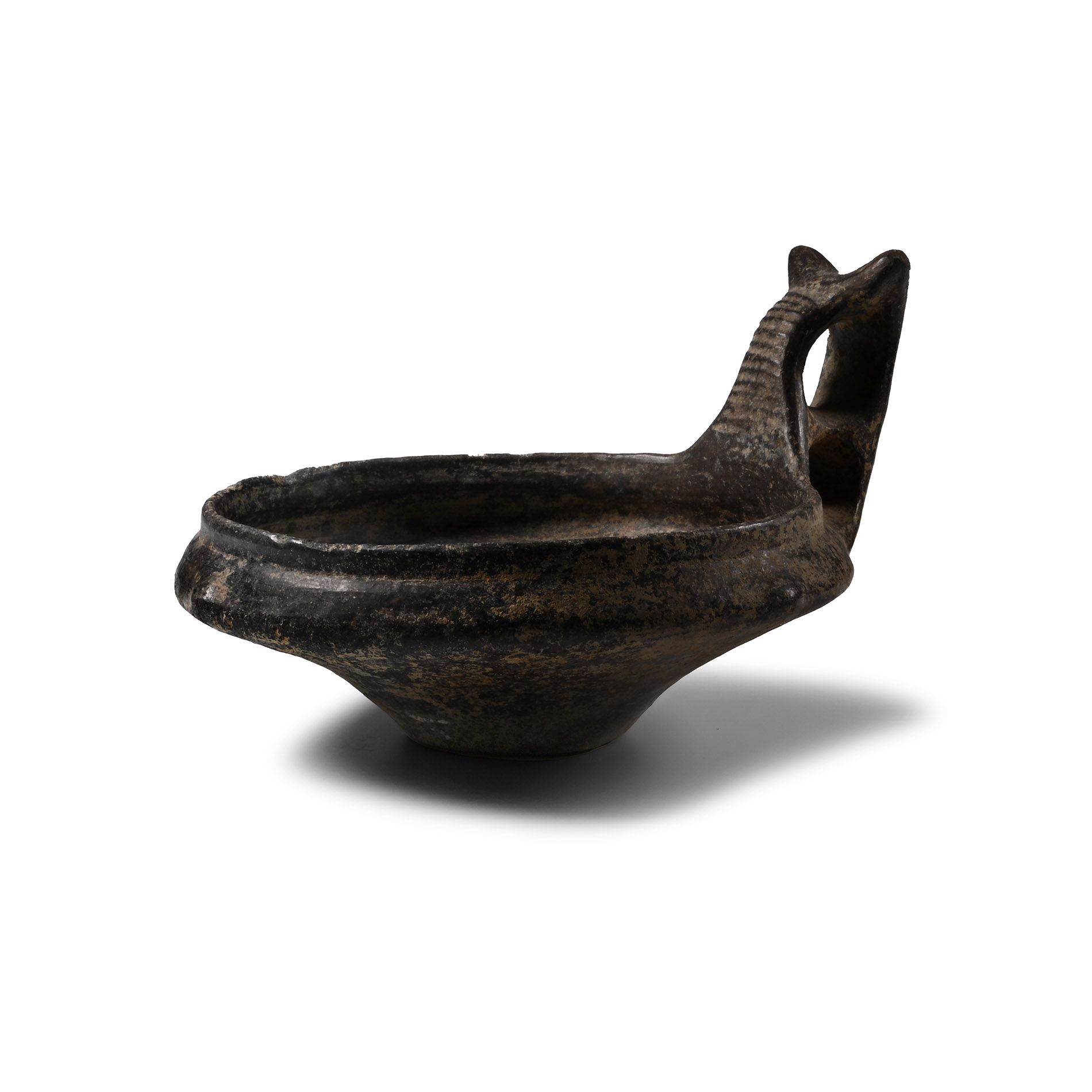
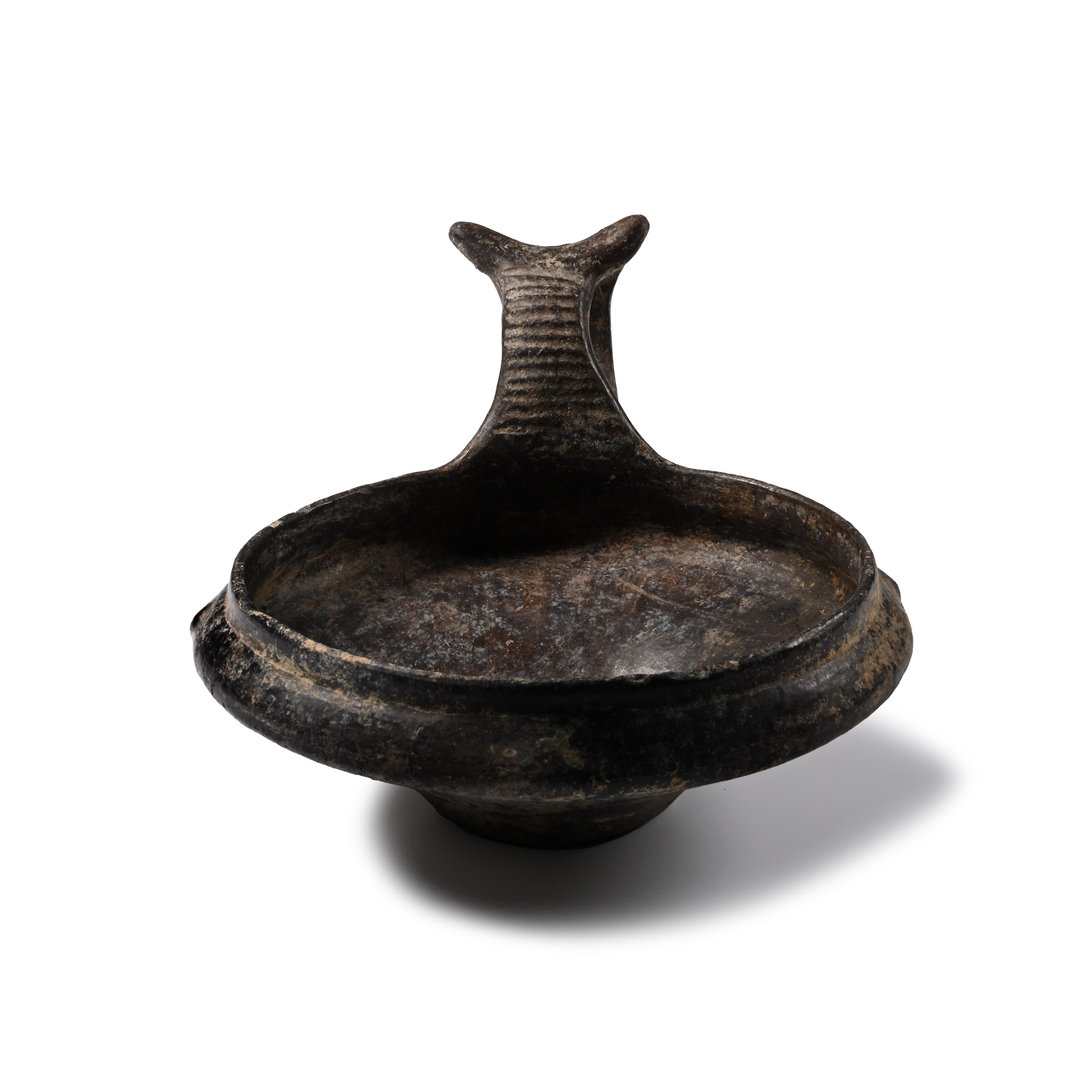
Etruscan Terracotta Impasto Kyathos
CIRCA 8TH CENTURY B.C.
5 1/4 in. (153 grams, 13.5 cm).
With low profile and narrow flat base, elaborate handle with crescent-shaped terminal and horizontal ridges below on the facing side; three small evenly placed bosses to the outer rim of the bowl. [No Reserve]
ProvenanceFrom the collection of a South German artist and art collector, 1960 -1980.
Ex Nagel Auktionen, 9 September 2014, lot 223(part).
Ancient Resource Auctions, California, USA, 6 February 2016, lot 94A.
Property of a South Australian private collector, with collection reference 16.01.
Accompanied by a detailed collector's catalogue page including description and photograph.
This lot is accompanied by an illustrated lot declaration signed by the Head of the Antiquities Department, Dr Raffaele D’Amato.
Cf. CVA Roma, Museo Preistorico L. Pigorini 1, Veio 5, pl.(1013) 2.3., for a smaller parallel dated to the 8th century B.C.; see also Cassani, Art of the italic Peoples, p.121, no.44, for a cup with a similar treatment of the handle.
CONDITIONTimeLine Auctions follows a vetting process to ensure the authenticity and legality of all items, reinforcing our commitment to integrity and responsible trading. Each antiquity, antique, and coin lot undergoes thorough examination by a vetting committee of at least ten external specialists, professional trade association members, scientists, and archaeologists: Our Vetting Process
AUCTIONS:
TimeLine is a leading auction house specialising in antiquities, ancient art, collectables, natural history, coins, medals, and books. Our auctions offer museums, collectors, historians, and enthusiasts the opportunity to acquire unique and historically significant pieces.
-
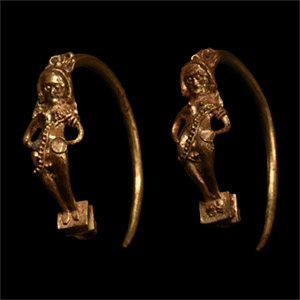
Hellenistic Gold Earring Pair with Nude Figures
5th-3rd century B.C.Sold for (Inc. bp): £1,430
Matched pair, each with a nude female standing on a tiered base with hands on her hips, rosette above her head. 7.59 grams total, 29 mm each
Acquired before 1983. Ex London gallery, 1990s. This lot is accompanied by an illustrated lot declaration signed by the Head of the Antiquities Department, Dr Raffaele D’Amato. -
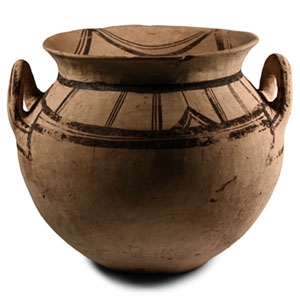
Daunian Terracotta Olla
Subgeometric, 6th-5th century B.C.Estimate: £600 - 800 (‡+bp*)
Opening Bid: £270
With a deep body on round base, flaring mouth, short loop handles to the shoulders; pendant circle segments on interior of mouth; Metope-like frieze on shoulder with triglyphs and suspended triangles, U-shaped motif at the root of the handle, horizontal bands; monochrome ware. 2.33 kg, 25.5 cm wide
The estate of Hans-Ulrich Rutschmann, Switzerland, circa 1950s-1970s. Accompanied by a copy of an Art Loss Register certificate no.S00097644. This lot is accompanied by an illustrated lot declaration signed by the Head of the Antiquities Department, Dr Raffaele D’Amato. -
Greek and Roman Pottery Sherd Group
4th century B.C.-4th century A.D.Sold for (Inc. bp): £7
Including shards of bowl and other vessels, marble block and other items. 868 grams total, 2-11.2 cm
Acquired from Brigantia Antiques, York, circa 2003. Ian Wilkinson collection, Nottinghamshire, UK, formed since 1985. This lot is accompanied by an illustrated lot declaration signed by the Head of the Antiquities Department, Dr Raffaele D’Amato.
