
Loading, please wait...
LOT 0093
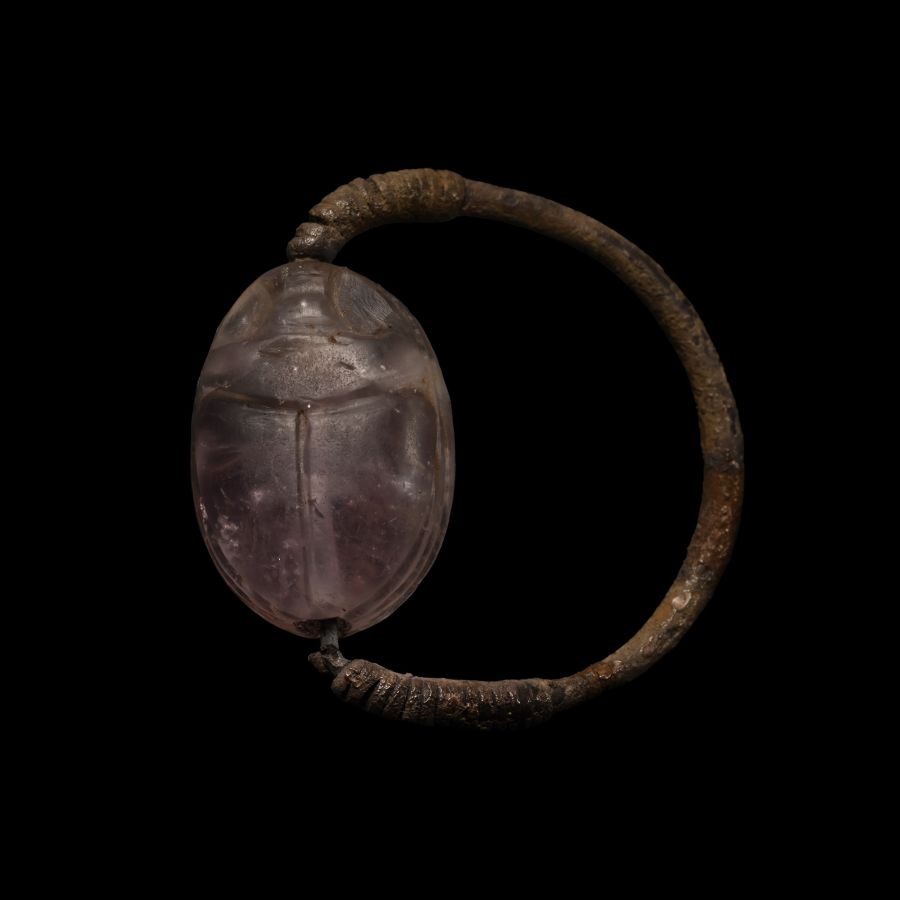
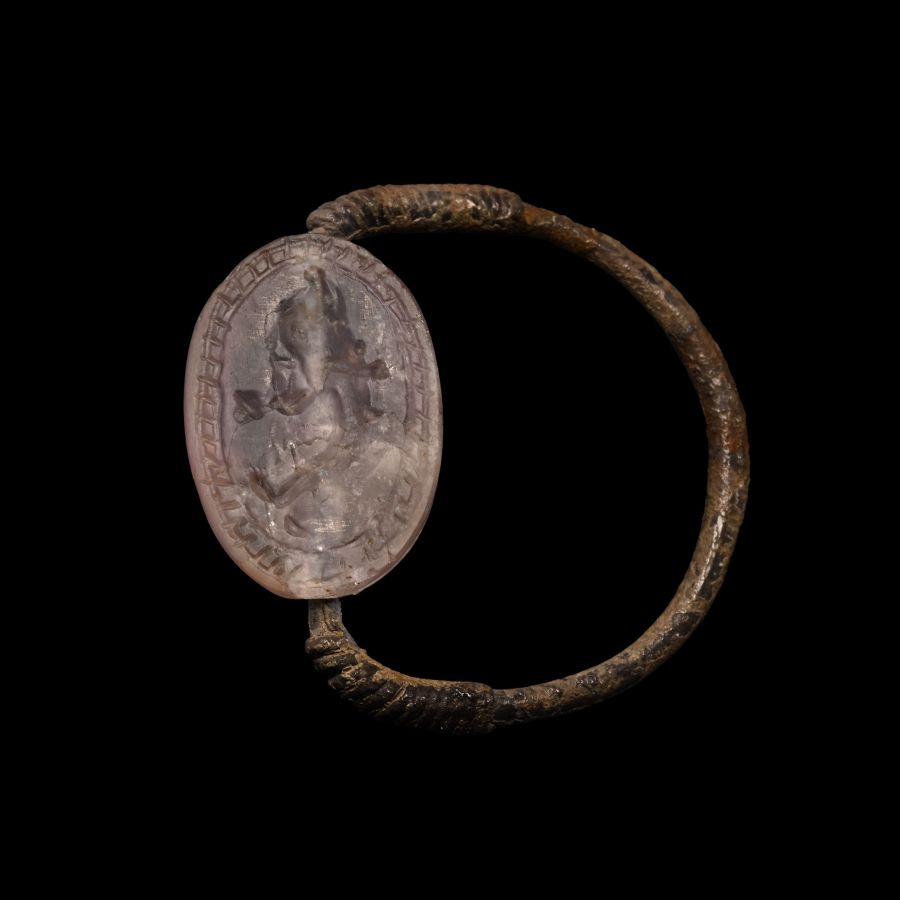
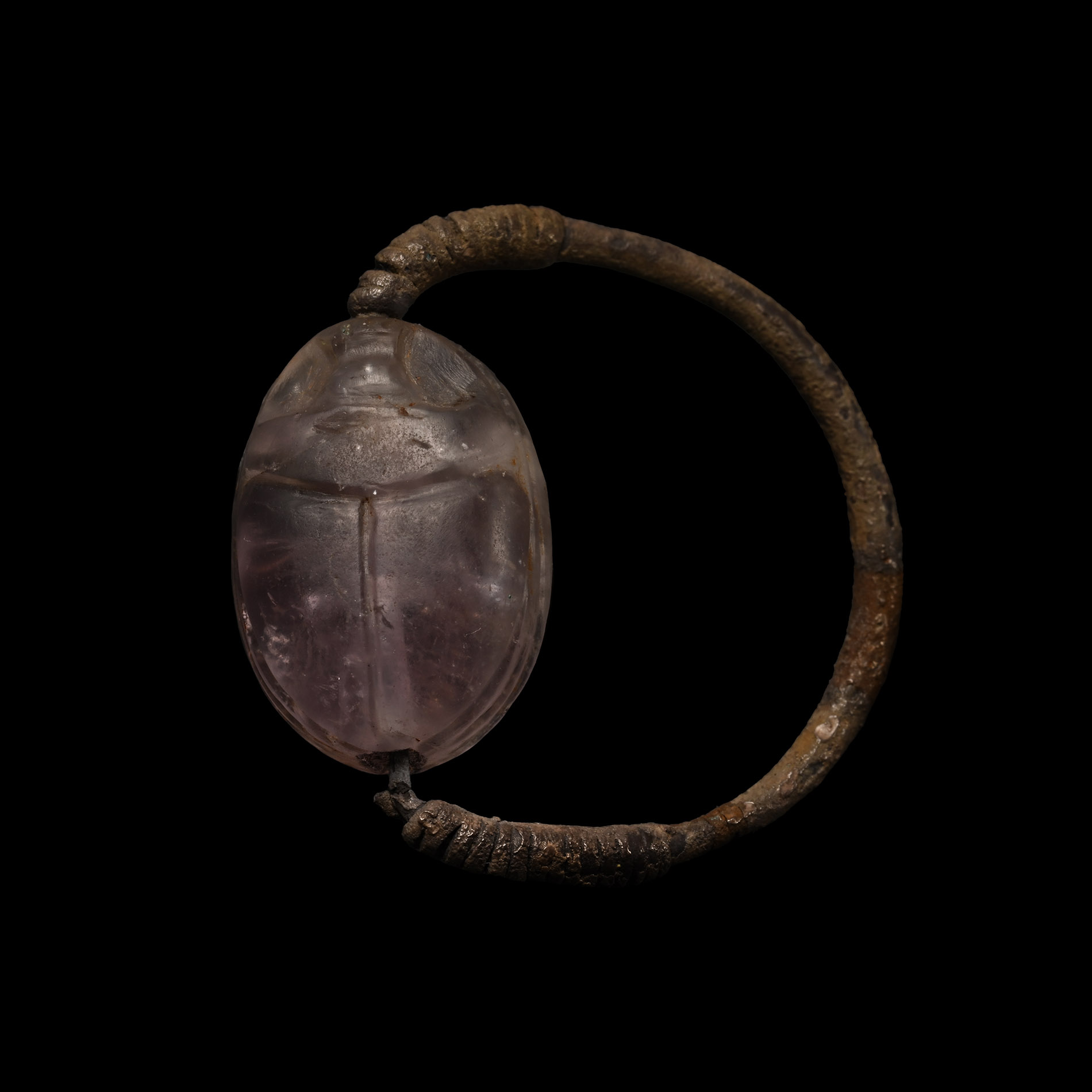
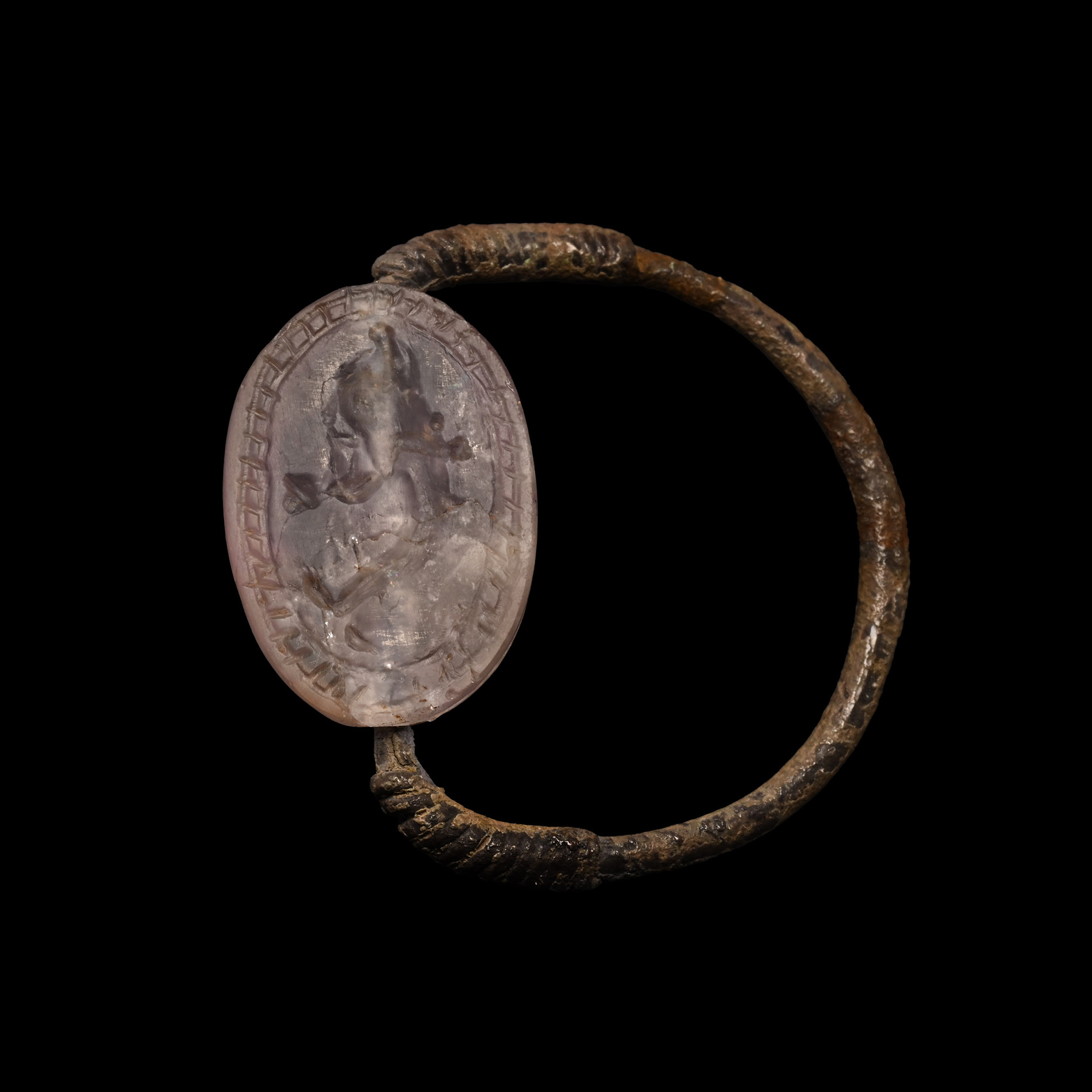
Etruscan Silver Ring with Amethyst Scarab
8TH-3RD CENTURY B.C.
1 1/8 in. (5.44 grams, 30.77 mm overall, 25.27 mm internal diameter (approximate size British W, USA 11, Europe 25, Japan 24)).
Wire hoop with ends wound round the shank at each shoulder, swivel-mounted amethyst scarab with flat underside, segmented border around a dolphin with putto mounted on its back.
ProvenanceFrom the private collection of Mr K.A., acquired in the 1990s-early 2000s.
LiteratureCf. Chadour, A.B., Rings. The Alice and Louis Koch Collection, volume I, Leeds, 1994, item 43, for type.
CONDITIONTimeLine Auctions follows a vetting process to ensure the authenticity and legality of all items, reinforcing our commitment to integrity and responsible trading. Each antiquity, antique, and coin lot undergoes thorough examination by a vetting committee of at least ten external specialists, professional trade association members, scientists, and archaeologists: Our Vetting Process
AUCTIONS:
TimeLine is a leading auction house specialising in antiquities, ancient art, collectables, natural history, coins, medals, and books. Our auctions offer museums, collectors, historians, and enthusiasts the opportunity to acquire unique and historically significant pieces.
LOT 0093
Etruscan Silver Ring with Amethyst Scarab
Estimate £700 - 900€810 - 1,040 (for guidance only)$950 - 1,220 (for guidance only)
-
Corinthian Black-Figure Oinochoe
6th century B.C.Sold for (Inc. bp): £4,160
Decorated with two superimposed friezes of animals including panthers, bulls and grazing ibexes; flowers and rosettes in the field; restored. 675 grams, 26.5 cm
Private collection, Old City of Jaffa, Israel. with Archeological Center, Tel Aviv, Israel. Accompanied by a thermoluminescence analysis report no.N124d54 from Oxford Authentication. This lot has been checked against the Interpol Database of stolen works of art and is accompanied by a search certificate number no.12383-226986. -
Greek Terracotta Votive Head
4th-3rd century B.C.Sold for (Inc. bp): £26
Modelled in the round, female head with hair drawn back in a chignon, tilted angle to the neck. 36 grams, 44 mm
From a family collection mostly formed in the 1940s-1950s, thence by descent. -
.jpg)
Hellenistic Garnet Gemstone with Hercules Club and Lionskin
2nd century B.C.Estimate: £2,000 - 3,000 (+bp*)
Opening Bid: £1,000
Plano-convex with incuse image of spiked club and lionskin mantle. 1.8 grams, 17 mm
Acquired in the 1970s. Ex London, UK, collection. This lot has been checked against the Interpol Database of stolen works of art and is accompanied by a search certificate number no.12386-226380.
