
Loading, please wait...
LOT 0509
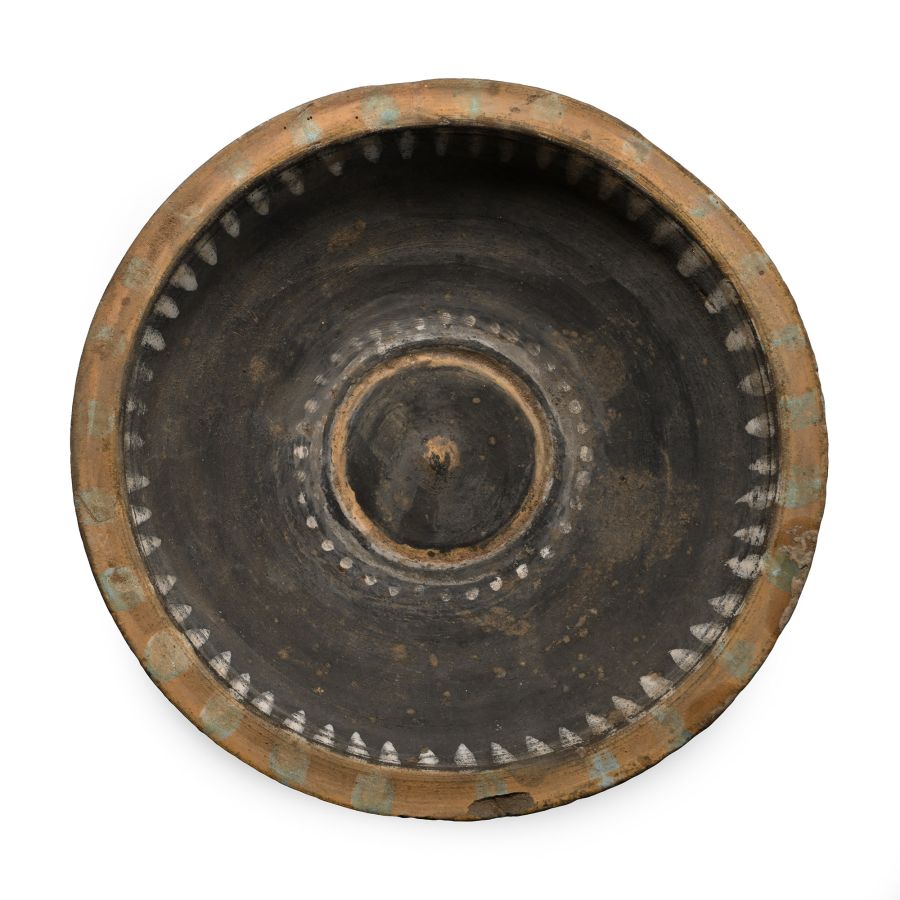
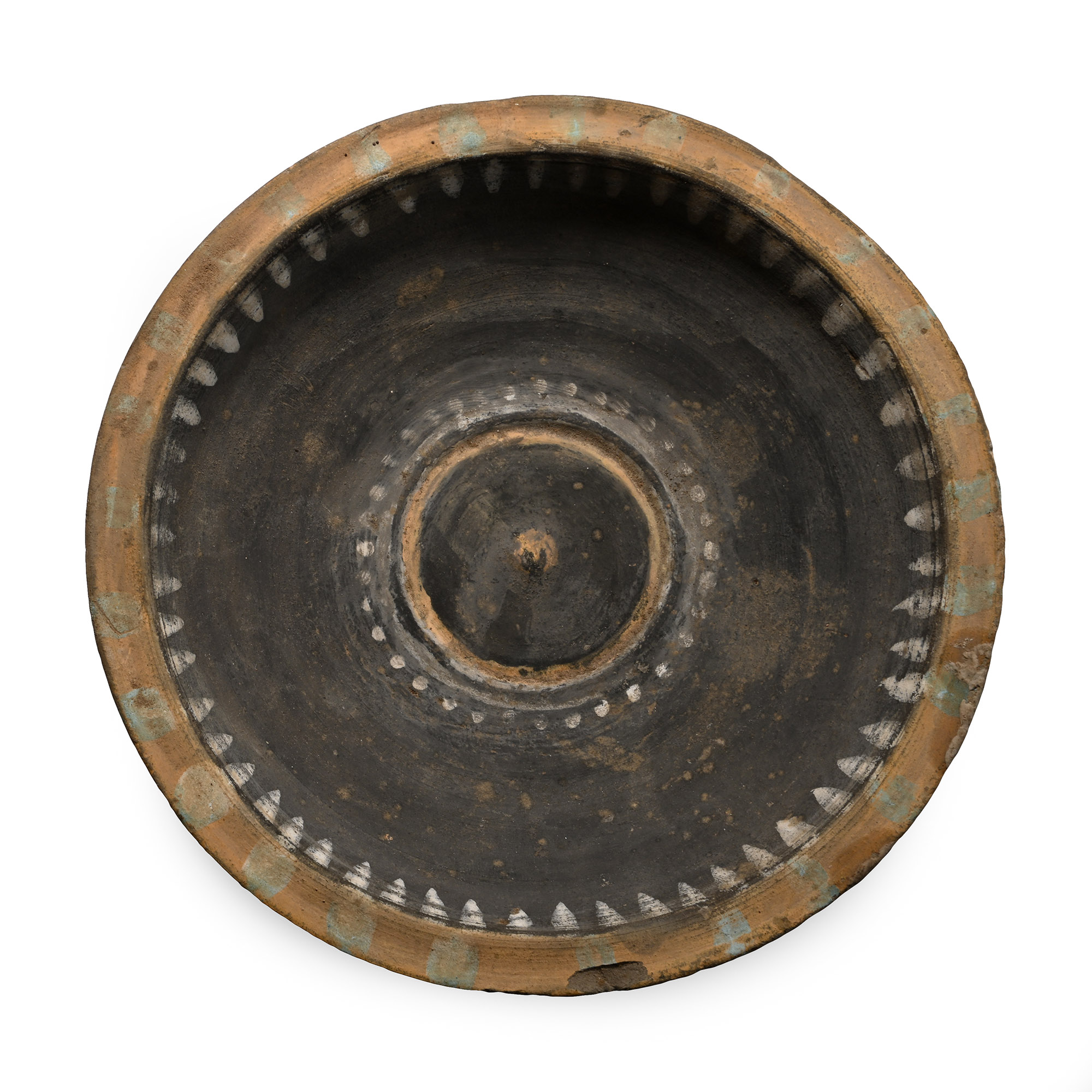
Etruscan Painted Terracotta Dish
CIRCA 7TH-4TH CENTURY B.C.
5 3/8 in. (156 grams, 13.8 cm).
Low dish with everted rim and painted decoration on the inner face. [No Reserve]
ProvenanceFrom the collection of a Cambridge, UK, gentleman, by direct descent from his father, who acquired the items in London in circa 1960.
CONDITIONTimeLine Auctions follows a vetting process to ensure the authenticity and legality of all items, reinforcing our commitment to integrity and responsible trading. Each antiquity, antique, and coin lot undergoes thorough examination by a vetting committee of at least ten external specialists, professional trade association members, scientists, and archaeologists: Our Vetting Process
AUCTIONS:
TimeLine is a leading auction house specialising in antiquities, ancient art, collectables, natural history, coins, medals, and books. Our auctions offer museums, collectors, historians, and enthusiasts the opportunity to acquire unique and historically significant pieces.
-
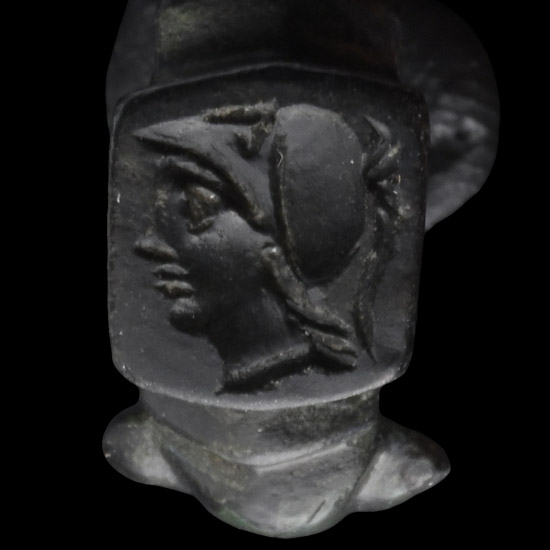
Graeco-Roman Bronze Ring with Bust of Athena
Circa 1st century B.C.Sold for (Inc. bp): £234
D-section hoop with stepped rims and trefoil shoulders, cuboid bezel with incuse profile bust of Athena to the upper face. 10.19 grams, 27.01 mm overall, 17.71 mm internal diameter (approximate size British O 1/2, USA 7 1/4, Europe 15.61, Japan 15)
Ex German art market, 2000s. Acquired from an EU collector living in London. From the collection of a Surrey, UK, gentleman. -
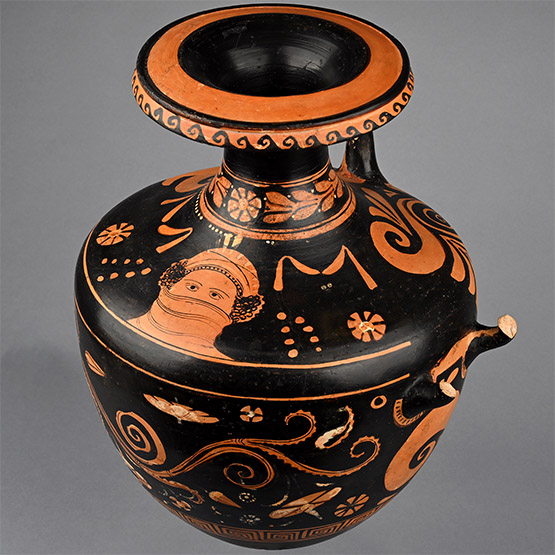
Greek Fragmentary Terracotta Red-Figure Hydria
Paestan or Apulian, 4th century B.C.Estimate: £4,000 - 6,000 (‡+bp*)
Opening Bid: £2,200
Comprising the upper two thirds of the vessel; on the shoulder a facing woman's head with diadem and half-veiled face; rosettes to left and right, with suspended ribbons and dots; vine motif around the body with floral ornaments; to the reverse, palmettes and vines; band of laurel with rosettes around the neck and wavy band at the mouth; reassembled from various fragments with three large areas of restoration, only the beginnings of the handles preserved; mounted on a custom-made stand. 1.95 kg, 31 cm (2.6 kg total, 47.5 cm high including stand)
Ex Herbert A. Cahn, Basel, 1990s. This lot has been checked against the Interpol Database of stolen works of art and is accompanied by search certificate number no.12475-228738.
The face-veiling gesture is a known marriage rite; the diadem may suggest that she is intended to represent Persephone. Alternatively, the veiled woman might be a dancer as many terracotta figurines of dancing women are shown with face-coverings. However, the floral ornaments could indicate a funeral or sepulchral context. -
.jpg)
Greek Miniature Bronze Hydria
Geometric Period, 6th century B.C.Sold for (Inc. bp): £845
With a bulbous body, flared foot, lateral loop handles to the shoulder and a strap handle to the rear. 23.5 grams, 37 mm
Acquired by a Swiss family in the mid-1980s to late 1990s, thence by descent. Private collection, Switzerland, since the late 1990s.
The earliest Archaic Greek bronze hydriai enter the archaeological record in the last quarter of the seventh century. Although the appearance of bronze marks the first significant period of production in the Iron Age, these vessels represent a reawakening of an illustrious tradition dating back at least to the Helladic Bronze Age, if not considerably earlier.
