
Loading, please wait...


LOT 0059
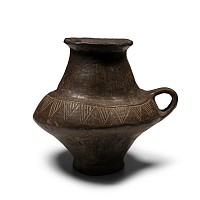
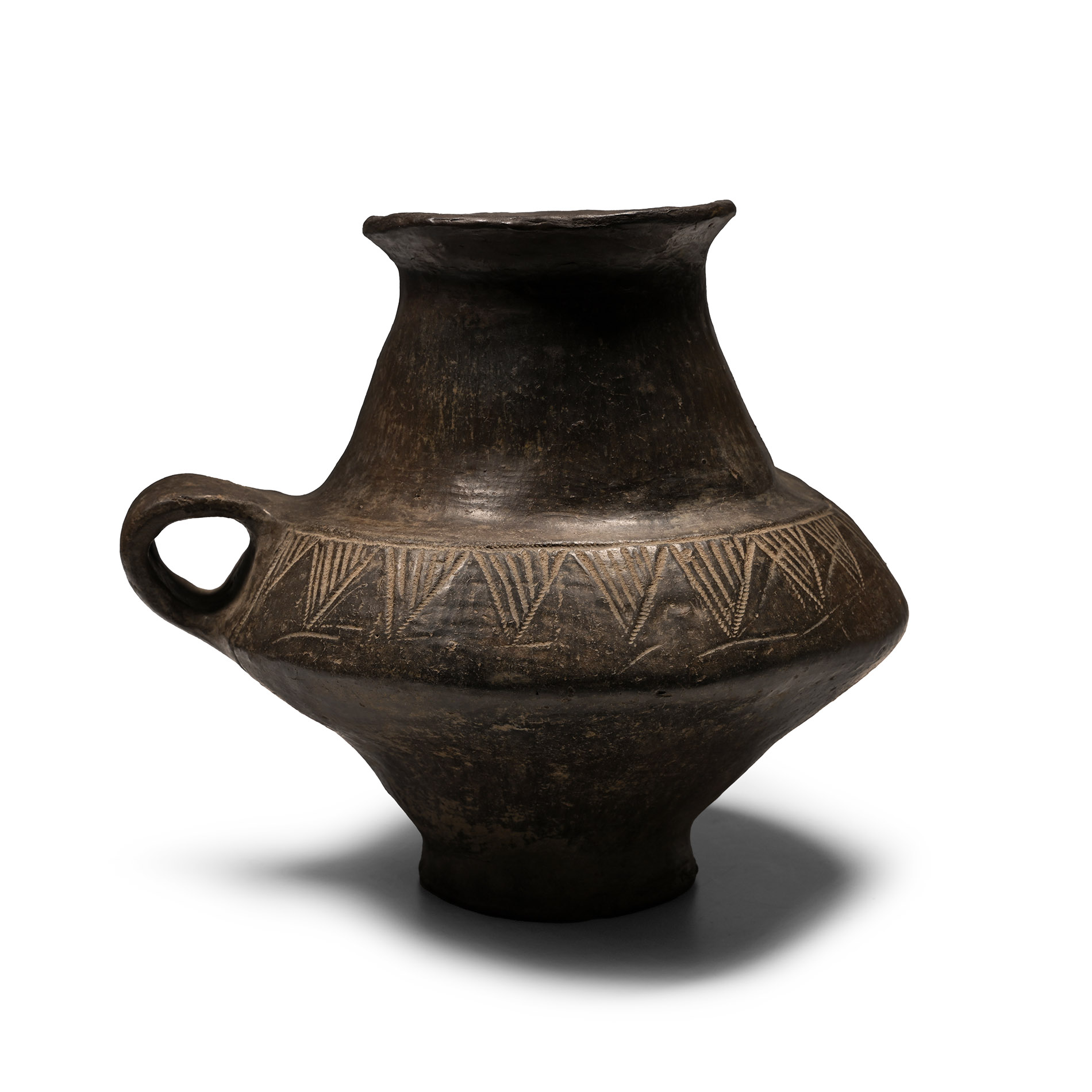
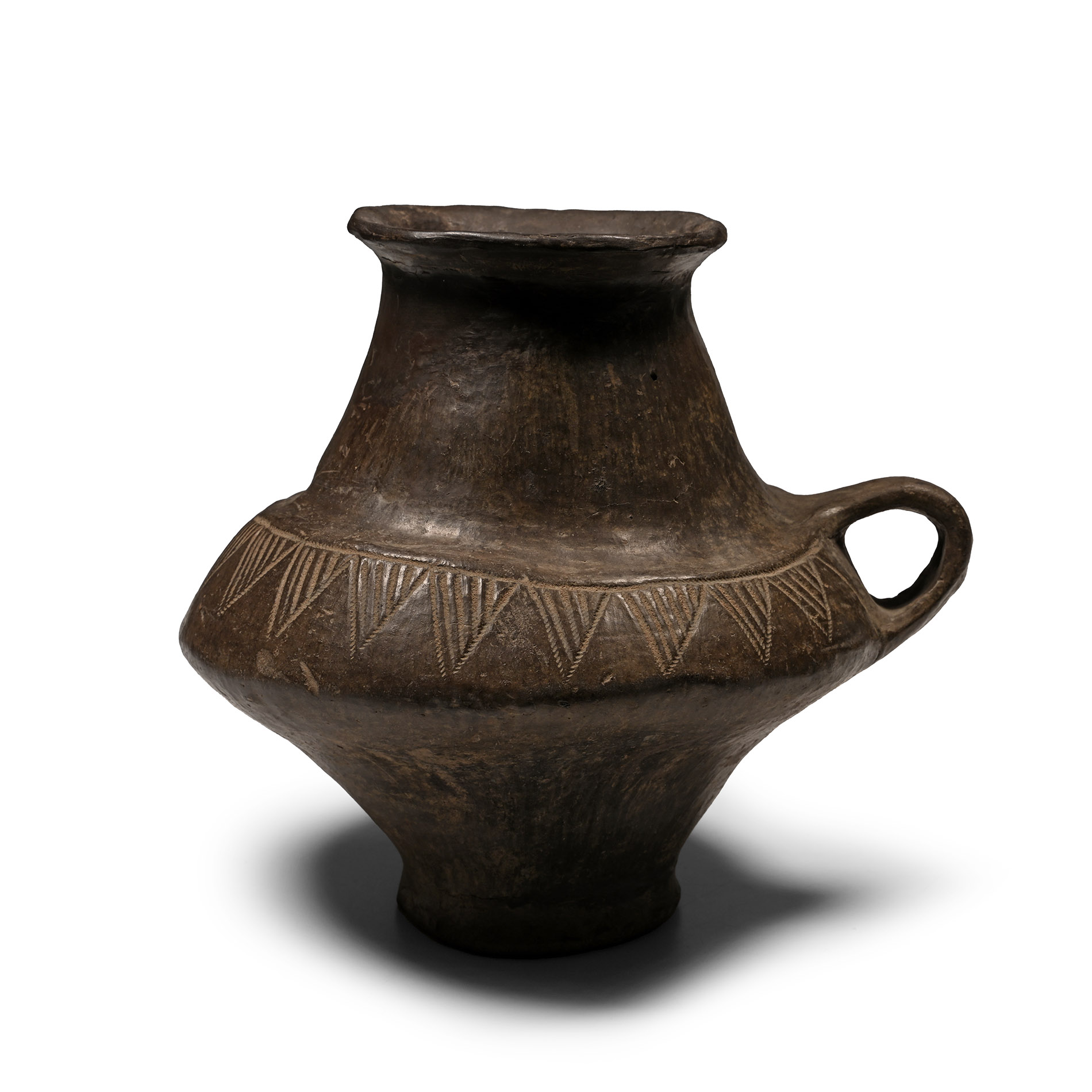
Etruscan Impasto Single-Handled Vase
CIRCA 6TH CENTURY B.C.
6 3/8 in. (854 grams, 16.3 cm).
Bucchero olpe with a glossy black slip to surface, trumpet-shaped neck and mouth, loop handle to the shoulder and discoid foot, circumferential band of hatched triangles to the shoulder. [No Reserve]
ProvenanceProperty from the Upper East Side estate of M.H., New York, USA; a Slovak refugee who collected in the early 1980s.
LiteratureCf. Edlund, I.E.M., The Iron Age and Etruscan Vases in the Olcott Collection at Columbia University, New York, pp.28-29.
CONDITIONTimeLine Auctions follows a vetting process to ensure the authenticity and legality of all items, reinforcing our commitment to integrity and responsible trading. Each antiquity, antique, and coin lot undergoes thorough examination by a vetting committee of at least ten external specialists, professional trade association members, scientists, and archaeologists: Our Vetting Process
AUCTIONS:
TimeLine is a leading auction house specialising in antiquities, ancient art, collectables, natural history, coins, medals, and books. Our auctions offer museums, collectors, historians, and enthusiasts the opportunity to acquire unique and historically significant pieces.
-
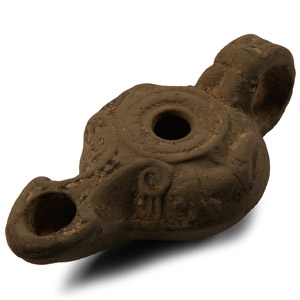
Hellenistic Terracotta Oil Lamp with Cornucopiae
2nd-1st century B.C.Estimate: £150 - 200 (+bp*)
Opening Bid: £83
With circular body and raised rim, round central filling-hole flanked by cornucopiae; long broad nozzle with rounded spout-like termination; handle with three ribs. 62 grams, 10.5 cm
Collected from 1970-1999. From the collection of the late Mr S.M., London, UK.
The principal parts of a Graeco-Roman lamp were: a) the body or reservoir which contained the oil (infundibulum); the flat circular top (discus) on which the design was placed, sometimes with an ornamental rim; the edge (margo); the nozzle (rostrum, nasus, myxus) with a hole for the insertion of the wick (ellychnium); and the handle (ansa, manubrium,). -
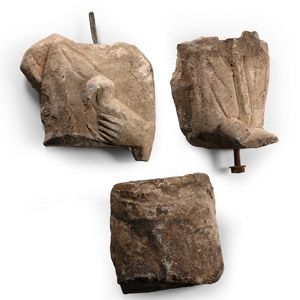
Cypriot Large Limestone Figure Fragment Group
2nd-1st millennium B.C.Sold for (Inc. bp): £104
Including the torso of a soldier with baldric, left hand clutching the hilt of the sword. 1.15 kg total, 10.3-13 cm
From a collection acquired on the UK art market from various auction houses and collections mostly before 2000. From an important Cambridgeshire estate; thence by descent. -
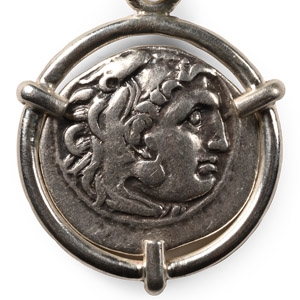
Greek Silver Alexander the Great Drachm Pendant
3rd century B.C. and laterSold for (Inc. bp): £221
Drachm with profile bust of Herakles to obverse, seated figure of Zeus with eagle to reverse; clasp-mounted in a modern silver frame with ring and loop. 7.26 grams, 41 mm
Ex German art market, 2000s. Acquired from an EU collector living in London. From the collection of Surrey, UK, gentleman.
