
Loading, please wait...



LOT 0097
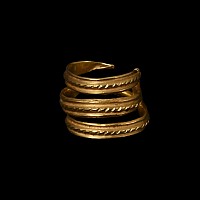
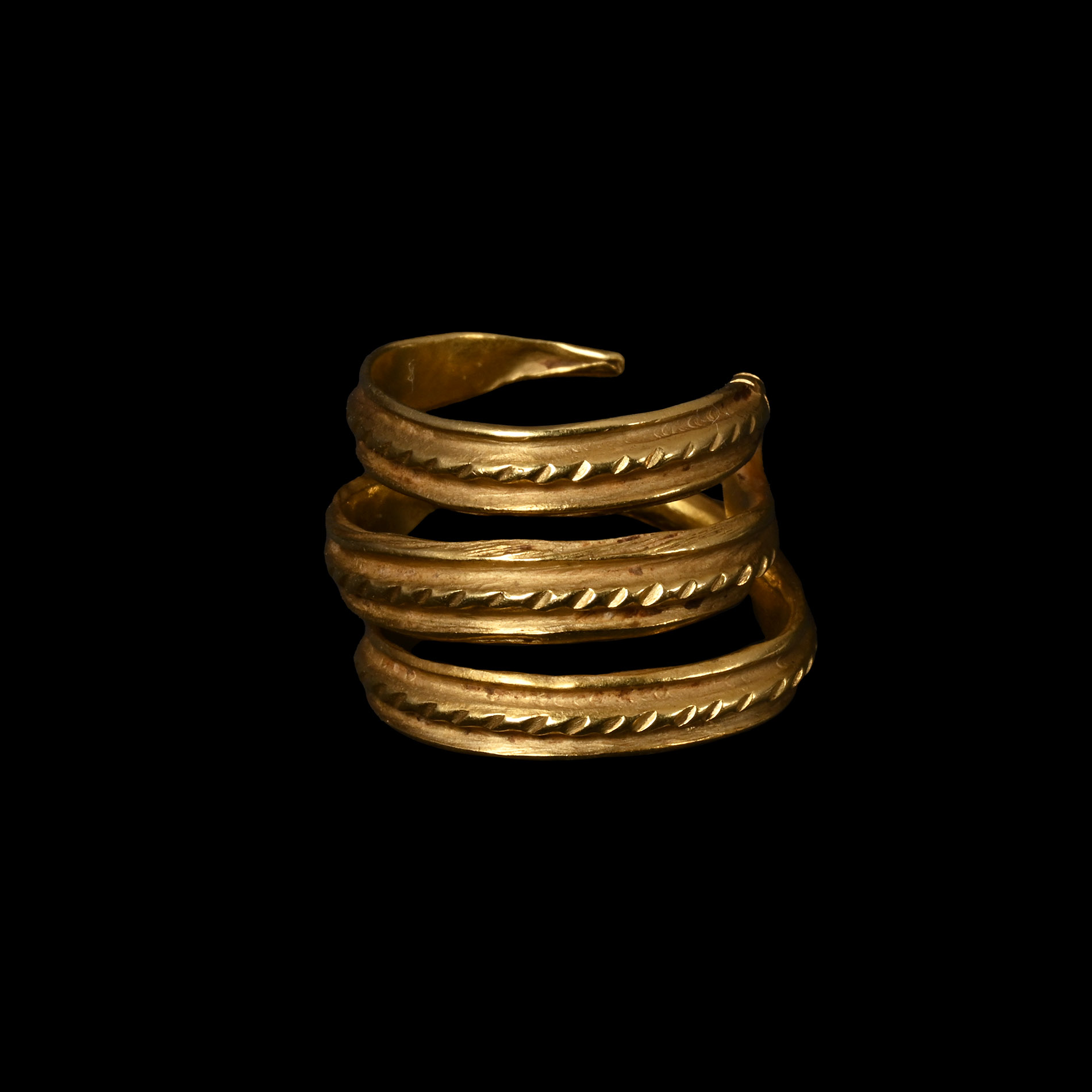
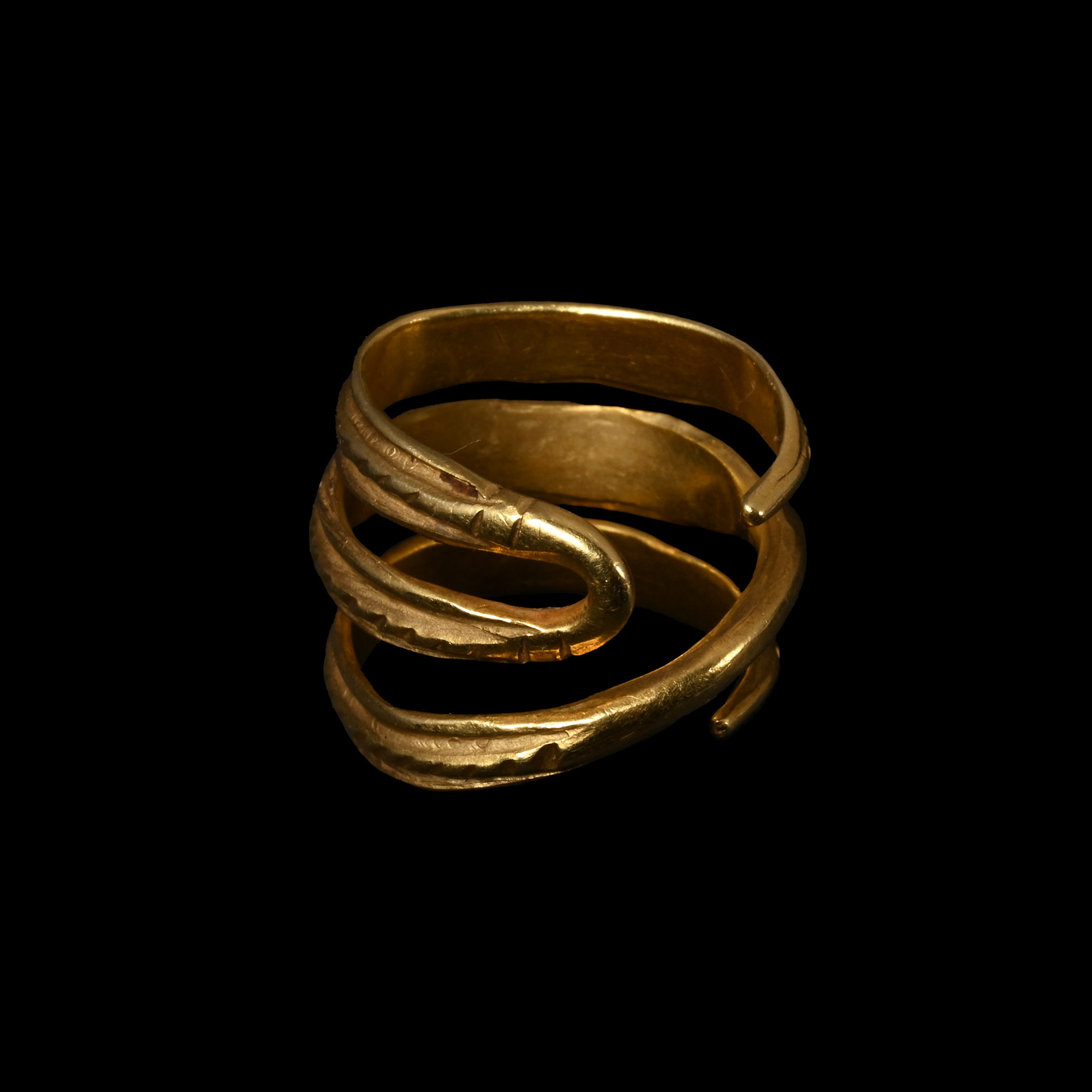
Etruscan Gold Spiral Ring
8TH-3RD CENTURY B.C.
3/4 in. (5.45 grams, 19.01 mm overall, 15.21 mm internal diameter (approximate size British F, USA 2 3/4, Europe 3.67, Japan 3)).
Comprising a D-section band with median band of raised ropework; S-curved format.
Provenancewith Arts d'Orient Archaeology, Paris, 7 June 2006, no. 556.
Ex Galerie Dominique Thirion, Brussels, Belgium.
From the private collection of Mr K.A.
TimeLine Auctions follows a vetting process to ensure the authenticity and legality of all items, reinforcing our commitment to integrity and responsible trading. Each antiquity, antique, and coin lot undergoes thorough examination by a vetting committee of at least ten external specialists, professional trade association members, scientists, and archaeologists: Our Vetting Process
AUCTIONS:
TimeLine is a leading auction house specialising in antiquities, ancient art, collectables, natural history, coins, medals, and books. Our auctions offer museums, collectors, historians, and enthusiasts the opportunity to acquire unique and historically significant pieces.
-
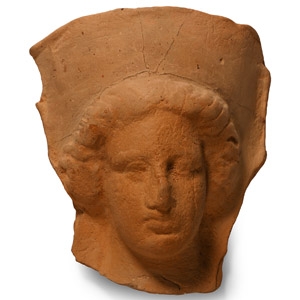
Greek Terracotta Protome Mask
4th-3rd century B.C.Sold for (Inc. bp): £182
Moulded in the half-round with soft facial features and hair drawn back framing the face. 169 grams, 11.2 cm
From a family collection mostly formed in the 1940s-1950s, thence by descent. -
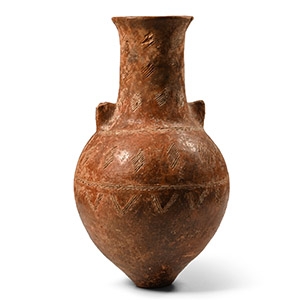
Large Cypriot Red Burnished Ware Amphora-Shaped Vessel
Early Bronze Age, 2300-2150 B.C.Sold for (Inc. bp): £780
The ovoid body and trumpet-shaped neck decorated with bands of hatched lozenges, shoulder with encircling broken bands above and below with inverted chevrons beneath; lateral flange handles. 1.7 kg, 30.5 cm
From a collection acquired on the UK art market from various auction houses and collections mostly before 2000. From an important Cambridgeshire estate; thence by descent. -
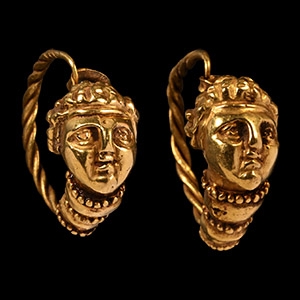
Greek Gold Earrings with Female Heads
Hellenistic, 2nd-1st century B.C.Sold for (Inc. bp): £2,470
Each a hollow-formed female head with stephane to the brow, granulated collars flanking biconvex bulbs, tapering twisted shank curved to meet the gussetted loop above the head. 5.93 grams total, 25-28 mm
From the collection of a gentleman, acquired on the London art market in the 1990s.
