
Loading, please wait...

LOT 0087
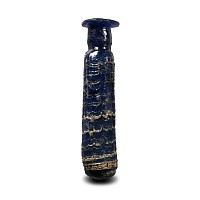
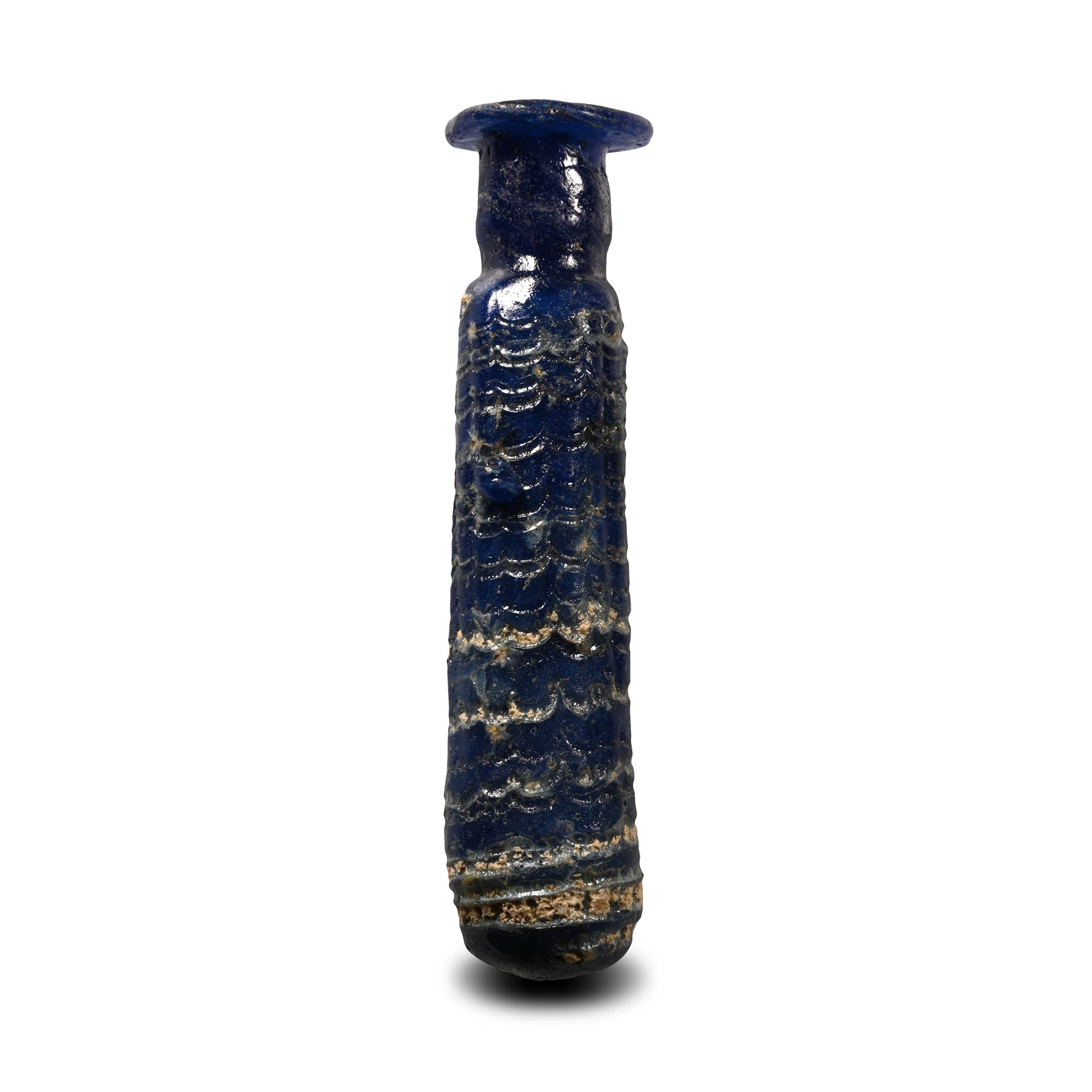
Etruscan Core-Formed Glass Alabastron
4TH-2ND CENTURY B.C.
4 in. (31.8 grams, 10.2 cm).
With fusiform body, slender neck and broad flange rim, decorated with white marvered feathering and spiralling trails; remains of attachment point for handle.
ProvenanceEx Bertolami, 19 November 2018, no.39.
Property of a London based academic, 2003 to present.
Cf. The Corning Museum of Glass, accession number 74.1.19, for similar; cf. The Metropolitan Museum, accession number 17.194.590, for similar.
CONDITIONTimeLine Auctions follows a vetting process to ensure the authenticity and legality of all items, reinforcing our commitment to integrity and responsible trading. Each antiquity, antique, and coin lot undergoes thorough examination by a vetting committee of at least ten external specialists, professional trade association members, scientists, and archaeologists: Our Vetting Process
AUCTIONS:
TimeLine is a leading auction house specialising in antiquities, ancient art, collectables, natural history, coins, medals, and books. Our auctions offer museums, collectors, historians, and enthusiasts the opportunity to acquire unique and historically significant pieces.
LOT 0087
Etruscan Core-Formed Glass Alabastron
Estimate £700 - 900€810 - 1,040 (for guidance only)$950 - 1,220 (for guidance only)
-
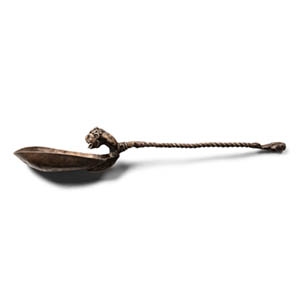
Graeco-Roman Silver Spoon with Lion Head
1st century B.C.-1st century A.D.Sold for (Inc. bp): £1,040
Deep piriform bowl with scooped repoussé rear, baluster formed as a lioness's head with applied rosette to the brow, twisted handle with knop finial. 9.42 grams, 15.2 cm
From the collection of a gentleman, acquired on the London art market in the 1990s. -
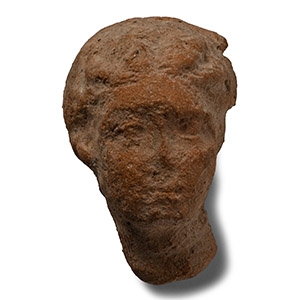
Greek Terracotta Votive Head
4th-3rd century B.C.Sold for (Inc. bp): £26
Modelled in the round, female head with hair drawn back in a chignon, tilted angle to the neck. 36 grams, 44 mm
From a family collection mostly formed in the 1940s-1950s, thence by descent. -
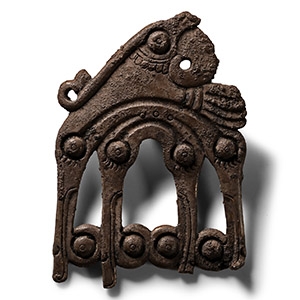
Thracian Silver Pendant
6th-3rd century B.C.Estimate: £400 - 600 (‡+bp*)
Opening Bid: £200
Openwork plaque depicting a stylised horse with curved body, bosses to the hips and shoulders, head turned backwards along the spine with looped reins; ribbed loop to the reverse. 41.5 grams, 75 mm
Acquired in the mid 1980s-1990s. From the family collection of Mr S.A., Switzerland, thence by descent. Private collection since the late 1990s.
