
Loading, please wait...


LOT 0517
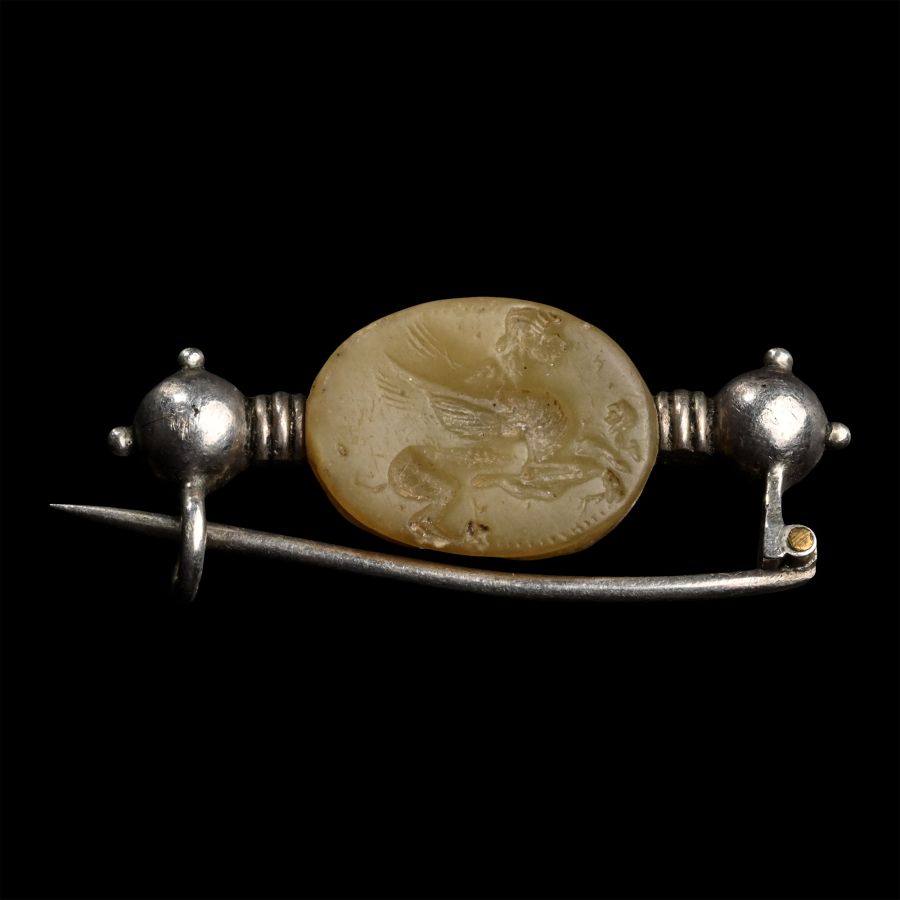
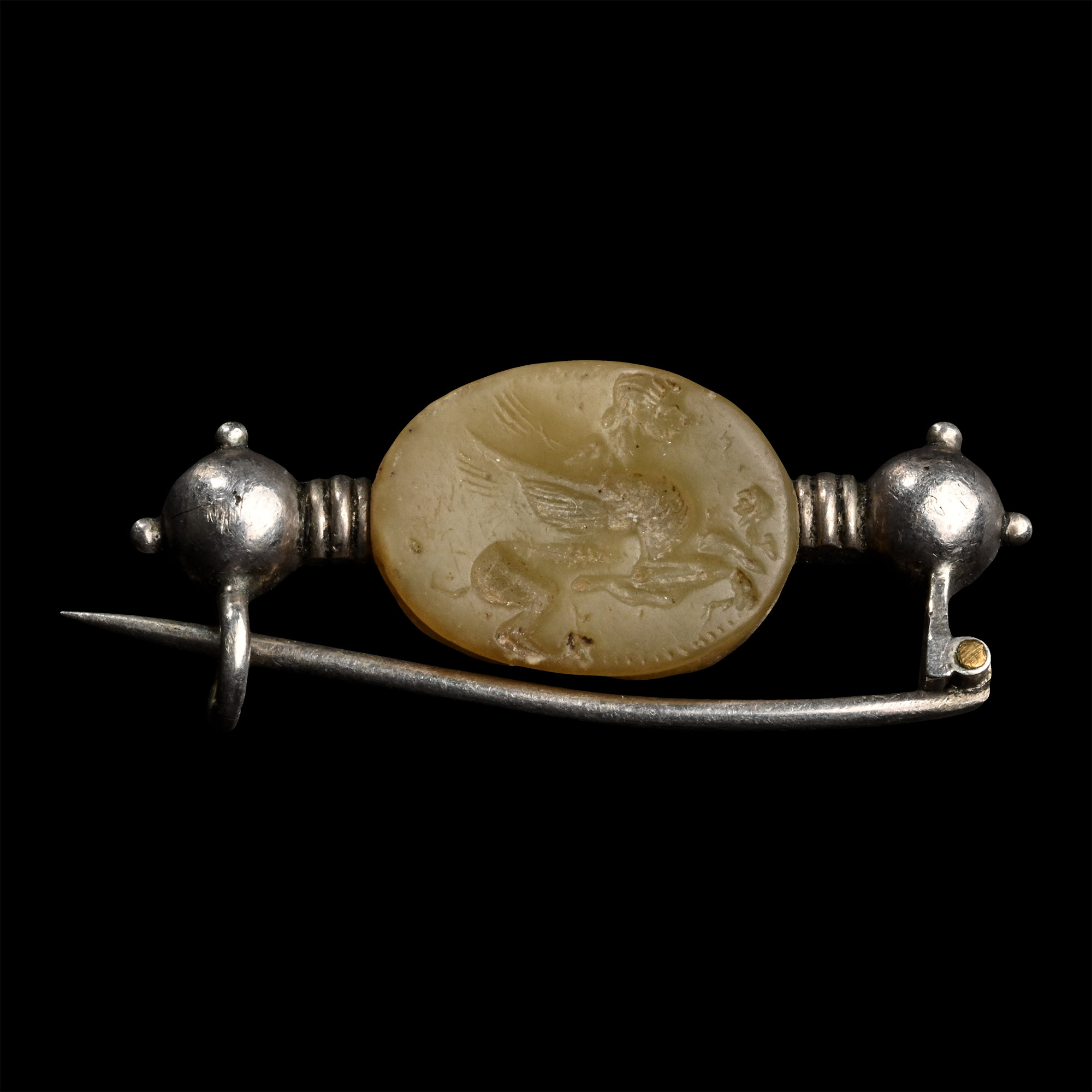
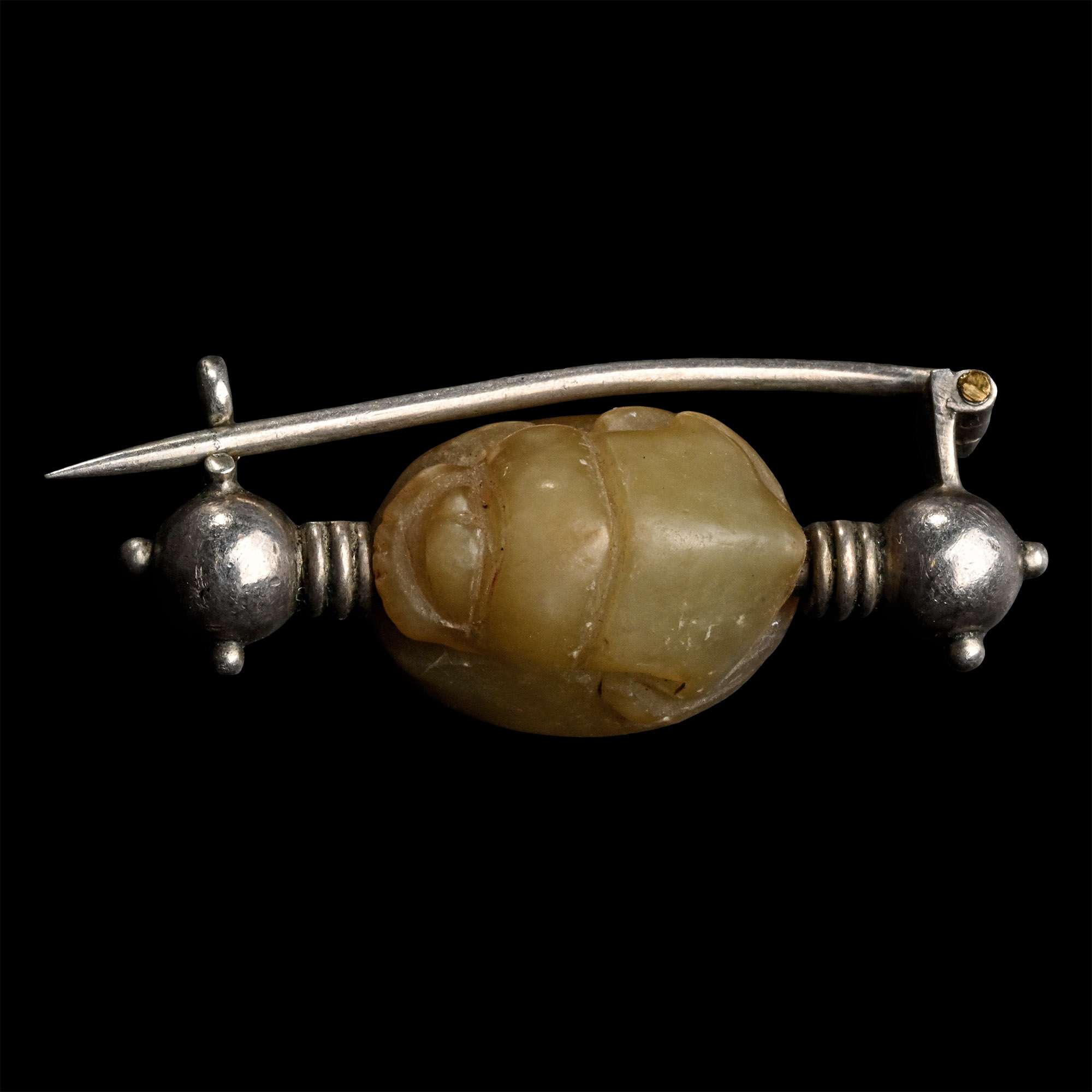
Etruscan Carnelian Scarab with Sphinx in Later Victorian Silver Mount
5TH-4TH CENTURY B.C.
1 3/8 in. (5.12 grams, 36 mm).
Naturalistically carved scarab on an oval base engraved with a leaping sphinx, set in a later silver brooch mount.
ProvenanceAcquired on the European art market.
CONDITIONTimeLine Auctions follows a vetting process to ensure the authenticity and legality of all items, reinforcing our commitment to integrity and responsible trading. Each antiquity, antique, and coin lot undergoes thorough examination by a vetting committee of at least ten external specialists, professional trade association members, scientists, and archaeologists: Our Vetting Process
AUCTIONS:
TimeLine is a leading auction house specialising in antiquities, ancient art, collectables, natural history, coins, medals, and books. Our auctions offer museums, collectors, historians, and enthusiasts the opportunity to acquire unique and historically significant pieces.
LOT 0517
Etruscan Carnelian Scarab with Sphinx in Later Victorian Silver Mount
Sold for (Inc. bp): £442
-
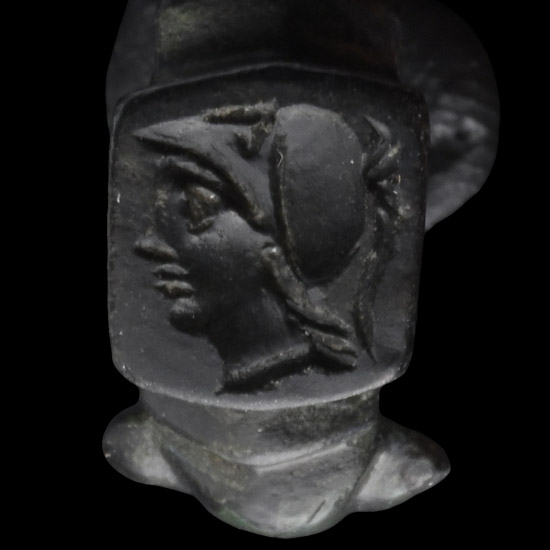
Graeco-Roman Bronze Ring with Bust of Athena
Circa 1st century B.C.Sold for (Inc. bp): £234
D-section hoop with stepped rims and trefoil shoulders, cuboid bezel with incuse profile bust of Athena to the upper face. 10.19 grams, 27.01 mm overall, 17.71 mm internal diameter (approximate size British O 1/2, USA 7 1/4, Europe 15.61, Japan 15)
Ex German art market, 2000s. Acquired from an EU collector living in London. From the collection of a Surrey, UK, gentleman. -
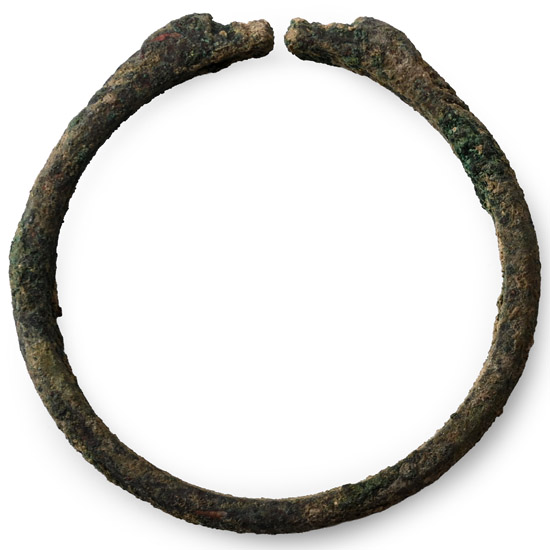
Greek Bronze Bracelet with Animal Heads
Hellenistic, circa 3rd-2nd century B.C.Sold for (Inc. bp): £72
Penannular bracelet with D-section body and the finials formed as stylised animal heads. 33.52 grams, 60 mm
From a UK collection formed in the 1980s. Property of an Essex, UK, gentleman. -
.jpg)
Greek Miniature Bronze Hydria
Geometric Period, 6th century B.C.Sold for (Inc. bp): £845
With a bulbous body, flared foot, lateral loop handles to the shoulder and a strap handle to the rear. 23.5 grams, 37 mm
Acquired by a Swiss family in the mid-1980s to late 1990s, thence by descent. Private collection, Switzerland, since the late 1990s.
The earliest Archaic Greek bronze hydriai enter the archaeological record in the last quarter of the seventh century. Although the appearance of bronze marks the first significant period of production in the Iron Age, these vessels represent a reawakening of an illustrious tradition dating back at least to the Helladic Bronze Age, if not considerably earlier.
