Loading, please wait...

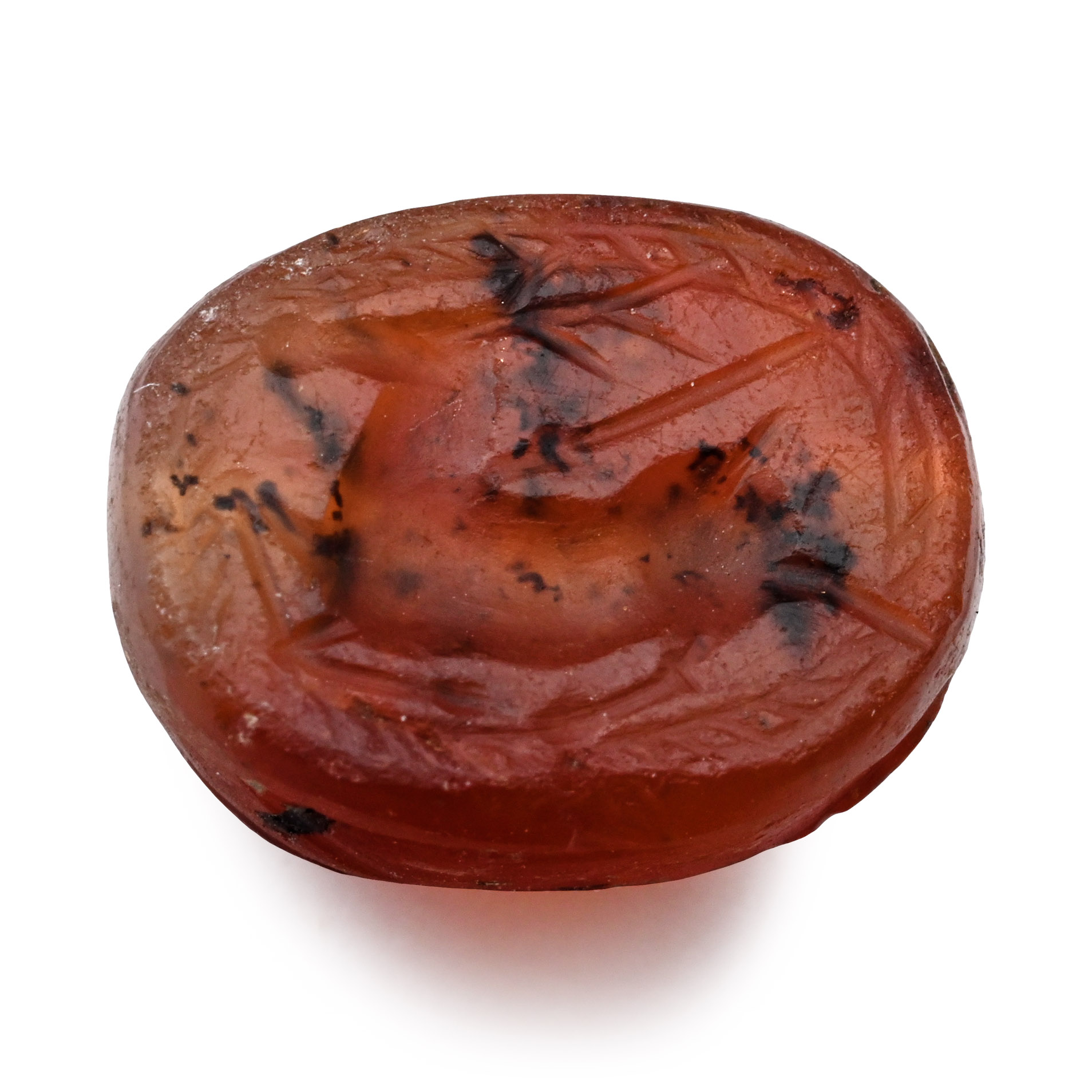
Etruscan Carnelian Scarab with Deer Etruscan Carnelian Scarab with Deer Etruscan Carnelian Scarab with Deer Etruscan Carnelian Scarab with Deer Etruscan Carnelian Scarab with Deer Etruscan Carnelian Scarab with Deer
Use mousewheel to zoom in and out, click to enlarge
Details

LOT 0080

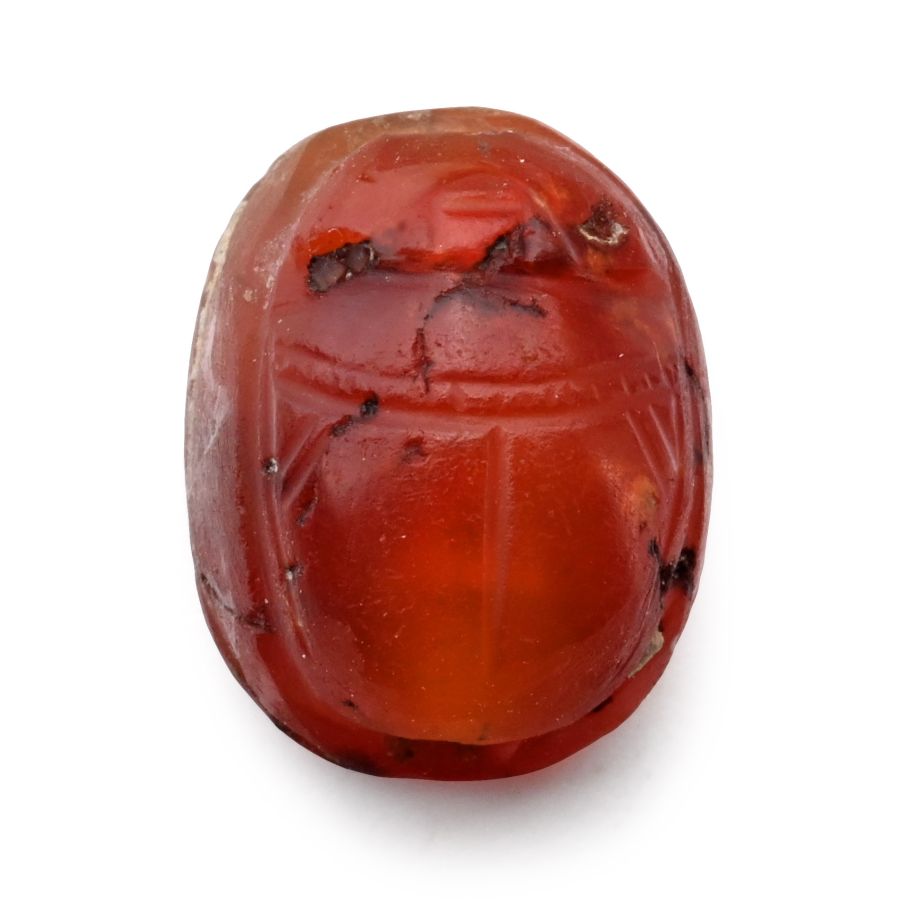
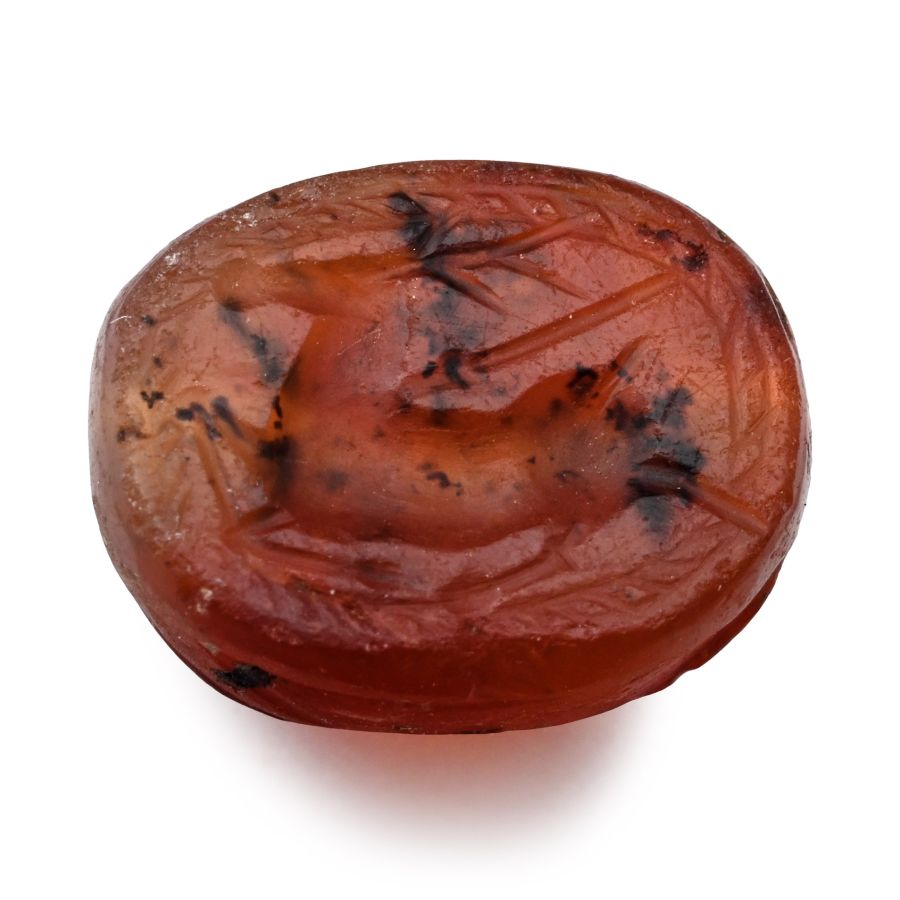
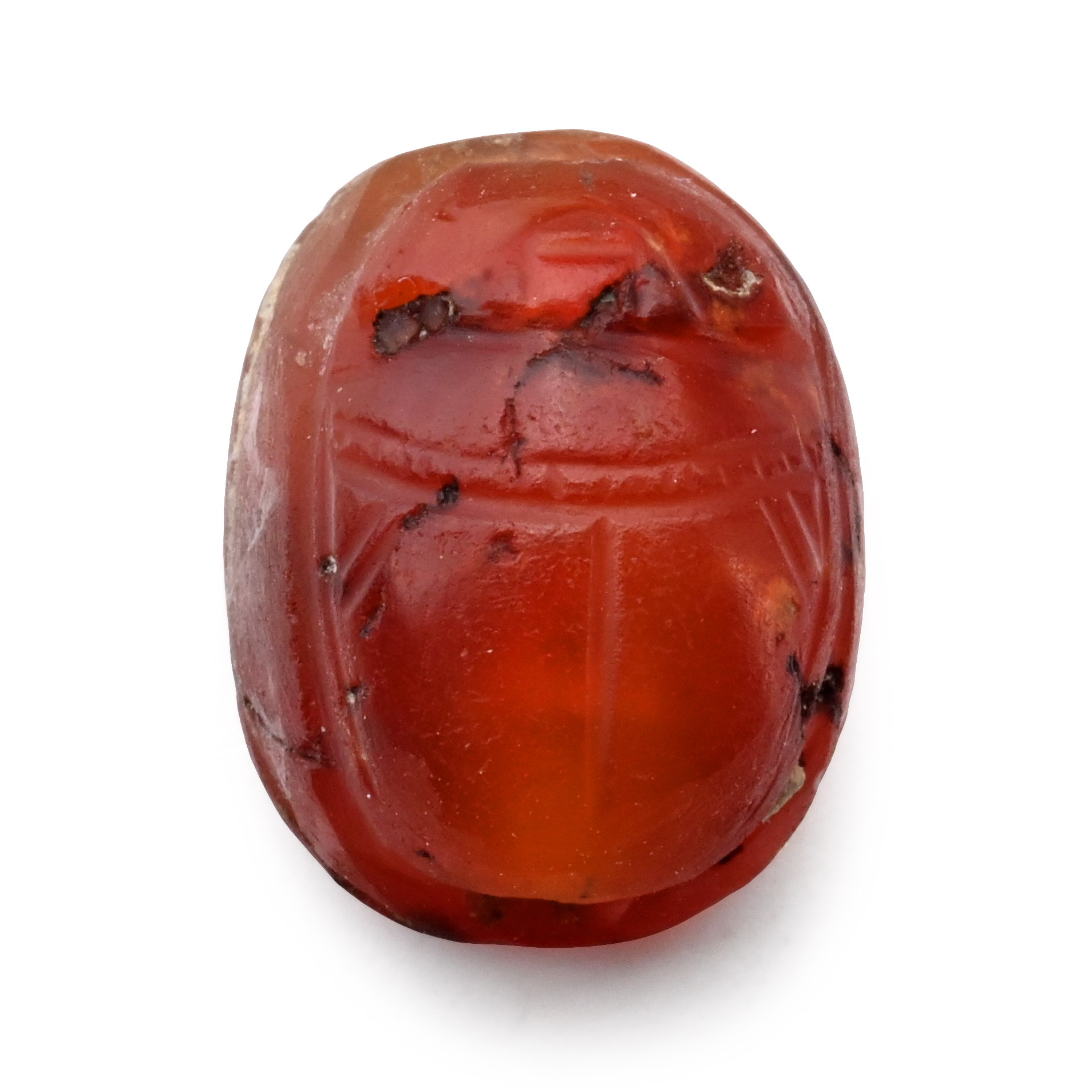
Etruscan Carnelian Scarab with Deer

5TH CENTURY B.C.

3/8 in. (1.1 grams, 11 mm).

With carved anatomical detailing, the underside featuring a running stag with a long spear about to pierce its neck from behind.

Provenance

Acquired on the European art market.

CONDITION
VETTING:

TimeLine Auctions follows a vetting process to ensure the authenticity and legality of all items, reinforcing our commitment to integrity and responsible trading. Each antiquity, antique, and coin lot undergoes thorough examination by a vetting committee of at least ten external specialists, professional trade association members, scientists, and archaeologists: Our Vetting Process


AUCTIONS:

TimeLine is a leading auction house specialising in antiquities, ancient art, collectables, natural history, coins, medals, and books. Our auctions offer museums, collectors, historians, and enthusiasts the opportunity to acquire unique and historically significant pieces.

LOT 0080

Etruscan Carnelian Scarab with Deer

Estimate £400 - 600€460 - 700 (for guidance only)$540 - 810 (for guidance only)

Opening Bid
£200 (EUR 232; USD 270) +BP*

Sign in to Bid

Please enter a e-mail
Please enter a password
Or Create Account here.
Please confirm to accept TC and Privacy policy

Bids: 0
RELATED LOTS
  • Parthian Carnelian Gemstone of a Goat-Headed Rhyton in Gold Ring
    Parthian Carnelian Gemstone of a Goat-Headed Rhyton in Gold Ring
    4th century B.C.-220 A.D.

    Estimate: £2,000 - 3,000 (+bp*)

    Opening Bid: £1,000

    Achaemenid or Parthian oval intaglio engraved with a style standing at the threshold between natural and stiff rigid linear style, depicting a goat-headed rhyton, the vessel terminating in the forepart of a wild goat with the front leg tucked under the body, the head rendered in profile with elegantly arched horns, pronounced muzzle, and carefully incised eye; the neck of the conical rhyton decorated with diagonal and cross-hatched incisions suggesting ribbing or chased metalwork; set in a modern gold ring with a small triangular area at the top left of the stone filled in with gold; supplied with a museum-quality impression. 8.51 grams, 24.02 mm overall, 21.18 mm internal diameter (approximate size British P, USA 7 1/2, Europe 16.23, Japan 15)


    Acquired on the European art market. This lot has been checked against the Interpol Database of stolen works of art and is accompanied by search certificate number no.13356-257945.

    The subject, a rhyton terminating in an animal protome, belongs to a well-established tradition in Eastern Greek and Achaemenid art of the late Archaic and Classical periods, in which zoomorphic libation vessels were used in ritual and ceremonial contexts. Goat-headed rhyta, though less commonly preserved in glyptic media, are attested in silver and ceramic examples, notably from Asia Minor and Thrace. The stylised horned animal, here likely a wild goat or ibex, is associated with vitality and mountain symbolism, while the rhyton itself signals elite drinking culture and votive use. The use of carnelian is typical of high-quality glyptic production in the 6th to 4th century BC, valued for its durability and ability to take a fine polish. The style and iconography suggest an Eastern Mediterranean origin, most probably Ionian or Anatolian.

    Lot Details

  • Greek Terracotta Rhyton of a Goddess
    Greek Terracotta Rhyton of a Goddess
    3rd-2nd century B.C.

    Estimate: £5,000 - 7,000 (+bp*)

    Bids: 1   |   Current Bid: £3,000

    With flanged and stepped rim, tapering curved body, figural finial of the goddess with diadem; bands of red and cream geometric detail to the rim and upper body, red wave patterns to the inner face; the goddess modelled with carefully dressed hair and floral diadem, ringlets cascading to her collar bone, alert facial expression with almond-shaped eyes and prominent nose, with C-shaped billetted collar and chiton, cupping her left breast in her right hand; mounted on a custom-made stand. 1.25 kg, 24 cm


    Private collection, London, UK; formed 1970s-1980s. Accompanied by an academic report by Dr Raffaele D’Amato. This lot has been checked against the Interpol Database of stolen works of art and is accompanied by search certificate number no.13312-258233.

    It is challenging to identify the divinity represented on our vessel: it can be associated with Ariadne, wife of the god Dionysus, but also with a Parthian goddess such as Anahita. She was a Zoroastrian goddess associated with water, fertility, and wisdom, widely venerated across the Parthian Empire and often invoked alongside Ahura Mazda in royal and religious inscriptions. Rhyta in her likeness, typically terminating in a zoomorphic or divine protome, were used as ceremonial drinking vessels, reflecting Anahita's close association with libation and purification rites.

    Lot Details

  • Etruscan Bronze Handle Pair with Heads of Medusa
    Ex Christie's, London, 1978
    Etruscan Bronze Handle Pair with Heads of Medusa
    6th-5th century B.C.

    Estimate: £10,000 - 14,000 (+bp*)

    Opening Bid: £5,000

    Each formed as a D-shaped fluted bar with the finials formed as grotesque Medusa heads (gorgoneia) in Archaic Greek style with protruding tongue and a pair of bearded snakes framing her forehead; mounted on custom-made display stands. 683 grams total including stand, handle: 10.9-11 cm wide


    Ex private collection of Athos Moretti, Bellinzona, Switzerland, in the 1960s. with Christie's, London, 14 June 1978, lot 344. with Sotheby's, New York, 29 May 1987, lot 154. Accompanied by an academic report by Dr Raffaele D’Amato. This lot has been checked against the Interpol Database of stolen works of art and is accompanied by search certificate number no.11773-204596.

    Lot Details