
Loading, please wait...
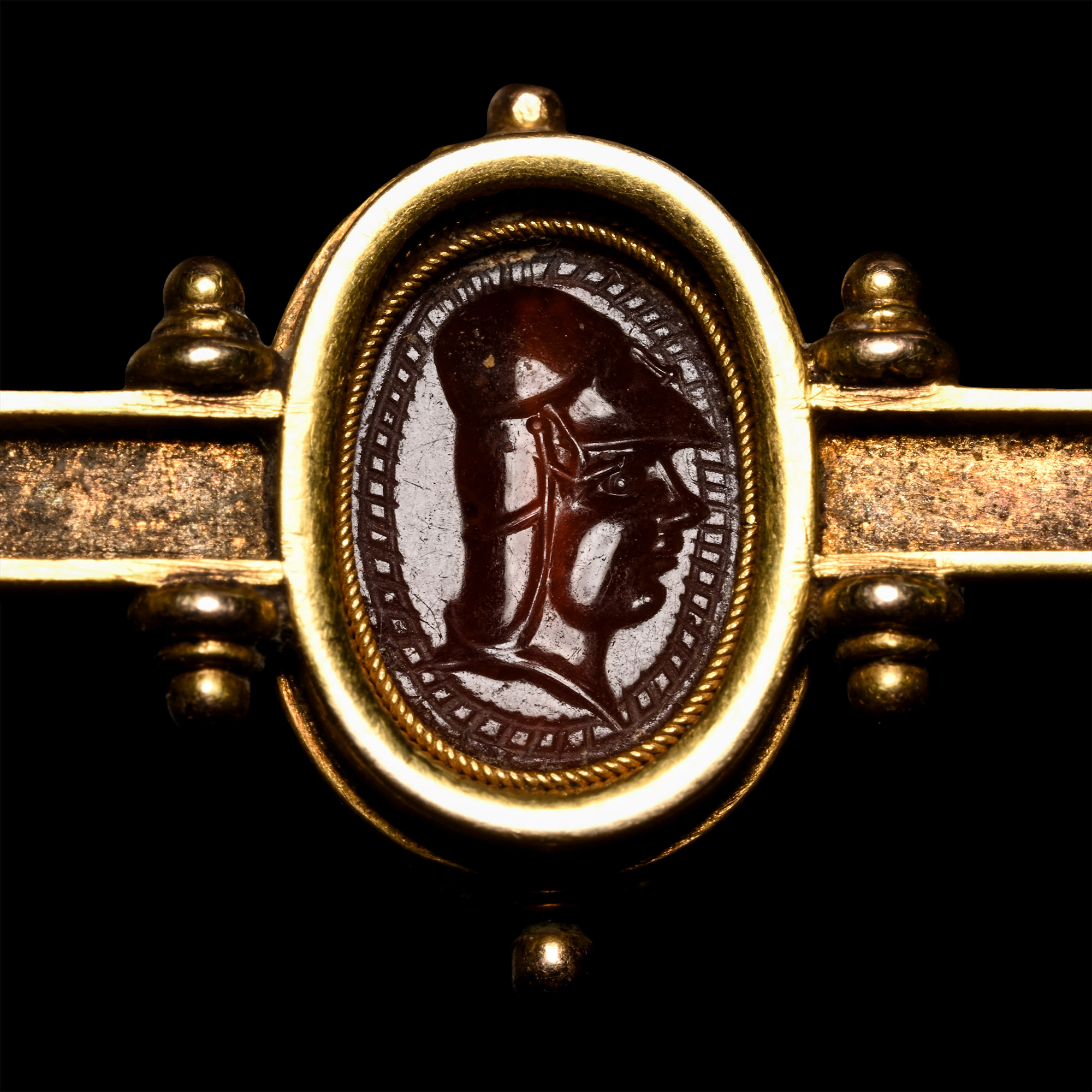
LOT 0070
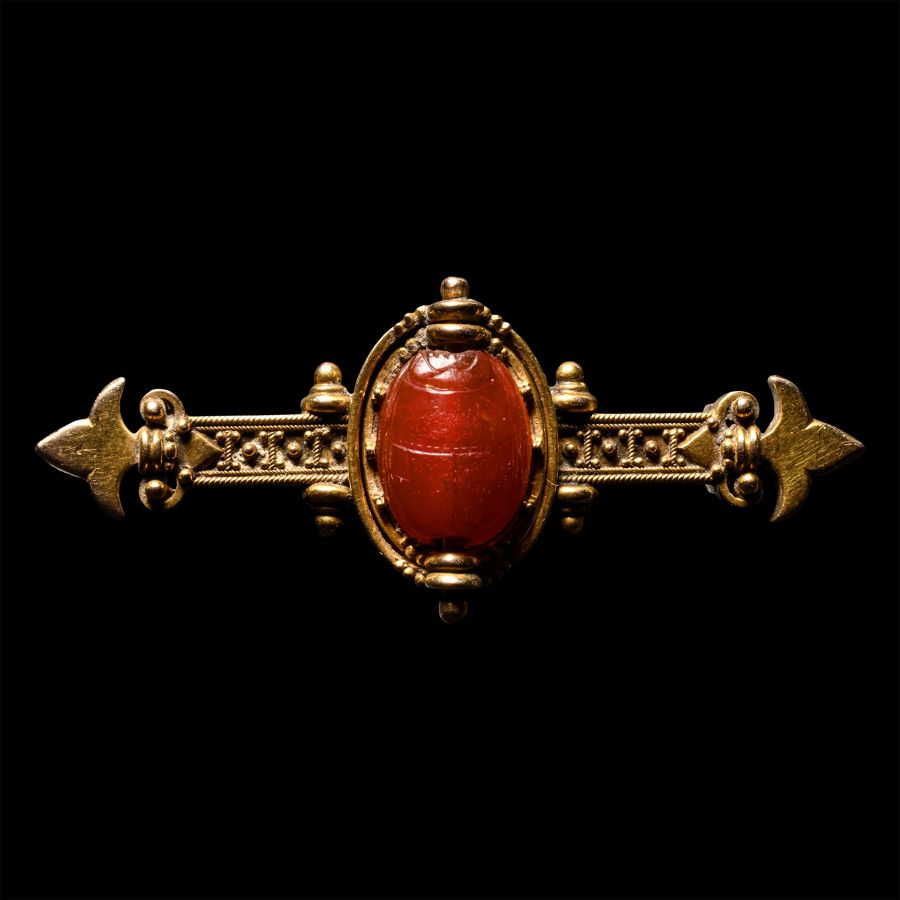
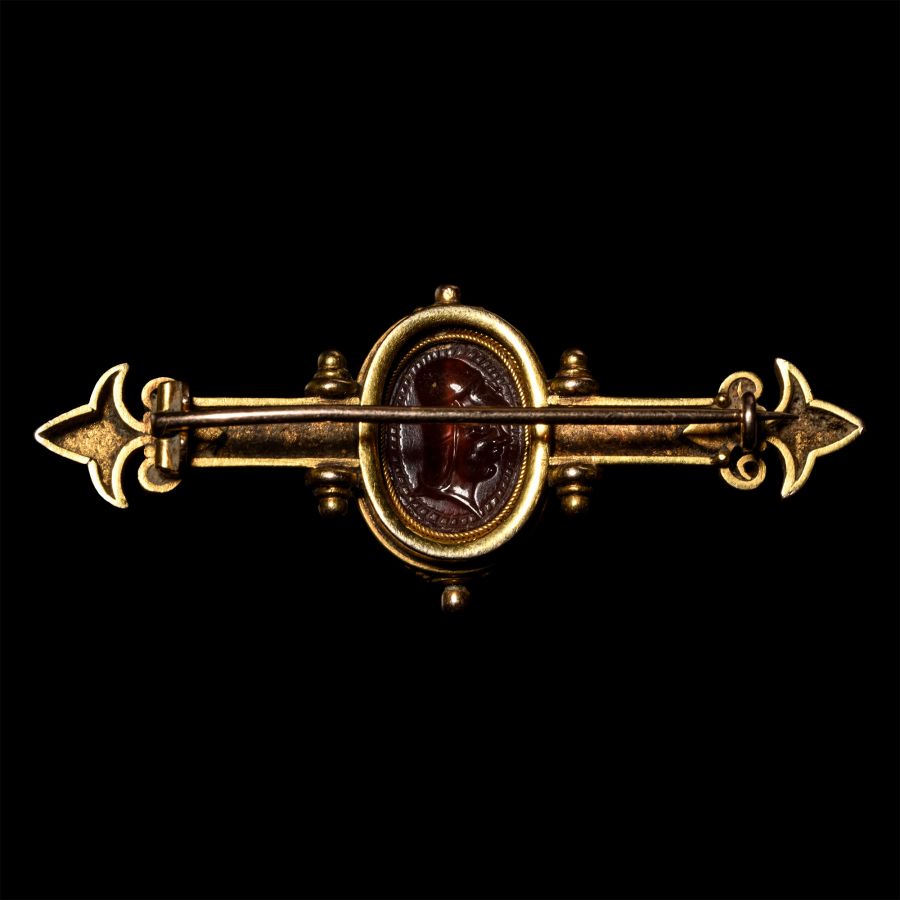
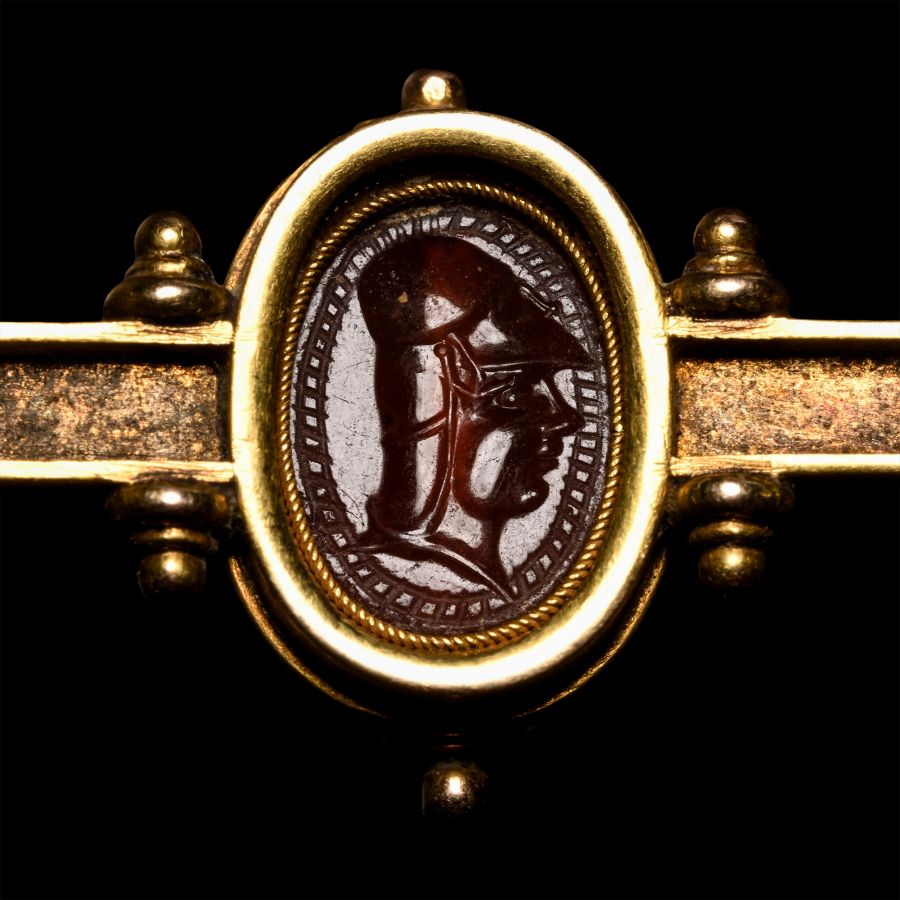
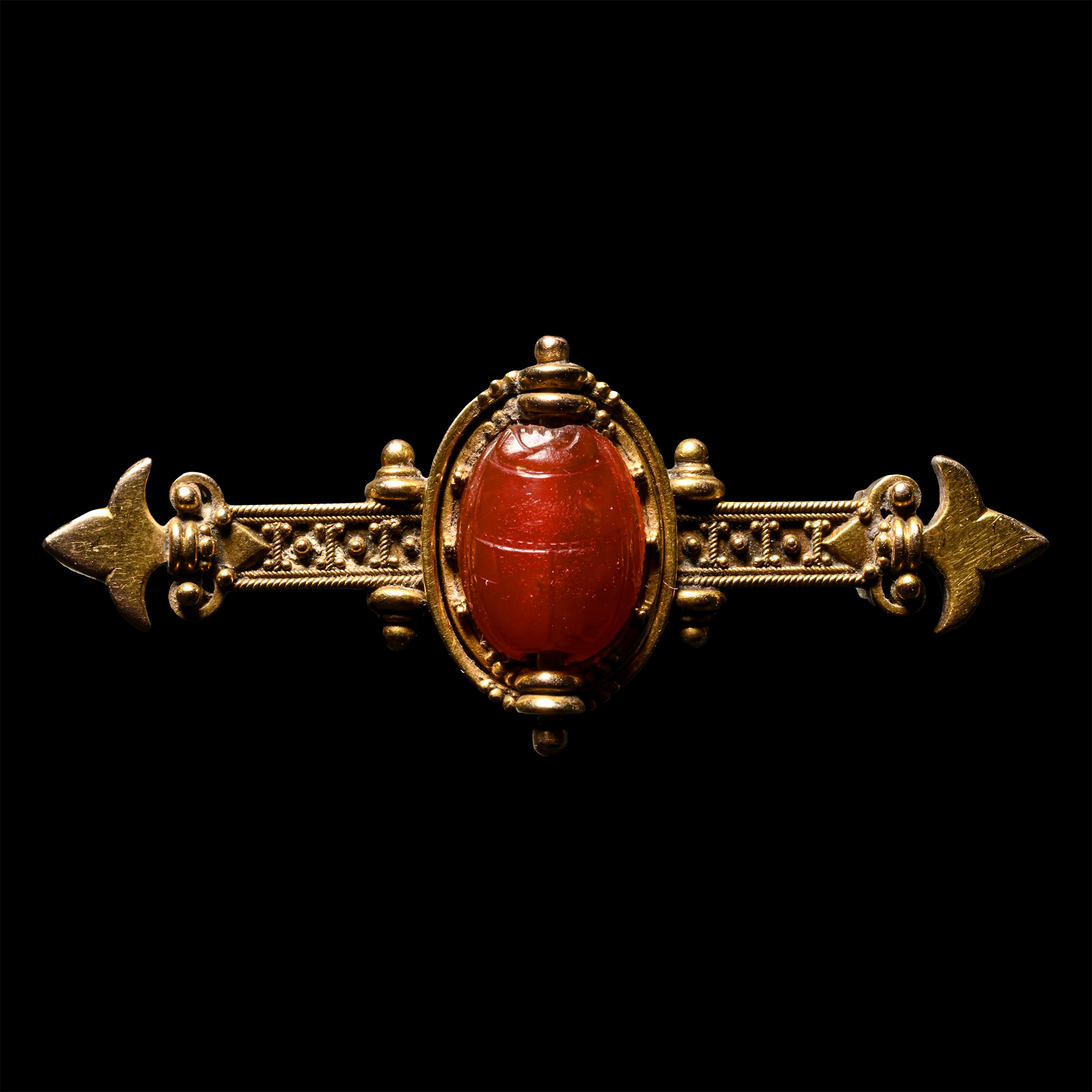
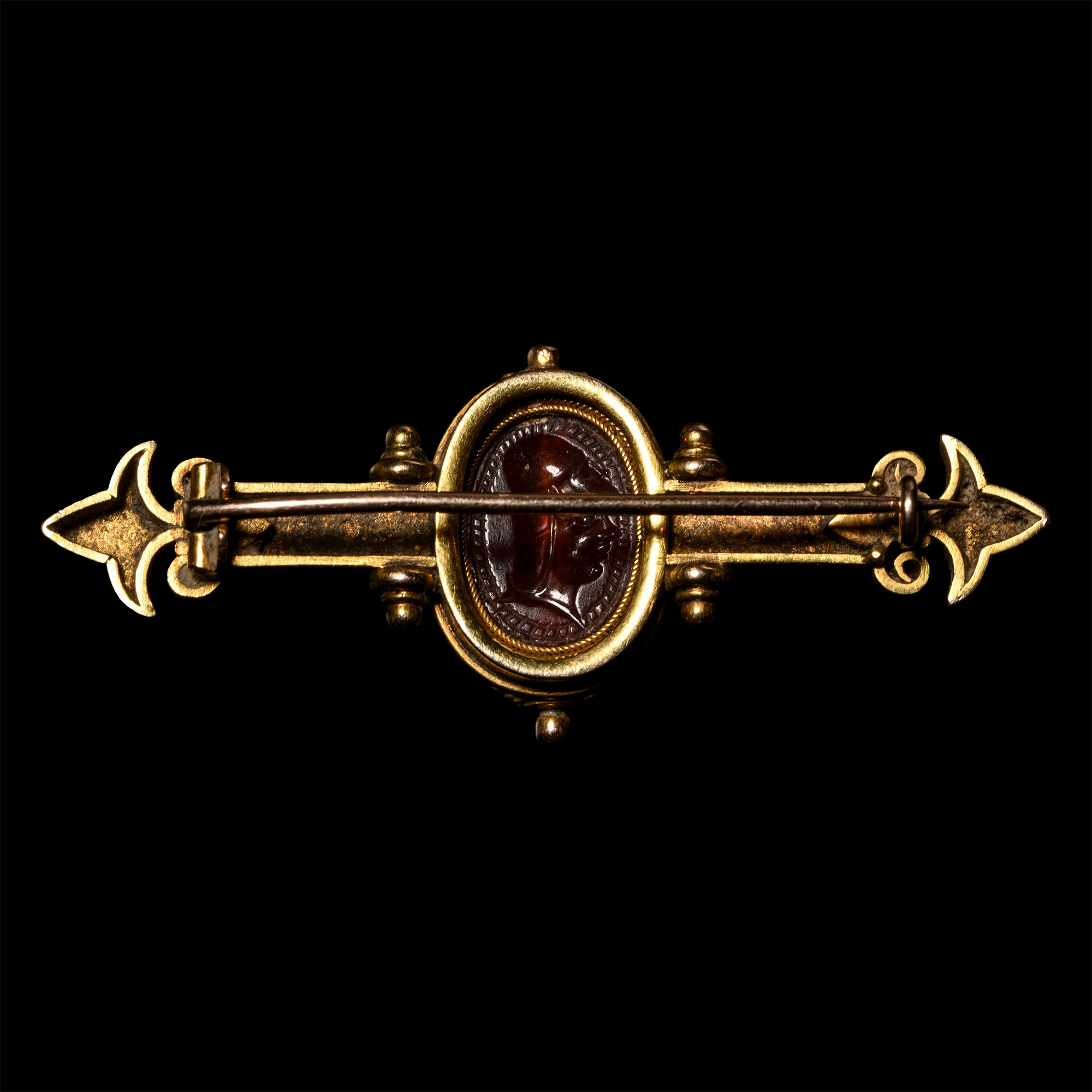
Etruscan Carnelian Scarab with Bust of a Warrior in Later Victorian Gold Brooch
5TH-4TH CENTURY B.C. AND LATER
2 1/8 in. (10.35 grams, 55 mm).
The scarab with anatomical detailing on the carapace, underside with a profile bust of a helmetted warrior; set in a later brooch frame with swivel mount for the scarab.
ProvenanceAcquired on the European art market.
This lot has been checked against the Interpol Database of stolen works of art and is accompanied by search certificate number no.13358- 257891.
Cf. similar Etrusco-Roman scarabs in Van den Bercken, B.J.L., Baan, V.C.P., Engraved Gems from Antiquity to Present, Leiden, 2017, pp.155-162, figs.1-11.
FootnotesEgyptian-style scarabs and scaraboids were characteristic of Etruscan art from the 8th century B.C. Originally made in Phoenicia, Cyprus or Rhodes, these objects were made of faience, blue paste, glass paste, bone, or semi-precious stones of varying hardness, from steatite to quartz, onyx and jasper. Mounted in settings on revolving pendants of precious metal, later imitated by Etruscan goldsmiths, these Egyptianising items performed prophylactic-religious functions.
CONDITIONTimeLine Auctions follows a vetting process to ensure the authenticity and legality of all items, reinforcing our commitment to integrity and responsible trading. Each antiquity, antique, and coin lot undergoes thorough examination by a vetting committee of at least ten external specialists, professional trade association members, scientists, and archaeologists: Our Vetting Process
AUCTIONS:
TimeLine is a leading auction house specialising in antiquities, ancient art, collectables, natural history, coins, medals, and books. Our auctions offer museums, collectors, historians, and enthusiasts the opportunity to acquire unique and historically significant pieces.
LOT 0070
Etruscan Carnelian Scarab with Bust of a Warrior in Later Victorian Gold Brooch
Sold for (Inc. bp): £2,860
-
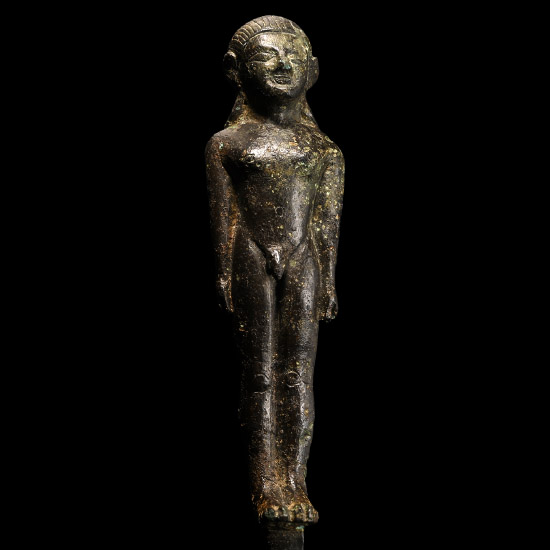
Etruscan Bronze Figure of a Kouros
Late 6th century B.C.Estimate: £2,000 - 3,000 (+bp*)
Current Winning Bid: £1,200
Depicting a youthful nude kouros standing frontally, with a long, slender body, broad shoulders, a narrow waist, and arms hanging close to the sides; the head, slightly oversized, characterised by an oval face, large almond-shaped eyes, an Archaic smile, and finely modelled ears, the hair arranged in beaded locks framing the forehead and falling onto the shoulders, reflecting the influence of contemporary Greek Archaic sculpture; standing on an integral rectangular base provided with a long tang for attachment. 118 grams, 11.2 cm
Acquired on the European art market between 1960s and 1980s. English private collection, property of a gentleman. Bertolami Fine Art, London, Auction 54, 9 November 2018, no.88. This lot has been checked against the Interpol Database of stolen works of art and is accompanied by search certificate number no.13320-258214.
The elegant proportions and linear modelling place the statuette within the widespread production of Etruscan votive bronzes of the Late Archaic period, probably intended as a sanctuary dedication. -
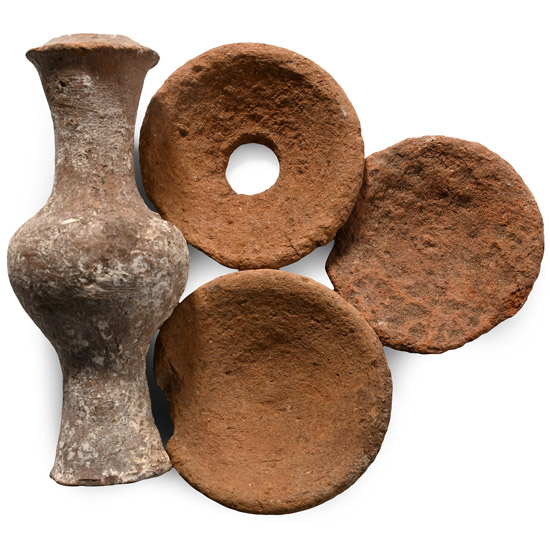
Greek Terracotta Spindle-Flask and Votive Plate Group
Hellenistic, circa 2nd-1st century B.C.Sold for (Inc. bp): £26
With a long, narrow neck and a chamfered mouth, developing to a fusiform body and a flared foot; three shallow footed dishes, one with voided centre. 93 grams total, 48-90 mm
From a UK private collection since at least 1946. Property of a West London, UK, gentleman. -
.jpg)
Etruscan Variegated Agate Scaraboid Gemstone with Dancing Satyrs
4th century B.C.Sold for (Inc. bp): £182
Scaraboid type with incuse design to the underside of two opposed dancing satyrs, heads and arms missing, possibly unfinished or cut down from a depiction of a lion and hero; supplied with a museum-quality impression. 2.75 grams, 17 mm
From the private collection of a European gentleman (1942-2024), formed since the 1970s.
