
Loading, please wait...
_900x900.jpg "Etruscan Carnelian Scarab of a Fletcher in Gold Ring")
_200x200.jpg "Etruscan Carnelian Scarab of a Fletcher in Gold Ring")
_900x900.jpg "Etruscan Carnelian Scarab of a Fletcher in Gold Ring")
_200x200.jpg "Etruscan Carnelian Scarab of a Fletcher in Gold Ring")


.jpg "Etruscan Carnelian Scarab of a Fletcher in Gold Ring")
.jpg "Etruscan Carnelian Scarab of a Fletcher in Gold Ring")
LOT 0069
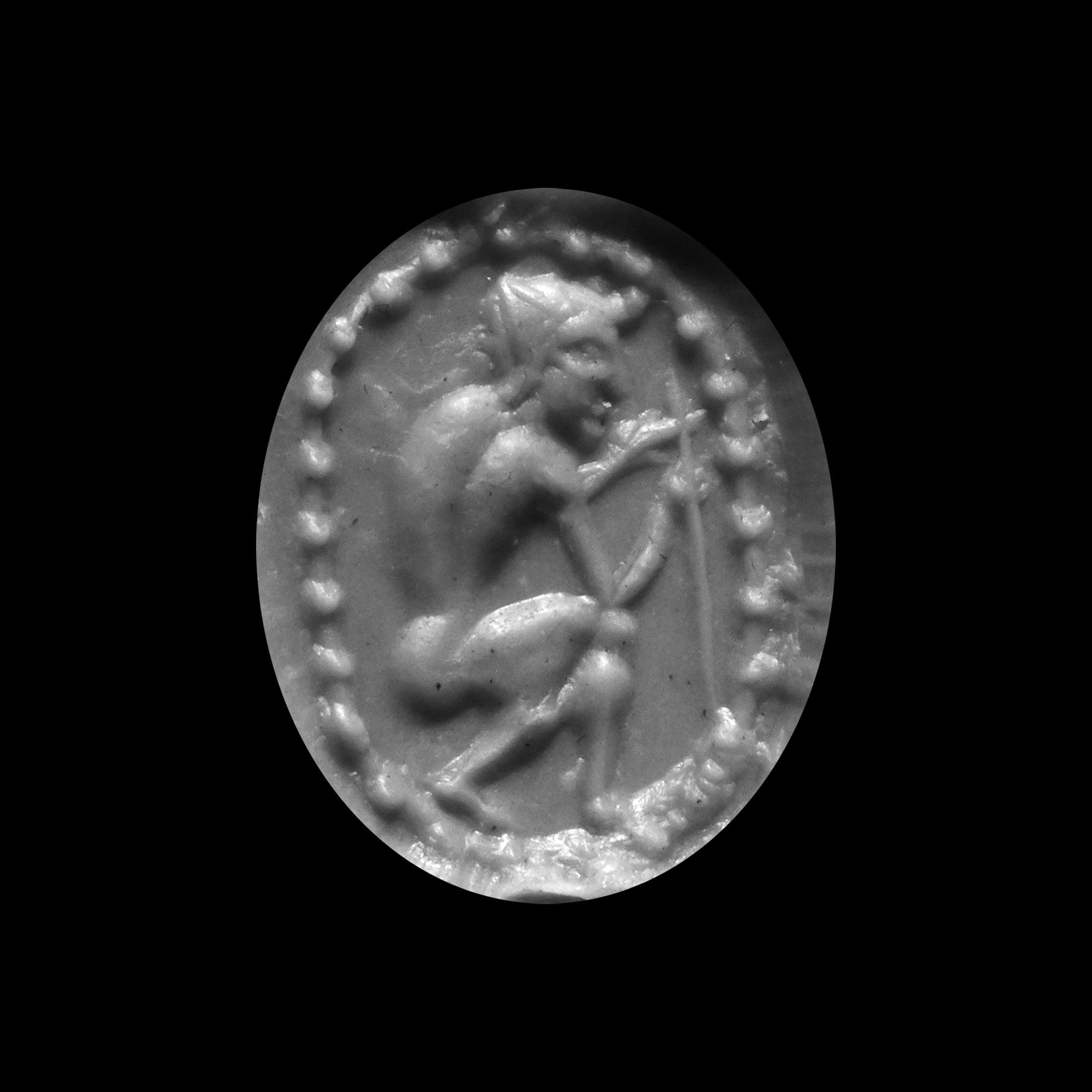
Etruscan Carnelian Scarab of a Fletcher in Gold Ring
LATE 4TH-3RD CENTURY B.C.
1 in. (4.24 grams, 27.12 mm overall, 18.38 x 18.49 mm internal diameter (approximate size British P 1/2, USA 7 3/4, Europe 16.86, Japan 16)).
With carapace detailing and intaglio of a crouching male carving an arrow, set within a dotted border; set into a later gold swivel ring.
ProvenancePrivate collection, Europe.
Acquired on the English art market.
For the motif, see Boardman, J. and Vollenweider, M-L., Catalogue of the Engraved Gems and Finger Rings, I: Greek and Etruscan, Oxford, 1978, items 67-8.
CONDITIONTimeLine Auctions follows a vetting process to ensure the authenticity and legality of all items, reinforcing our commitment to integrity and responsible trading. Each antiquity, antique, and coin lot undergoes thorough examination by a vetting committee of at least ten external specialists, professional trade association members, scientists, and archaeologists: Our Vetting Process
AUCTIONS:
TimeLine is a leading auction house specialising in antiquities, ancient art, collectables, natural history, coins, medals, and books. Our auctions offer museums, collectors, historians, and enthusiasts the opportunity to acquire unique and historically significant pieces.
-
.jpg)
Etruscan Variegated Agate Scaraboid Gemstone with Dancing Satyrs
4th century B.C.Sold for (Inc. bp): £182
Scaraboid type with incuse design to the underside of two opposed dancing satyrs, heads and arms missing, possibly unfinished or cut down from a depiction of a lion and hero; supplied with a museum-quality impression. 2.75 grams, 17 mm
From the private collection of a European gentleman (1942-2024), formed since the 1970s. -
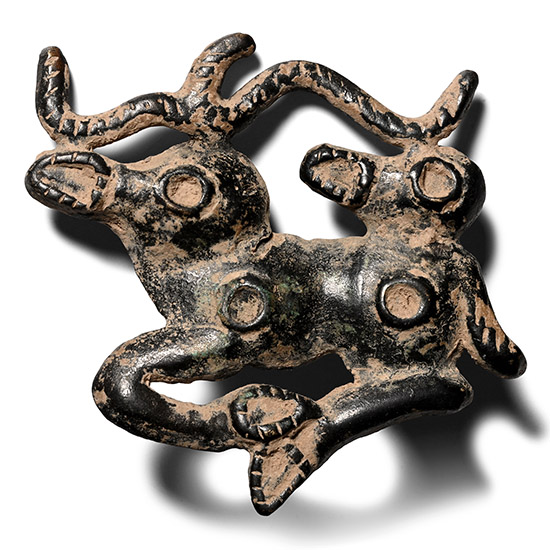
Scythian Bronze Galloping Stag Strap Decoration
Circa 5th-3rd century B.C.Estimate: £200 - 300 (+bp*)
Current Winning Bid: £100
Modelled as a stylised quadruped with its legs folded beneath the body, long curving horns and circular cells on the body and eye, two lugs on the reverse. 24.3 grams, 51 mm
Ex Abelita collection, 1990s. -
.jpg)
Greek Red-Figure Bell Krater with Eros
Apulia, 4th century B.C.Sold for (Inc. bp): £5,460
With flared and carinated foot, broad stem, ovoid body, carinated shoulder, everted rim with lip, D-shaped antefixes and lateral pendant loop handles; band of ivy to the neck and meander to the lower edge, frieze with figural scenes: Side A - seated female with thyrsos pointing towards Eros with head turned regarding her, wings spread; Side B - seated female in tiered robe pointing towards standing Eros with wreath, objects in the field; by the Ascoli Satriano Painter; restored. 1.81 kg, 33.5 cm
Ex private collection, previously with Bonhams, Bond Street, London, UK. This lot has been checked against the Interpol Database of stolen works of art and is accompanied by search certificate number no.13353-259030.
Female heads and Eros figures are common features on the vases attributed to the Ascoli Satriano Painter. His real name is unknown, and he has been named after a northern Apulian town, where many of his vases have been found.
