
Loading, please wait...
LOT 0068
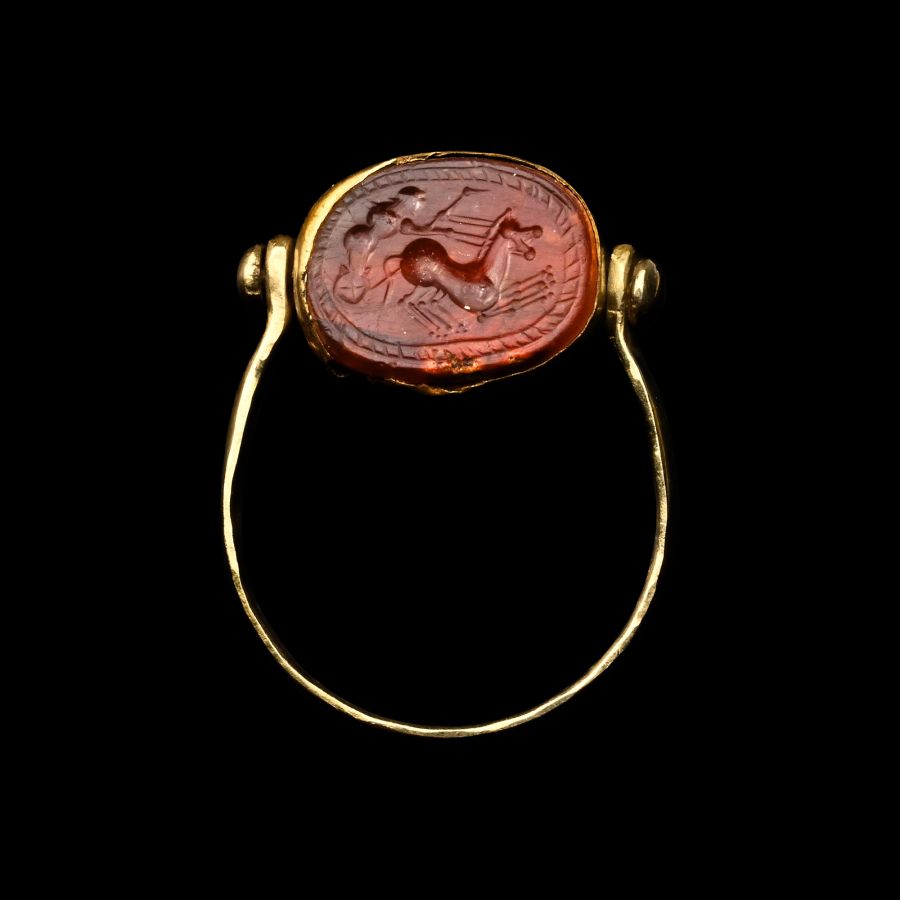
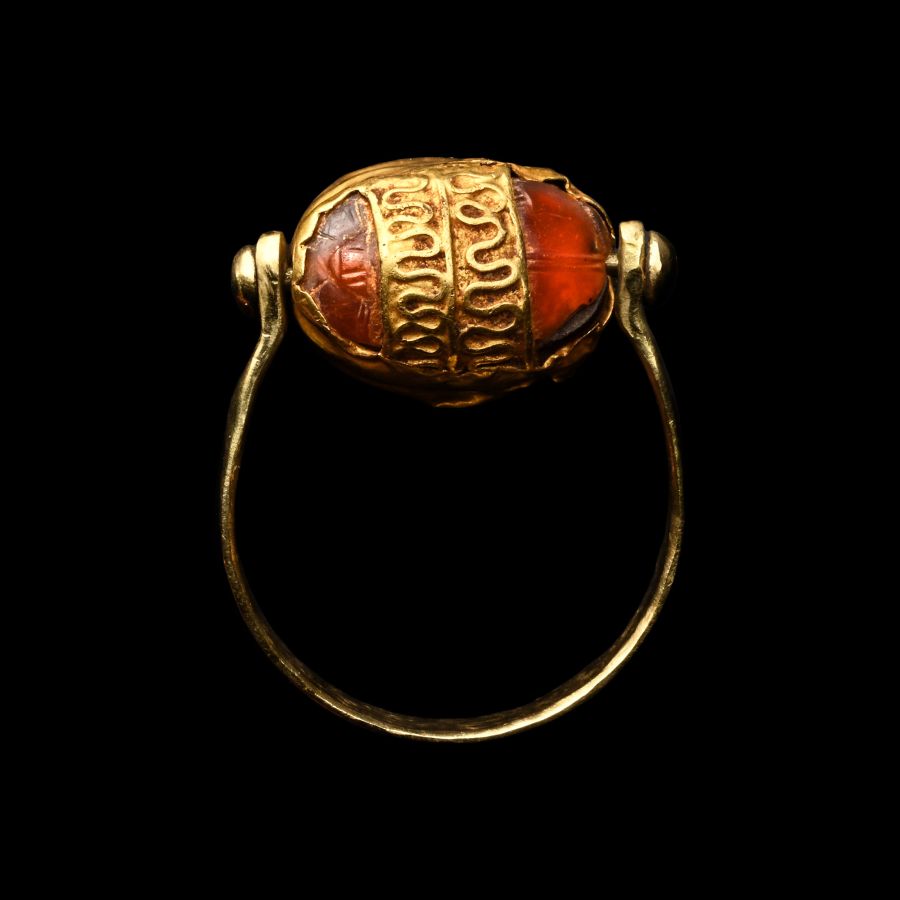
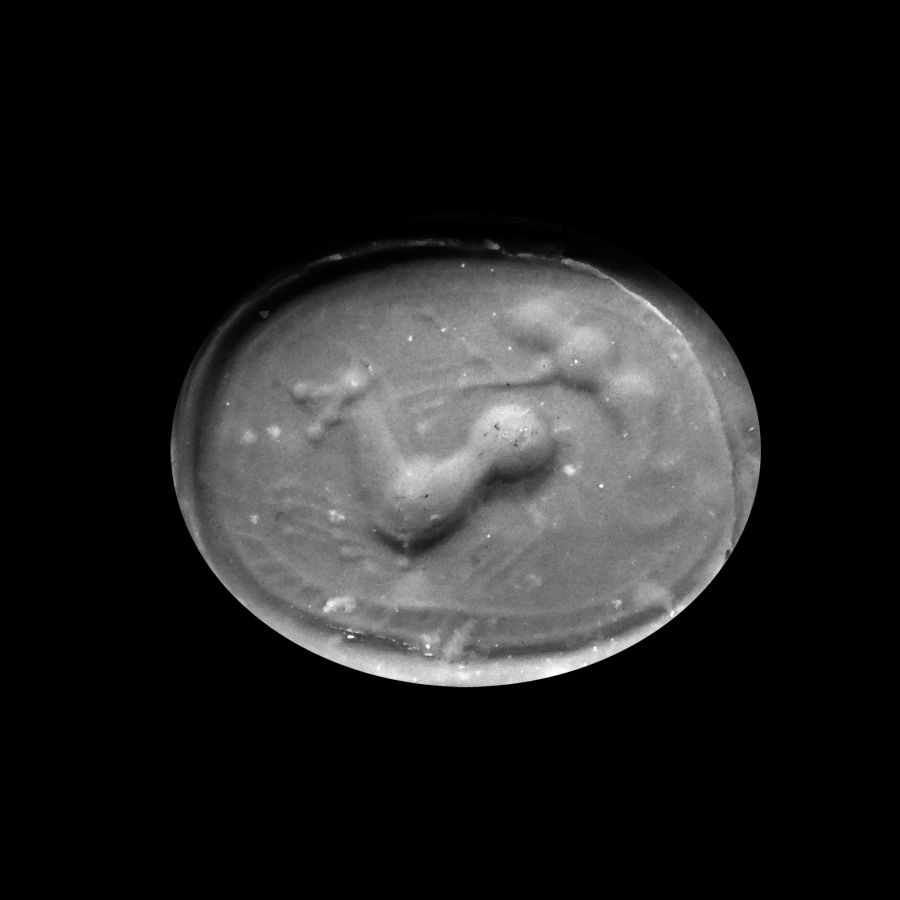
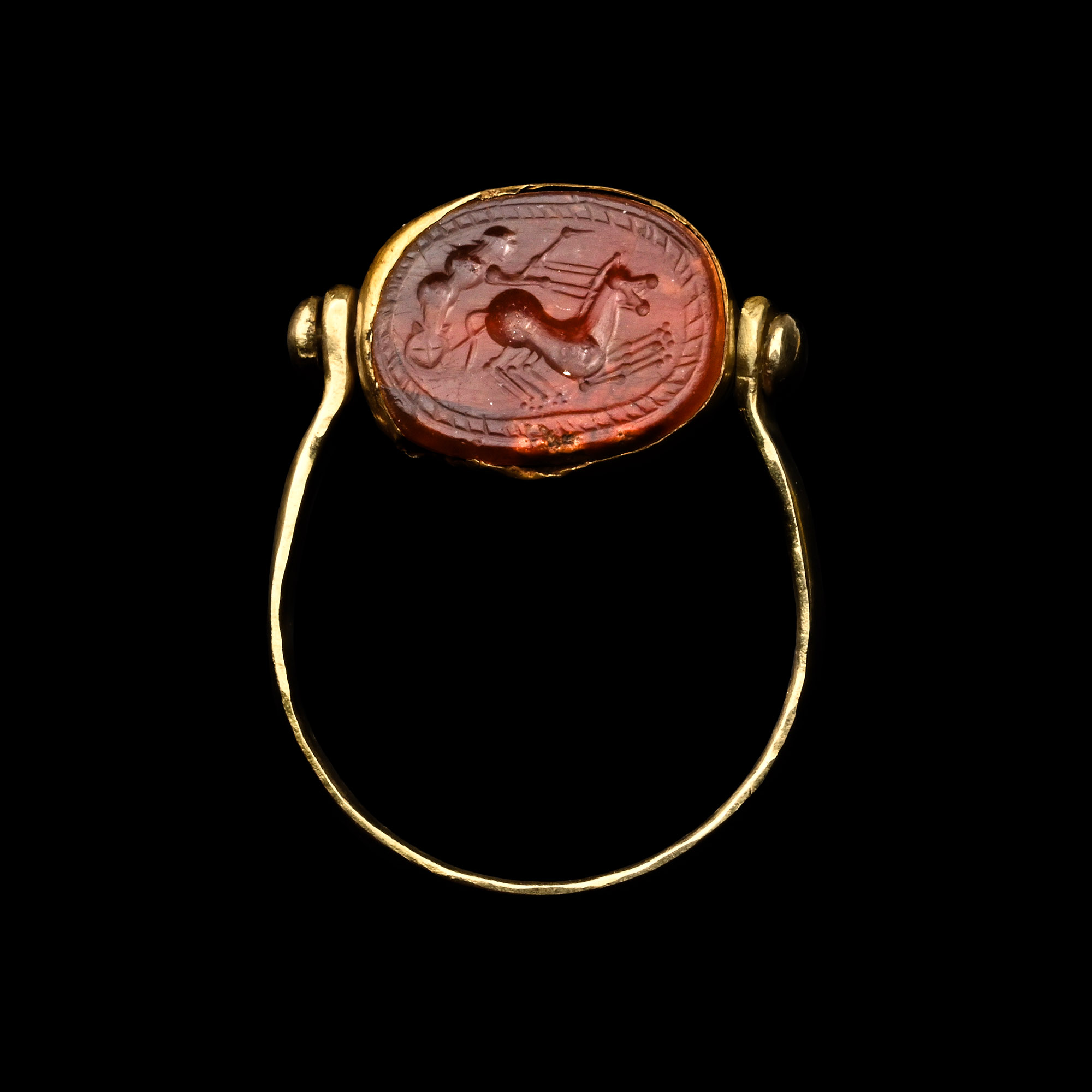
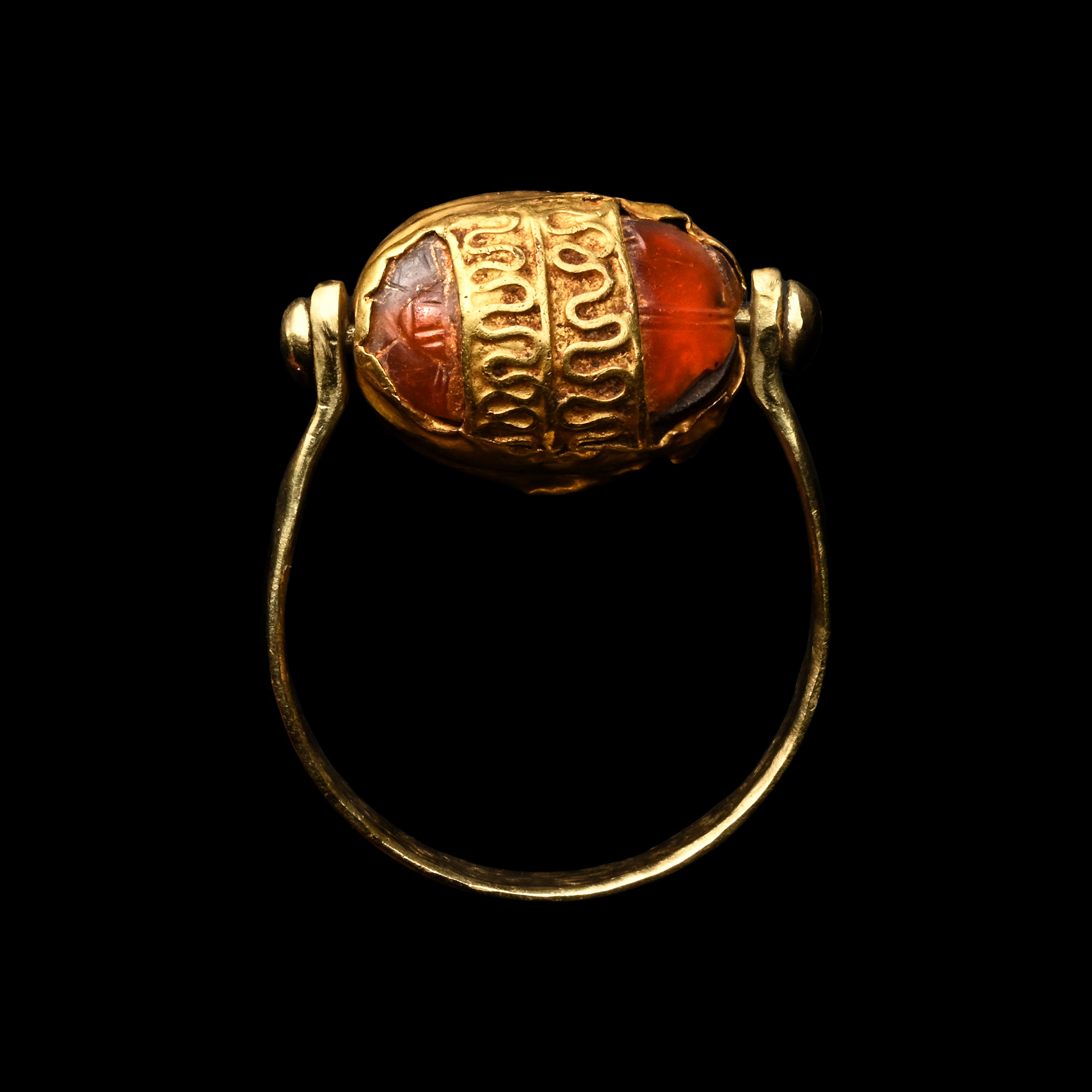
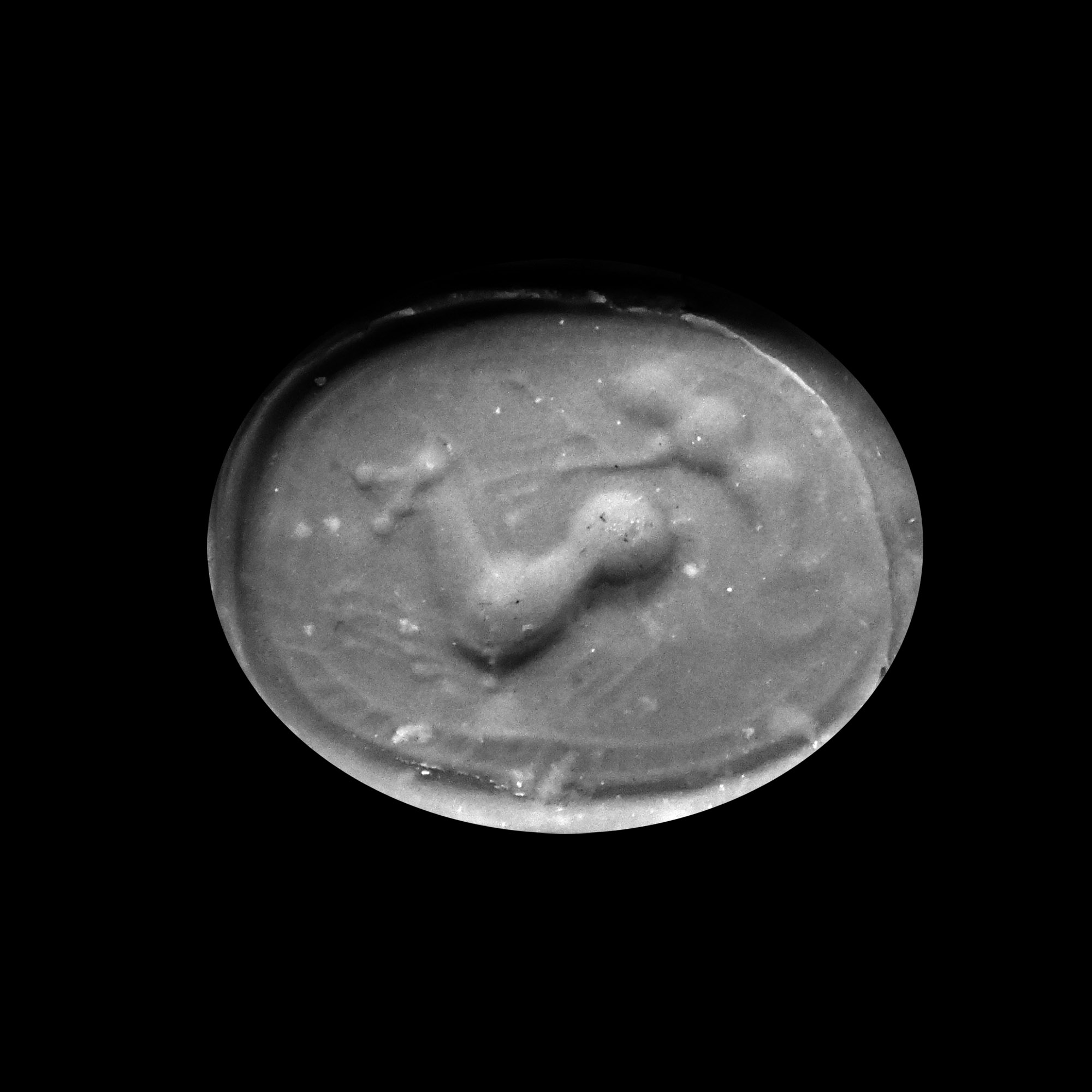
Etruscan Carnelian Scarab of a Charioteer in Gold Ring
LATE 4TH CENTURY B.C.
1 in. (4.26 grams, 25.07 mm overall, 17.77 x 16.22 mm internal diameter (approximate size British O, USA 7, Europe 14.98, Japan 14)).
Opaque scaraboid engraved in globolo style with a dynamic scene of a charioteer driving a biga with his whip raised; set in a later sheet-gold mount and swivel ring, possibly 19th century; supplied with a museum-quality impression.
ProvenancePrivate English collection, formed between the late 1970s and early 1990s.
Private collection, UK.
This lot has been checked against the Interpol Database of stolen works of art and is accompanied by search certificate number no.12948-245985.
See The British Museum, London, accession no.1872,0604.33, for a similar scarab retaining its original gold casing.
FootnotesIn line with trends introduced from the Eastern Mediterranean increasing use was made by the Etruscans of war chariots, even more luxurious in appearance and faced with embossed sheets of bronze. In addition to transporting warriors, they proved an effective means of controlling outlying areas, and in case were status symbols of great prestige. The Orientalizing period also saw the importation of swift and nimble breeds that were particularly suited for use as cavalry mounts.
CONDITIONTimeLine Auctions follows a vetting process to ensure the authenticity and legality of all items, reinforcing our commitment to integrity and responsible trading. Each antiquity, antique, and coin lot undergoes thorough examination by a vetting committee of at least ten external specialists, professional trade association members, scientists, and archaeologists: Our Vetting Process
AUCTIONS:
TimeLine is a leading auction house specialising in antiquities, ancient art, collectables, natural history, coins, medals, and books. Our auctions offer museums, collectors, historians, and enthusiasts the opportunity to acquire unique and historically significant pieces.
LOT 0068
Etruscan Carnelian Scarab of a Charioteer in Gold Ring
Sold for (Inc. bp): £2,860
-
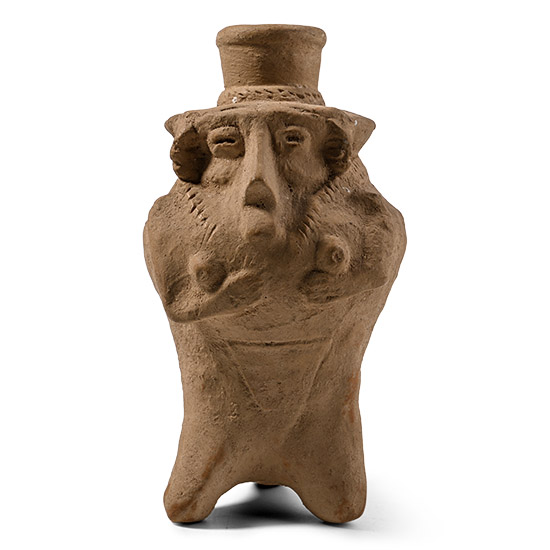
Phoenician Terracotta Anthropomorphic Vessel
3rd century B.C.Sold for (Inc. bp): £1,560
With three splayed stub feet, tubular body with flared shoulder and neck; applied facial detailing, pointillé circlet and collar, arms bent beneath the breasts, incised loincloth detail. 514 grams, 15.2 cm
with J.F. collection, Madrid. Ex Ars Historica Arqueologia, 7 October 2019. -
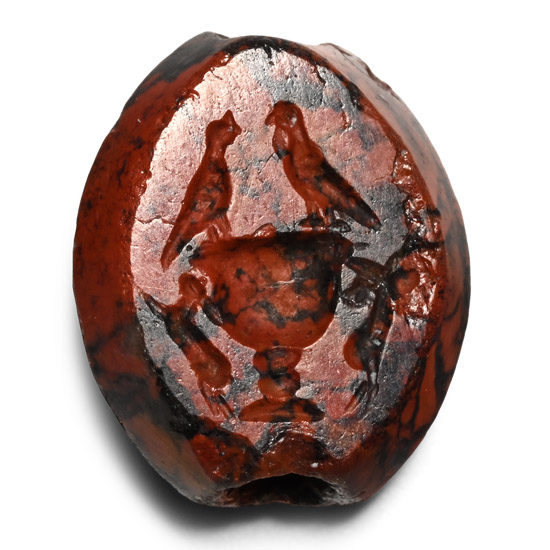
Greek Red Variegated Gemstone with Chalice and Birds
6th-4th century B.C.Sold for (Inc. bp): £234
Scaraboid type with incuse design to the underside of a footed chalice with two birds perched on the rim of the bowl; supplied with a museum-quality impression. 1.45 grams, 14 mm
From the private collection of a European gentleman (1942-2024), formed since the 1970s. -
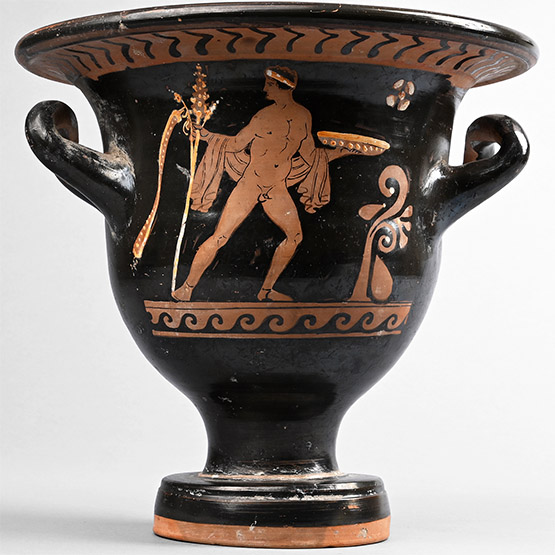
Greek Red-Figure Bell Krater Belonging to the Chevron Group
Apulia, 4th century B.C.Sold for (Inc. bp): £3,120
With reserved herringbone band beneath the rim, wave pattern to be the baseline; Side A: young man with thyrsus and pendant streamer holding a phiale, a loose mantle draped from the elbows; Side B: head of a lady of fashion with white accents to her stephane and hair drawn up in a chignon, a volute and window before her. 1.11 kg, 23.2 cm wide
Acquired on the art market between the late 1990s and mid-2000s. Estate of the late Barry Paul Buxton (1944-2024), Oakham, Rutland. Acquired on the UK art market, 2025. Accompanied by an academic report by Dr Raffaele D'Amato. This lot has been checked against the Interpol Database of stolen works of art and is accompanied by search certificate no.13071-249285.
Bell kraters were commonly used in regions of ancient Italy for mixing and serving wine during communal gatherings, thanks to their wide shape and flared mouth. These vessels also served as artistic expressions, reflecting the cultural tastes of the time. The Chevron Group is the conventional name for a group of ancient Apulian red-figure vase painters who were active in Southern Italy between approximately 335-310 B.C. They are named for their distinctive use of a band of chevron patterns to encircle the rims of the small kraters (mixing vessels) they decorated.
